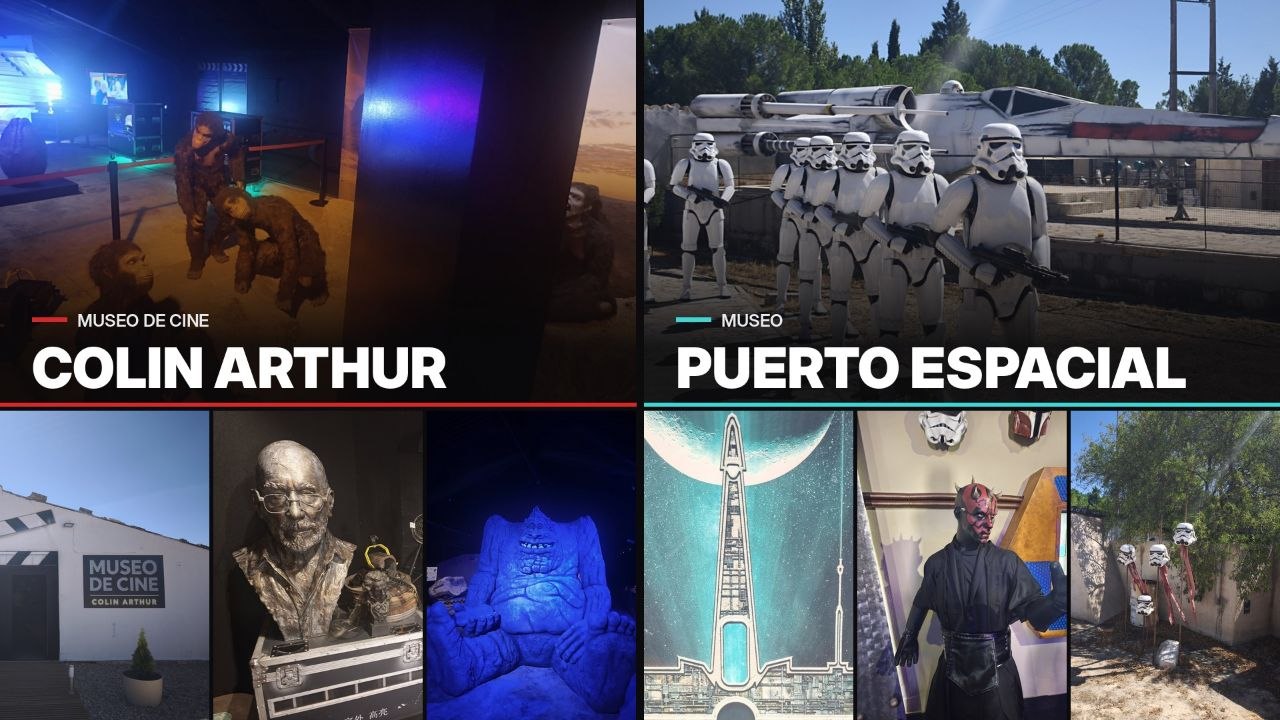
The Cerrato, the New Mecca of Tactile Celluloid
There is a conspiratorial theory, whispered in the darkest corners of film criticism forums, suggesting that the universe is divided into two: the realm of flat pixels and the realm of bleeding matter. In the heart of the Cerrato region of Valladolid, amidst limestone plateaus that seem plucked from a fever dream of Tarkovsky and vineyards that worship Cigales, one would not expect to stumble upon the cradle of the twentieth century’s greatest special effects milestones. Yet, Valoria la Buena has become a fascinating anomaly, a mandatory pilgrimage site for any lover of fantasy cinema, analog horror, and science fiction who understands that true magic does not emanate from a next-generation graphics card, but from sculpture, latex, and workshop ingenuity.
In an era where cinemas and blockbuster productions are drowning in seas of homogeneous green screen and textureless digital renders, Valoria offers a slap of tactile reality. It is not just another museum; it is a declaration of war against digital sterility. Thanks to two temples raised against oblivion, the Colin Arthur Film Museum and the monumental Puerto Espacial installation, this small village has established itself as the improbable capital of analog cinema. They are two sides of the same coin dedicated to visual craftsmanship and top-tier film props, where dust is not a defect, but an essential characteristic of authenticity.
"The true magic of cinema does not emanate from a graphics card, but from sculpture, latex, and workshop ingenuity."
The Latex Trench: The Legacy of Colin Arthur
To gauge the magnitude of this museum, one need only review the credits of the man it is named after. Colin Arthur is no ordinary prop technician; by his own merit, he is one of the most decisive living legends in the history of practical effects. His career is a compendium of the most iconic sequences in modern celluloid. And the fact that his entire personal archive, original molds, mechanical heads, and work diaries have found their final resting place in a two-thousand-square-meter warehouse in Valoria la Buena has something of a lysergic miracle about it. It is as if the god of prosthetic makeup himself had decided to retire to meditate in the Castilian countryside, surrounded by his silicone creations.
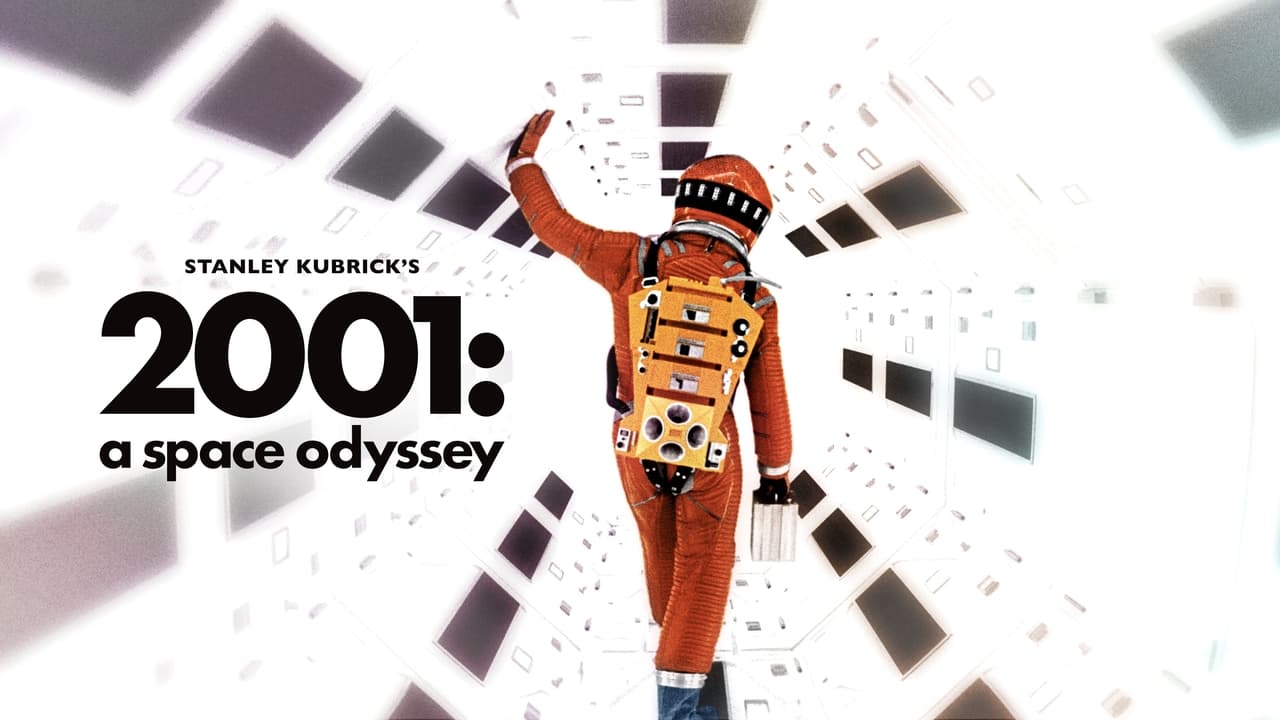
The tour of its facilities operates as a masterclass in unfiltered film history, free from institutional filters. Here are preserved the vestiges of the famous "Dawn of Man" sequence from 2001: A Space Odyssey (1968). Under the direct and obsessive orders of Stanley Kubrick and Stuart Freeborn, Arthur was one of the executing hands that sculpted and molded the faces of the primates that opened the film. It was a milestone that forever revolutionized prosthetic makeup by using articulated facial pieces capable of conveying emotion and ferocity without falling into the ridicule of a fairground costume. Seeing those molds today is understanding why 1970s cinema had a texture that today’s cinema cannot imitate.
A few steps away, film memory delves into the territory of visceral horror. Colin Arthur is the alchemist behind one of the most murky moments in Alien (1979), by Ridley Scott: the decapitation and dismemberment of the android Ash, played by Ian Holm. It was Arthur who formulated and perfected the dense milky substance, that synthetic white blood that gushed from the cyborg’s circuits. He gave the sequence an organic and unsettling nuance that no contemporary digital recreation has managed to equal. The texture, density, and viscosity were physical; they interacted with the set lighting and the actor’s skin in real time, creating a tension that a render will never be able to capture.

And, of course, the tour culminates in the collective memory of the eighties with The NeverEnding Story (1984), the monumental adaptation by Wolfgang Petersen. Arthur designed and supervised the physical construction of the Rockbeast, the racing snail, and, above all, the giant white dragon of luck, Fújur. Seeing the exposed mechanical heads, cable diagrams, pulleys, and synthetic skin of those mythical beasts recalls a golden age where directors filmed forward, forced to coexist on the set with giants of foam and iron moved by dozens of puppeteers hidden beneath the floor.

"Blood gushes from manual hydraulic pumps and interstellar scrap can be touched with the tips of your fingers."
Puerto Espacial: Archaeology of the Outer Rim
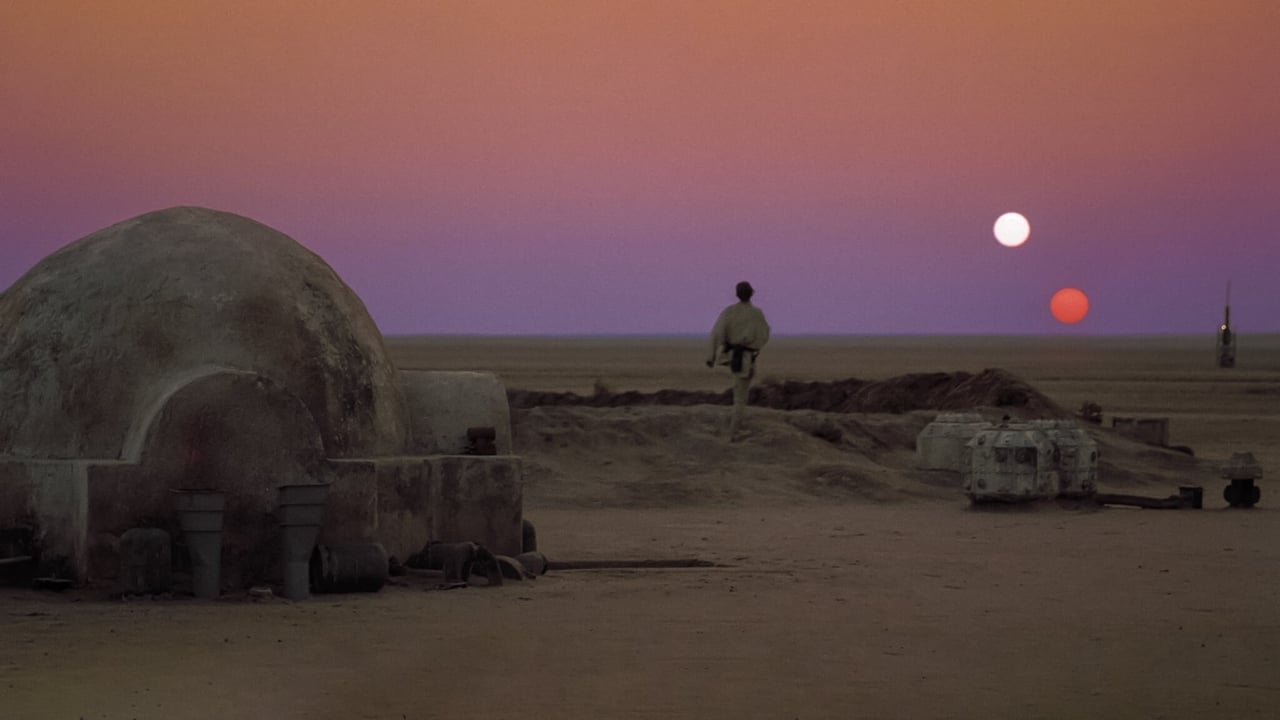
Barely crossing the threshold into the universe that Juan Villa—sculptor, model maker, and known visual accomplice of Spanish audiovisuals—has erected in Valoria, the atmosphere mutates into space science fiction with Puerto Espacial. Located in an imposing venue with a battlemented castle structure, this space is a radical homage to the "used universe" (used universe) aesthetic that George Lucas and his ILM team coined in 1977 with the classic Star Wars trilogy. It is not a simple set; it is a time capsule where rust is the absolute protagonist.

Puerto Espacial moves completely away from the conventional tourist trap. It is not a handful of static figures placed against white walls, but a fully immersive scenographic experience built to 1:1 scale. The visitor is thrown into the interior of a border spaceport in the galactic Outer Rim, where every surface, every rivet, and every sheet of oxidized metal tells a story of survival and interstellar travel. It is a total immersion in the glorious grime of a far-off galaxy.
The tour proceeds through narrow corridors lit by dim emergency lights, hangars crammed with mechanical parts, space junk dealer stalls, and life-size ship replicas that defy perspective. There are millimetric replicas of astromech droids with blaster burn marks, animatronic creatures that seem plucked from the bowels of a cave on a frozen planet, and a monumental recreation of an alien cantina. The latter devoutly replicates the murky and dangerous gloom of the Mos Eisley den or the court of Jabba the Hutt, inviting the spectator to feel the latent danger in every corner.
The merit of Juan Villa lies not only in the anatomical fidelity of the creatures or the accuracy of the props, but in the mastery of volume and texture. In Puerto Espacial, everything has weight, wear, and visual grime. Exhaust pipes have soot, armor shows combat scratches, and the fabrics of the costumes hang with the natural drape of heavy materials. It is the triumph of classic scenography: treated wood that looks like armored steel, resins that mimic volcanic rock, and a sound and light design that submerges the spectator in an uninterrupted long take of tangible reality.
The Antidote to Digital Cloning
The conjunction of these two spaces in Valoria la Buena generates a delicious geographical friction. In a region accustomed to promoting itself almost exclusively through Romanesque heritage and traditional enology, the presence of Fújur’s head and a port of galactic smugglers constitutes a healthy cultural provocation. It is as if the Cerrato had decided that wine was not enough and also needed to inject itself with synthetic adrenaline and stardust.
Both museums demonstrate that genre cinema does not belong solely to the archives of the major studios in Burbank or to the retrospectives of European capital cinémathèques. The true heart of artisanal cinema, that which dirties the hands of technicians and requires hundreds of hours of clay modeling before a single light is turned on, beats with tremendous force in these two warehouses of the Cerrato. It is a silent but fierce resistance against the aesthetic homogenization that plagues the current industry.
For the spectator weary of cloned blockbusters where nothing seems to cast a real shadow on the ground, Valoria la Buena offers the best possible antidote: a continuous double session where monsters still move with cables, blood gushes from manual hydraulic pumps, and interstellar scrap can be touched with the tips of your fingers. A sacred stop for any cinephile who understands that the cinematic illusion was always, above all, a miracle of matter.
The Claqueta Ácida Verdict
If digital cinema is a dream without texture, Valoria la Buena is the most beautiful nightmare a cinephile can have. Here, the raw material of spectacle is not erased with a click, but sculpted, painted, and dirtied. It is a brutal reminder that before the screen became a mirror of pixels, cinema was a physical construction, an act of faith in tangible reality. Visiting these spaces is not just a tourist stroll; it is an act of cultural resistance. It is touching the open wound of nostalgia and discovering that it still bleeds with vitality. For celluloid purists, this place is not a museum, it is a temple. And for the rest, it is the definitive proof that magic is not in the cloud, but in the mud, the latex, and the sweat of those who created it. 💀

