«Siempre supe que, aunque las pasara putas, no iba a hacer otra cosa en mi vida»: Miguel Ángel Refoyo ante el abismo.
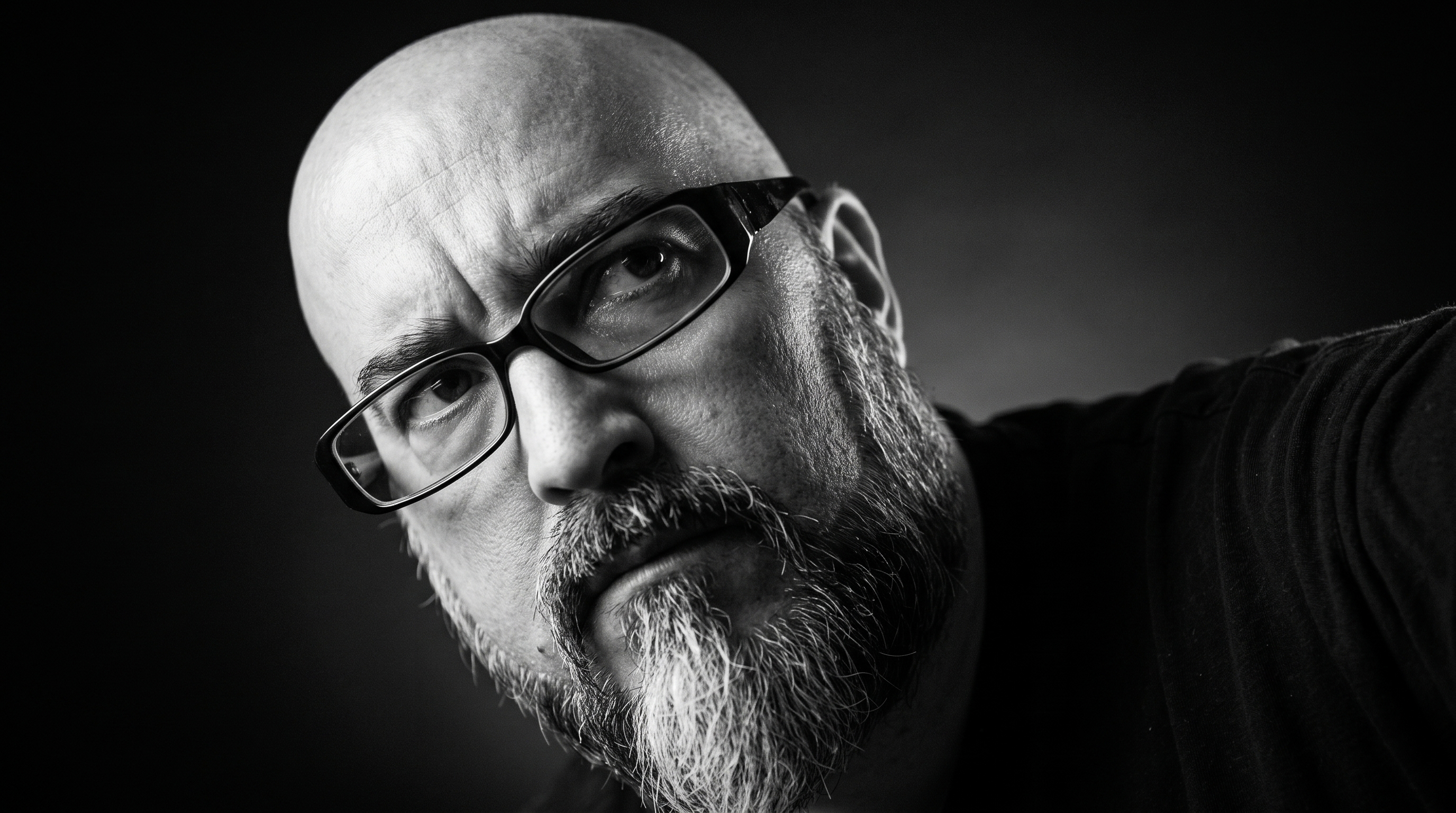
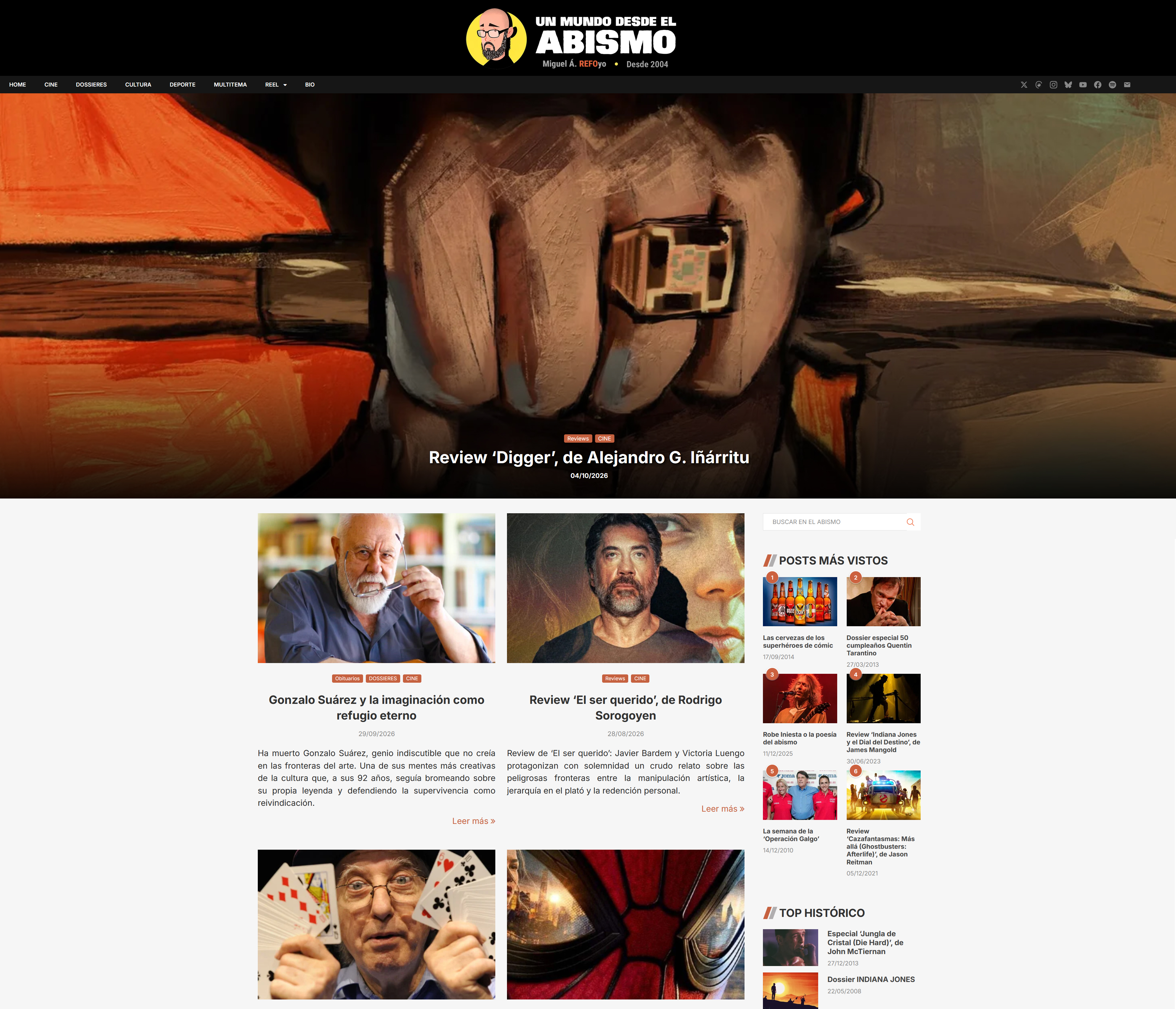
There are blogs on the internet that are not merely web pages, but rather trenches of cultural resistance, temples of uncompromising cinephilia, and beacons for those who understood the web as a territory of creative freedom. In 2004, 'Un mundo desde el abismo' was born, the mythical blog created by Miguel Ángel Refoyo "Refo". For years, that space became an unavoidable reference thanks to its thousands of sharp reviews, memorable obituaries, unique sports columns, and cultural essays that left a mark on an entire generation of readers. After a decade of silence in which the abyss seemed to have gone dark, the news broke: on October 22nd, the blog reopens its doors. It maintains the same incisive gaze, the same narrative pulse, and the same abyss as always, but with a renewed format and unpublished content.
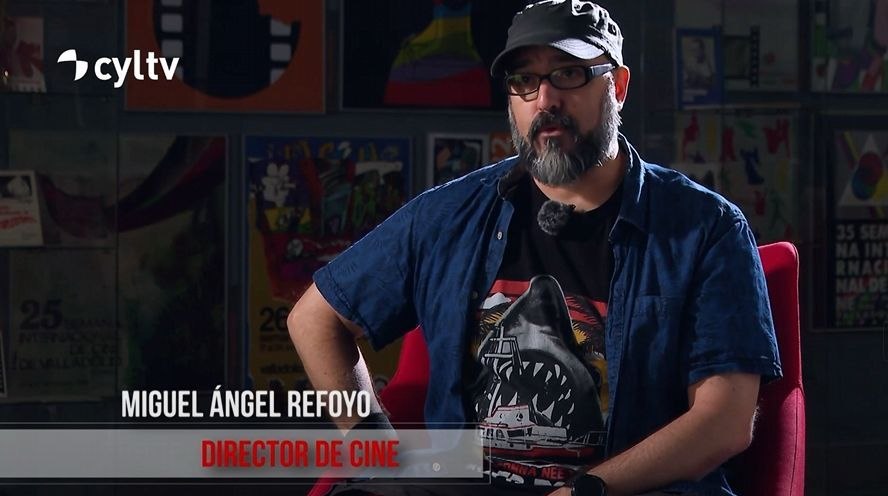
Behind this return is one of the most versatile and unique minds in the independent cultural panorama. A graduate in Information Sciences and a native of Salamanca, Refo's career is a fascinating journey through the borders of creation. He is a journalist, film critic, publicist, radio, television, and comic book scriptwriter, and even an author of horror stories, science fiction, and an unpublished novel.
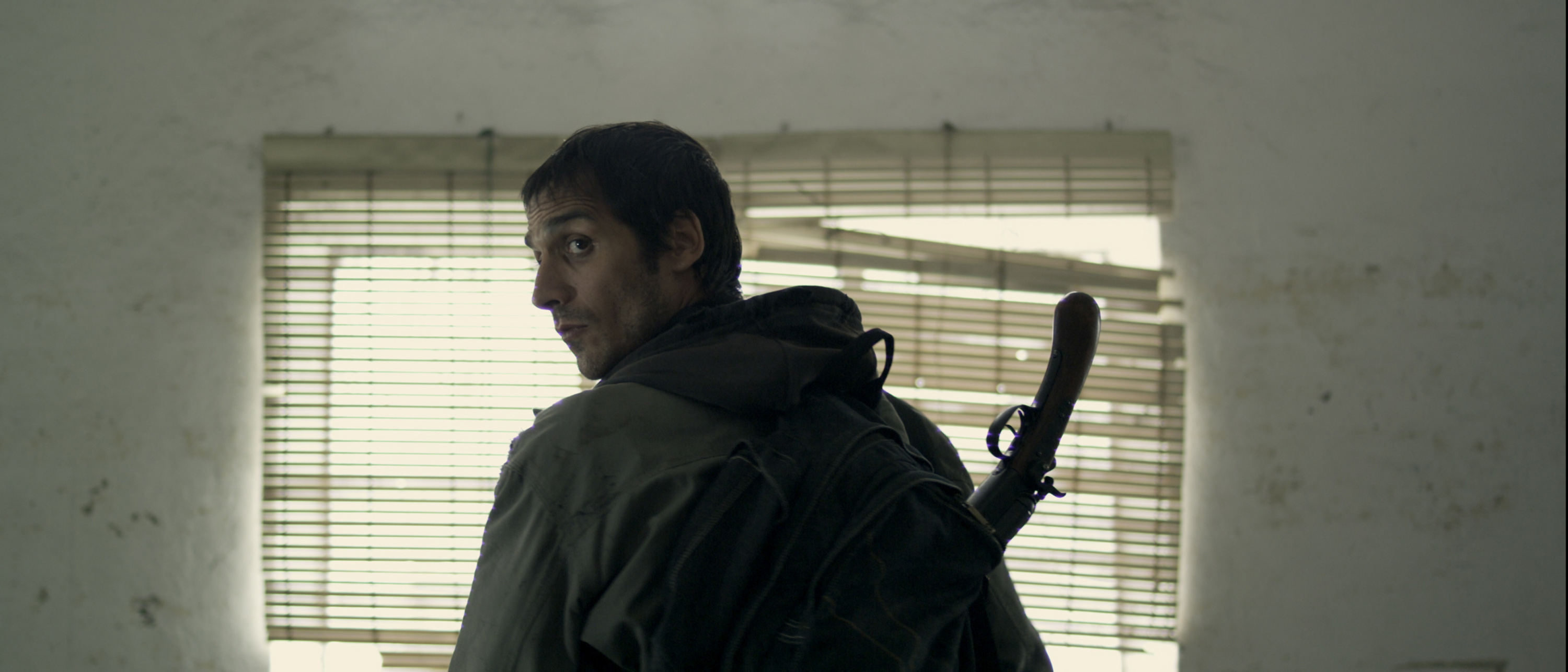
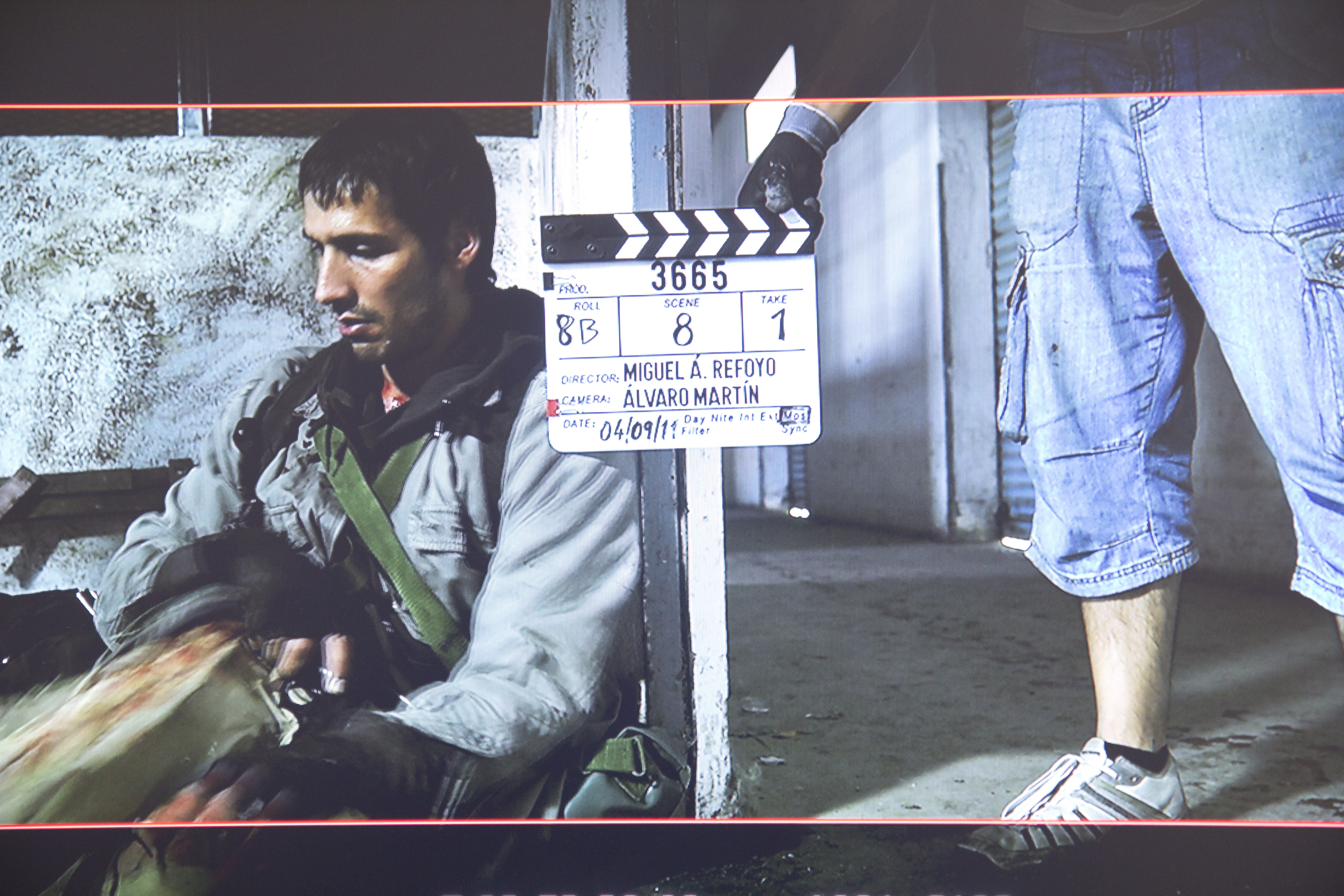
But if his digital pen has left a mark, his gaze behind the camera has crossed borders. As a filmmaker, Refoyo has built a universe of his own ranging from his beginnings in video with 'Abyecto' or 'El Código de las Sombras' to making the leap to the digital format with 'El Límite', an acclaimed short film that toured the most important national and international festivals—taking his cinema from local screenings to Los Angeles or the very Sitges Film Festival. Added to this is another of his major works, '3665' (released in late 2013), a futuristic and post-apocalyptic short film featuring the unforgettable voiceover of Álex Angulo, reflecting on our past from the Eldorados of tomorrow.
Today we chat with him on the occasion of this awaited return to the blogosphere, his inexhaustible passion for telling stories, and how the abyss is envisioned in this new stage.
I. THE FOUNDATIONS OF A CREATOR AND THE CINEMATIC GAZE
Let's start with the foundations. You have a degree in Information Sciences, are a native of Salamanca, and boast an extensive career as a film journalist, publicist, content editor, and scriptwriter for radio, television, and comics, as well as being an author of horror stories, science fiction, and an unpublished novel. How does this multifaceted career influence your way of looking at and telling stories today?
Miguel Ángel Refoyo:
I have always kept in mind that the first thing I did in life was tell stories, even if I didn't even know what I was doing. I had a Madelman in one hand and an Airgam Boy in the other, and between the two of them a universe of ambushes, returns home, and the hero's journey arose. I told what I saw. I had imagination, I don't know. Or I was just a dreamer. I think that was editing, though surely it wasn't. But I amused myself. And I always knew what I wanted to do in this life.
Cinema arrived when I was four or five years old. That is why I find it hard to separate looking from writing. Analyzing a shot, wondering why the director cuts there and not half a second later, why it's a low-angle shot or the camera moves away... All of that ends up filtering into the syntax of any sentence. I drew and wrote very early on and I already knew that, even if things got tough, I wasn't going to do anything else in my life. I went through radio, newspapers, magazines, advertising, scripts, stories, short films. None of those schools gave me a method. In exchange, they gave me craft, which I think is more useful. My discipline, if there is one, consists of adapting to the content. Each project demands its temperature and its way of breathing, and one must place oneself at its service without losing one's own voice. Everything has been useful to me. But if I had to tell you that something is important within the machinery, I would tell you it is reading. The foundation of everything, with the same voracity for a classic as for a newsstand comic book.
What I least expected is to still be happy doing this. I watch a movie, open a book, flip through the pages of a comic book, smell it... and the feeling of the kid with his toys returns: something is about to begin. I wouldn't know how to live away from writing. It is where I think, where I discover what my opinion is while I am having it. And there is much left to tell, more than I manage to give shape to.
In the audiovisual field, you made the leap with video short films like 'Abyecto' or 'El Código de las Sombras', to later consolidate yourself with works in digital format such as 'El Límite', which toured national and international festivals, and the futuristic '3665', which reflected on the past with the unmistakable voice of Álex Angulo. What did cinema mean in your creative evolution, and how do the audiovisual filmmaker and the writer inside you coexist?
Miguel Ángel Refoyo:
I started shooting at university, with the feeling of arriving very late to the medium. I didn't have a camera, I depended on others, and out of that rush came very rowdy short films, made guerrilla-style with a MiniDV and with all of us having a lot of fun. None of them aspired to anything. Beer, friendship, and cinema. What more do you want? But they were my first contact, and I learned on the fly: how a shoot is planned, how a crew moves, who waits for whom, how much an hour of poorly used light costs.
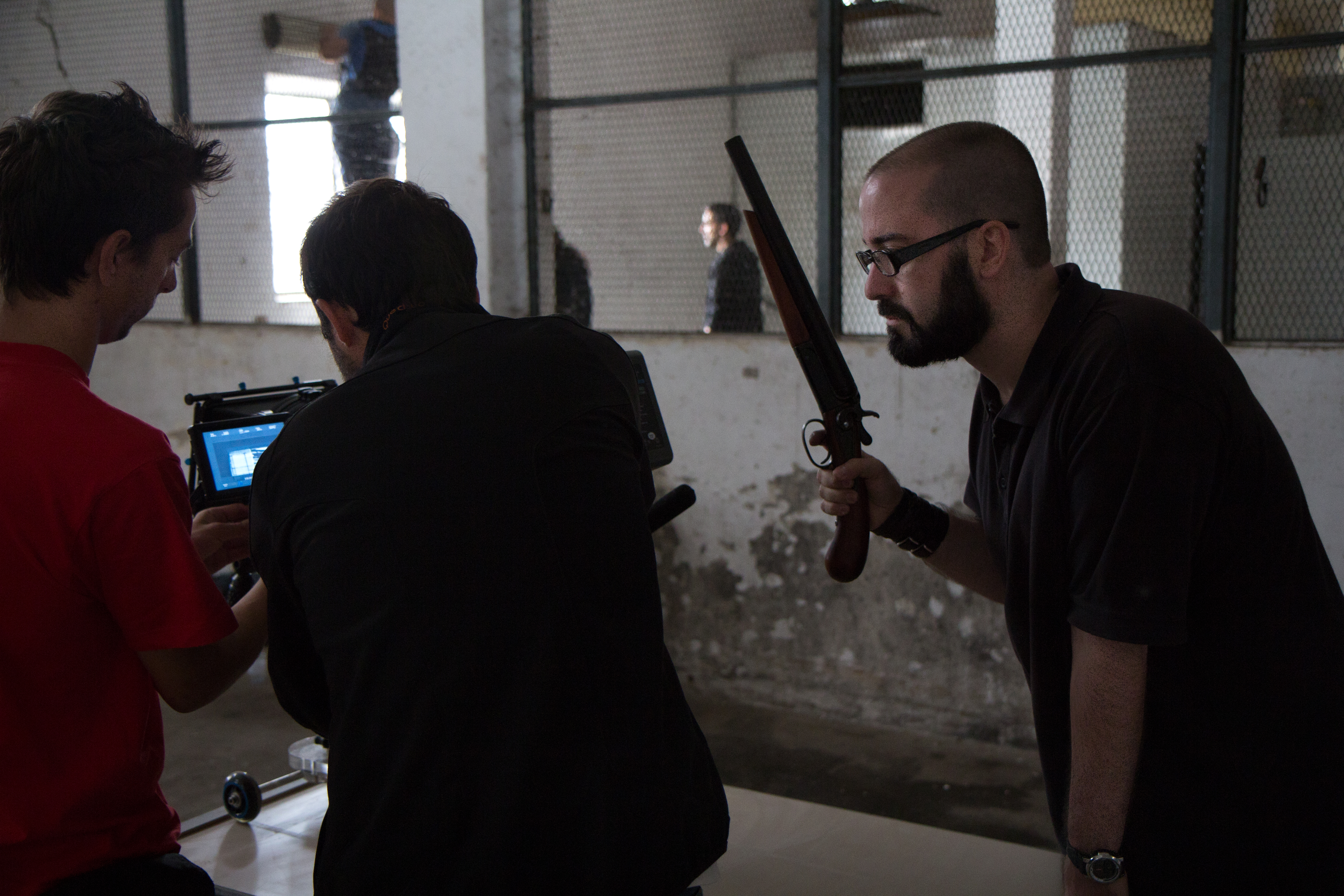
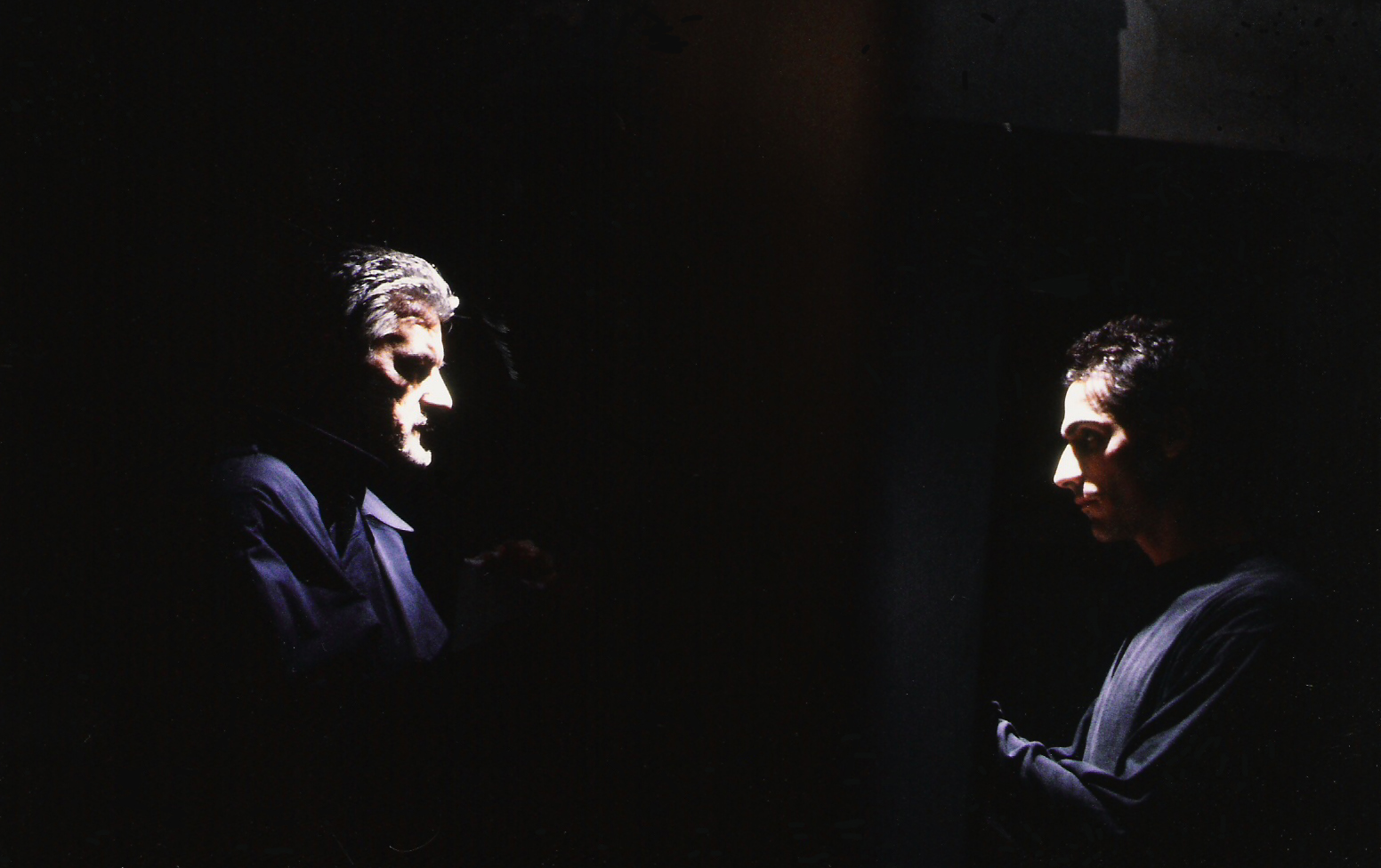
'El Límite' was very different. I had many projects and all of them were expensive. This one wasn't cheap either, but that's where I started doing something more serious and laid the foundations of what I wanted, visually and formally. I am still happy with what we did because it wasn't easy, and because a way of looking at things that I identify with came out of it. And I am very proud of the team I surrounded myself with, from whom I learned a lot, because almost all of them had already done things at a professional level in film. One of the secrets of cinema is that the people around you know more than you do.

With '3665' I repeated the lesson, but more thoroughly. There were better scripts, but they were unviable, and I had to adjust to a story that could be shot. It wasn't as exciting a shoot as the previous one. I took it on differently. So much so, that I planned every section of the shoot, even those that didn't concern me, in a sort of obsessive madness that I don't regret, but it was very exhausting. Even so, with a little more means we would have told the story as it was conceived. I say this without complaining, because I also had an amazing team under my command. Cinema has been demonstrating for over a century that scarcity sharpens wit and what you cannot pay for ends up forcing you to decide. What I do have to thank, and very much so, is the involvement of a lot of people who got into the shoot and post-production because they believed in the story. Without them there would be no film, and no budget replaces that faith.
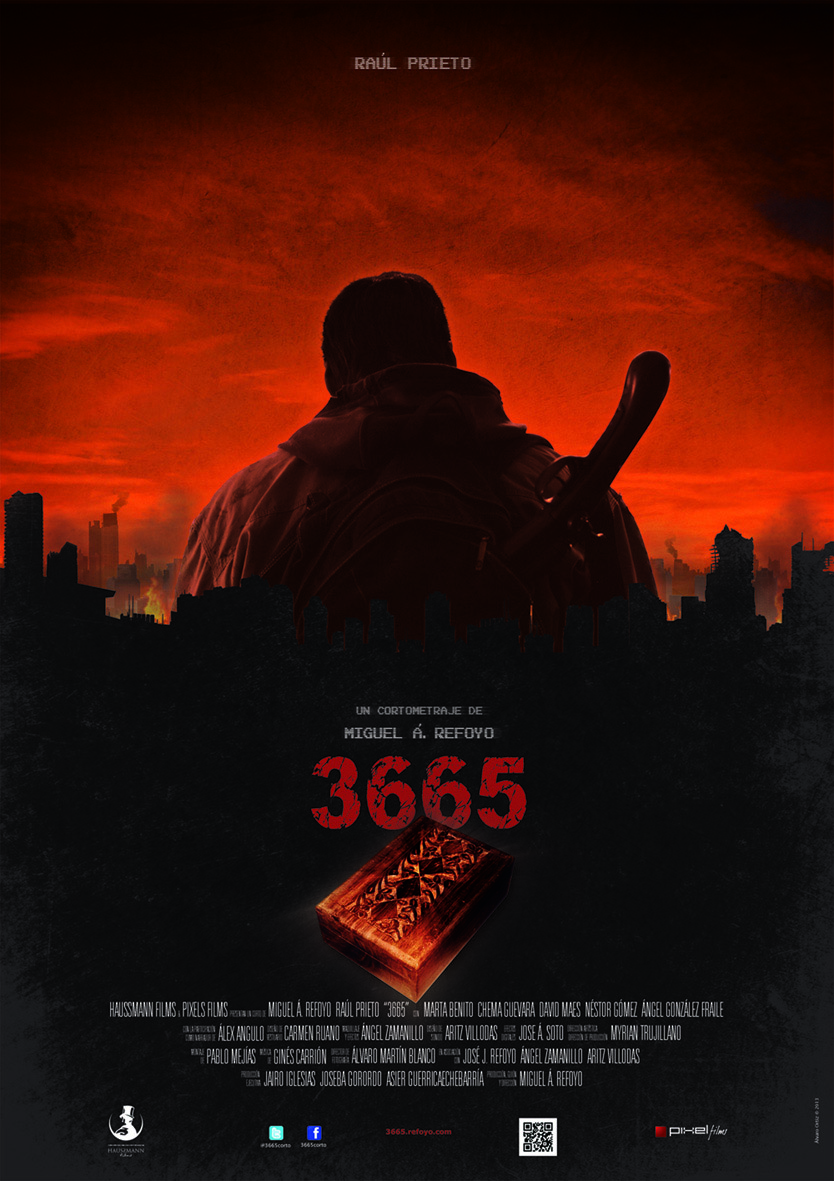
Regarding how the filmmaker and the writer coexist: when I write I don't set limits for myself, and when I shoot the borders are imposed by the medium itself. I learned that if I wanted to shoot again I had to look for a possible story. And, paradoxically, out of that came a futuristic short film, with some special effects and a dystopian society. A fucking madness. But the core remained what I was passionate about telling: memory, what is lost, and who is responsible for recovering it. The writer dreams without restraint and the filmmaker brings it down to earth. They fight, and I think out of that struggle between my screenwriter self and my director self the best comes out. I don't know if that clash of egos will happen again. I doubt it, but I don't close the door to it happening.
II. THE MYTH OF THE BLOGOSPHERE AND THE SILENCE OF THE ABYSS
In 2004, an authentic myth of the net was born: the blog 'Un mundo desde el abismo'. For years it was a reference thanks to its thousands of reviews, obituaries, sports chronicles, and cultural essays. What memories do you keep of that golden age of the blogosphere and what did that space mean to you and your readers?
Miguel Ángel Refoyo:
It all started reading another blog. It was called 'Nopodemosmás', and it was written by the great Rafa Gil, a prestigious publicist and friend of the Alvariño brothers, who were mutual friends. I looked at it with curiosity and envy. It was an open door to being able to write and having people read it. I told myself: why not. I had a lot of written material from newspapers, magazines, and loose collaborations, a drawer full of texts, and I felt like doing things. I knew nothing about blogs. I jumped in expecting very little, but with enthusiasm. In a few weeks I saw that there were people on the other side, that they came back, that they commented, that they waited for the next text. For a time, I was addicted to writing in the literal sense. I would open the computer in the morning, waiting for the internet hours when I could access the net, thinking about what post I would upload that night. Whatever my body asked for. That space had no character limit, and I was not used to so much freedom.
There is an image that sums up the era well. I lived, went back and forth from Madrid. Once in Callao, among the crowds of Gran Vía, someone greeted me and recognized me. It was the guy who followed the Abyss. One writes alone, in a room in Salamanca or in Madrid, without quite knowing who the words reach, and suddenly someone stops you in the middle of the street to tell you they read you. It was cool. I ended up having beers with him. But the goal was never applause. It was enjoying writing, with a content of effort and work that has little to do with today's content creators. The urgency to produce came so that something would get read. That was written slowly, with the head set on the text and not on the metrics or the algorithm, which I didn't even know what it was. That is why its return is what it is: the attempt by an old-school traveler to create things his own damn way without expecting much in return.
However, the abyss remained silent for a full decade. What caused this long hiatus? How did the decision to reignite the fuse come about, and why is October 22nd the chosen date for this return?
Miguel Ángel Refoyo:
It wasn't a hiatus, it was an entire life passing over me. I had a son, which is the best thing that has happened to me and what has changed my way of being in the world the most. Then came a period of low spirits, Covid which threw all of us off balance, and more things. It wasn't easy. I was a father and my wife sacrificed herself for the family's well-being. She gave up a lot. I paid my share. That's the good and bad of a relationship of more than two decades. There were disappointments, there was frustration, and there were months when writing seemed like a luxury belonging to someone else who was no longer me. But I'll stick with one thing: I watched my son grow every day. I was there. No darkness can take that away from me.
Whenever I have fallen, I have gotten back up. I have written it many times. And this time was no different, only slower. I pulled myself together and left the darkness. I moved house and what I had saved for a new, much more expensive short film I spent on creating a context where I would be happy writing. And damn if I achieved it. Now I have a proper place, a desk, a computer with four screens, a light, some bookshelves, an armchair, and a screen to watch movies. I think, in the end, it wasn't about making movies. That's why the fuse is being lit now and not before. I didn't want to return out of inertia or nostalgia; I wanted to return when there was something to tell and someone in a condition to tell it. And that time is now.
III. THE RETURN AND CULTURAL RESISTANCE
The official preview of the return has already advanced clues about what awaits us. What will the loyal public who had been waiting for ten years find, and what new features or surprises does this new stage bring in terms of format and content?
Miguel Ángel Refoyo:
Nothing different and everything at once. It's the best way I have to sum it up. Nothing different because the spirit is the same. I'm twenty-something years older, of course. An old fart. A 'boomer', or whatever the fuck it's called. And that shows in the pulse, but the one writing is still the one who opened that blog with a folder full of texts. Everything at once because in these ten years I haven't stopped writing. What the loyal reader will find is the legacy of the fourteen years until closure, intact and at their disposal, and also a lot of unpublished material: essays, long-form texts, and reviews that I wrote without knowing if they would ever see the light of day. From 2016 until today. The format is the usual one. The Abyss will have plenty of cinema and writing for an audience that wants to read. Networks, immediate feedback, shorts, the visual, podcasts, all of that gives me the shits. And I don't say this with contempt, I say it with the frankness of someone who knows his trade. The Abyss is texts. It always was. Whoever comes looking for a ten-minute video or a hot take is in the wrong place.
Nor am I worried about reach. I'm not returning to measure anything or chase anyone. Initially, I don't want to monetize or be famous. I have nothing to prove to myself or to others. I am returning to write like before, thoughtfully, with rigor, with the pleasure of giving shape to an idea until the text is published. If on the other side there are three, a hundred people, or a thousand, that will be the figure that satisfies me. There will be surprises, but they will be in content and not packaging. That is, perhaps, the biggest novelty in a world that has become so noisy. Screw content creators. I am not there. I am a writer with a career and studies versed in letters, not a celebrated fairground monkey living in Andorra making a lot of dough or freezing garbage while spewing toxic bile.
You maintain the same gaze and the same narrative pulse as always, but the digital and cultural landscape has changed radically since 2004. How do you see the current state of cultural criticism and the internet in the era of social media? Is there space today for trench blogs like yours?
Miguel Ángel Refoyo:
I think there is space. The product changes, not the one who looks at it, writes it, and judges it. Despite platforms being the worst thing that has happened to audiovisual media, no matter how much they promised unlimited alternatives, the craft of standing in front of a work and wondering what is there remains exactly the same. What has changed is that criticism has turned into a system of little stars and similar nonsense. There are hardly any in-depth reflections or essays anymore. They are ephemeral verdicts written so that even someone who can't tell their ass from a hole in the ground can understand them. Is it accessible? Cool. Not? You're a bore. It was already like that when I started. It's not a blog for people incapable of holding attention or who cannot breathe without scrolling for more than a minute. Five stars, three stars, thumbs up! Come on! That's not writing about film.
The brief and the meme dictate trends, decide what matters for three days, and disappear. It is a self-destructive culture. 'Un mundo desde el abismo' is the opposite. A dense blog. It is once again an environment that demands something of you as a reader. And if it takes too much effort, that's fine. There are millions of sites made to measure for you.
IV. PASSIONS, GHOSTS, AND REFUGES
You have a vast cultural curriculum—journalism, film, radio, advertising, comics...—, but on a personal level, when you turn off the screens and put aside the scripts, what hobbies or unconfessed little vices steal your free time?
Miguel Ángel Refoyo:
Reading. Always and hopelessly. It is a devouring hobby, and the best of my luck is that my work includes it. Being able to dedicate yourself to what you do in your free time is the most beautiful thing in the world, with a catch: the border between work and leisure is erased, and one ends up not knowing whether one is resting or producing. But I'm not complaining. Not even for what I'm paid, which is very little. I cannot conceive of a day without writing or without watching a movie, and the days when either of the two fails I find myself disoriented. I also live with music playing. Jazz, soundtracks, rock, whatever. I am eclectic by nature: the same way a Coltrane record can accompany me while I write, a John Williams soundtrack can accompany me while I cook, which is another thing I'm quite good at.
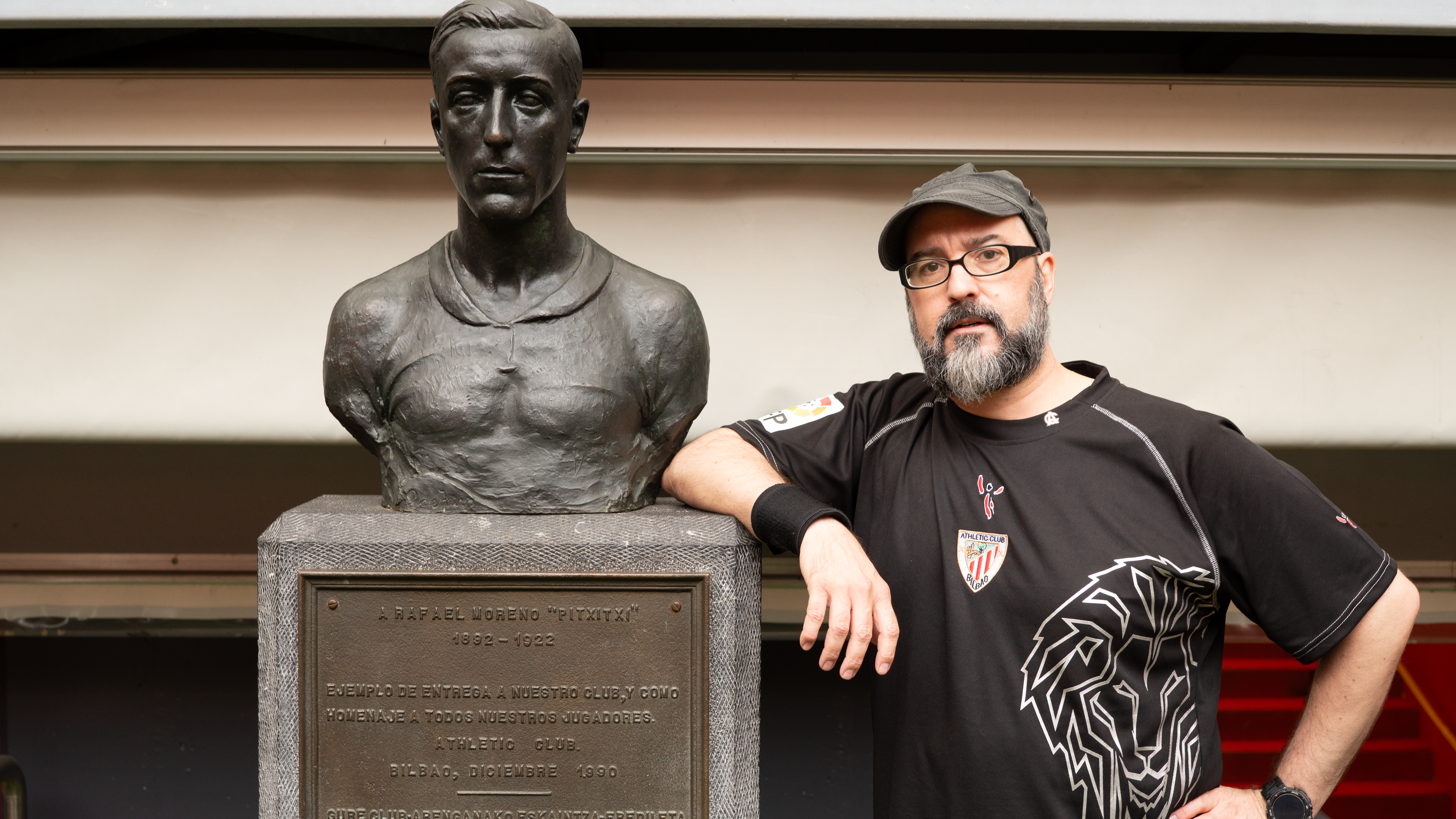
Then there is sports, and there I am truly passionate. Football, only Athletic Club, nothing else. The rest of the teams give me an overwhelming laziness. If I have to choose; basketball, of all kinds and at any hour. And if La Penya is playing, there I am. I am also an NFL fanatic, with my Patriots at the head, no matter what they do. I watch the NHL, and my team is the Philadelphia Flyers. Actually, I watch everything.
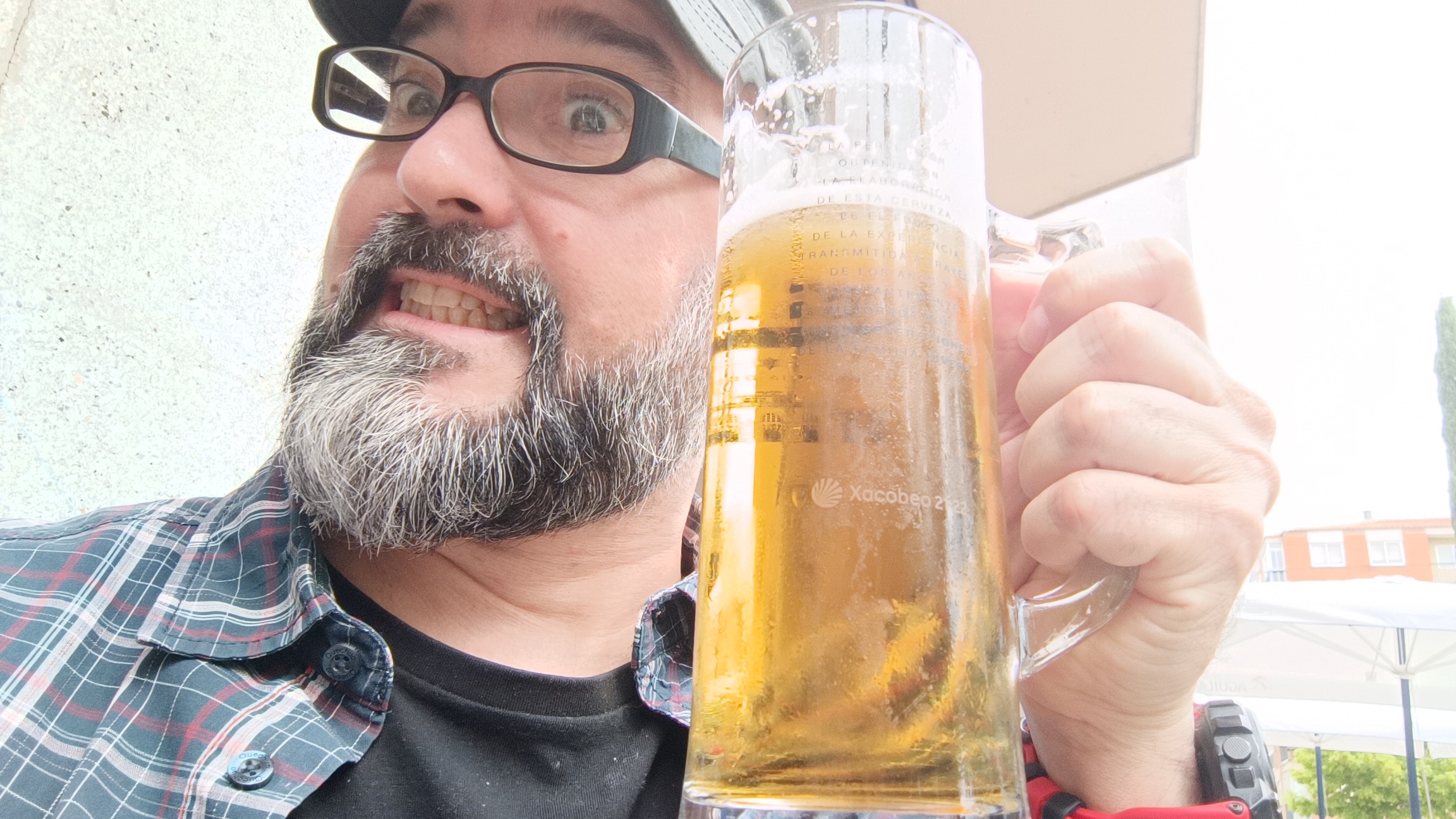
Among my vices, a confessable and well-known one is beer.
But the best ritual of the week comes on Thursdays, with a pickup basketball game alongside a group of guys with whom there is great chemistry on and off the court. Years pass, knees protest, shots don't go in like before, and still no one misses. If there is a place where I don't write, don't watch, and don't think about anything, it is that court with these fellows.
You are from Salamanca and have experienced the city's nightlife and culture up close, but that special rootedness is also noticeable in your videos (even with football winks and devotions like Athletic Club). Where does that faithful and passionate streak for your teams and your things come from?
Miguel Ángel Refoyo:
I am from Athletic Club by inheritance, but not on my father's side, who is from Betis. It reached me from a very young age from various fronts; through my maternal grandfather, through some uncles, through some cousins... in my family there are a lot of athleticzales. I grew up surrounded by zurigorri shirts, Sundays with the radio on, those Basque leagues and King's Cups. Supporting Athletic Club has never been just a matter of football. It is identity, a sense of belonging, a philosophy that goes ahead of the result. It is in the blood, even if it sounds like a cliché, and clichés tend to be true when lived from the inside. Besides, those of us from Bilbao are born wherever we want.
With everything else, the same thing happens. I have a great sense of loyalty. My group of best friends are those I studied with since preschool. And our reunions are with our EGB (elementary school) classmates, not those from high school or university. If I follow someone or something, it is forever: a team, a film director, a record, a beer, a place to sit. I don't like changes. Some people confuse loyalty with a lack of curiosity, and they are not the same thing. Curiosity is discovering new things, and loyalty is knowing what deserves to be loyal to. I do both. And if everything is fine as it is, why change. That's why The Abyss returns just like before.
Salamanca and its nightlife are important parts. During my university days, it was my habitat; lots of partying, hangovers, excesses, stairs, and early mornings that lasted until dawn. What I had to do, I did, and I stretched that dipsomanic nonsense quite enough. I had a child, and past a certain threshold of age, everything changes. I prefer quiet things. I don't regret anything, but I don't miss it either: I've already drunk those nights away entirely.
Considering that you have written a lot of horror and science fiction, and that your blog is named none other than 'Un mundo desde el abismo', are you one of those who enjoys being scared by dark stories in real life, or deep down are you a calm, armchair cinephile who runs away from scares?
Miguel Ángel Refoyo:
I've always been crazy about horror literature and cinema since I was little. It's not a late discovery, but a hobby with deep roots. The name of the blog, by the way, comes from an aphorism in Nietzsche's Beyond Good and Evil, the one that says that when you gaze long into an abyss, the abyss also gazes into you. It might have to do with my taste for the gloomy, but in this case, the title is bigger than its explanation. What attracts me to fear is, above all, the physical sensation. The adrenaline of staying motionless in an armchair waiting for what you know is going to arrive. And beneath the adrenaline, atavistic terrors: darkness, what moves at the end of a hallway, what cannot be seen. Now politicians scare me, a certain type of them. As Terele Pávez says in The Witches of Zugarramurdi: "Witches don't scare me... what scares me are sons of bitches."
As a child I spent time reading the classics, Lovecraft, Poe, Stephen King, Dean Koontz, Richard Matheson... and watching Hammer films and Universal classics broadcast on TV to the horror of the era, which were the eighties, with gore and all kinds of genre films. It was a sentimental education based on shadows, spurts of blood, and a lot of art and craftsmanship. It's cinema that I like and still like. What I end up not understanding is the fad of elevated horror and all that. It sounds like a gimmick to convince those who are ashamed to go see a scary movie. Horror when it is good is good, and when it is bad, a label doesn't fix it either.
To finish, and looking squarely at October 22nd: if you had to define in a single sentence what this reunion with 'Un mundo desde el abismo' means both for you on a personal level and for those who never stopped looking into the depths, what would it be?
Miguel Ángel Refoyo:
It is returning home after crossing the desert, my particular return to Ithaca, only here a kingdom does not await me but a keyboard, a cold beer, and recovered desires to write; and for those who never stopped looking into the depths, the proof that everything is still there.
«It is returning home after crossing the desert, my particular return to Ithaca, only here a kingdom does not await me but a keyboard, a cold beer, and recovered desires to write; and for those who never stopped looking into the depths, the proof that everything is still there.»
Conversación Registrada en Claqueta Ácida
Este expediente fue transcrito sin censura ni concesiones promocionales. Prohibida su dilución en lugares comunes.

