
Introduction
👈 This is the continuation of the collaborative special on solar horror. If you haven’t read Part 1 with the Introduction, The Wicker Man and the opening of Who Can Kill a Child?, read it first on Frikarium ➔ (https://frikarium.com/especial-terror-solar-la-pesadilla-a-plena-luz-del-dia-parte-1/)
Milestone 2 — 1976: Who Can Kill a Child? — Part Two (By: Frikarium)
And when the film reaches moments as savage as the unforgettable human‑piñata scene, horror no longer springs from violence itself, but from watching how children experience it with the same naturalness they would any other game.

The tension does not arise from the jump‑scare, but from the waiting. The protagonists wander a near‑deserted island while silence weighs heavier than any soundtrack. Every closing window, every empty alley, every child’s laugh seems to herald a tragedy that the film takes its time to reveal. It is a patient fear, one that never rushes because it knows that, sooner or later, it will catch anyone who dares to keep moving forward.
But the film’s true triumph is not in the children’s unsettling smiles; it is in the moral dilemma it poses. The title ceases to be a question for the characters and turns to address the viewer directly. Chicho forces us to confront a conflict for which there is no comfortable answer, leaving the audience trapped between morality and the instinct to survive. Perhaps that is why, almost fifty years later, Who Can Kill a Child? remains one of the most brutal demonstrations that fear does not need to hide in darkness.

Milestone 3 — 2019: Midsommar (By: Claqueta Ácida)
Leaping forward in time and geography, Ari Aster takes the baton of seventies folk horror and runs it through a centrifuge of psychedelia, wildflowers and unresolved couple trauma deep in Sweden. If in the ’70s the sun was an exacting god to be appeased with harvests and blood, in Midsommar the celestial body is recycled into an insomniac psychological torturer.
By wiping night out in one swift motion with the midnight sun, Ari Aster strips his characters of any biological clock and, consequently, any hint of sanity. The cinematography, scorched by brazen over‑exposure that almost forces you to watch the screen through sunglasses, saturates the whites of the robes and the grotesque colors of the floral crowns. The terror of this community does not ambush you in a dark alley: it is choral, empathetic and overwhelmingly public. Here we weep together, scream at the top of our lungs together, and tear strangers apart together, all under a sky so antiseptic‑blue it borders on clinical.
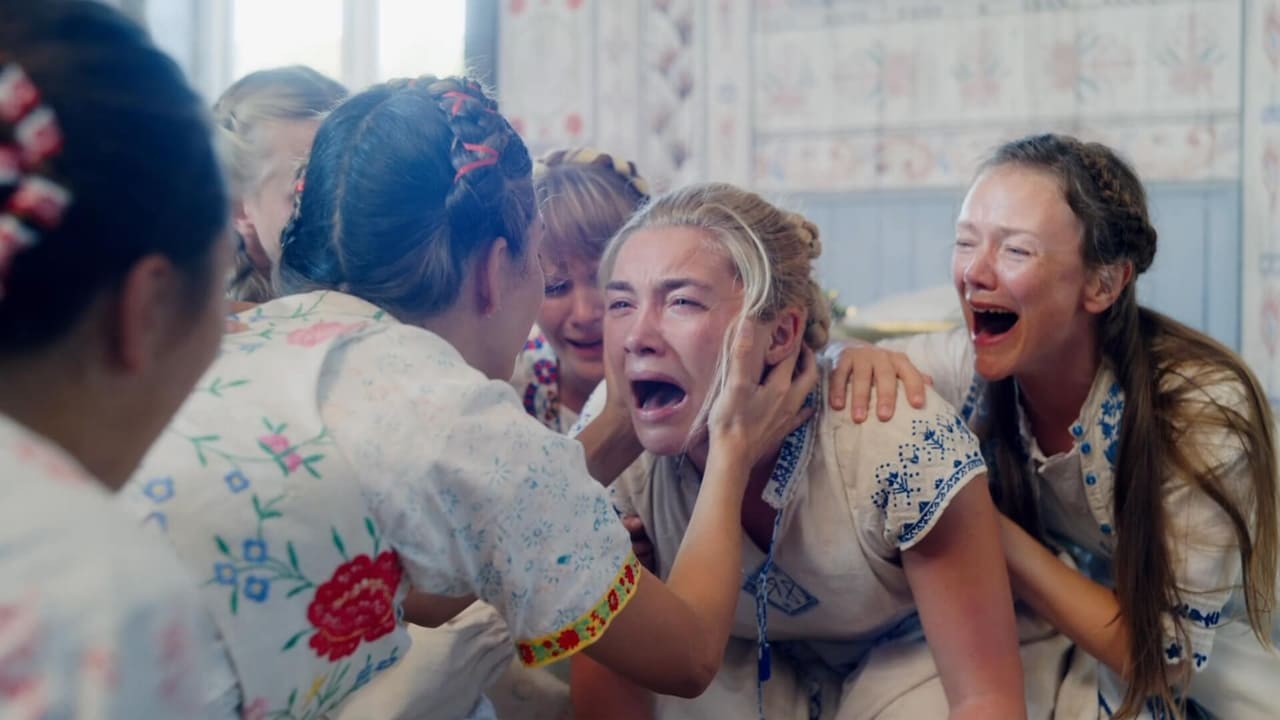
In Midsommar, light is not a refuge: it is an unrelenting magnifying glass on human decay. There is no dark corner to hide an unbearable duel, nor the arrogant stupidity of a group of university tourists thinking they’re clever about life. The blinding Swedish summer light strips away the embarrassments of modern empathy and turns familial tragedy into the worst possible nightmare: a collective catharsis in broad daylight that you cannot look away from.
Because the truly perverse climax is not seeing a fool sewn into a bear’s skin while the temple burns at 40 °C. The horrific moment is the survivor’s final smile. Ari Aster uses that maddening over‑exposure to stage perfect sectarian manipulation: under the sleepless sun of Swedish communes there is no healing or mental peace, only brain‑washing packaged as a communal hug. The midnight sun destroys individuality until horror stops frightening you and instead appears as a viable form of self‑care.

Conclusion
Across this journey, the sun has acted as a mute witness, accomplice to barbarity and inevitable executioner. What began as a theological cult of the agricultural cycle and the earth in The Wicker Man escalated to pure moral tearing in the Mediterranean siesta of Who Can Kill a Child?, only to mutate into sectarian and emotional brain‑washing under the sleepless sky of Midsommar.
Three eras and three visions demonstrate that a nightmare is far more effective when it occurs in broad daylight. Solar horror does not consist in changing the window frame; it lies in stripping humanity of its last certainties. In the end, when the screen goes dark, the lesson is clear: don’t fear the midnight darkness; fear noon, because that is where madness needs no disguise to destroy you.
These three films did not invent daylight terror, but they changed how cinema understands light as a narrative tool. They proved that atmosphere does not depend on darkness and that a luminous landscape can be as oppressive as night. That modest revolution continues to illuminate—never better said—much of contemporary horror cinema. After them, dawn ceased to be a promise of salvation and became another possibility for nightmare.

This article was written by four hands between Claqueta Ácida and Frikarium.
- Keep reading more critiques, unfiltered reviews and film specials at claquetaacida.com.
- Discover more analysis pieces, pop‑culture essays and cult recommendations at frikarium.com.
💀