Dead Residents Evil — The Trap of Hope and The Asylum's Cynicism
An intellectual autopsy of Dead Residents Evil, where Ryan Ebert and The Asylum wield the promise of a cure as the ultimate mechanism of infection.
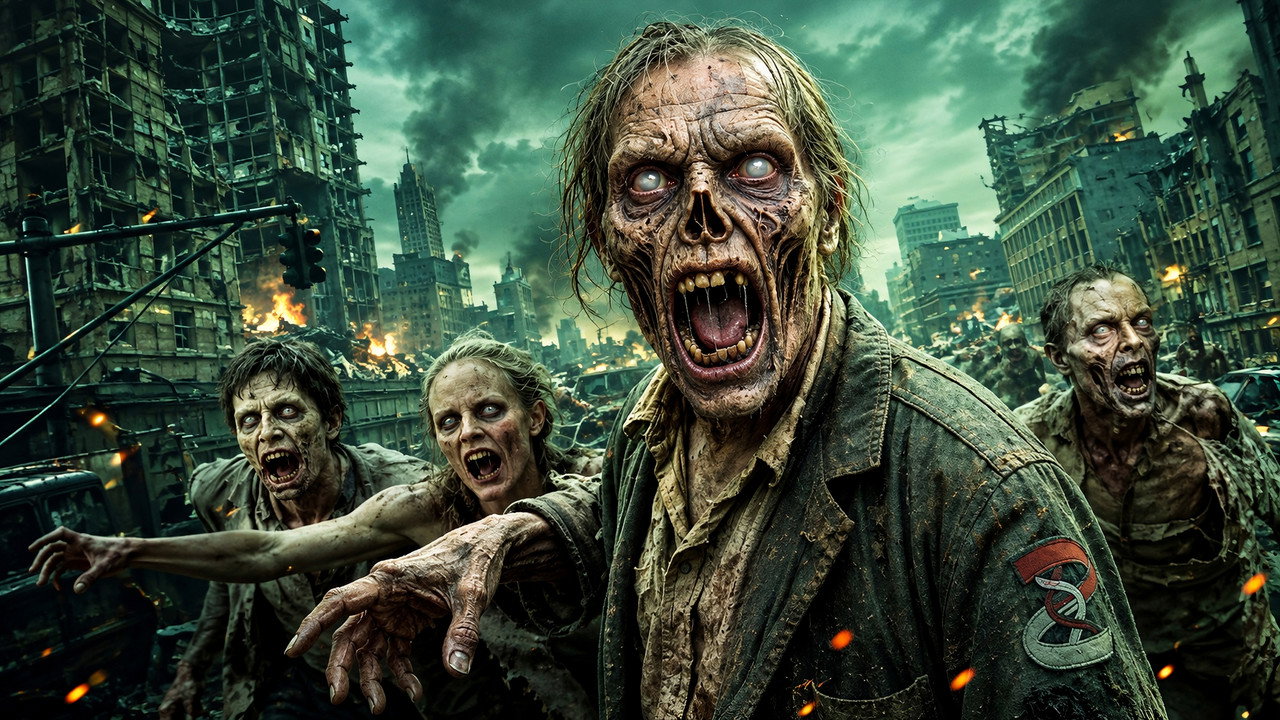
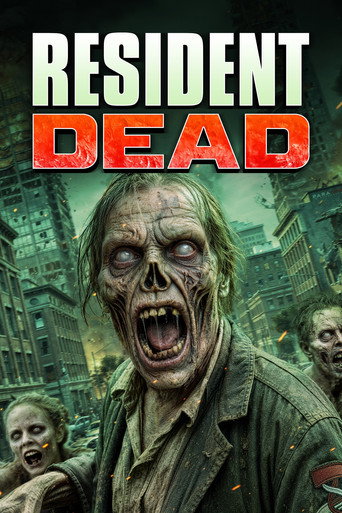
Dead Residents Evil: full review
Contemporary genre cinema insists on selling us the apocalypse as a mere athletic housekeeping problem, an obstacle course where the individual runs faster than decomposition. We have been educated in the faith of the stopwatch, in the almost childlike conviction that crossing the threshold of a laboratory with a smoking vial equals moral and biological absolution. However, when a director like Ryan Ebert takes the helm under The Asylum’s banner in Dead Residents Evil, the classic structure of belated salvation undergoes a fascinating mutation. The film does not seek the tension of the journey, but the systematic betrayal of that very promise. True horror never resides in the shapeless mass of the undead that populate the margins of the frame, but in the agonizing revelation that the coveted cure operates as the final and definitive mechanism of the infection itself. It is an inversion of values that, in less daring hands, would have resulted in a hollow plot twist, but here feels like an open wound in the narrative fabric.
Contemplating this trek without succumbing to automatic contempt requires abandoning the plebeian skepticism that usually accompanies trench‑industrial productions. Ebert understands that the contemporary viewer has memorized every nook of the zombie‑survival saga, so he decides to use that very predictability as narrative bait. While John Wells embodies a father whose determination to save his daughter Isabel Ramirez becomes the fatal engine of the plot, the mise‑en‑scene builds a climate of conceptual suffocation. We are not witnessing a parade of gratuitous, complacent gore, but a methodical dissection of false hope. The real danger lurks precisely where institutional logic promised salvation, turning the scientific refuge into the antechamber of an unsolvable logical trap. It is a veiled critique of blind faith in technical progress, wrapped in the dirty, cheap aesthetic that characterizes its producer.

The Architecture of Deception and Actor Direction
The pulse Ryan Ebert impresses onto his direction evades the hyperventilated tics of modern disaster cinema to embrace an almost theatrical dryness. The dramatic progression rests on the shoulders of a cast that, far from limiting themselves to shouting in front of a green screen, endow their roles with a visceral and contained urgency. John Wells’s work as the father willing to sacrifice the unspeakable distills a subtle desperation, devoid of the melodramatic excesses that would ruin the pact with the audience. His face, marked by fatigue and doubt, becomes the mirror where viewers project their own impotence before the inevitability of disaster. Beside him, the young Isabel Ramirez navigates physical vulnerability with a conviction that dismantles any temptation for easy irony from the most cynical crowd. She is not an action heroine; she is a hostage of biology, and that forced passivity grants her a dramatic weight many neoprene‑suit action protagonists will never achieve. Their chemistry is not explosive, but toxic, like the substance coursing through their veins.
The Formal Rigor and the Score of Collapse
In strictly technical terms, Myles Channing Thompson’s cinematography understands that shadow is not a resource to hide budgetary seams, but a tool of psychological subtraction. Closed spaces compress around the characters, suffocating every glimpse of geographic optimism. Light, when it appears, is hard, clinical, almost offensive in its sterile whiteness, contrasting with deep shadows that suggest what cannot be seen. Accompanying this visual claustrophobia, Christopher Cano’s soundtrack shuns redundant symphonic bombast and opts for minimalist electronic textures. The music acts as a constant, clinical drip that underscores the futility of effort, marking the beats of a countdown already born dead from the first frame. There are no heroic themes, only low‑frequency hums that settle in the viewer’s skull like a persistent migraine, reminding us that tension does not come from what happens, but from what cannot happen. Production design, limited by budget, exploits the genuine grime of the sets to create a verisimilitude that polished CGI often lacks.
The best
- Thematic subversion: Narrative bravery in turning the vaccine into the ultimate trap instead of the classic happy ending, breaking the emotional contract with the audience.
- Central performance: The sustained dramatic pulse delivered by John Wells and Isabel Ramirez, which lifts the material above its industrial status and gives it soul.
- Oppressive atmosphere: Myles Channing Thompson’s ability to turn cramped spaces into authentic existential cells with no way out.
The worst
- Budgetary potholes: Certain obvious limitations in the scale of the undead crowds that strip three‑dimensionality from the apocalyptic context and break immersion.
- Rigidity of some supporting roles: Moments where Ryan Ebert’s script falls back on B‑movie clichés, with expository dialogue that sounds like a user manual.
The Verdict of Claqueta Ácida
Dead Residents Evil executes with dazzling lucidity the art of argumentative demolition. Far from settling for lazy recycling of genre tropes, Ebert and his team weave a cruel fable about the futility of faith in scientific institutions and prefabricated endings. It is not an untouchable masterpiece, but it possesses the brutal honesty of staring into the abyss and reminding us that the cure has always been the best‑administered disease. A small cynical anomaly that deserves rescue from digital oblivion for those who seek more than blood and screams. 💀
🎬 Tráiler Oficial
Abrir en YouTube
Dead Residents Evil: frequently asked questions
- What is the rating of "Dead Residents Evil" on Claqueta Ácida?
- "Dead Residents Evil" scored 6.2/10 on Claqueta Ácida in the review by Odin Lagbert.
- Is "Dead Residents Evil" worth watching?
- With reservations. We gave it 6.2/10 (Citric Acid), our rating for uneven films with something worth saving.
- Who directed "Dead Residents Evil"?
- "Dead Residents Evil" was directed by Ryan Ebert.
Theater Collateral Damage Report
Psychophysical impact certificate issued by Odin Lagbert
El tedio se disfraza de urgencia constante, obligando al espectador a cuestionar cada giro del trayecto.
Provoca esa sutil urgencia de consultar el cronómetro para comprobar si la cura llega antes del apagón mental.
Un espresso doble servido con la frialdad de un diagnóstico clínico irreversible.
"El instante en que el laboratorio de destino revela su verdadera naturaleza burocrática y letal."

The rebuttal from Dante Sangre (Blockbuster Scalpel)
In stark disagreement with the review given by Odin Lagbert.
“Basura industrial, estafa de zombis. I see la cámara temblorosa. El montaje es un corte sin ritmo. Los efectos son plástico barato. La iluminación parece un sótano. El guion es un engendro sin lógica. Los personajes mueren sin causa. No hay tensión, solo ruido. La música grita como sirena rota. Ryan intenta una vuelta, falla. El concepto de cura suena a lobotomía narrativa. La trama se vende como revolución, pero es lavado de cara. El resultado: cadáver corporativo de la industria. Yo no compro la pretensión. Lo único salvable es la ironía involuntaria. La película es una estafa de presupuesto. No merece ni un punto. El marketing promete gore épico. Lo que entrega es sombra y susurros. En resumen, un agujero negro de creatividad.
💬 Community Verdict
What did you think of the film? Rate it from 0 to 10 to compare it with the editorial review.
You haven't voted yet
📢 ¿Te ha gustado el ácido?
Comparte esta crítica con tus amigos cinéfilos o desata la polémica en redes.
⚡ THE CINEMATIC VENOM YOUR INBOX CRAVES
No sugarcoated ratings, no corporate fluff. Subscribe for our uncensored weekly analysis or join the private Telegram for press previews, poll clashes, and instant alerts.
Alertas de estrenos en 1 segundo, encuestas en caliente y audios al salir de pases de prensa.
Recibe la dosis semanal en tu mail + regalo inmediato del PDF con 50 joyas ocultas de culto.
Related Reviews
Recommended autopsies for demanding film buffs.
 ⚠️ Ácido Sulfúrico 3.2
 On the Run: A Senseless Sprint
⚡ Afinidad temática directa en atmósfera, estilo y fijaciones visuales.
A marathon of clichés and marketing sweat that leaves the audience feeling like they've run in circles. 💀
 ⚡ Ácido Cítrico 6.8
 Azrael: Samara Weaving and the Hell of Silence
⚡ Afinidad temática directa en atmósfera, estilo y fijaciones visuales.
E.L. Katz and Simon Barrett deliver a brutal, relentless mute survival horror film where Samara Weaving once again proves why she is the modern scream queen.
 ⚡ Ácido Cítrico 6.9
 Beetlejuice Beetlejuice: Tim Burton Shits the Bed Again—With Style
⚡ Afinidad temática directa en atmósfera, estilo y fijaciones visuales.
Tim Burton resurrects his most iconic creature, but the script is a Frankenstein’s monster of stale jokes and half-digested nostalgia. Keaton still rules, but this reeks of easy money.
Editorial Ecosystem
Cinephile connections, archive interviews and related analyses.
💬 Debate Cinéfilo & Autopsia de Lectores
0 veredictos¿Discrepas con nuestra nota? ¿Es una obra maestra o veneno puro? Deja tu veredicto abajo sin necesidad de registro.


Aún nadie ha dejado su veredicto para esta película.
Sé el primero en clavarle el colmillo rellenando el formulario de arriba.