


France has sold us the image of a country of bistros, existentialism, and gentlemen smoking in black and white while debating the absence of God for decades. Lies. Or half-truths.
Because while the official critics were masturbating over the Nouvelle Vague, someone in a basement of the République was sharpening a scalpel. And when they finally pulled it out, early in this century, the rest of the world discovered that the French don't just know how to philosophize about death: they also know how to film it with a cruelty that would make a butcher from Burgos vomit.
Welcome to French horror. Bring a bag.
The Grandfathers: a magician, a surgeon, and a gentleman obsessed with vampires in nightgowns
It’s worth remembering before some smartass on Twitter tells you that Hollywood invented horror: the first horror film in history is usually attributed to a Frenchman. Georges Méliès shot Le Manoir du diable in 1896, three minutes of bats, the devil, and editing tricks. Naive, yes. But the lineage starts there, not in Burbank.
Then came the respectable era, the one academics can cite without blushing. Henri-Georges Clouzot delivered Les Diaboliques (1955), a suspense lesson so damn good that the poster itself asked the audience not to spoil the ending.
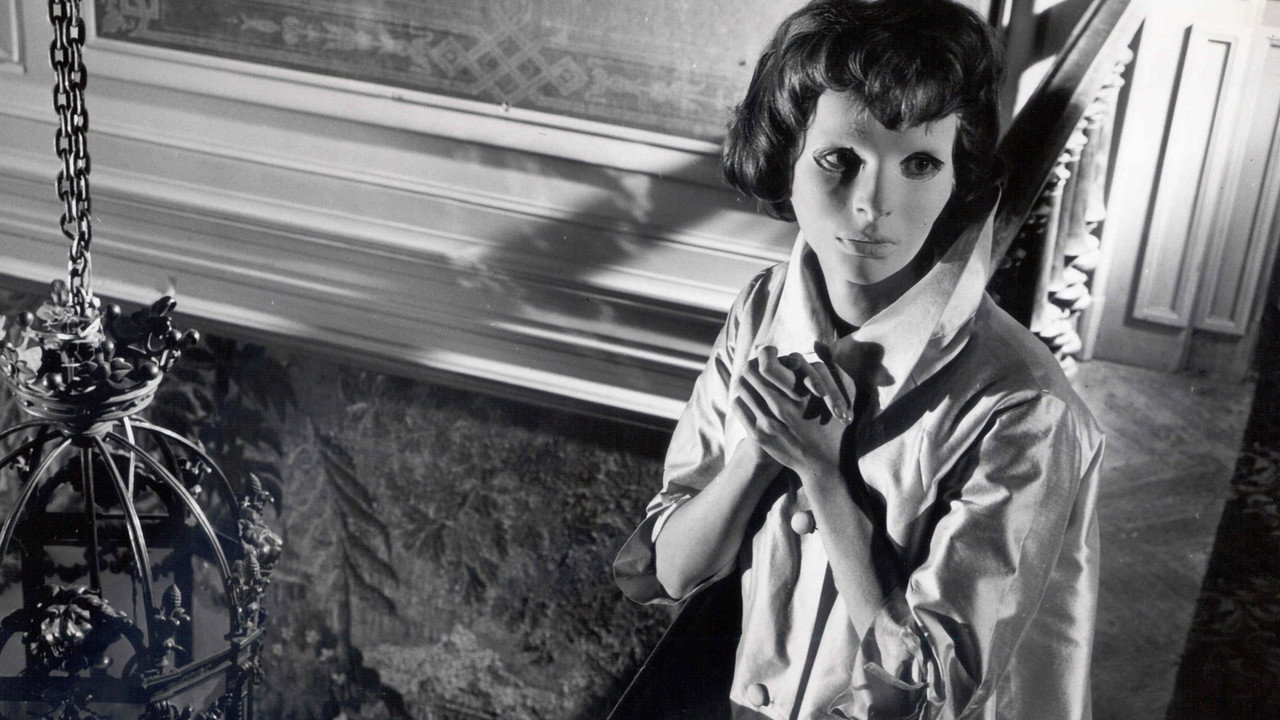
And in 1960, Georges Franju signed Eyes Without a Face, a surgical fairy tale about a surgeon who steals faces for his disfigured daughter. Poetry, a white mask, and a skin transplant filmed with a coldness that still turns stomachs today. It is, probably, the best French horror film ever made. And no one in France knew quite what to do with it.
Then there is Jean Rollin, the patron saint of low-budget vampiric eroticism. Castles, beaches of Dieppe, semi-naked vampires reciting dialogue as if they were on drugs, and a dreamlike atmosphere that his fans call poetry and his detractors call boredom. Both are right. Rollin was despised by serious critics during his lifetime, which, at Claqueta Ácida, is almost a letter of recommendation. If you're interested, Le Frisson des vampires (1971) is a good gateway to our Green Dogs section.
The problem is that, except for these islands, horror in France was the domain of outcasts for decades. The industry preferred screwball comedies with Louis de Funès and bourgeois dramas where the greatest horror was an affair in Neuilly. Until the new century arrived with a thirst for blood.
The New French Extremity: when art and butchery signed a pact
In 2004, Canadian critic James Quandt published an indignant article in Artforum against a wave of French cinema that, according to him, confused transgression with cheap provocation. He named it New French Extremity, and in doing so, achieved exactly the opposite of what he intended: giving it a brand. Nothing sells better than the disdain of a pretentious critic. We know this well.
Quandt was mainly pointing at auteur cinema: Gaspar Noé and his Irreversible (2002), with that nine-minute shot in an underground passage that half the audience couldn't stand; Claire Denis and her Trouble Every Day (2001), where desire and cannibalism share a bed. But the real feast was in pure genre, and it arrived in just five years:
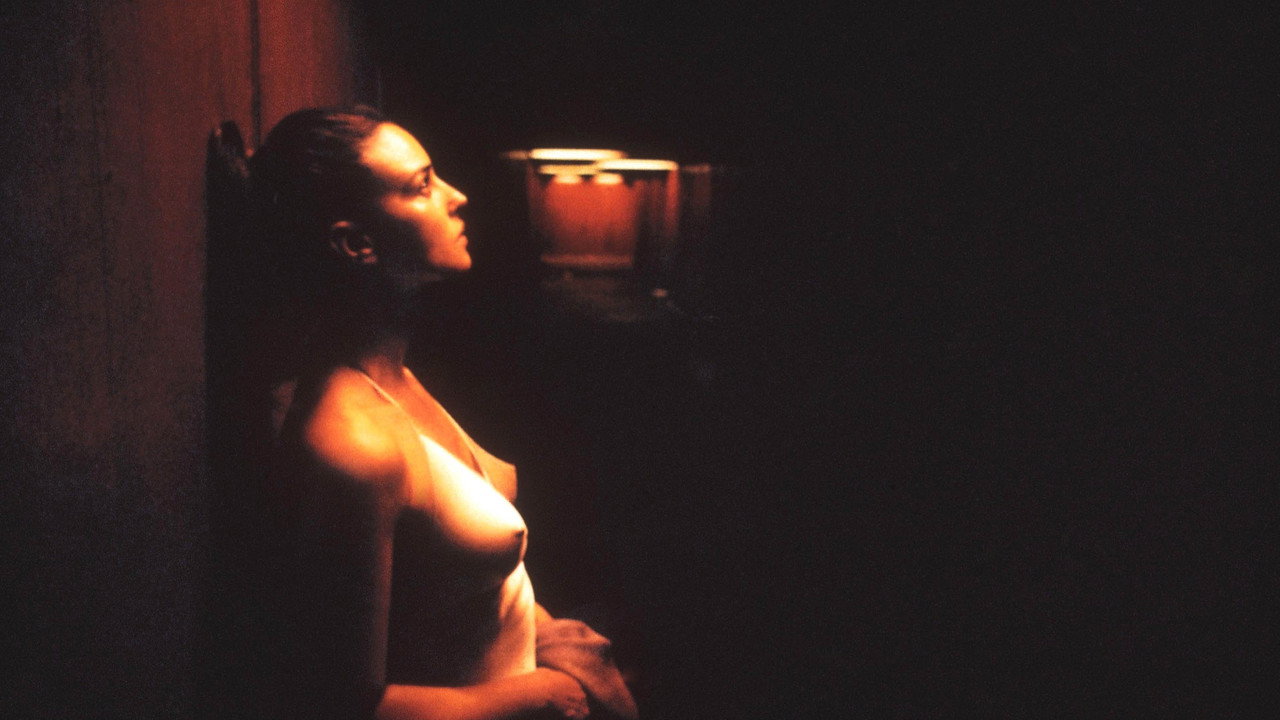
- High Tension (2003), Alexandre Aja. A rural slasher with a chainsaw, a shaved Cécile de France, and a final twist so cheap that it still causes fights in forums today. First-rate gore, third-rate script. Still enjoyable.
- Ils (2006), David Moreau and Xavier Palud. A house in Romania, a couple, and some hooded intruders. Dry, short, and unpleasant. Hollywood copied it shamelessly in The Strangers two years later.
- Frontière(s) (2007), Xavier Gens. Cannibal Nazis on a farm. Like that, no anesthesia. The closest thing to a Texas Chainsaw Massacre filtered through the political resentment of the banlieue.
- Inside (2007), Julien Maury and Alexandre Bustillo. A pregnant woman, some scissors, and Béatrice Dalle on Christmas Eve. If you have never looked away from a screen, this is your chance.
- Martyrs (2008), Pascal Laugier. The peak, the abyss, and the point of no return. It starts as a revenge movie and ends as a metaphysical treatise on suffering that leaves you stranded on the couch wondering why you exist. Hated, adored, essential. There is no middle ground and there shouldn't be.

Vive la mort: French horror, or how the country of the baguette learned to gut you
The interesting thing is that this wave didn't come out of nowhere. It was a France that had just seen Le Pen in the second round of 2002, that was burning in the riots of 2005, and that didn't know quite what to do with its own rage. These films are that: filmed rage, bodies opened as a metaphor for a country tearing itself apart. Or maybe they were just kids who had seen too much Fulci. Probably both.
The Hollywood Escape: or how to tame a wolf with a check
And then the usual happened. Hollywood smelled fresh blood and pulled out the checkbook. The pattern is so predictable it should have its own subgenre: European director makes a wild work with four bucks, the studios sign him, give him a remake, and pull his teeth in the editing room.

Aja was the star pupil. His remake of The Hills Have Eyes (2006) is one of the few that surpasses the original, and Piranha 3D (2010) is a bloody, titty-filled prank that knows it's trash and celebrates it. Even Underwater (2019), with crocodiles and a hurricane, proved that the guy knows how to shoot tension in a bathtub. But of the rage of High Tension, little remains. Now he is a craftsman. A good craftsman. Which is exactly what Hollywood wanted.

Bustillo and Maury ended up making Leatherface (2017), an unrequested prequel to a saga squeezed to the bone. Xavier Gens went through Hitman and ended up, years later, putting a shark in the Seine for Netflix. And Laugier, the most radical of them all, took The Tall Man (2012) to Hollywood, a strange and uneven film that the studios didn't know how to sell. He went home with his tail between his legs and shot Ghostland (2018), reminding us that, when left alone, he is still a category-A sadist.
The moral is old and bitter: the system doesn't buy talent, it buys brands. And when the brand is "extreme," the first thing it does is file down the edges.
The Daughters of the Scalpel: Ducournau, Fargeat, and the revenge of the body
If the first wave was the work of angry kids, the second has been signed by them. And they have done something their predecessors never managed: slipping gore onto the red carpet of Cannes without asking for forgiveness.
Julia Ducournau opened the floodgates with Raw (Grave, 2016), the story of a vegetarian veterinary student who discovers that human meat tastes glorious. At TIFF there were fainting spells and ambulances, and the promoters rubbed their hands together. Five years later, Titane (2021) won the Palme d'Or with a woman who gets pregnant by a Cadillac.
I repeat: a film where the protagonist gets pregnant by a car won the most prestigious award in auteur cinema.
The same critics who covered their eyes with Quandt in 2004 were now applauding on their feet. Horror didn't change. The label they put on it did.
Coralie Fargeat followed the same path. First Revenge (2017), a rape and revenge that turns the desert into a blood pool and the male gaze into a joke. Then The Substance (2024), neon body horror with Demi Moore literally flaying herself in front of Hollywood's mirror. Best Screenplay award at Cannes, Oscar nominations, and a satire as subtle as a hammer blow. Which is exactly what the subject demanded.

And more are coming behind. Just Philippot turned lobsters into farm monsters in La Nuée (2020). Sébastien Vanicek filled a peripheral housing block with spiders in Vermin (2023), the best bug movie in years and, incidentally, the most honest portrait of the banlieue the genre has produced. Hollywood has already thrown a lasso around it, of course. We know how that story usually ends. Fingers crossed we're wrong.
Verdict: the country that films flesh like no other
What does French horror have that American horror doesn't? Easy: it doesn't ask for forgiveness. Hollywood scares you and then comforts you with a happy ending, a sequel, and a Funko Pop. France guts you, looks you in the eyes, and lights a cigarette. There is no redemption, no final girl saved by her virginity, no catechism moral. Just bodies: bodies that bleed, that mutate, that rebel against those who inhabit them.
And that is, perhaps, the great lesson. French horror has never been a genre. It has been a stance. That of a country that has spent centuries theorizing about the soul and that, suddenly, decided to look under the skin to see what was there. What it found was not pretty. But it was true.
To start (if you have a stomach)
| Film | Year | Director | For whom |
| :--- | :--- | :--- | :--- |
| Eyes Without a Face | 1960 | Georges Franju | Those who think classic horror is a Universal thing |
| High Tension | 2003 | Alexandre Aja | Gorehounds with a tolerance for cheap twists |
| Inside | 2007 | Bustillo and Maury | No pregnant people. Seriously |
| Martyrs | 2008 | Pascal Laugier | Those who want to come out changed (or broken) |
| Raw | 2016 | Julia Ducournau | Vegetarians wanting to rethink things |
| Titane | 2021 | Julia Ducournau | Cinephiles who still think they've seen it all |
| Vermin | 2023 | Sébastien Vanicek | Masochistic arachnophobes |
| The Substance | 2024 | Coralie Fargeat | Anyone who has looked in the mirror with disgust |
House note: if you're only going to watch one, make it Martyrs. And then don't write to us complaining. You've been warned. 💀


