«La confirmación de estar bien encaminado es comprobar la perturbación del espectador»: Juanma Bajo Ulloa y el pulso implacable contra la corrección política en El Mal

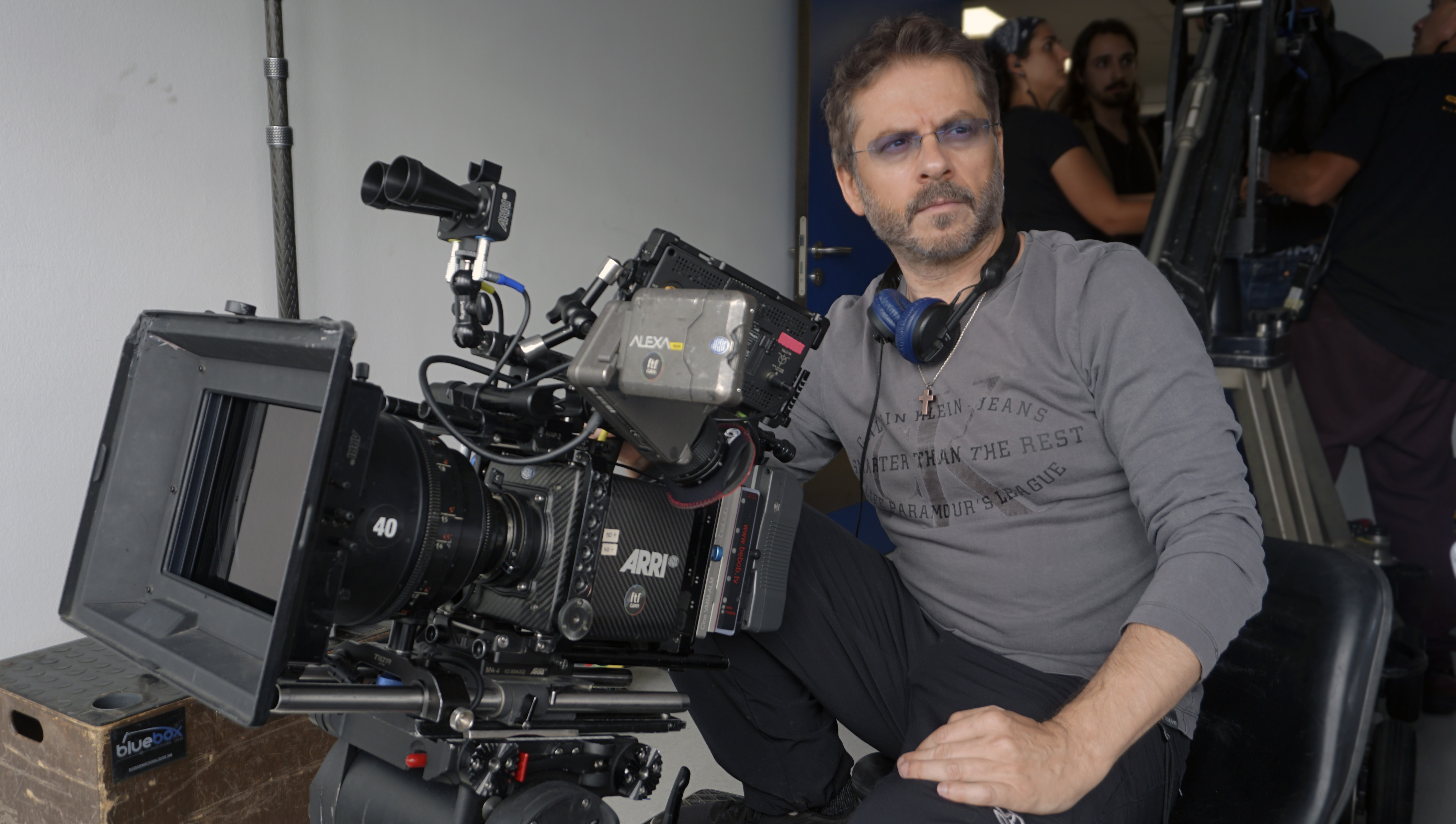
There are two types of filmmakers: those who seek the truth and those who want to be right. My desire is not to be uncomfortable, but to seek and understand the human being and myself.
At the heart of contemporary auteur cinema, few figures maintain such a visceral resistance against present-day dogmas as Juanma Bajo Ulloa. On the occasion of the release of El Mal, we met in Vitoria-Gasteiz to dissect a cinematography that has never asked for permission nor sought the complacency of the herd. Far from harmless artistry and the ideological servitudes that suffocate the current landscape, the Basque filmmaker welcomes us without a safety net, ready to confront the industry's demons, institutional hypocrisy, and the moral urgency of the image against the dictatorship of the algorithm and political correctness.
I. LANGUAGE AND THE PACT OF 'EL MAL'
Narrative evolution: You have gone from the thunderous dialogue of Airbag to shooting Baby without a single word and placing all your bets on suspense in El Mal. Have you become an image purist over the years, or is it simply that you have grown tired of how badly people write nowadays?
Juanma Bajo Ulloa:
Nowadays "people" write basically what the System demands of them. It is a staggering phenomenon to observe creators, slaves to political correctness, wearing that ideological uniform, putting their artistic lives at the service of power's sectarian interests.
I simply explore the possibilities of cinematographic language and try to seek personal challenges. People talk about how overexploited the landscape is and the impossibility of finding original formulas, but to me the possibilities seem infinite, and I prefer to try not to repeat proposals.
Premise and market: In El Mal you tackle the contemporary obsession with immediate success and validation through a faustian thriller. To what extent is Elvira's character your disenchanted reflection on the moral price the cultural market demands to validate a creator?
Juanma Bajo Ulloa:
I have always been interested in the concept of fame, recognition, and the need for external approval—something I have known from a very young age, and which actually affects everyone. But most people deny it despite the fact that it has become a sudden pandemic of narcissism. I deal with this concept with other characters and in other films like "Frágil" (2005), or in the documentary "Historia de un grupo de rock" (2008). In "El Mal" the protagonist Elvira Nous says, "wanting to be admired is a desperate way of being appreciated." I don't see myself reflected in my characters, but there is something of me in all of them, or I couldn't write them.
Philosophy of conflict: The film posits that violence is not merely an external phenomenon, but something latent in every individual. What dramatic tools did you use to prevent that premise from falling into gratuitous nihilism and keep it as a legitimate philosophical reflection?
Juanma Bajo Ulloa:
Today's cinema, as the woke propaganda medium it has become, maintains a highly nihilistic approach where the spiritual has no place, precisely because this ideology tries to take the place of religion. "El Mal" (just like "Baby"), proposes a reflection on the discernment between the sacred and the profane and material. On love that dignifies us, even though it makes us vulnerable, and fear that arises from the ego and weighs us down.
The tools are all those offered by cinematic narration, at the service of the creator's gaze and the spectator's. But perhaps music is what connects us most to something subconscious, irrational, and divine.
The counterpoint of 'El Bien': You have hinted that, after the darkness of El Mal, you plan a comedy-toned sequel titled El Bien, starring a "team of morons." If El Mal speaks of toxic ambition and the shadow, what exactly is El Bien in your universe? A satire on these contemporary creators who call themselves "beings of light"?
Juanma Bajo Ulloa:
Actually, I was talking about two projects. The comedy you mention would be titled “Muerte mortal (al borde del límite)”. The other project, of a less roguish nature, could be “El bien”, the autonomous and unrecognized continuation of “El mal”. No comment…
But it turns out there is also an idea for a trailer that largely coincides with your intuitive approach regarding that simple-minded do-goodism that is destroying the West…
II. MIS-EN-SCÈNE AND FORMAL CRITIQUE
Technical craftsmanship: In this production you simultaneously assumed the roles of director, screenwriter, producer, and camera operator. Does physically handling the camera allow you to capture your vision more fluidly, or does it entail a wear and tear that distracts from directing actors?
Juanma Bajo Ulloa:
I have increasingly taken charge of the camera due to the difficulty of conveying to operators all the instructions that occur to me even in the middle of a take. That allows me to improvise re-framings and coexist more closely with the actors. Certainly, at times it entails a significant extra effort and something can be lost along the way. But that's life.
Tone and music: You return to filming in Vitoria-Gasteiz and its surroundings, turning the architecture into an active character. And in terms of sound, you use Jeanette's songs during passages of implacable violence. Were you seeking to ethically disorient the spectator or find beauty in the grotesque?
Juanma Bajo Ulloa:
Architecture is the setting and, therefore, a fundamental part of the narration just like light, dialogue, or makeup. In Vitoria I find everything I need, I just have to imagine and choose the right point of view, sometimes while brushing my teeth.
Musical themes like Jeanette's correspond to the protagonist Martin's personal soundtrack. She does not dramatize her sinister acts; she performs them with an almost childlike illusion, and indeed, there is beauty and innocence in her mind.
Self-criticism and form: It has been pointed out that the images of El Mal possess an overwhelming force, but that the script leaves scattered fronts in its central part. Do you accept that dispersion as a necessary consequence of prioritizing visual atmosphere over closed genre structure?
Juanma Bajo Ulloa:
I am unaware of which fronts you are referring to; this appreciation has not reached us. But atmosphere is for me a vehicle always at the service of the narration, a narration that relies on the criterion of the committed spectator. And this is sustained not only by the image but also by elements such as silence or the musical environment, rhythm, or light.
III. CONTRADICTIONS, MYTHS, AND SHADOWS
The myth of the tyrant on set: You often denounce the moral superiority and hypocrisy of many woke filmmakers who publicly lecture on humanism and in private are tyrants. However, actresses like María León have publicly stated that during the filming of Rey Gitano you treated the crew and a legend like Rosa María Sardá with "very bad manners," hiding behind a "superiority persona." Where is the line that separates the perfectionist, misunderstood director from the tyrant on set? Do you recognize that part of the "shadow" in your way of directing?
Juanma Bajo Ulloa:
Tyranny on set is unacceptable, whether from insecure professionals or egocentric performers. Regarding Rosa Mª Sardá, she was a dear and admired friend with whom I shared a great complicity, and she did not coincide on set with this aforementioned actress. I regret these calumnies, but for people with addiction problems and judicially condemned for their violence, one can only wish a sincere recovery. You will always be evil in the eyes of those who fail to manipulate you, and in those of individuals who need to justify what they have done to you.
The trauma of 'Airbag' and the Supreme Court: You often say that your independence is an ideological choice and that you prefer to mortgage your house rather than bow to the industry, calling yourself a "bad producer." However, the only time you trusted outside producers for Airbag, the film blew up the box office and it took years—and a Supreme Court ruling—for you to collect your share of the profits. Does your radical rejection of the industry truly stem from a philosophical stance or from trauma and mistrust after being swindled out of your biggest commercial success?
Juanma Bajo Ulloa:
There was no trauma because it wasn't the first lawsuit; it was basically another legal dispute resolved in our favor. Already with “Alas de mariposa” (1991), for example, we had won litigation against the Basque Government and the San Sebastián Festival. The success of “Airbag” was not only due to such an unusual or daring creative bet, I was also lucky enough to have a distributor just as disturbed or more so, Paco Hoyos.
But I have not rejected the industry; I simply sought to be independent from the very first film. This demands a high toll and defending oneself against its eventual abuses. You understand early on that it is an arena of sharks who will exploit you if you allow it.
The paradox of subsidies: You go to the media to fiercely criticize the public aid system for "ideological discrimination," but the credits of El Mal bear the stamp of RTVE and ETB. How do you manage the paradox of questioning an institutional model upon which, at least in part, you also depend to release your film?
Juanma Bajo Ulloa:
I see a paradox in the question, or is it provocation? I don't go to the media; I attend to whoever asks me, and without discriminating by their relevance, as you will have verified with your medium. And my discourse is the same as always: defense of creative freedom against the ideological manipulation of power. Nor have I "criticized," but rather exposed accredited facts that appear, for example, in the BOE (Official State Gazette).
Regarding the televisions you mention, they do not subsidize anything; they buy broadcasting rights, just as every spectator buys a movie ticket.
Subsidies have indeed been for years, as I have been effectively exposing, a shameful mechanism of political segregation, rather than support for merit.
IV. PROVOCATION, ETHICS, AND CANCEL CULTURE
The limits of transgression: Today you lament living in an infantilized society where any offense turns you into a pariah. However, at the 2002 Granada Comic Con gala you orchestrated a show with simulated terrorist attacks, burning of virgins, and live sex. Seeing the scandal you unleashed back then, do you think the limits of provocation have narrowed, or is it that today excess is no longer forgiven under the label of "art"?
Juanma Bajo Ulloa:
I defend adult entertainment in total freedom, and I expose the hypocrisy of moralists, who always hide corpses (or prostitution) under the rug. The only thing permitted today is ideological propaganda that helps the interests of the elites who manage governments with the profitable purpose of thus frightening and fragmenting the population. Art matters as much to them as the color of that Persian rug I am not going to buy.
Ethical rigidity vs. career: You have thrown years of work in the trash, like your adaptation of El Capitán Trueno, by refusing to shoot with a budget that would exploit the crew, or Paul Naschy's biopic because you considered it "morally disrespectful." Seeing how other directors accept any assignment just to stay on the wheel, do you consider that this extreme ethical rigidity has sabotaged more opportunities for you than the very ideological censorship you denounce?
Juanma Bajo Ulloa:
Nothing goes in the trash; the path is not making movies, but discovering who you are. I don't know what reasons move others; I limit myself to following my personal journey, I haven't come to this world to live someone else's life. I make no distinction between ethical and ideological reasons; it is about choosing between pleasing the emperor so as not to eat lentils, or eating lentils so as not to submit to the emperor. But lentils are my favorite dish.
Comedy and incorrectness: In Rey Gitano you tried to recover the pulse of roguish comedy, suffering heavy controversy for its political incorrectness. Looking at it in perspective, is it harder to make satire in Spain today than in the nineties?
Juanma Bajo Ulloa:
“Rey Gitano” laughed at established authority, at de facto powers such as oligarchy, banking, institutional feminism, or an innocuous monarchy. But to the extent that you do not join the polarization instigated by these powers, you become an uncomfortable dissident for both "sides."
Political satire is unviable in any dictatorship, which only accepts satire that mocks its adversaries and dissidents. Today spontaneity, and truth itself, have died at the hands of political correctness.
V. CLOSING
New technologies: At a time when the impact of Artificial Intelligence and script standardization dictated by streaming platforms is debated, do you see these technologies as a threat to the artist's subjectivity or just another tool?
Juanma Bajo Ulloa:
Technologies always provoke this debate. To the extent that they are used as a tool, they can help the creator. But when they take the place of their creativity, they turn them into a fraud.
Some filmmakers are very happy about technological advances like digital, but the question is whether better films have been made since its arrival around 2010 than before. Maybe I missed them...
The capital sin: With a career grounded in the desire to make the spectator uncomfortable and shake them up, what do you consider to be today the greatest sin a filmmaker can commit: seeking easy applause or resigning themselves to complacency?
Juanma Bajo Ulloa:
There are two types of filmmakers, those who seek the truth and those who want to be right. My desire is not to make people uncomfortable but to seek and understand the human being and myself. The confirmation of being on the right track is verifying the spectator's perturbation.
«There are two types of filmmakers, those who seek the truth and those who want to be right.»
🎬 Filmografía de Juanma Bajo Ulloa

El mal
★ Leer Crítica
En mitad de la nada
Filmografía oficial
The Parrot
Filmografía oficial
Baby
★ Leer Crítica
RockNRollers
Filmografía oficial
Rey gitano
Filmografía oficial
Historia de un grupo de rock
Filmografía oficial¡Qué glande es el cine!
Filmografía oficial
Frágil
Filmografía oficial
Torrente 2: Misión en Marbella
Filmografía oficial
Airbag
★ Leer Crítica
La madre muerta
★ Leer Crítica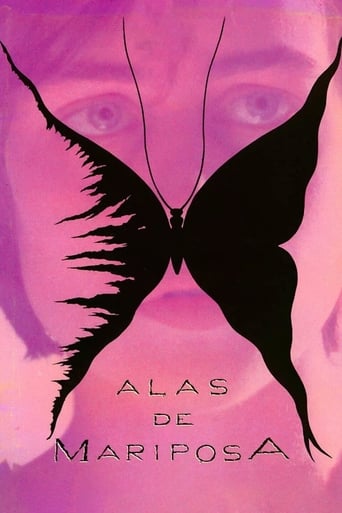
Alas de mariposa
Filmografía oficial
El reino de Víctor
Filmografía oficial
Akixo
Filmografía oficialConversación Registrada en Claqueta Ácida
Este expediente fue transcrito sin censura ni concesiones promocionales. Prohibida su dilución en lugares comunes.

