Halloween — The Night Pure Evil Slapped on a Cheap Mask and Took a Leisurely Stroll
John Carpenter reinvented the modern slasher on a shoestring budget, three piano notes, and a faceless killer embodying suburban terror—no backstory, no mercy, just a knife and the slow creep of dread.

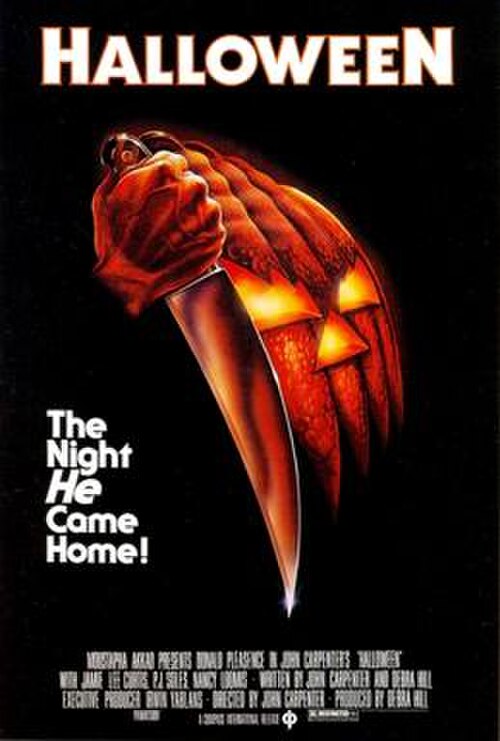

Here at Claqueta Ácida headquarters—where we’ve mercilessly dissected everything from franchise reboots on life support to bargain-bin psychopaths wielding chainsaws so out of tune they sound like they were tuned with a rusty screwdriver—revisiting Halloween (1978) isn’t just a nostalgic trip down memory lane. It’s a full-blown act of cinematic heresy. Because let’s be real: in an era where horror has become a theme park of prefab jump scares and CGI so overstuffed it looks like it was designed by a TikTok algorithm, John Carpenter’s film emerges as a living fossil, a sacred relic still oozing freshness and genius. Shot on a budget that wouldn’t even cover a decent cup of coffee in Hollywood, with a William Shatner mask spray-painted white—because, why waste money on special effects when you can have a guy with the face of a washed-up starship captain and a kitchen knife?—Halloween didn’t just invent the modern slasher. It proved that real terror doesn’t need tentacled monsters or supermarket gore. All it needs is a shadow lurking at the end of a suburban hallway, a held breath, and the certainty that evil has no face—just presence.
finalExplicado: "Michael Myers acorrala a Laurie en la casa de los Strode. Tras matar a sus amigos, la persigue con implacable lentitud hasta que ella le clava un gancho en el ojo y Loomis le dispara seis veces, lanzándolo por el balcón. Cuando bajan a comprobar el cadáver, Myers ha desaparecido. Solo queda la máscara vacía en el suelo. Simbólicamente, el final consagra a Michael como mal puro e indestructible: no es un hombre al que se pueda matar, sino una fuerza primigenia que escapa, se reinicia y acecha eternamente. El suburbio americano nunca volverá a ser seguro; el mal no muere, simplemente espera la siguiente Halloween."
The Premise: Sacred Dogma or the Eternal Horror Manual?
The premise of Halloween is so simple it borders on biblical: Michael Myers, a six-year-old boy who stabbed his sister to death on Halloween night—because, what better way to celebrate a holiday than with a little sibling slaughter?—escapes from the asylum fifteen years later to return to his picturesque hometown, Haddonfield. There, like a ghost in blue overalls and a Shatner mask, he begins stalking Laurie Strode (Jamie Lee Curtis in her film debut, so fresh she still smelled like movie theater popcorn) and her teenage friends with methodical, silent precision. Meanwhile, Dr. Loomis (Donald Pleasence, oscillating between prophetic and outright psychotic) chases him like the last man on Earth trying to prevent the Apocalypse. What follows isn’t just a movie—it’s a masterclass in unbearable tension and formal elegance, as extinct today as common sense at a genre film festival.
Carpenter and co-writer Debra Hill didn’t bother with cheap psychological explanations for Michael Myers. There are no deep childhood traumas, no abuse backstories, no dark pasts justifying his bloodlust. Michael is pure evil, a force of nature as inexplicable as a hurricane or an earthquake. And that, dear readers, is what makes him so terrifying. In an industry obsessed with humanizing villains until they become antiheroes with self-esteem issues, Myers is a reminder that sometimes evil doesn’t need motivation—just existence. He’s the void with eyes, a presence that lurks without reason, without emotion, without anything but infinite patience and a sharp knife.
The Camera That Stalks Like a Ghost’s Gaze: Voyeurism as Art
If there’s one thing that elevates Halloween to cinematic Olympus—and no, we’re not talking about the Greek gods’ Olympus, but the one reserved for directors who know horror isn’t filmed, it’s orchestrated—it’s the glorious use of the Panaglide and Dean Cundey’s anamorphic format. Carpenter didn’t just shoot terror; he choreographed it like a macabre ballet where the camera is the true protagonist. The long takes that glide through Haddonfield’s hallways, leaf-strewn streets, and suburban gardens aren’t just shots—they’re declarations of intent: the viewer isn’t a mere observer but a voyeuristic accomplice, forced to adopt Myers’ gaze and scan every corner of the frame for that silhouette lurking in the shadows.
The wide shot of Michael behind a bush, motionless as a statue while Laurie and her friends pass within feet of him, is a masterclass in suspense. Carpenter doesn’t need blood or screams to generate tension; he just plays with space, light, and time. The camera becomes the eye of a ghost, a silent witness that knows more than the characters—and thus, turns us into accomplices of the horror. It’s a technique Hitchcock would’ve applauded with both ears, and today, in the era of rapid cuts and frenetic editing, it feels as revolutionary as the day it premiered.
Then there’s the use of off-screen space, that underrated yet devastatingly effective tool. Carpenter doesn’t show Annie’s (Nancy Kyes) murder until it’s too late; he suggests it with a camera movement, a stifled scream, and a car rocking slightly. The terror isn’t in what you see—it’s in what you imagine, and Carpenter knows this better than anyone. In a pivotal scene, Laurie climbs the stairs of a stranger’s house, believing her friends are in danger, while the camera stays downstairs, motionless, as if it knows something—or someone—is waiting in the dark. That shot is pure cinematic alchemy: it turns anticipation into agony and silence into a scream.
The Score: Three Notes to Rule Them All
If Carpenter’s direction is a masterpiece of surgical precision, the soundtrack is the final nail in the viewer’s coffin. Carpenter composed the music himself because he couldn’t afford an orchestra—because, why waste money on musicians when you can torture the audience with a synthesizer and three notes repeated into madness? The result is one of the most iconic themes in cinema history. Those three notes in 5/4 time, played with an almost sick obsession, are a mental drill that burrows into the brain and refuses to leave. It’s not music—it’s an auditory curse, a constant reminder that danger is near, that Myers is lurking, that there’s no escape.
The genius of Carpenter’s score lies in its minimalism. There are no pompous orchestrations, no dramatic choirs, no weeping violins. Just an relentless rhythm that accelerates the pulse and a melody that repeats like a demonic mantra. It’s the sonic equivalent of a knife being sharpened in the dark, and its influence is so vast it’s been sampled, covered, and parodied ad nauseam, from Stranger Things to It Follows. But none of those imitations capture the essence of the original: a soundtrack that doesn’t accompany terror—it embodies it.
The Cast: Gods Among Mortals
#### Jamie Lee Curtis: The "Final Girl" Who Changed Everything
Before Jamie Lee Curtis became the queen of teen horror—and later, an action star and family comedy icon—there was Laurie Strode, the ultimate final girl, the one who survived to tell the tale and, in the process, redefined the archetype for generations to come. Curtis doesn’t play Laurie as an invincible heroine but as a normal teenager, with her fears, insecurities, and naivety, making her infinitely more relatable and, thus, more compelling. When Laurie hides in a closet, trembling with fear as Myers stalks her on the other side of the door, we’re not watching an actress playing a role—we’re watching a real person fighting for her life.
What’s most fascinating about Laurie is that she doesn’t survive because of her skills—she survives because of her instinct. She has no master plan, no martial arts expertise, not even a shred of bravery. She simply refuses to die, and that stubbornness makes her unforgettable. Curtis gives her a humanity that contrasts with Myers’ coldness, and that duality—light versus darkness, noise versus silence—is what makes Halloween work on a near-metaphysical level.
#### Donald Pleasence: The Apocalypse’s Prophet in a Tweed Suit
If Jamie Lee Curtis is the light, Donald Pleasence is the fire that consumes it. His portrayal of Dr. Loomis is a mix of contained madness, justified paranoia, and a near-religious conviction that Michael Myers is evil incarnate. Pleasence doesn’t act; he rants, he preaches, he warns with the urgency of a man who knows the end is near. His monologue about Myers—"He’s not a man. He’s evil in its purest form"—is one of the most quoted lines in horror cinema, not just for its grandiosity, but because it sums up the film’s essence: Myers isn’t a villain; he’s a force of nature, and Loomis is the only one who understands.
And then there’s the asylum scene, where Loomis bursts into Myers’ empty room to find the window open and a bloodstained sheet. Pleasence doesn’t scream, doesn’t cry, doesn’t flail. He just stares into the void, as if he’s witnessed the end of the world, and whispers, "He’s escaped." It’s a moment of pure terror, not because of what’s shown, but because of what’s implied: evil has been unleashed, and there’s no turning back.
#### Nick Castle: The Man Behind the Mask (and the Faceless Void)
Michael Myers is, without a doubt, the most terrifying character in the film precisely because he isn’t a character. He doesn’t speak, doesn’t cry, doesn’t show emotion. He’s a presence, a shadow, a void with eyes. Nick Castle, the actor who played the killer in most scenes, didn’t have to do much beyond walking slowly and holding a knife, but that’s exactly what makes him so effective. Myers doesn’t need to act; his mere existence is enough to terrify.
The genius of Castle—and Carpenter—lies in the economy of movement. Myers doesn’t run, doesn’t scream, doesn’t flail. He walks with supernatural determination, as if he knows time is on his side. And that William Shatner mask, painted white with enlarged eye holes, has become one of the most recognizable icons in horror cinema, not because of its elaborate design, but because of its simplicity. It’s a face without a face, a void that reflects the viewer’s fear.
The Legacy: Why Halloween Still Matters 45 Years Later
In an industry obsessed with constantly rebooting franchises, Halloween (1978) remains the gold standard against which all horror films are measured. It’s not just that it invented the modern slasher—with its unwritten rules: the silent killer, the final girl, the punishment for promiscuity—but it did so with an elegance and intelligence that most of its imitators haven’t even come close to matching.
Films like Scream (1996) tried to deconstruct the genre, but even they acknowledged their debt to Carpenter. Halloween doesn’t need meta-commentary or postmodern irony to work; it’s a perfectly oiled terror machine, where every shot, every musical note, and every silence is calculated to maximize fear. And the most terrifying thing of all? It hasn’t aged a day. While other 70s horror films feel dated—with their cheesy practical effects and naive dialogue—Halloween remains as effective as the day it premiered, because the fear it explores isn’t about monsters. It’s about the unknown, the inexplicable, the thing lurking in the dark when you think you’re safe.
The Best
- Carpenter’s Direction: With a shoestring budget and a Shatner mask, Carpenter proved that horror isn’t made with money—it’s made with brains, patience, and a camera that knows where to look.
- The Hypnotic Score: Three notes and a synthesizer were enough to create the national anthem of fear, a soundtrack that still haunts nightmares decades later.
- Jamie Lee Curtis: Before the term "Final Girl" existed, she embodied it with a naturalness that made generations of teenagers identify with her terror.
The Worst
The Pacing for Modern Audiences: If you grew up with the frenetic editing of The Conjuring or the jump scares of Insidious, the first half of Halloween* might feel as slow as a small-town funeral. But, of course, that’s exactly what makes it brilliant.- The Naivety of Some Characters: Laurie’s friends make decisions so stupid they deserve a posthumous Darwin Award, like going outside to investigate a strange noise on Halloween night. But let’s be honest—what would horror be without characters who act like common sense is an urban legend?
The Verdict of Claqueta Ácida (9.8/10)
Halloween isn’t just a movie—it’s an act of cinematic witchcraft, a 91-minute spell that turned fear into art and a guy in a Shatner mask into the most iconic villain in history. John Carpenter and Debra Hill proved that terror isn’t about special effects or million-dollar budgets—it’s about space, light, rhythm, and the ability to turn the everyday into something sinister. Michael Myers remains the most terrifying presence to ever cross a screen, not because he runs, screams, or has a traumatic backstory, but because he’s the void that lurks when you turn off the lights. An absolute masterpiece that, 45 years later, still makes us look over our shoulders before going to bed. 💀🎬 Tráiler Oficial
Abrir en YouTube
Ending Explained: Halloween
Ficha de Daños Colaterales en Sala
Certificado de impacto psicofísico emitido por Lúa Ácida
Cero bostezos. Pupilas dilatadas y tensión mandibular constante.
Ni una sola mirada al móvil.
Ninguna. Esta obra no necesita muletas estimulantes.
"Inexistente: pulso de hierro hasta los créditos finales."
💬 El Veredicto de la Comunidad
¿Qué te ha parecido la película? Deja tu nota de 0 a 10 para contrastarla con el análisis de la redacción.
Aún no has votado
📢 ¿Te ha gustado el ácido?
Comparte esta crítica con tus amigos cinéfilos o desata la polémica en redes.
⚡ THE CINEMATIC VENOM YOUR INBOX CRAVES
No sugarcoated ratings, no corporate fluff. Subscribe for our uncensored weekly analysis or join the private Telegram for press previews, poll clashes, and instant alerts.
Alertas de estrenos en 1 segundo, encuestas en caliente y audios al salir de pases de prensa.
Recibe la dosis semanal en tu mail + regalo inmediato del PDF con 50 joyas ocultas de culto.
Related Reviews
Recommended autopsies for demanding film buffs.
 🔥 Fusión Nuclear8.0
Halloween Night: The Psychopath Born from a Shit Budget (And Saved Us from Mediocrity)
⚡Hermana de saga: otro capítulo diseccionado con rigor forense.
John Carpenter turned $300,000 and a guy in a William Shatner mask into the slasher that redefined horror. Claqueta Ácida dissects its cheap genius.
 🔥 Fusión Nuclear8.2
*Christine*: The Most Toxic and Brilliant Mechanical Romance in Cinema History
⚡Del mismo director (John Carpenter): analiza la evolución o degradación de su estilo.
John Carpenter takes Stephen King’s eponymous novel and soups it up to deliver a staggering fable about teenage obsession, rock ‘n’ roll, and a 1958 Plymouth Fury with the jealous rage of a scorned lover.
 🔥 Fusión Nuclear8.5
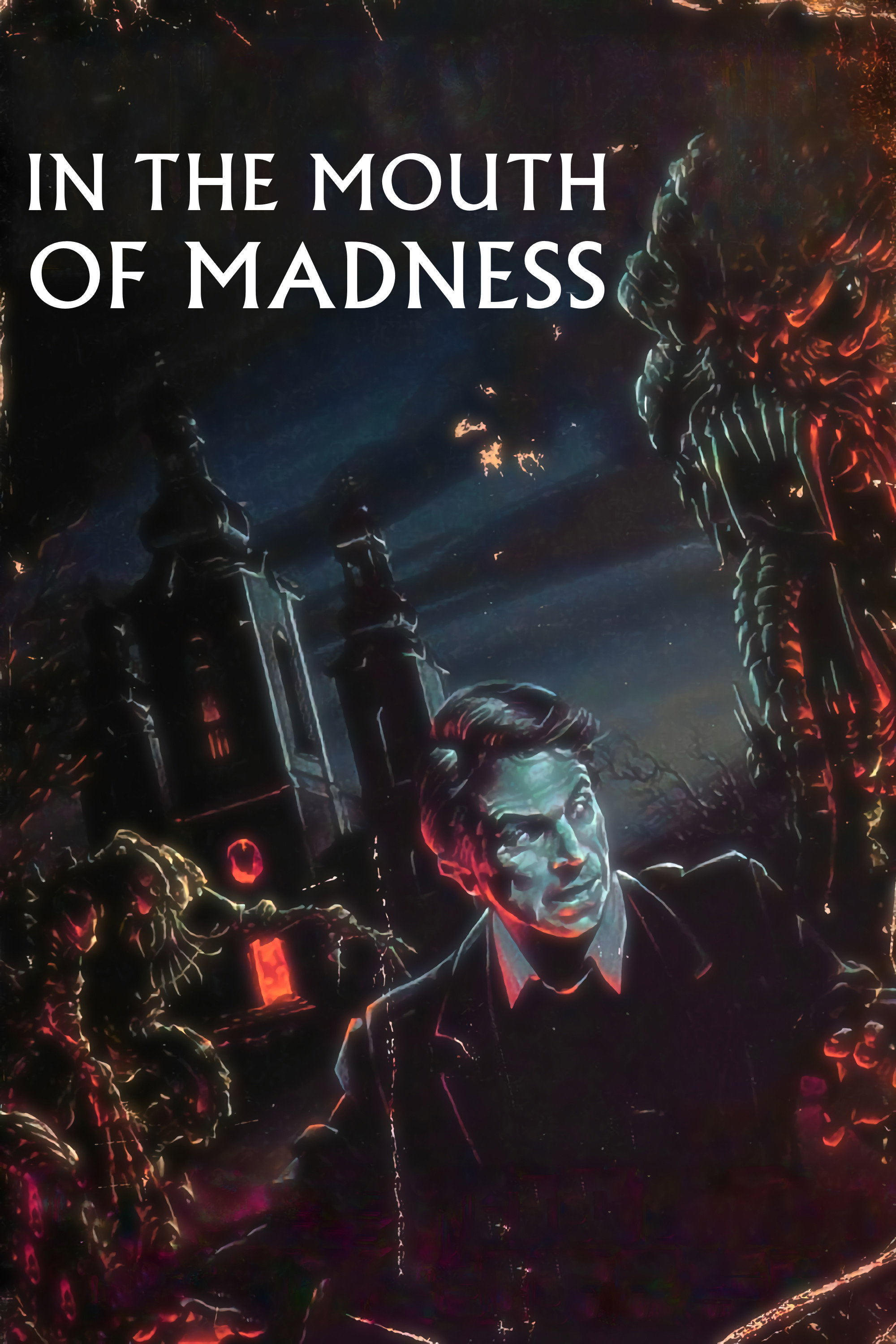
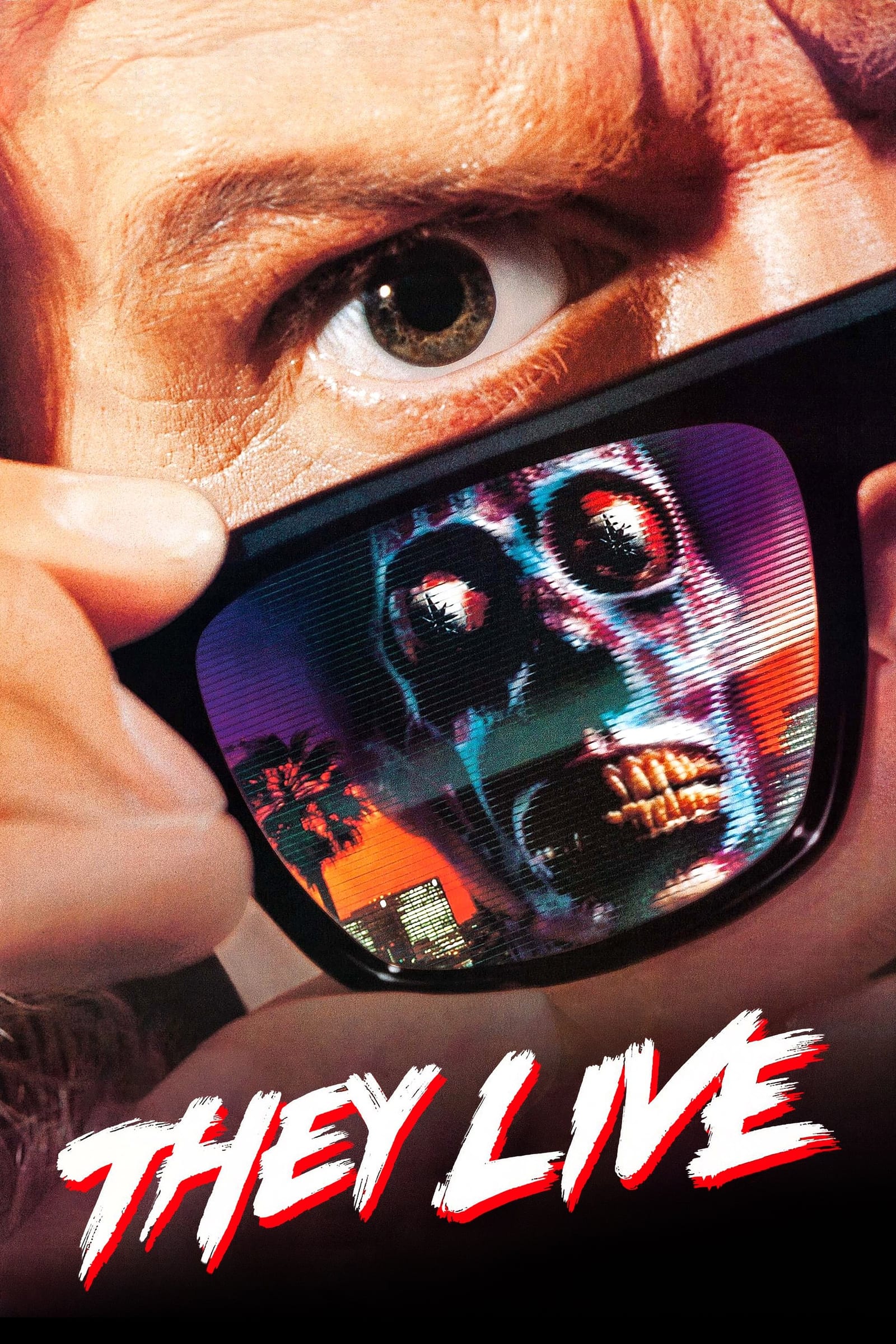
In the Mouth of Madness: When John Carpenter Swallowed Lovecraft (And Spat Out Our Sanity)
⚡Del mismo director (John Carpenter): analiza la evolución o degradación de su estilo.
John Carpenter delivers a Lovecraftian nightmare with Sam Neill teetering on the edge of the abyss. A masterpiece of cosmic horror or a self-parody with literary pretensions? Here’s the autopsy.
Editorial Ecosystem
Cinephile connections, archive interviews and related analyses.
💬 Debate Cinéfilo & Autopsia de Lectores
0 veredictos¿Discrepas con nuestra nota? ¿Es una obra maestra o veneno puro? Deja tu veredicto abajo sin necesidad de registro.

Aún nadie ha dejado su veredicto para esta película.
Sé el primero en clavarle el colmillo rellenando el formulario de arriba.