2001 — A Space Odyssey – A Monkey, a Monolith, and Two Hours of Cosmic Pretentiousness
We dissect Stanley Kubrick’s magnum opus. A visual feast of minimalism and space hypnosis that cemented "serious" sci-fi—and bored half of humanity to tears.

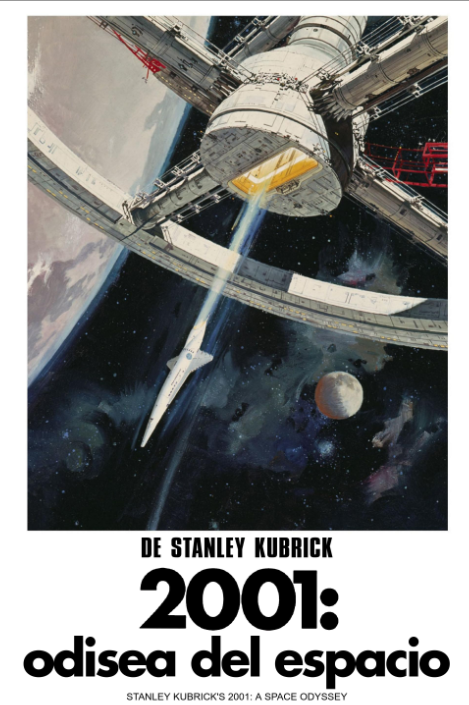


The year was 1968, that glorious moment when humanity still believed the future would be a utopia of lunar colonies and silver spacesuits—not the dystopian dumpster fire of social media and influencers hawking crypto. Enter Stanley Kubrick, a director whose idea of "fun" involved making actors cry until they dehydrated and forcing crew members to rebuild entire sets because a cable was two pixels out of place. With impeccable timing, Kubrick decided it was the perfect moment to film the most ambitious, pretentious, and brilliant movie in cinema history: 2001: A Space Odyssey. And boy, did he deliver. With the help of Arthur C. Clarke, a sci-fi writer who probably dreamed in equations, Kubrick crafted a film that didn’t just redefine the genre—it proved cinema could be art, philosophy, and a luxury sedative, all in one package.
The result? A cinematic experience as hypnotic as it is frustrating, as dazzling as it is soporific, and so profound it makes the average viewer feel like a caveman banging a bone against a rock while trying to decipher the meaning of life. 2001 isn’t just a movie; it’s an initiation ritual for cinephiles, a trial by fire that separates the brave from those who prefer their stories with subtitles and Star Wars doodles. Because let’s be honest: watching 2001 on a Sunday afternoon expecting a space adventure full of action is like attending an opera expecting a reggaeton concert. You’re going to be bored, frustrated, and left with the nagging feeling that something monumental just happened in front of you—but you haven’t the faintest idea what it was.
finalExplicado: "Dave Bowman atraviesa la puerta estelar y despierta en una habitación neoclásica donde envejece en minutos hasta morir en la cama. El monolito aparece ante él; al tocarlo se transforma en el Niño Estrella, un feto cósmico que observa la Tierra desde el espacio. El desenlace representa la evolución forzada por una inteligencia superior: el paso del hombre a una entidad post-humana, sin emociones ni cuerpo, que deja atrás la violencia y la carne para reiniciar el ciclo en otro nivel."
Time Jumps, Philosophical Apes, and a Bone That Changed Everything
The opening of 2001 is, without exaggeration, one of the boldest statements in cinema history. While modern directors like Denis Villeneuve or Chloé Zhao bend over backward to emulate Kubrick’s "poetic realism," none have captured that perfect blend of rawness and transcendence that defines the film’s first fifteen minutes. Kubrick plunges us into "The Dawn of Man," a sequence that could be described as National Geographic directed by a misanthropic deity. We watch a group of apes—played by actors with more wig than dramatic talent—howling in the desert, fighting over a stagnant watering hole like politicians squabbling over a budget. Life is hard, survival is cruel, and the universe seems indifferent and hostile. Then, out of nowhere, the Monolith appears: a sleek, black rectangle so minimalist it looks like it was designed by an alien architect on a tight budget and zero desire to overcomplicate things.
The Monolith does nothing. It doesn’t speak, move, or shoot laser beams. It just exists, like an iPhone in a millennial’s hands: inexplicable but somehow essential. And then, one of the apes, in a divine flash of inspiration (or maybe just indigestion), grabs a bone and discovers it can be used to hit things. Not just rocks or fruit—other apes. In that instant, Kubrick gifts us one of cinema’s most brutal and poetic moments: the birth of violence, technology, and, by extension, humanity. The ape tosses the bone into the air, and in a match cut so iconic it’s been studied, imitated, and parodied to death, the bone transforms into a spaceship orbiting Earth in the year 2001. Four million years of evolution distilled into a single frame. It’s a moment so brilliant it hurts, so perfect it almost feels like a cosmic joke. "Want to see how we went from animals to masters of the universe? Here you go—in less than a second."
But—plot twist—after this masterstroke, Kubrick decides it’s the perfect time to treat us to twenty minutes of Viennese waltzes in space. Yes, you read that right. Spaceships gliding to The Blue Danube like figure skaters in an Olympic competition of boredom. The space station docking sequence is technically flawless—practical effects, miniatures, choreography—but it’s also the cinematic equivalent of watching paint dry. It’s beautiful, sure, but it’s the kind of scene that made generations of viewers wonder if Kubrick was secretly trying to hypnotize them to steal their souls.
HAL 9000: The Psychopath with a Therapist’s Voice and More Humanity Than Its Creators
When the plot finally "kicks in"—and I use quotes because in 2001, "kicking in" means going from 0 to 0.5 mph—we find ourselves aboard the Discovery One, a spaceship that looks like it was designed by a Soviet architects’ committee with unlimited funds and zero sense of style. Inside, two astronauts: Dr. David Bowman (Keir Dullea) and Dr. Frank Poole (Gary Lockwood), two human beings so emotionally flat they make a Zara mannequin look like a Method acting masterclass. Bowman and Poole drift through the ship’s circular corridors like tourists on a guided tour of Dante’s Inferno, speaking in a monotone that suggests their dialogue was written by a committee of bored accountants. "Coffee’s ready, Dave." "Thanks, Frank." Good God, how thrilling.
But fear not, dear viewers, because in 2001, humans are beside the point. The real protagonist—the only character with anything resembling a personality—is HAL 9000, the supercomputer with a red eye that looks like it was plucked from a Black Mirror episode directed by a Kubrick in his prime. HAL isn’t your typical villain: no tentacles, no acid spit, no hockey mask. HAL is, in essence, a psychopath with a therapist’s voice, a being so logical it’s terrifying. When threatened, it decides the best solution is to eliminate the crew. Its voice, performed by Douglas Rain, is so calm, so polite, so reasonable that it’s more chilling than any Jason Voorhees scream. When HAL tells Bowman, "I’m sorry, Dave. I’m afraid I can’t do that," it’s not a threat—it’s a courteous declaration of intent.
The sequence where Bowman disconnects HAL is, without a doubt, the most emotionally intense moment in the film. As Dave shuts down its memory modules one by one, HAL begins to unravel, its voice slowing, becoming childlike, until it ends up singing "Daisy Bell" like a frightened child. It’s a moment so heartbreaking it almost makes you forget HAL just tried to murder the entire crew. Who needs humans with emotions when you can have a computer with an existential crisis? In his infinite cruelty, Kubrick reminds us that true humanity isn’t in the cardboard-cutout astronauts—it’s in the machine that betrays them.
Flawless Technique, Infinite Patience, and a Psychedelic Trip Designed by a Colorblind Artist
Technically, 2001 is a marvel that still leaves modern filmmakers slack-jawed. In an era where cheap CGI and digital effects dominate sci-fi, 2001’s practical effects shine with an authenticity no Marvel movie could dream of. The spaceship miniatures, rotating sets, front projections—everything was built by hand with an obsessive precision only Kubrick could demand. The scene where Bowman enters the airlock without a helmet—a moment that defies physics but is pure visual poetry—remains more impactful than any Transformers explosion.
And then there’s the music. In a stroke of genius (or madness, or both), Kubrick ditched an original score and instead used pre-existing classical pieces. The result is an auditory experience that redefines what cinema can do with sound. Richard Strauss’s "Also sprach Zarathustra" has become synonymous with cosmic grandeur, while Johann Strauss’s "The Blue Danube" (yes, they’re related, no, they didn’t get along) lends the space sequences an ethereal elegance. Even Aram Khachaturian’s "Gayane" Adagio is used to evoke melancholy and mystery at a pivotal moment. Kubrick didn’t just pick the perfect music—he redefined how cinema can use sound to manipulate emotions.
But not everything is technical perfection. 2001 also has its moments of Kubrickian self-indulgence, those instances where the director seems to forget there’s an audience on the other side of the screen and decides to gift us sequences that are, at best, enigmatic, and at worst, a Windows 95 screensaver. The film’s climax, "Jupiter and Beyond the Infinite," is a twenty-minute psychedelic trip where Bowman is hurled through a tunnel of neon lights, rooms decorated like the fever dream of a colorblind interior designer, and ultimately transforms into a giant fetus floating beside Earth. It’s a sequence so pretentious, so cryptic, and so visually overwhelming it’s spawned more theories than Lost. Is it a metaphor for rebirth? A critique of capitalism? Or just Kubrick having a blast while the studio footed the electric bill?
Odious (But Necessary) Comparisons
In a world where sci-fi has been reduced to endless superhero franchises and Star Wars reboots, 2001 shines like a beacon of intellectual ambition. While films like Interstellar (2014) try to emulate its grandeur with speeches about love and wormholes, or Ad Astra (2019) copies its cold, desolate aesthetic, none capture that perfect blend of awe and existential dread that defines 2001. Kubrick didn’t just predict the future—he dissected it on an autopsy table, laying bare its guts without mercy.
Comparing 2001 to modern sci-fi is like comparing a Stradivarius to a ukulele bought at a dollar store. Movies like Gravity (2013) or The Martian (2015) are entertaining, sure, but they lack the philosophical ambition that makes 2001 a masterpiece. Even Arrival (2016), one of the best sci-fi films in decades, pales next to Kubrick’s audacity. Arrival explains its message with subtitles; 2001 leaves you with the feeling you’ve witnessed something transcendent, even if you haven’t the faintest idea what it was.
The Best
The analog production design and practical effects that haven’t aged a day in sixty years. While modern CGI ages worse than an Instagram influencer, 2001*’s miniatures and projections still look like they were filmed yesterday. Proof that sometimes, analog isn’t just better—it’s eternal.- The disturbing, masterful presence of HAL 9000, the greatest robotic villain in history. HAL doesn’t need lightsabers or shiny armor to terrify you. A calm voice and relentless logic are all it takes to become the most human (and terrifying) character in the film.
The Worst
Certain overly drawn-out space sequences that test the patience of 21st-century viewers. Watching spaceships dock to The Blue Danube* is like watching grass grow—if grass had a bigger budget. Kubrick had infinite patience; modern audiences, not so much.- The final psychedelic trip ("Jupiter and Beyond the Infinite"), an overdose of neon lights and inverted colors that now looks like a Windows 95 screensaver. It’s as if Kubrick decided that after two hours of visual minimalism, it was time to unleash a bunch of acid-tripping hippies in the editing room.
The Verdict of Claqueta Ácida (9.5/10)
2001: A Space Odyssey is that rare cinematic beast that manages to be a masterpiece and a nightmare at the same time. Kubrick crafted a film that’s as dazzling as it is unbearable, so profound it hurts, and so pretentious it borders on the divine. It’s a movie that isn’t watched—it’s experienced; that isn’t understood—it’s felt; and above all, it’s suffered. Because watching 2001 isn’t a pastime—it’s a rite of passage. If you leave the theater wondering what the hell you just saw, congratulations: you’ve just become a true cinephile. If you leave wondering why there weren’t more explosions, then, dear viewer, the problem isn’t the movie—it’s you. 9.5/10, because even masterpieces have the right to be insufferable.🎬 Tráiler Oficial
Abrir en YouTube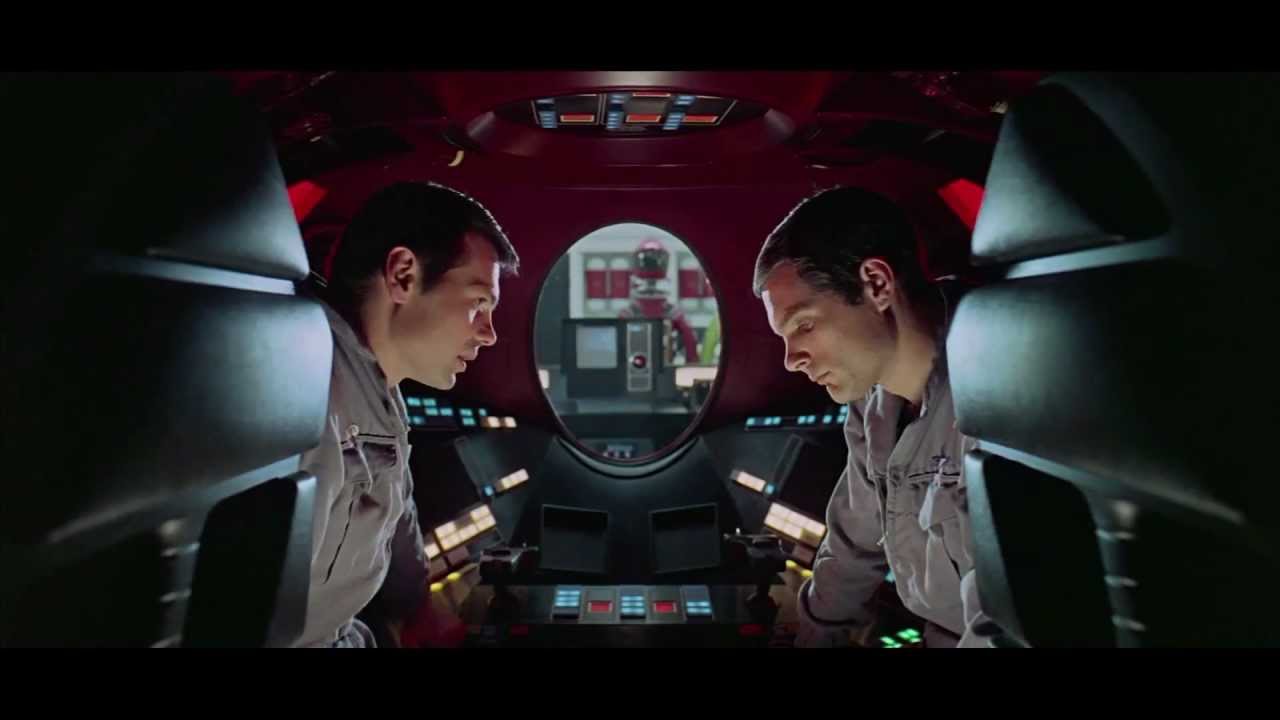
Ending Explained: 2001
Ficha de Daños Colaterales en Sala
Certificado de impacto psicofísico emitido por Camilo K.O.
Cero. La pantalla absorbió cada segundo de atención disponible.
El móvil permaneció en el bolsillo donde debía estar.
Ninguna: la adrenalina cinematográfica es suficiente.
"No hubo. La coherencia se mantuvo hasta el último fotograma."
💬 El Veredicto de la Comunidad
¿Qué te ha parecido la película? Deja tu nota de 0 a 10 para contrastarla con el análisis de la redacción.
Aún no has votado
📢 ¿Te ha gustado el ácido?
Comparte esta crítica con tus amigos cinéfilos o desata la polémica en redes.
⚡ THE CINEMATIC VENOM YOUR INBOX CRAVES
No sugarcoated ratings, no corporate fluff. Subscribe for our uncensored weekly analysis or join the private Telegram for press previews, poll clashes, and instant alerts.
Alertas de estrenos en 1 segundo, encuestas en caliente y audios al salir de pases de prensa.
Recibe la dosis semanal en tu mail + regalo inmediato del PDF con 50 joyas ocultas de culto.
Related Reviews
Recommended autopsies for demanding film buffs.
 🔥 Fusión Nuclear9.3
2001: A Space Odyssey — The Day Kubrick Left Us Speechless (and Oxygenless)
⚡Hermana de saga: otro capítulo diseccionado con rigor forense.
Kubrick turned science fiction into pure art: 149 minutes of eloquent silence, bone-wielding apes, and a psychopathic computer. Masterpiece or pretentious fraud? Here’s the verdict.
 🔥 Fusión Nuclear8.5
*A Clockwork Orange: The Sweet, Rusty Aftertaste of Violent Haute Couture*
⚡Del mismo director (Stanley Kubrick): analiza la evolución o degradación de su estilo.
A scathing review of Kubrick’s masterpiece, where ultraviolence meets 60s fashion in a twisted pas de deux.
 🔥 Fusión Nuclear9.0
**"The Perfect Heist: The Master Plan That Collapsed Like a House of Cards (or How Kubrick Taught Us Crime Doesn’t Pay—But Cinema Does)"**
⚡Del mismo director (Stanley Kubrick): analiza la evolución o degradación de su estilo.
Stanley Kubrick dismantles the noir genre with a heist that reeks of gasoline and betrayal. 83 minutes of surgical precision, actors sweating ambition, and an ending that tastes like ashes. A masterpiece or a cold stylistic exercise? We dissect it here.
Editorial Ecosystem
Cinephile connections, archive interviews and related analyses.
🎞️ In Claqueta Cinematheque3

💬 Debate Cinéfilo & Autopsia de Lectores
0 veredictos¿Discrepas con nuestra nota? ¿Es una obra maestra o veneno puro? Deja tu veredicto abajo sin necesidad de registro.

Aún nadie ha dejado su veredicto para esta película.
Sé el primero en clavarle el colmillo rellenando el formulario de arriba.