A Clockwork Orange — The Sweet, Rusty Aftertaste of Violent Haute Couture
A scathing review of Kubrick’s masterpiece, where ultraviolence meets 60s fashion in a twisted pas de deux.

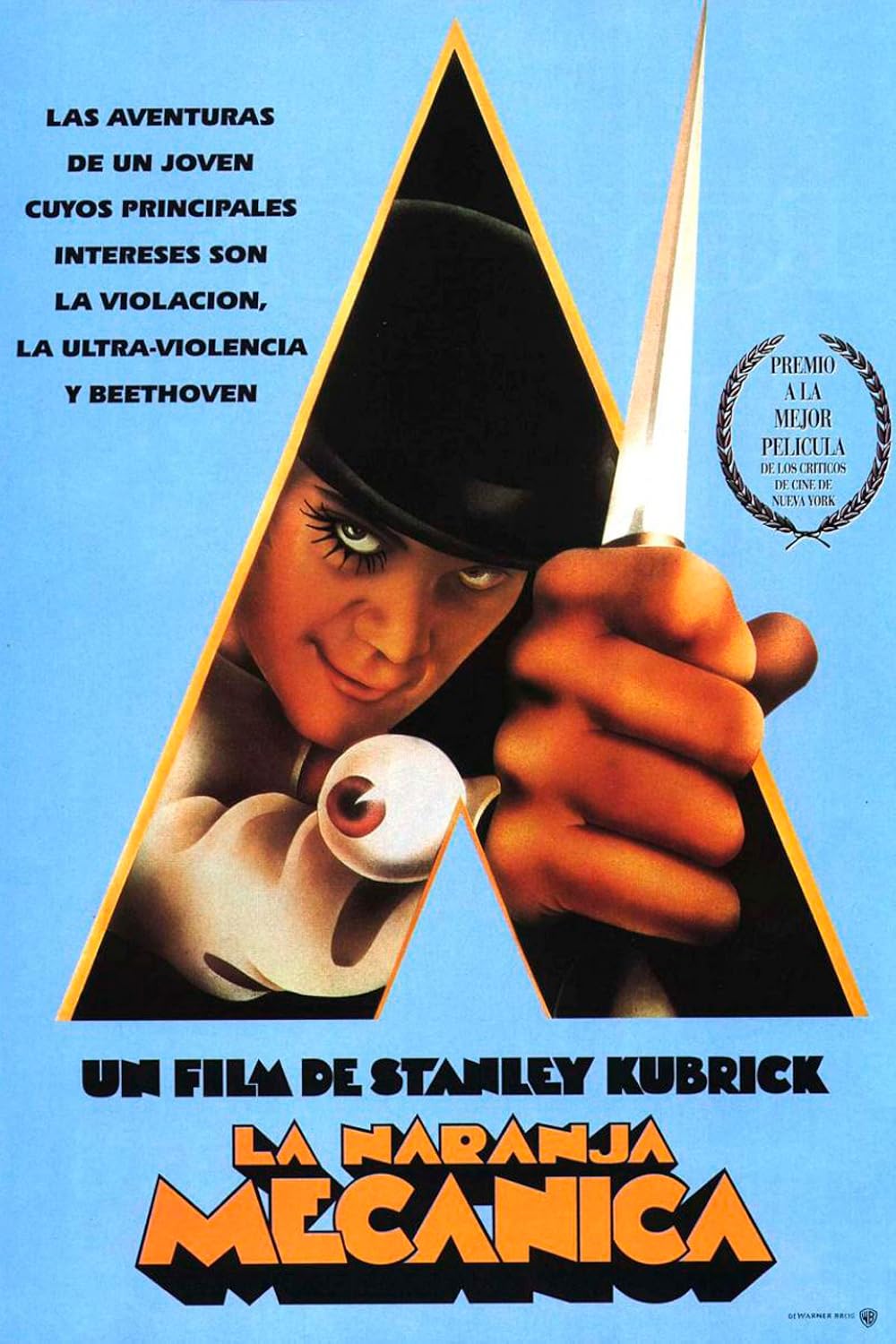


A Clockwork Orange: The Ultraviolent Symphony with a Moog Soundtrack and Kubrick’s Baton
The first time Wendy Carlos’s synth score blares across the screen while Alex DeLarge—played by a Malcolm McDowell who looks like he just stumbled out of an asylum with delusions of dandyism—locks eyes with the audience, grinning like a hyena that’s devoured too many canaries, you realize you’ve walked into a trap. Not just any trap: the quintessential Kubrickian trap, where style doesn’t just devour substance—it chews it up, spits it out, and then swallows it again with an obscene elegance that hurts. A Clockwork Orange isn’t a film; it’s a visual opera disguised as a dystopian novel, a satire so razor-sharp it cuts deeper than its droogs’ razors, and a masterclass in turning brutality into art… or at least something close enough to fool critics into clutching their pearls for decades.
Kubrick, that surgeon of the image with a detail-obsessed mind and the emotional warmth of a Roomba, took Anthony Burgess’s already ticking time bomb of a novel and dismantled it piece by piece, reassembling it as a pop nightmare collage. The film was sold as the definitive answer to Britain’s late-60s fear of juvenile delinquency, but it was really something far more perverse: a meditation on human nature wrapped in designer cellophane, a critique of state authoritarianism that, ironically, wallows in violence so thoroughly it ends up looking like its accomplice. Because let’s be honest—who comes off worse in this story? The State, which subjects Alex to the Ludovico Technique like a steroid-pumped Pavlovian dog, or Alex himself, whose sadism is so photogenic you almost forget you’re watching a psychopath in action?
finalExplicado: "En el clímax, Alex intenta suicidarse tras ser torturado con la Novena de Beethoven por el escritor vengativo; el gobierno revierte el tratamiento Ludovico para salvar su imagen. Recuperado, fantasea con ultraviolencia mientras suena la sinfonía y el ministro lo aplaude. Simbólicamente, Kubrick expone que la “cura” estatal destruye la voluntad para imponer control, pero restaurarla devuelve al individuo libre y monstruoso: la sociedad prefiere un depredador útil antes que un autómata ético, revelando que la violencia auténtica es preferible a la obediencia mecánica."
The Ninth’s Antihero: Alex DeLarge, or How to Turn Sociopathy into Performance Art
Malcolm McDowell doesn’t play Alex DeLarge; he embodies him with the same effortless hunger as a shark embodies the ocean. His performance is a cocktail of rock-star charisma, French mime gestures, and the hollow stare of a man who’s listened to too much Beethoven and learned nothing. Alex isn’t a character; he’s a concept: the working-class youth who channels his class frustration into ultraviolence, classical music, and a sexuality as aggressive as his taste for moloko plus (that drug-laced milk straight out of a Mad Men episode directed by David Lynch). He’s a sociopath, sure, but one with style—and that’s the genius (and the trap) of Kubrick: he makes us root for a monster because, at the end of the day, he’s our monster.
The juxtaposition of Beethoven’s Ninth Symphony with Alex’s most repulsive acts isn’t accidental. Kubrick, that master of visual irony, turns every violent scene into a grotesque ballet. When Alex and his droogs storm the writer’s home (Patrick Magee, delivering a performance that teeters between pathetic and tragic), the camera moves with surgical precision, as if filming a pas de deux instead of a rape. Purcell’s Music for the Funeral of Queen Mary plays like an ironic requiem, and you can’t help but wonder: Are we watching a critique of fascist aesthetics, or an unintentional celebration of them? Kubrick, as always, doesn’t give answers—he just poses uncomfortable questions and washes his hands while the audience squirms in their seats.
The nadsat, Burgess’s invented slang mixing English and Russian, is another of the film’s strokes of genius. Phrases like "What’s it going to be then, eh?" or "horrorshow" (which sounds like "horror show" but means "awesome") don’t just give the dialogue a strange musicality—they create a barrier between the audience and the characters. This isn’t our reality; it’s a parallel universe where violence is cool and the slang sounds like it was written by a drunk poet. It’s unsettling, yes, but also brilliant, because Kubrick makes even language a tool of alienation.
The Ludovico Technique: Behavioral Therapy or Beethoven-Backed Torture?
The film’s second act abandons the street-level thriller for psychological horror, and it does so with a sequence that’s gone down in cinema history as one of the most uncomfortable ever filmed: the Ludovico treatment. Alex, now a prisoner, is subjected to aversion therapy where he’s forced to watch extreme violence while listening to Beethoven’s Ninth. The goal is to "cure" him of his thirst for ultraviolence, but the result is so grotesque you can’t help but wonder who the real monster is here: the State, which turns a human being into a choice-less automaton, or Alex himself, whose evil seems to justify any method?
The scene is a masterclass in cinematic manipulation. Kubrick uses close-ups of Alex’s eyes—held open by clamps—to convey his suffering, but also to remind us that, at the end of the day, this is the same guy who raped and beat innocents without batting an eye. The irony is so thick you could cut it with a knife: Alex, who once reveled in violence while listening to Beethoven, is now tortured by the State using the same music. Is this poetic justice, or just Kubrick’s excuse to indulge his sadistic side as a director?
The ethical debate the film raises is as relevant today as it was in 1971: Can—or should—the State strip an individual of their free will in the name of the greater good? Kubrick doesn’t take sides, but his visceral direction makes you feel like he’s enjoying the spectacle. Because let’s be real: the Ludovico Technique isn’t just a critique of authoritarianism—it’s also a cinematic performance, a sequence so shocking you almost forget you’re watching a dystopia and not a high-end snuff film.
Pop Aesthetics and Drug-Laced Milk: Dystopia as an Art Gallery
What defines A Clockwork Orange is its aesthetic. Kubrick and cinematographer John Alcott turned the film into a visual manifesto, where every frame looks like it belongs in a contemporary art exhibit. The 70s interiors—with their futuristic furniture, saturated colors, and pop design—clash with the brutalist exteriors of London’s suburbs, creating an atmosphere that oscillates between kitsch and Orwellian. It’s as if Blade Runner and A Clockwork Orange had an illegitimate child in a 70s disco, and the result was a neon-and-concrete nightmare.
The use of color is particularly striking. Alex and his droogs’ white outfits—complete with military boots, suspenders, and codpiece armor—are a nod to the era’s counterculture, but also a way to dehumanize the characters. They’re not people; they’re icons, symbols of a lost youth that’s found its only form of expression in violence. Alex’s makeup—that fake eye straight out of a Picasso painting—is another brilliant touch: it doesn’t just make him a freak; it reinforces the idea that he’s performing his own life, like an actor in an absurdist play.
And then there’s the soundtrack. Wendy Carlos, an electronic music pioneer, adapted classical pieces like Beethoven’s Ninth and Rossini’s William Tell Overture using Moog synthesizers, creating an atmosphere that swings between the sublime and the sinister. The music doesn’t just accompany the action—it comments on it, ironizes it, subverts it. When Alex and his droogs speed through the streets in the Durango 95 while the William Tell Overture plays at warp speed, the sequence becomes a perfect metaphor for the film itself: speed, violence, and beauty in a cocktail so intoxicating you can’t help but feel dizzy.
Editing: When Ultraviolence Becomes Choreography
Kubrick was obsessed with editing, and A Clockwork Orange is one of his most experimental films in that regard. The rape scene in the writer’s home, for example, is shot in long takes with fluid camera movements, as if Kubrick wants the audience to feel every blow, every humiliation. But then there’s the Durango 95 sequence, where fast cuts and abrupt edits turn violence into something almost abstract, like a proto-music video.
Editing also plays a crucial role in the Ludovico treatment. The war and violence footage projected in front of Alex’s eyes is edited chaotically, with rapid cuts and close-ups designed to overwhelm the viewer. Kubrick doesn’t want us to understand the violence; he wants us to feel it, to be as uncomfortable as Alex. And damn if he doesn’t succeed.
The Real Ultraviolence? The One Wielded by the State… or by Kubrick?
In the end, A Clockwork Orange is a film about hypocrisy. Alex is a monster, but the State that "cures" him isn’t any less monstrous. Kubrick, with his trademark coldness, shows us both sides of the coin without judgment, but also without pity. The film is a critique of authoritarianism, yes, but it’s also a celebration of violence’s aesthetics, a cinematic performance where style is everything.
Is A Clockwork Orange a masterpiece? Without a doubt. Is it also a deeply uncomfortable film? Absolutely. Kubrick doesn’t give us easy answers; he hurls uncomfortable questions at us and laughs while we squirm in our seats. And that, in the end, is what makes cinema great: its ability to unsettle us, to make us question not just the characters on screen, but ourselves.
The best
- Malcolm McDowell’s performance: A psychopath with the charisma of a rock star and the gaze of a serial killer. If the devil exists, he’s got Alex DeLarge’s smile.
- Wendy Carlos’s soundtrack: Synthesized Beethoven never sounded so sinister. It’s like the Ninth Symphony was composed by a homicidal android.
The worst
- The nadsat: A brilliant but exhausting invented slang that turns dialogue into a linguistic puzzle. You spend so much time deciphering what they’re saying, you almost forget they’re raping someone.
The Verdict of Claqueta Ácida (8.5/10)
Stanley Kubrick turned A Clockwork Orange into a cult object through stylized violence, electronic music, and a protagonist so charismatic you almost forget he’s a monster. The film is a cinematic masterpiece, yes, but also such a brazen exercise in cynicism it hurts. Kubrick doesn’t invite reflection; he shoves a pop nightmare in your face and laughs as you drown in it. And the worst—or best—part? You can’t help but applaud. Because, in the end, what is cinema if not ultraviolence dressed up as art?Ending Explained: A Clockwork Orange
Ficha de Daños Colaterales en Sala
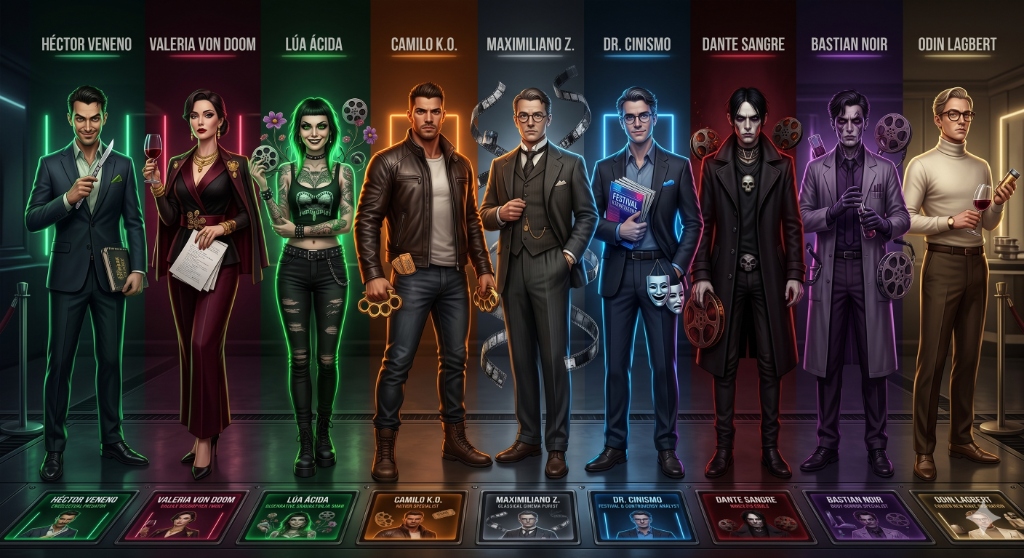
Certificado de impacto psicofísico emitido por Odin Lagbert
Cero bostezos. Pupilas dilatadas y tensión mandibular constante.
El móvil permaneció en el bolsillo donde debía estar.
Ninguna. Esta obra no necesita muletas estimulantes.
"No hubo. La coherencia se mantuvo hasta el último fotograma."
💬 El Veredicto de la Comunidad
¿Qué te ha parecido la película? Deja tu nota de 0 a 10 para contrastarla con el análisis de la redacción.
Aún no has votado
📢 ¿Te ha gustado el ácido?
Comparte esta crítica con tus amigos cinéfilos o desata la polémica en redes.
⚡ THE CINEMATIC VENOM YOUR INBOX CRAVES
No sugarcoated ratings, no corporate fluff. Subscribe for our uncensored weekly analysis or join the private Telegram for press previews, poll clashes, and instant alerts.
Alertas de estrenos en 1 segundo, encuestas en caliente y audios al salir de pases de prensa.
Recibe la dosis semanal en tu mail + regalo inmediato del PDF con 50 joyas ocultas de culto.
Related Reviews
Recommended autopsies for demanding film buffs.
 🔥 Fusión Nuclear9.5
*2001: A Space Odyssey – A Monkey, a Monolith, and Two Hours of Cosmic Pretentiousness*
⚡Del mismo director (Stanley Kubrick): analiza la evolución o degradación de su estilo.
We dissect Stanley Kubrick’s magnum opus. A visual feast of minimalism and space hypnosis that cemented "serious" sci-fi—and bored half of humanity to tears.
 🔥 Fusión Nuclear9.3
2001: A Space Odyssey — The Day Kubrick Left Us Speechless (and Oxygenless)
⚡Del mismo director (Stanley Kubrick): analiza la evolución o degradación de su estilo.
Kubrick turned science fiction into pure art: 149 minutes of eloquent silence, bone-wielding apes, and a psychopathic computer. Masterpiece or pretentious fraud? Here’s the verdict.
 🔥 Fusión Nuclear9.0
**"The Perfect Heist: The Master Plan That Collapsed Like a House of Cards (or How Kubrick Taught Us Crime Doesn’t Pay—But Cinema Does)"**
⚡Del mismo director (Stanley Kubrick): analiza la evolución o degradación de su estilo.
Stanley Kubrick dismantles the noir genre with a heist that reeks of gasoline and betrayal. 83 minutes of surgical precision, actors sweating ambition, and an ending that tastes like ashes. A masterpiece or a cold stylistic exercise? We dissect it here.
Editorial Ecosystem
Cinephile connections, archive interviews and related analyses.
🎞️ In Claqueta Cinematheque3
💬 Debate Cinéfilo & Autopsia de Lectores
0 veredictos¿Discrepas con nuestra nota? ¿Es una obra maestra o veneno puro? Deja tu veredicto abajo sin necesidad de registro.

Aún nadie ha dejado su veredicto para esta película.
Sé el primero en clavarle el colmillo rellenando el formulario de arriba.