Drishyam — The Conclusion: The myth of closure in the era of emptiness
An analytical dissection of Abhishek Pathak's so‑called conclusion and his inability to deliver any real certainties.
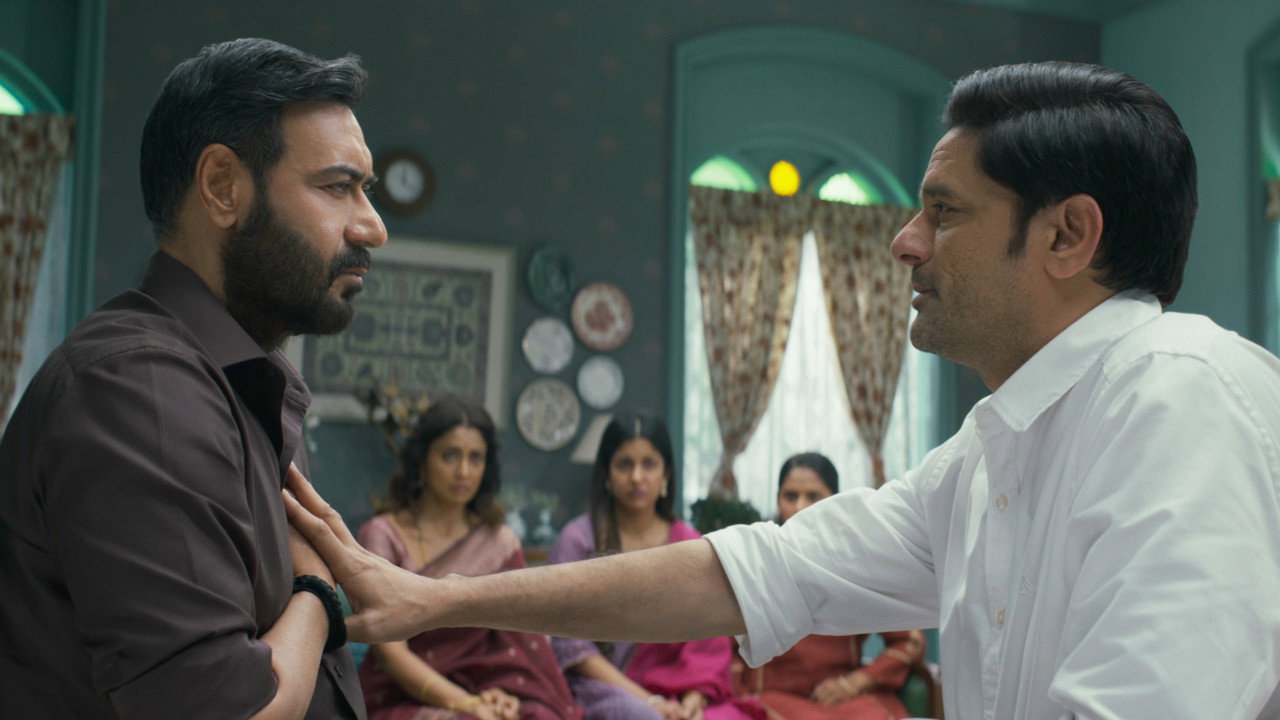
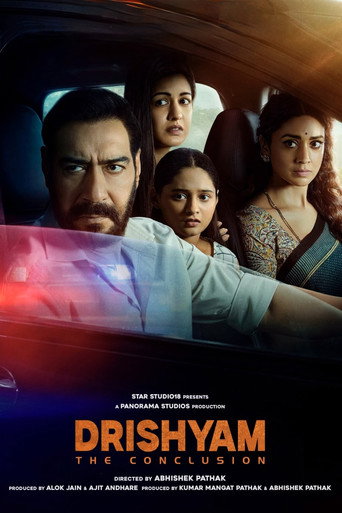
Drishyam: The Conclusion: full review
The very notion of a definitive ending in contemporary cinema has become a commercial chimera, a lure tossed at an audience starving for closure yet condemned to hermeneutic exposure. When a title incorporates the word conclusion as an inescapable command, the seasoned viewer should instantly suspect the rhetorical snare that looms ahead. We are not facing the organic culmination of a dramatic arc, but rather an industrial artifact engineered to temporarily close a debate that the fiction itself detonates from its initial premise. The label functions as a commercial alibi to mask the artificial prolongation of a conflict that had already exhausted its discursive springs in previous installments. In this territory of false certainties, the exercise of the gaze is reduced to verifying how the mechanisms of suspense crumble under the weight of their own tautological ambition. It is an invitation to patience that, in practice, feels more like a sentence to forced labor in the dark screening room.
Abhishek Pathak’s track record within genre cinema suggested a more cerebral approach to linear deconstruction, a latent interest in destabilizing the expectations of the bourgeois viewer who enters the hall looking for a neat and reassuring narrative architecture. However, in this prolongation via runtime, the director seems to have succumbed to the temptation of vacuous monumentalism, diluting the sequences until they border on the physical exhaustion of the audience. The staging avoids concision in favor of an accumulation of shots where ellipsis shines by its absence, preferring to explain a thousand times what a precise framing would resolve with a minimum of formal elegance. One breathes in every transition an urgency to demonstrate dramatic weight that ends up producing the exact opposite of the desired effect, turning the courtroom drama into an exercise in intellectual wear and tear. The editing, instead of acting as a surgical scalpel, behaves like a pneumatic hammer: it strikes, repeats, and leaves no room for the viewer's breath.
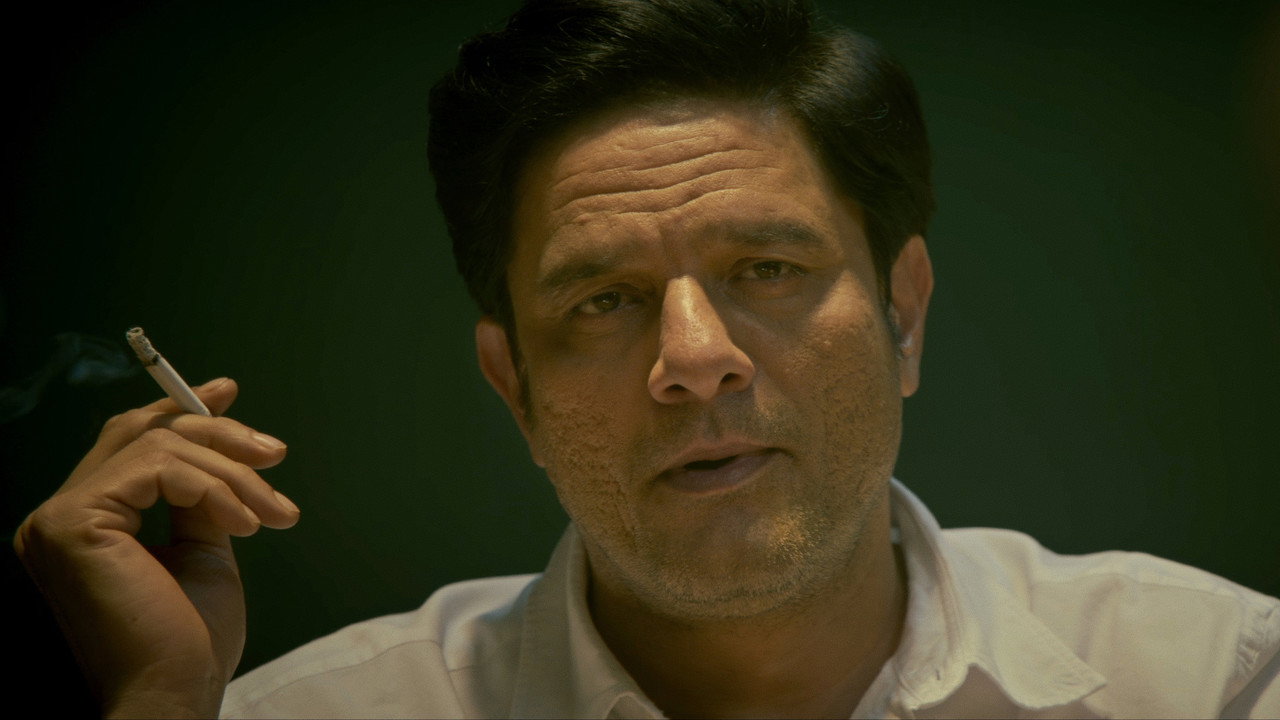
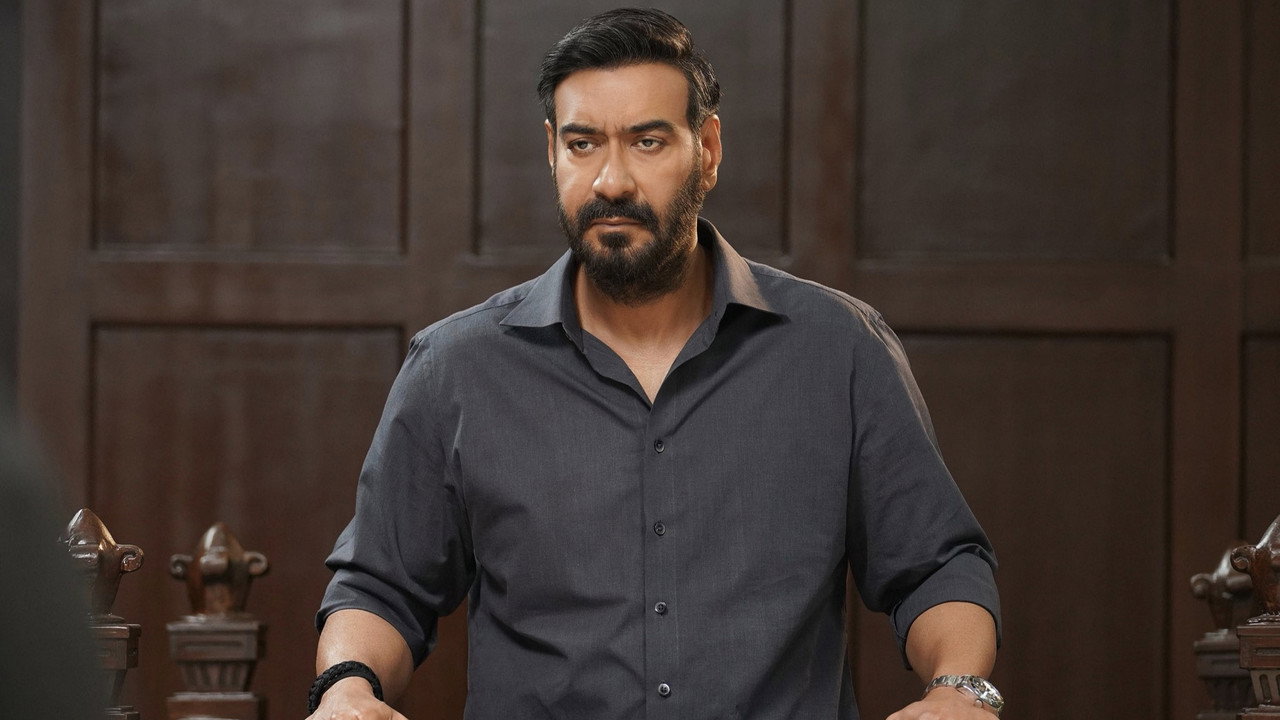
The unstable heart of the proposal rests upon the shoulders of a cast that oscillates between stony restraint and histrionics reined in by the very seams of the script. Ajay Devgan resumes his role with a gestural economy that borders on functional catatonia, playing a family patriarch whose survival depends on his ability to inhabit permanent suspicion without the tremor in his hands showing. His performance is a study in paralysis, where each glance toward the camera seems to apologize for the very existence of the character. Opposite him, Jaideep Ahlawat introduces a fissure of physical urgency that rescues several scenes from expository shipwreck, imposing an imposing presence that sharply contrasts with the ambient paralysis. His body occupies space with silent violence, anchoring the narrative when the script threatens to lift off the ground. The rest of the ensemble cast wanders through judicial and domestic corridors reciting lines where legal over-explanation drowns out any trace of psychological naturalism. Actor direction prioritizes functional clarity over moral complexity, reducing ethical dilemmas to a chessboard where pieces move by pure mechanical inertia, devoid of spark or real risk.
The architecture of the no-exit labyrinth
The script signed by the director himself assumes the suicidal risk of pitting popular myth against the relentless machinery of the state apparatus, using the reopening of the case as a pretext to dissect the fragility of collective memory. Nevertheless, the plot machinery bogs down in constant reiterations that prevent suspense from advancing with the lightness required for a thriller of these dimensions. The insistence on surrounding the family nucleus with a suffocating atmosphere works during the early stretches, but soon degenerates into a tautological loop where characters repeat the exact same fears in identical rooms. Ravi Basrur’s musical score accents every plot twist with orchestral underlinings so evident that they ruin any attempt at subtlety in building ambient tension. It is video game music: it tells you precisely when you should feel fear, eliminating the possibility for the viewer to construct their own anxiety. The cinematography, on the other hand, takes refuge in a palette of cold grays and blues which, while coherent with the judicial tone, lacks the visual texture necessary to sustain the gaze for more than two hours. Static shots become eternal in moments where a smooth tracking shot would have breathed life into the scene, creating a rigidity that reflects the narrative stagnation itself.
The best
- Interpretive duel: The magnetic and restrained presence of Jaideep Ahlawat as the new relentless investigator.
- Sound design: The capacity of the soundtrack to intensify psychological discomfort during moments of heightened police encirclement.
The worst
- Excessive runtime: An unjustified duration that turns moments of latent tension into exercises in unbearable patience.
- Schematic resolution: The final stretch's inability to sustain the moral ambiguity posed at the start of the plot.
The Verdict of Claqueta Ácida
Drishyam: The Conclusion is a monument to narrative procrastination that confuses the accumulation of hours with analytical depth. Abhishek Pathak erects a mammoth judicial setup only to end up demonstrating what we already knew from the very first frame: truth is a luxury that current commercial cinema cannot afford to finance without tricks. The viewer exits the screening room with the annoying sensation of having attended an endless oral hearing where the verdict mattered far less than collective exhaustion. It is a film that takes itself far too seriously to be entertaining, yet not seriously enough to be memorable. 💀
🎬 Tráiler Oficial
Abrir en YouTube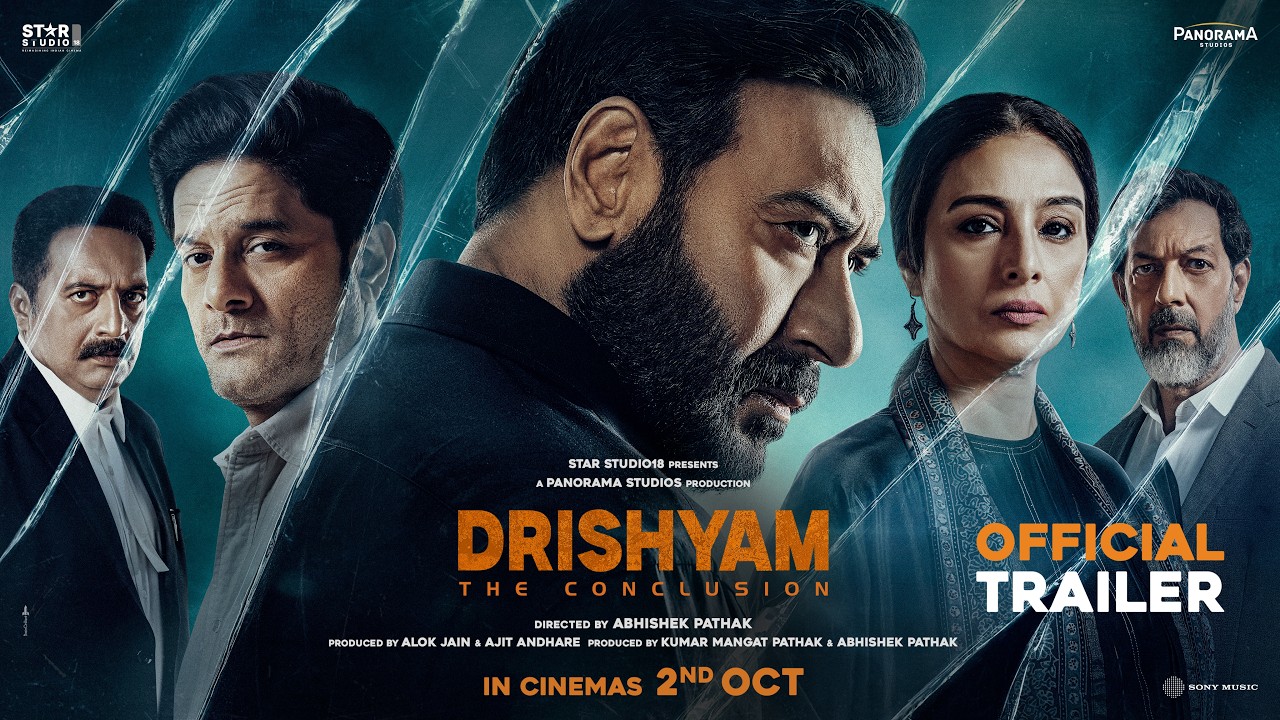
Drishyam: The Conclusion: frequently asked questions
- What is the rating of "Drishyam: The Conclusion" on Claqueta Ácida?
- "Drishyam: The Conclusion" scored 5.4/10 on Claqueta Ácida in the review by Odin Lagbert.
- Is "Drishyam: The Conclusion" worth watching?
- With reservations. We gave it 5.4/10 (Citric Acid), our rating for uneven films with something worth saving.
- Who directed "Drishyam: The Conclusion"?
- "Drishyam: The Conclusion" was directed by Abhishek Pathak.
Theater Collateral Damage Report
Psychophysical impact certificate issued by Odin Lagbert
Provoca un letargo reflexivo que invita a cuestionar todas las decisiones vitales tomadas antes de entrar a la sala.
El segundero se convierte en un enemigo íntimo mucho antes de alcanzar la mitad del metraje.
Doble espresso cargado sin azúcar, consumido de golpe para evitar el coma inducido por la verborrea judicial.
"El instante en que la investigación policial se estanca en bucles expositivos interminables que anulan cualquier tensión acumulada."
The rebuttal from Dante Sangre (Blockbuster Scalpel)
In stark disagreement with the review given by Odin Lagbert.
“Desastre glorioso, funcional, sin remedio Yo vi la apertura. Lenta, sin energía. El ritmo recuerda a un tráiler roto. El montaje sufre de lobotomía. Yo comparo con los 80. Aquellos eran basura industrial. Tenían sangre, no plástico. Aquí solo hay lavado de cara. Yo analizo los efectos. Son engendro de CGI barato. No generan tensión real. El suspense se evapora. Yo juzgo la narrativa. Es una estafa final. El arco ya murió. El final es cadáver corporativo. Yo otorgo siete punto nueve. La intención fue ambiciosa. La ejecución es un desastre glorioso. La película aún corta. Yo escucho la banda. Es ruido sin propósito. Los actores parecen sombras vacías. La atmósfera huele a fracaso.
💬 Community Verdict
What did you think of the film? Rate it from 0 to 10 to compare it with the editorial review.
You haven't voted yet
📢 ¿Te ha gustado el ácido?
Comparte esta crítica con tus amigos cinéfilos o desata la polémica en redes.
⚡ THE CINEMATIC VENOM YOUR INBOX CRAVES
No sugarcoated ratings, no corporate fluff. Subscribe for our uncensored weekly analysis or join the private Telegram for press previews, poll clashes, and instant alerts.
Alertas de estrenos en 1 segundo, encuestas en caliente y audios al salir de pases de prensa.
Recibe la dosis semanal en tu mail + regalo inmediato del PDF con 50 joyas ocultas de culto.
Related Reviews
Recommended autopsies for demanding film buffs.
 ⚠️ Ácido Sulfúrico 3.2
 On the Run: A Senseless Sprint
⚡ Comparten trinchera editorial en la sección de Estrenos.
A marathon of clichés and marketing sweat that leaves the audience feeling like they've run in circles. 💀
 🔥 Fusión Nuclear 8.0
 Bitter Christmas: Almodóvar Comes Home (And Saves Us from Corporate Holiday Hell)
⚡ Comparten trinchera editorial en la sección de Estrenos.
Almodóvar turns holiday grief into an intimate, visually stunning, and emotionally raw drama. Bárbara Lennie shines, but the script stumbles in the third act. 8/10.
 ⚡ Ácido Cítrico 6.8
 Azrael: Samara Weaving and the Hell of Silence
⚡ Comparten trinchera editorial en la sección de Estrenos.
E.L. Katz and Simon Barrett deliver a brutal, relentless mute survival horror film where Samara Weaving once again proves why she is the modern scream queen.
Editorial Ecosystem
Cinephile connections, archive interviews and related analyses.
💬 Debate Cinéfilo & Autopsia de Lectores
0 veredictos¿Discrepas con nuestra nota? ¿Es una obra maestra o veneno puro? Deja tu veredicto abajo sin necesidad de registro.


Aún nadie ha dejado su veredicto para esta película.
Sé el primero en clavarle el colmillo rellenando el formulario de arriba.