The Man Who Defied the King — The Elegy of Political Impotence According to Paul Greengrass
Paul Greengrass signs a desolating elegy on the 14th-century peasant rebellion that exposes the absolute impotence of the individual against the system.
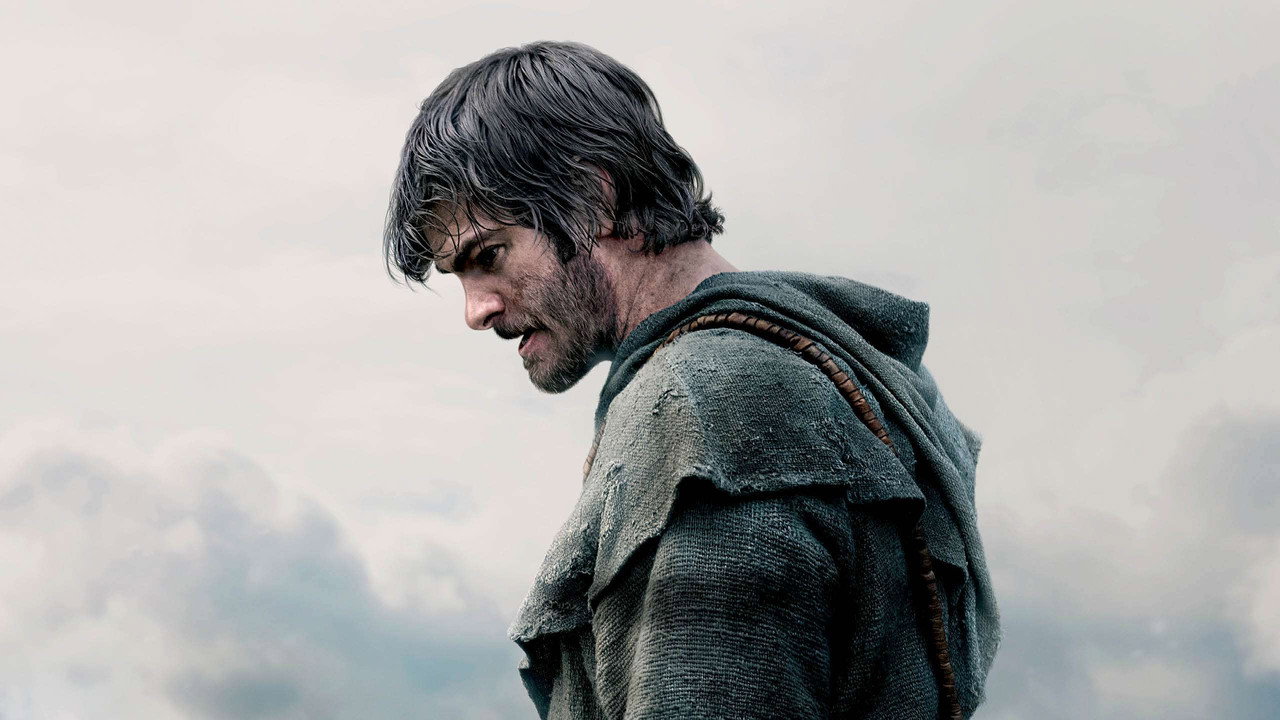
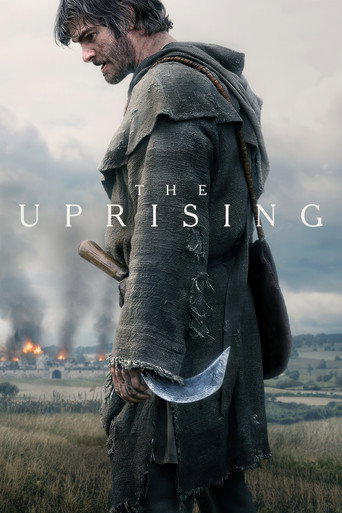
The Man Who Defied the King: full review
There is something profoundly disturbing about watching a director historically associated with tactical vertigo and contemporary efficiency decide to plunge into the mire of 14th-century England. Paul Greengrass abandons his modern suspense devices, those shaky cameras that made us feel the impact of bullets in Bourne, to deliver a fresco where feudal geopolitics acquires the viscous texture of a collective nightmare. We find ourselves before a work that disdainfully rejects the populist catharsis of standard industrial cinema, preferring to bleed its characters out in a purgatory of abusive taxes and corpses piled high by the plague. The premise sets the action in a territory where demographics have been decimated and central power takes refuge in the infantile paranoia of a monarch besieged by nocturnal terrors. It is a risky bet, almost suicidal, for a filmmaker who has made immediacy his trademark, but here slowness is not a flaw; it is the primary tool of psychological torture.
Far from constructing a triumphalist ode to popular heroism, the narrative functions as a mechanism for the systematic demolition of any notion of historical agency. The protagonist, played by an Andrew Garfield with a gaunt face and a permanently astonished look, does not seek to lead any revolution; he simply tries to pay an impossible tribute while dragging his grief for his family. The rebellion does not arise from ideological conviction or strategic planning, but from material exhaustion and the most absolute despair in the face of an administrative system that charges fees for the death of loved ones. Greengrass demonstrates unusual lucidity in filming this outburst not as an emancipatory feat, but as the unequivocal symptom of a diseased society that devours its own children. There are no flags waving in the wind, only mud, hunger, and the cold certainty that the system does not break; it adapts.
Staging deliberately avoids the habitual operatic pomp of period cinema to plunge the spectator into a harsh naturalism where mud and sweat replace cheap epic. The cinematography by Pål Ulvik Rokseth gives each shot an almost funerary gloom, where natural light always seems on the verge of extinguishing under a leaden sky that weighs heavily upon the peasants' shoulders. Moving across this moral wasteland are memorable figures such as the priest played by Jamie Bell, whose egalitarian proclamations sound less like inspiring revolution than like litanies pronounced at the edge of the gallows. The score composed by Volker Bertelmann accentuates this sensation of imminent asphyxiation, weaving a dull hum that accompanies the inexorable advance of the dispossessed toward their own annihilation. It is a sound that does not invite action, but resignation, a constant drone reminding you that you are trapped in a cycle with no way out.
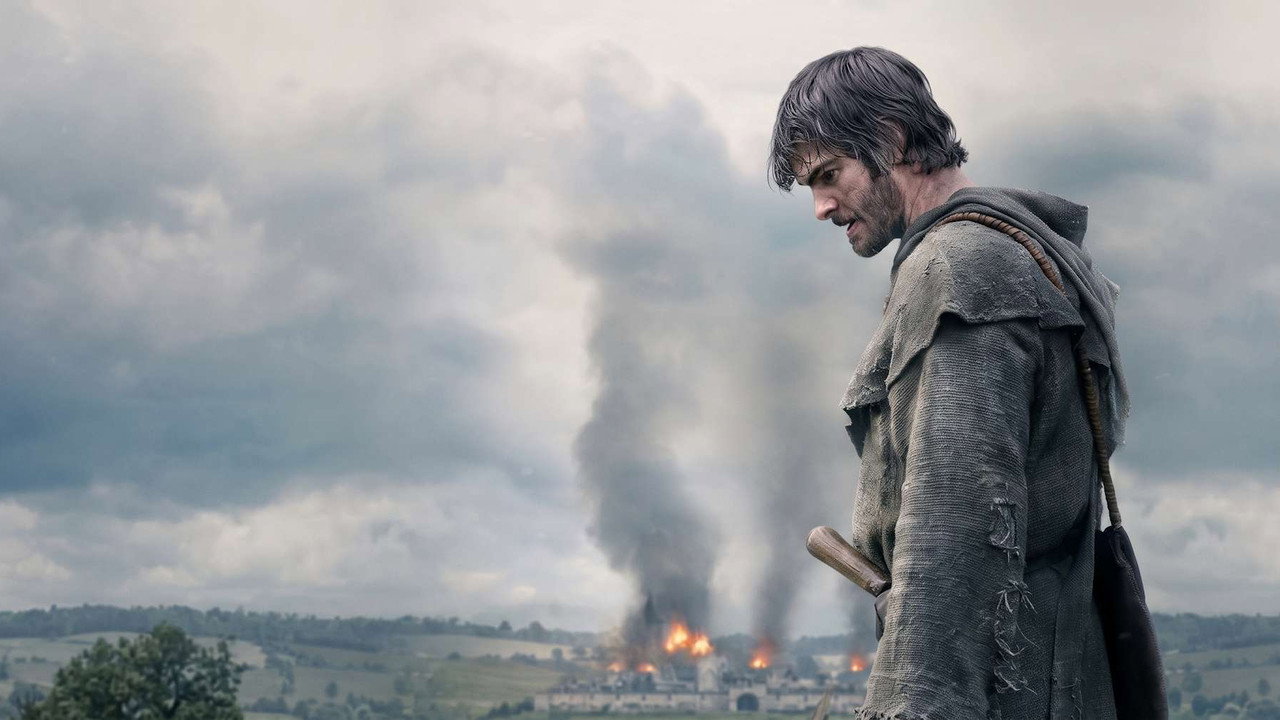

The architecture of defeat
The dramatic framework rests upon a gallery of faces that embody the rigidity of a world fractured by plague and noble greed. Stephen Dillane brings glacial authority as the archbishop, while Tom Hollander modulates with millimetric precision the bureaucratic avarice of the kingdom's treasurer. There are no operetta villains on this board, but greased parts of an extractive machinery that operates with the cold precision of a Swiss watch. Actor direction prioritizes mutism and gestural restraint over grandiloquent speech, allowing tension to accumulate in crossed glances during tax transactions and arbitrary interrogations. It is an exercise in restraint that demands patience from the viewer, because the true violence here is not physical, but administrative.
The central stretch of the footage consolidates this atmosphere of inexorability when local revolts begin to spread across the country under cardboard-cutout figures converted into involuntary myths. The central character advances dragged by a current he neither understands nor can control, transformed into the banner that history instrumentalizes before discarding it. Volker Bertelmann's score withdraws in key moments to make room for the silence of depopulated fields, underlining the intrinsic loneliness of those who challenge the crown with no tools other than their own misery. Editing, somewhat irregular at first, finds its rhythm in this section, where the repetition of assembly scenes is not a flaw, but a metaphor for bureaucracy repeating itself to infinity.
The best
- The oppressive atmosphere: An uncompromising portrait of medieval misery that shuns commercial cardboard and leaves you with the taste of dirt in your mouth.
- Andrew Garfield's work: His ability to transmit exhausted vulnerability and hopelessness of redemption, an actor who disappears into the character.
- Volker Bertelmann's score: A sound design that turns silence and ambient hum into tangible characters, almost more present than the actors.
The worst
- The pacing in its central stretch: Certain narrative reiterations in peasant assemblies that border on didactic redundancy and test the patience of the most impatient viewer.
- The emotional dryness: The absolute lack of concession to the viewer can feel hermetic for those seeking conventional epic or a redemptive ending.
The Verdict of Claqueta Ácida
Paul Greengrass signs one of his most mature and desolating films, reminding us that popular revolts are usually the prelude to an even greater punishment. Far from gifting the audience the catharsis of an incandescent victory, the film dares to show the painful reverse of the historical myth: the realization that the individual is merely fuel for an imperturbable machinery of power. A work as uncomfortable as it is intellectually stimulating that challenges the conventions of the historical blockbuster with the sober elegance of a feudal requiem. It is not a movie for everyone, but it is a necessary movie for those who believe that history is linear. 💀
🎬 Tráiler Oficial
Abrir en YouTube
The Man Who Defied the King: frequently asked questions
- What is the rating of "The Man Who Defied the King" on Claqueta Ácida?
- "The Man Who Defied the King" scored 6.8/10 on Claqueta Ácida in the review by Odin Lagbert.
- Is "The Man Who Defied the King" worth watching?
- With reservations. We gave it 6.8/10 (Citric Acid), our rating for uneven films with something worth saving.
- Who directed "The Man Who Defied the King"?
- "The Man Who Defied the King" was directed by Paul Greengrass.
Theater Collateral Damage Report
Psychophysical impact certificate issued by Odin Lagbert
Incapacidad absoluta para el bostezo gracias a la atmósfera opresiva, aunque con momentos de sequía narrativa que exigen rigor intelectual.
Apetece mirar el reloj exactamente cuando los recaudadores de impuestos aparecen para recordarnos que la burocracia feudal es eterna.
Un espresso doble tomado en una taza de peltre oxidado mientras se reflexiona sobre la inutilidad histórica de las revueltas populares.
"El instante en que el protagonista mata al soldado por defender a su comunidad, marcando el paso de la supervivencia silenciosa al martirio inevitable."

The rebuttal from Dante Sangre (Blockbuster Scalpel)
In stark disagreement with the review given by Odin Lagbert.
“Mierda de pretensión sin sustancia Yo vi su estilo desvanecido. El ritmo se volvió plomo. Las tomas temblorosas desaparecieron. Solo quedó humo barato. Los decorados parecen cartón corrugado. El vestuario huele a plástico. Todo parece una basura industrial. Un lavado de cara evidente. Garfield luce como muñeco roto. Su expresión es lobotomía total. No transmite ni una chispa. Es un cadáver corporativo. La trama es un engendro incoherente. Los diálogos suenan a relleno. No hay tensión, solo vacío. La historia se arrastra, moribunda. En los ochenta se hacía magia. Con presupuesto se construía épico. Hoy solo venden humo barato. Esta película es pura estafa. Yo la descarto sin remordimiento. Merece ser enterrada pronto. No hay redención posible. Cero estrellas, puro fracaso.
💬 Community Verdict
What did you think of the film? Rate it from 0 to 10 to compare it with the editorial review.
You haven't voted yet
📢 ¿Te ha gustado el ácido?
Comparte esta crítica con tus amigos cinéfilos o desata la polémica en redes.
⚡ THE CINEMATIC VENOM YOUR INBOX CRAVES
No sugarcoated ratings, no corporate fluff. Subscribe for our uncensored weekly analysis or join the private Telegram for press previews, poll clashes, and instant alerts.
Alertas de estrenos en 1 segundo, encuestas en caliente y audios al salir de pases de prensa.
Recibe la dosis semanal en tu mail + regalo inmediato del PDF con 50 joyas ocultas de culto.
Related Reviews
Recommended autopsies for demanding film buffs.
 🔥 Fusión Nuclear 8.5
 The Wicker Man: The Cinematic Ritual That Burns You Alive (And No, It’s Not a Metaphor)
⚡ Hermana de saga: otro capítulo diseccionado con rigor forense.
Robin Hardy and Anthony Shaffer forged a pagan celluloid cult: 94 minutes of suffocating tension that choke you like the smoke of a sacrifice. Edward Woodward burns on screen. Will you accept the challenge?
 ⚠️ Ácido Sulfúrico 3.2
 On the Run: A Senseless Sprint
⚡ Afinidad temática directa en atmósfera, estilo y fijaciones visuales.
A marathon of clichés and marketing sweat that leaves the audience feeling like they've run in circles. 💀
 ⚡ Ácido Cítrico 6.8
 Azrael: Samara Weaving and the Hell of Silence
⚡ Afinidad temática directa en atmósfera, estilo y fijaciones visuales.
E.L. Katz and Simon Barrett deliver a brutal, relentless mute survival horror film where Samara Weaving once again proves why she is the modern scream queen.
Editorial Ecosystem
Cinephile connections, archive interviews and related analyses.
💬 Debate Cinéfilo & Autopsia de Lectores
0 veredictos¿Discrepas con nuestra nota? ¿Es una obra maestra o veneno puro? Deja tu veredicto abajo sin necesidad de registro.


Aún nadie ha dejado su veredicto para esta película.
Sé el primero en clavarle el colmillo rellenando el formulario de arriba.