Law & Order — Special Victims Unit: Dick Wolf's Catholic Exorcism
An analytical dissection of Dick Wolf's machinery: when television justice becomes a placebo against real-world trauma.

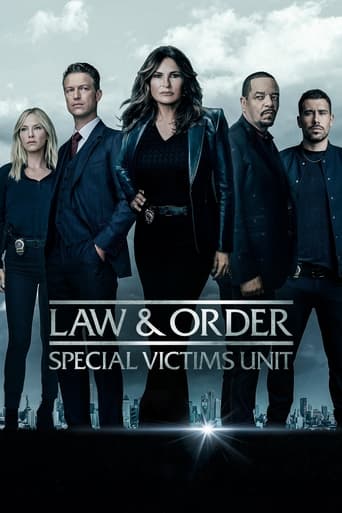
Law & Order: Special Victims Unit: full review


There is something profoundly comforting about the immutability of fictional institutions when the real world collapses into a cesspool of systemic incompetence. Since its genesis in 1999 under the tutelage of Dick Wolf, this bastardized yet infinitely more charismatic offshoot of the franchise's primal universe understood that the contemporary viewer does not seek sociological rigor in prime-time television, but rather a form of Sunday absolution. We find ourselves before a formula that operates with the precision of a Swiss clockwork mechanism, where the most abject human pain is domesticated, processed through a pristine aesthetic filter, and filed away before the credit roll appears. The nocturnal refuge provided by this New York precinct is nothing more than a narrative engineering device designed to ease the bourgeois conscience in the face of urban barbarism.
The perverse genius of the proposal lies in its absolute refusal to contaminate the viewer's comfort with the moral ambiguity that characterizes real-world courts. While contemporary justice struggles between corruption, bureaucratic sloth, and operational collapse, the fiction manufactured by Universal Television grants us a universe where every atrocity perpetrated against the most vulnerable sectors finds a symmetrical, forceful, and almost always triumphant response. We are not looking at an anthropological document on sexual trauma or domestic violence, but rather at a carefully choreographed exorcism ritual. The screen becomes an altar where collective guilt is dissolved through the intervention of civil servants who never sleep, never doubt their methods, and, above all, never lose a trial for lack of conclusive evidence.
This pretense of sanitizing horror through the corset of the procedural format generates a fascinating paradox that sustains interest season after season. The scripts, nominally inspired by the most lurid headlines of the New York press, smooth out the rough edges of tragedy to transform it into a digestible, almost comforting entertainment that is consumed with the same naturalness as taking a pharmaceutical sedative. The spectator attends the feast of others' suffering from the safety of their living room, knowing perfectly well that the narrative structure functions as a life insurance policy against frustration. At the end of each episode, the judicial system imagined by the creator redeems its own historical shortcomings by condemning the culprit with an efficacy bordering on the miraculous, granting us a comforting fiction that substitutes true justice for its most sterilized and photogenic version.


The architecture of the procedure and the trap of rhythm
The uninterrupted success of this machinery rests not on breakthrough formal discoveries or auteur aesthetic whimsies one usually applauds, but on the inflexible rigidity of its two-part structure. The first half of the episode always functions as a controlled descent into the hells of the 16th precinct in Manhattan, where the team led by veteran Donald Cragen examines the remains of the tragedy with a mixture of professional fatigue and crusading zeal. The second half shifts inexorably toward the courtroom, transforming human drama into a dialectical game of chess where the prosecutors' eloquence matters infinitely more than forensic evidence. This unyielding binarism prevents any hint of profound reflection, reducing the complexity of trauma to a moral puzzle that always fits perfectly before the final commercial break.

The faces of dogma: between iconography and rigidity
Within this closed ecosystem, performances function less as exercises in psychological exploration and more as television totems perfectly recognizable by the masses. Mariska Hargitay, in the central role of Olivia Benson, has built over the decades a cultural icon whose evolution transitions from militant empathy to a sort of secular sanctity bordering on hagiography. Her classic counterpart during the early era, detective Elliot Stabler played by Christopher Meloni, provided that testosteronized and contained fury that fueled dramatic tension through reproachful glares and slamming doors in interrogation rooms. Orbiting this magnetic core are secondary figures as functional as Richard Belzer's cynical John Munch or Ice-T's street-smart Fin Tutuola, interchangeable pieces of a choral gear where character depth systematically yields to the demand for weekly continuity.
The best
- Narrative consistency: The imperturbable capacity to maintain a hyper-functional entertainment standard for decades without collapsing from a cynic's overdose.
- Acting iconography: The magnetic presence of Mariska Hargitay, capable of sustaining the moral weight of the series with the discipline of a dramatic metronome.
The worst
- Predictable schematism: The dangerous tendency to reduce the complexity of abuse and human pain to a routine forty-two-minute formula.
- Moral complacency: The insistence on offering redemptive endings that whitewash the deep cracks and incompetence of the real legal system.
The Verdict of Claqueta Ácida
Law & Order: SVU is not a masterpiece of television avant-garde, but it possesses such a disarming industrial efficacy that it is foolish to completely dismiss it. It functions as a high-potency cathodic analgesic, a comforting ritual that allows us to stare into the abyss of human depravity knowing that, on the other side of the screen, a group of infallible professionals will restore cosmogonic order before dinner gets cold. It does not seek truth nor challenge the demanding spectator's intellect; it limits itself to offering designer justice that calms our worst urban nightmares with metronomic precision. A guilty pleasure, yes, but executed with a military discipline that deserves a certain cynical respect 💀.
Law & Order: Special Victims Unit: frequently asked questions
- What is the rating of "Law & Order: Special Victims Unit" on Claqueta Ácida?
- "Law & Order: Special Victims Unit" scored 7.5/10 on Claqueta Ácida in the review by Odin Lagbert.
- Is "Law & Order: Special Victims Unit" worth watching?
- With reservations. We gave it 7.5/10 (Citric Acid), our rating for uneven films with something worth saving.
- Who directed "Law & Order: Special Victims Unit"?
- "Law & Order: Special Victims Unit" was directed by Dick Wolf.
Theater Collateral Damage Report
Psychophysical impact certificate issued by Odin Lagbert
Tan mecánicamente infalible que anula cualquier conato de hastío legítimo.
Cero tentaciones de mirar el segundero gracias al implacable diseño de su maquinaria.
Un café solo y amargo, tomado frente a la pantalla con la resignación del fiscal de guardia.
"El instante en que el realismo sucio de los titulares se pliega mansamente al cierre feliz de sumario."
The rebuttal from Dante Sangre (Blockbuster Scalpel)
In stark disagreement with the review given by Odin Lagbert.
“Basura industrial. Dos puntos seis. Odin habla de "absolución". Mentira. Es anestesia. Veinte años de plástico. Mismo guion. Mismo corte. Cero riesgo. Dick Wolf fabrica cadáveres corporativos. No hay tensión. Solo trámite. El dolor se empaqueta. Se vende. Se olvida. En los noventa, *Twin Peaks* te rompía el cráneo. Aquí te aburren a muerte. La comisaría es un set vacío. Los detectives son marionetas. El espectador no busca rigor. Busca dormir. Y esta serie le da la almohada. Es una estafa masiva. Lavado de cara eterno. No hay ambigüedad. Hay vacío. Odin ve relojería. Yo veo lobotomía. Veinte temporadas de nada. El trauma se archiva. El público se va. Sin preguntas. Sin cicatrices. Solo sábanas limpias. Televisión de plástico. Cero alma. Cero pulso. Un engendro que respira por inercia. No es arte. Es higiene. Y la higiene no salva a nadie. Solo limpia la sangre. Para que mañana vuelva a manchar.
💬 Community Verdict
What did you think of the film? Rate it from 0 to 10 to compare it with the editorial review.
You haven't voted yet
📢 ¿Te ha gustado el ácido?
Comparte esta crítica con tus amigos cinéfilos o desata la polémica en redes.
⚡ THE CINEMATIC VENOM YOUR INBOX CRAVES
No sugarcoated ratings, no corporate fluff. Subscribe for our uncensored weekly analysis or join the private Telegram for press previews, poll clashes, and instant alerts.
Alertas de estrenos en 1 segundo, encuestas en caliente y audios al salir de pases de prensa.
Recibe la dosis semanal en tu mail + regalo inmediato del PDF con 50 joyas ocultas de culto.
Related Reviews
Recommended autopsies for demanding film buffs.
 🔥 Fusión Nuclear 9.0
 *Six Feet Under: When Family Drama Smells Like a Decadent Corpse*
⚡ Afinidad temática directa en atmósfera, estilo y fijaciones visuales.
HBO served us a feast of family dysfunction, pitch-black sarcasm, and metaphorical corpses. Alan Ball dug a grave so deep we still haven’t climbed out.
 🔥 Fusión Nuclear 8.5
 *Animal Kingdom: A Descent into Hell (Where Family is the Devil’s Playground)*
⚡ Afinidad temática directa en atmósfera, estilo y fijaciones visuales.
A visceral takedown of *Animal Kingdom*, where "family values" take on a whole new (and deeply criminal) meaning.
 🔥 Fusión Nuclear 8.5
 *Crematorio: Ambition Without Limits – A Masterclass in Moral Rot (Or How to Binge-Watch Your Own Corruption)*
⚡ Afinidad temática directa en atmósfera, estilo y fijaciones visuales.
A scathing, no-holds-barred evisceration of *Crematorio*—the Spanish series that didn’t just show you the sewers of power, but handed you a shovel and dared you to dig deeper.
Editorial Ecosystem
Cinephile connections, archive interviews and related analyses.
💬 Debate Cinéfilo & Autopsia de Lectores
0 veredictos¿Discrepas con nuestra nota? ¿Es una obra maestra o veneno puro? Deja tu veredicto abajo sin necesidad de registro.


Aún nadie ha dejado su veredicto para esta película.
Sé el primero en clavarle el colmillo rellenando el formulario de arriba.