
Model Citizen — Ontological Panic Before the Lens of Power
A cynical dissection of Model Citizen (2026), where extreme surveillance doesn't seek to control the individual, but to prove they are still breathing.
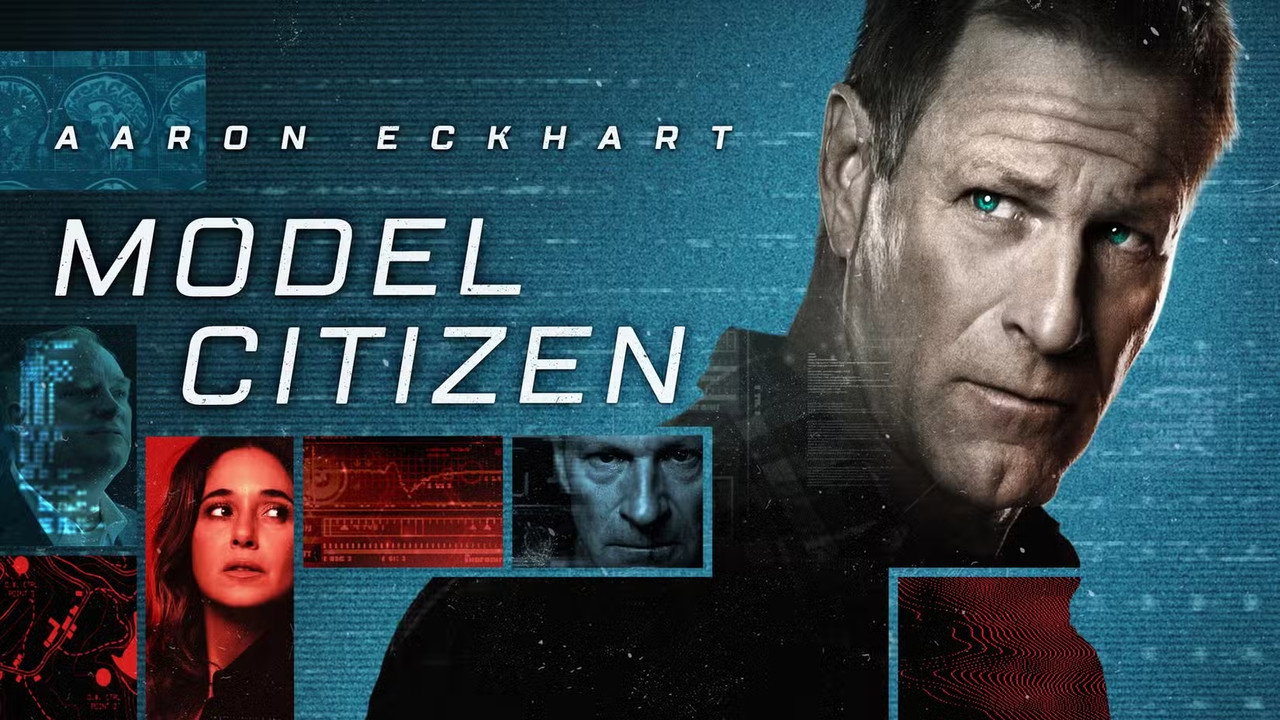

Model Citizen: full review
The temptation to reduce any contemporary dystopia to a pamphlet on the perils of databases is a vice that the modern viewer savors with the same alacrity as they consume their ration of industrial sulfur. We have been educated to fear the mechanical eye that records every step on the sidewalk, assuming that the State watches us because it hates us or because it desires our economic submission. But it happens that from time to time a modest production appears, willing to invert the terms of the equation, reminding us that the true horror of the panopticon does not lie in the loss of privacy, but in the suspicion that, if we stop complying with the norm and being recorded, we simply cease to exist for the world. It is a premise that smells of cheap philosophy in an airport bar, but which here is executed with a clinical exactness that forces one to bite their tongue before issuing judgment.
In that swampy and feverish territory moves this proposal signed by Tag Mendillo, a director who elegantly sidesteps the commonplaces of the technological thriller to venture into a much more arid and unsettling terrain. Here there is no evil corporation conspiring in glass towers illuminated by bluish LEDs; what we have is an administrative gear so perfect that it devours the identity of those who feed it. The figure of the model citizen ceases to be a civic ideal to become the only ontological alibi available for an individual cornered by their own credentials. It is a critique of the system that does not scream, but whispers with the coldness of a form printed on low-quality recycled paper.
The script written by Ian Arnison-Phillips understands with lucidity that the contemporary nightmare is not the Big Brother that punishes the slip, but the bureaucracy that ignores the dissident until erasing them from the civil registry and from collective memory. The laws of the system thus become religious dogmas where the lack of registration equates to the original sin of invisibility. The machinery of Red Sea Media backs this minimalist pulse with a budgetary containment that directly benefits the general tone, forcing the frames to concentrate on the suffocation of the closed space and on the rigidity of normative behaviors. There are no infinite funds for explosions, only the silent anguish of a man who discovers that his name is just a chain of characters in a cold server.

The weight of the gaze and the protocol
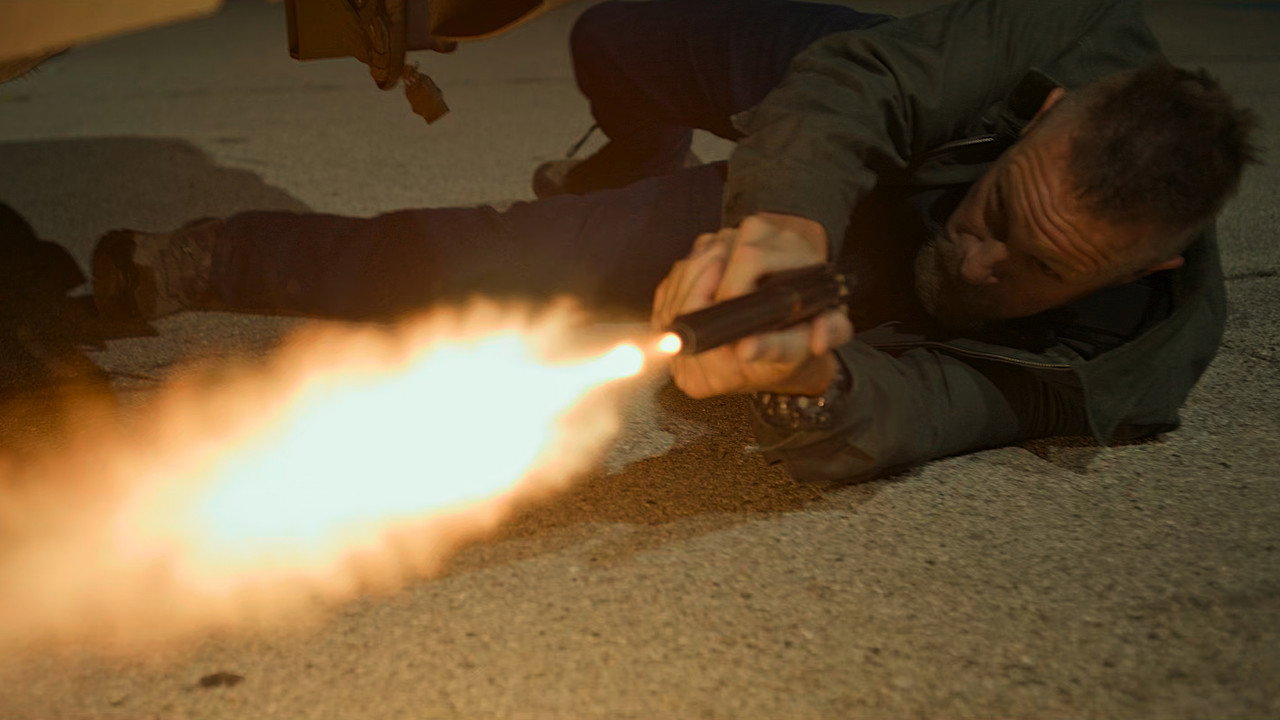
The direction of Tag Mendillo operates as an implacable metronome that marks the tempo of a choreography where freedom of movements is synonymous with systemic error. The staging renounces pyrotechnic gestures to entrust all the dramatic weight to the geometric disposition of the bodies facing the lenses of control. Each shot is calculated millimeter by millimeter to transmit the sensation that the walls narrow every time a municipal ordinance is infringed. The camera does not pursue the characters out of sadistic voyeurism, but out of an urgent need for formal certification; if the objective moves away for a single second, the portrayed subject fades into absolute irrelevance. It is an aesthetic of containment that reminds of the best moments of European suspense cinema, where terror does not come from what is seen, but from what is insinuated in the margins of the frame.
The interpretive trench of Aaron Eckhart

The work of Aaron Eckhart at the head of the cast functions as the necessary anchor to avoid that the philosophical premise dissolves into pure intellectual abstraction. His interpretation of the protagonist transits with mathematical coldness through the range of grays of one who has internalized self-criticism until turning it into their only moral armor. Beside him, the presence of Emmanuelle Chriqui brings the necessary skeptical counterpoint, while secondary characters like Paul Braunstein and David Hewlett amplify the sensation of being surrounded by bureaucrats of paranoia who interpret the regulation with the ferocity of a medieval inquisitor. There is no overacting or sentimental gestures; the faces are sculpted by the weight of obligation and digital fatigue. Eckhart manages that the viewer feels the claustrophobia in the stomach, not in the head, thanks to an economy of gestures that borders on paralysis.
The best
- Aaron Eckhart: His absolute conviction in embodying the citizen trapped in his own compliance cell.
- The ontological concept: The brilliant subversion of the surveillance genre turned into proof of existence.
- The direction of Tag Mendillo: His resounding refusal to fall into cheap digital effectism and his bet on suffocating geometry.
The worst
- The discursive rigidity: Certain stretches of the script reiterate too much the ideological theses when the image already spoke for itself.
- The secondary design: Some characters of the work environment barely touch the thick stroke in their function of bureaucratic obstacle.
The Verdict of Claqueta Ácida
Model Citizen demonstrates with unusual elegance that genre cinema still retains neurons capable of thinking beyond the fast consumption algorithm. Tag Mendillo signs an uncomfortable piece that transforms the cold contemporary bureaucracy into a first-rate existential nightmare, supported by the always solvent gaze of an Aaron Eckhart who seems to challenge us from the other side of the viewfinder. It will not change the course of film history, but it leaves us the satisfactory certainty that intelligence and discomfort still have a space in the billboards 💀.
🎬 Tráiler Oficial
Abrir en YouTube
Model Citizen: frequently asked questions
- What is the rating of "Model Citizen" on Claqueta Ácida?
- "Model Citizen" scored 6.8/10 on Claqueta Ácida in the review by Odin Lagbert.
- Is "Model Citizen" worth watching?
- With reservations. We gave it 6.8/10 (Citric Acid), our rating for uneven films with something worth saving.
- Who directed "Model Citizen"?
- "Model Citizen" was directed by Tag Mendillo.
Theater Collateral Damage Report
Psychophysical impact certificate issued by Odin Lagbert
Cero bostezos, pero una constante sensación de estar siendo interrogado por un funcionario del catastro digital.
Apetecerá mirar el reloj exactamente cuando el protagonista olvide por tercera vez su propio número de registro.
How much second-hand embarrassment the film causes (10 = maximum). It is not the review score.
Un espresso corto y amargo, tomado de pie y mirando fijamente a la esquina superior del salón.
"El giro de guion donde la normativa deja de ser burocracia para convertirse en un requisito metafísico."
Another critic from the newsroom scores the same film. The main score is still the one at the top of the review.

The rebuttal from Lúa Ácida (Queen of the Box Office)
In stark disagreement with the review given by Odin Lagbert.
4.3/10 Me quedé con la piel erizada, pero no por la idea; fue la cámara la que me golpeó. Cada plano se arrastra como una herida abierta, sin ritmo, sin pulso. El montaje se vuelve una autopsia del suspense: cortes que se alargan hasta que el aliento se vuelve espuma. La luz, fría y sin matiz, aplasta la atmósfera en vez de perfumarla; la banda sonora susurra como feromona moribunda, incapaz de arrancar la sangre del pecho. Los actores se mueven como sombras sin carne, sus gestos son mutilación lírica de la emoción. El guion promete una maquinaria de control que devora identidades, pero la puesta en escena se queda en un grotesco sagrado de papeles y decorados de oficina. No hay mordida, solo un vacío que se cuela bajo la epidermis y se queda allí, sin dejar huella.
📋 Ficha Técnica
| Año | 2026 |
| Duración | 93 min |
| País | United States of America |
| Guión | Ian Arnison-Phillips |
| Fotografía | N/A |
| Productora | Red Sea Media |
| Dónde ver | |
| Letterboxd | Ver Ficha ↗ |
⭐ Estrella Emergente
Aaron Eckhart
Anchors the film's central paranoia with the exact rigidity of someone terrified of vanishing if they dare to blink.
💬 Community Verdict
What did you think of the film? Rate it from 0 to 10 to compare it with the editorial review.
You haven't voted yet
📢 ¿Te ha gustado el ácido?
Comparte esta crítica con tus amigos cinéfilos o desata la polémica en redes.
⚡ THE CINEMATIC VENOM YOUR INBOX CRAVES
Every Sunday: the week’s reviews, a recommended antidote and the editors’ verdict (in Spanish). No sugarcoated ratings, no corporate fluff. Or join the private Telegram for press previews, poll clashes, and instant alerts.
Alertas de estrenos en 1 segundo, encuestas en caliente y audios al salir de pases de prensa.
Get the weekly dose in your email, every Sunday.
By subscribing you agree that we use your email only to send you the newsletter. Unsubscribe at any time. Privacy policy
Related Reviews
Recommended autopsies for demanding film buffs.
 ⚠️ Ácido Sulfúrico 3.2
On the Run: A Senseless Sprint
⚡ Afinidad temática directa en atmósfera, estilo y fijaciones visuales.
A marathon of clichés and marketing sweat that leaves the audience feeling like they've run in circles. 💀
 ⚠️ Ácido Sulfúrico 3.8
Apocalypse Z: New World: The Repetition Virus in the Canary Shelter
⚡ Afinidad temática directa en atmósfera, estilo y fijaciones visuales.
Relentless critique of Apocalypse Z: New World, Carles Torrens' sequel that turns the end of the world into an exercise in inertia and generic recycling.
 ⚡ Ácido Cítrico 6.8
Azrael: Samara Weaving and the Hell of Silence
⚡ Afinidad temática directa en atmósfera, estilo y fijaciones visuales.
E.L. Katz and Simon Barrett deliver a brutal, relentless mute survival horror film where Samara Weaving once again proves why she is the modern scream queen.
Editorial Ecosystem
Cinephile connections, archive interviews and related analyses.
💬 Debate Cinéfilo & Autopsia de Lectores
¿Discrepas con nuestra nota? ¿Es una obra maestra o veneno puro? Deja tu veredicto abajo sin necesidad de registro.
📏 Normas: se critica la película, no a las personas. Los insultos y los ataques personales se pueden borrar.