V/H/S — The Found Footage That Forgot It Was an Anthology Until It Was Too Late
Eight directors, one cursed format, and a script that reads like it was scribbled on a bar napkin. Art or accident? Silvia Mordaz dissects it with a scalpel and acid.


V/H/S: full review


Found footage had hit rock bottom. Or so we thought. In 2012, when the subgenre already reeked of mothballs and handheld scares had become a running gag in Scary Movie, V/H/S arrived like a desperate attempt to resuscitate a corpse. Eight directors, a shoestring budget (rumored to hover around $300,000), and a premise so simple it induced secondhand embarrassment: a gang of thugs stumbles upon a cursed tape in an abandoned house, and each segment of the film is a fragment of that VHS. It sounds like a cheap excuse to stitch together horror shorts, and in part, it is. But the worst part isn’t the lack of originality—it’s that some of these shorts don’t even feel like shorts. They’re half-baked ideas stretched to the brink of endurance.
The problem with V/H/S isn’t its ambition—it’s its execution. The film was born from a collective of directors tied to Radio Silence and Bloody Disgusting, a website that was once the epicenter of indie horror. The project reeks of camaraderie more than artistic vision: “Hey, what if we all make a movie together?” The result is a Frankenstein of tones, styles, and qualities that oscillates between brilliant and pathetic in a matter of minutes. Some segments work, like Adam Wingard’s, where found footage is used for more than cheap scares: there’s dark humor, well-built tension, and even a twist that surprises. Then Ti West’s segment arrives, and you wonder if the man dozed off during filming. Or Joe Swanberg’s, which feels like an SNL sketch directed by someone who’s never seen a horror movie.
The anthology format has always been a double-edged sword. When it works, like in Creepshow or The Twilight Zone, it’s because there’s a stylistic or thematic coherence tying the segments together. In V/H/S, the only thing uniting them is the VHS format and the promise that something will go wrong. But that promise is only half-fulfilled. There are moments when the film captures that gritty, chaotic vibe it’s chasing, like when Glenn McQuaid’s segment turns into a psychedelic trip through 80s hell. But then there are others, like Justin Martinez’s, that feel like they were plucked from a film school final project. The lack of uniformity wouldn’t be an issue if there were at least a baseline of quality across all segments, but here the bar is so low even the most forgiving viewer ends up exhausted.
And then there’s the framing narrative, that supposed thread giving everything meaning. A gang of thugs breaks into a house, finds a VHS, and instead of bolting like any sane person would, they sit down to watch the entire tape. Why? We don’t know. What for? Even less. It’s the kind of narrative decision only justified by someone thinking, “Hey, we need something to tie these shorts together.” The result is a frame that adds nothing, generates no tension, and often feels like an awkward filler between segments. If this is the best they could come up with for cohesion, it’s better not to ask what they discarded.
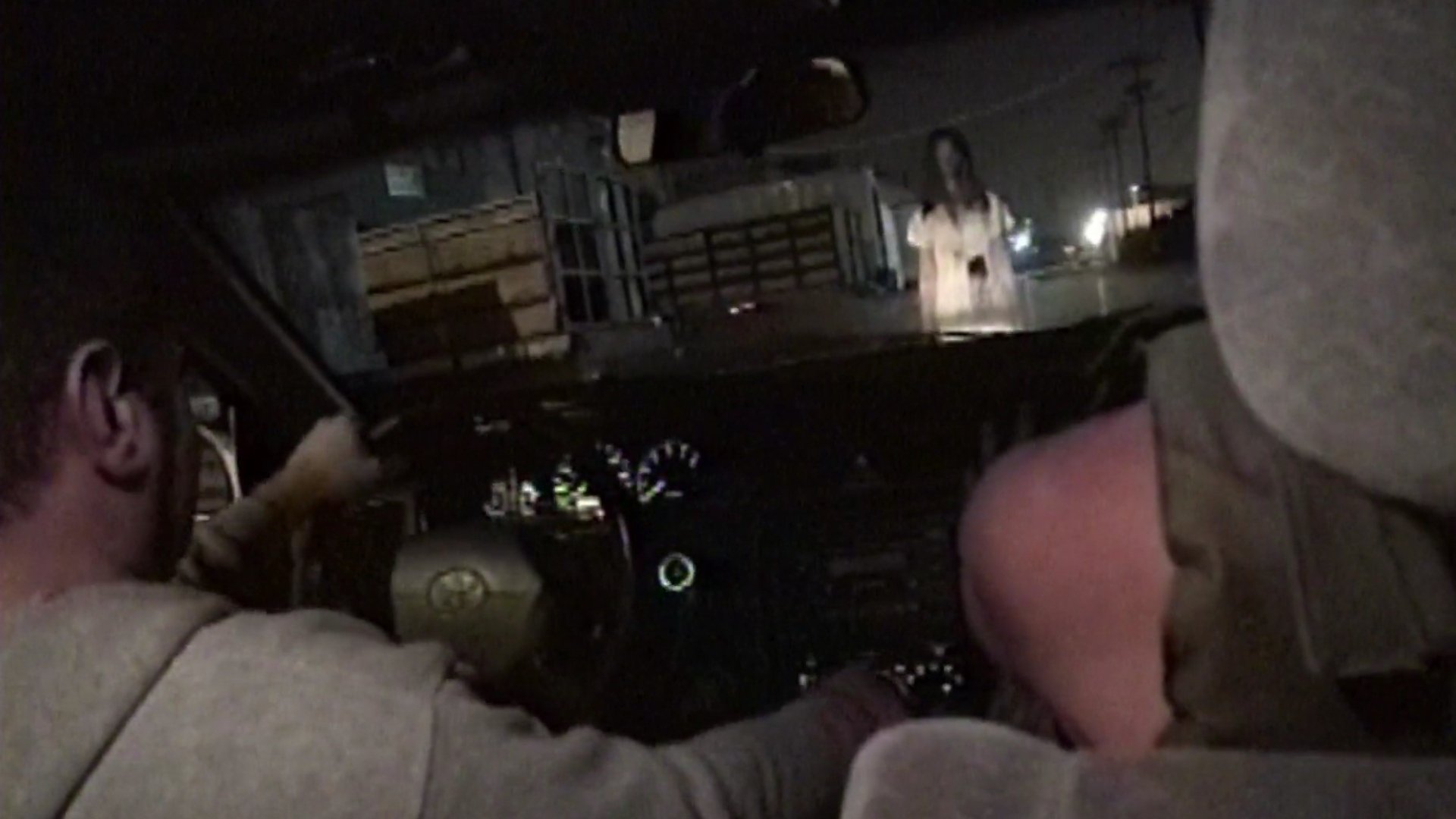
Direction: Eight Cooks in a Kitchen Too Small
The direction in V/H/S is an exercise in controlled schizophrenia. Each segment has its own style, its own rhythm, and in some cases, its own quality. Adam Wingard takes the crown with a short that blends horror and dark humor intelligently, using found footage for more than cheap scares. His segment, Tape 56, is the only one that seems to understand horror doesn’t have to be solemn: there are moments when the film laughs at itself, and that makes it even more terrifying. The shot where the camera lingers in a hallway while something crawls just out of frame is one of the best things found footage has delivered in years.
But then there’s Ti West’s segment, Second Honeymoon, which feels like it was directed by someone who’s heard of horror but never actually felt it. It’s slow, boring, and worst of all, predictable. West, who in films like The House of the Devil has proven he knows how to build tension, seems lost here. The short meanders without direction, with dialogue that sounds like filler and an ending that surprises no one. It’s as if West decided to make a horror short without scares, just to check a box. And then there’s Joe Swanberg, whose segment, The Sick Thing That Happened to Emily When She Was Younger, is so amateurish it’s hard to believe it’s from the same director as Drinking Buddies. Swanberg tries to mix psychological horror with found footage, but the result is a disaster of over-the-top acting and a script that feels like it was written in five minutes.
The rest of the segments range from forgettable to laughable. Glenn McQuaid attempts something different with Tuesday the 17th, a short that blends found footage with animation and practical effects, but the result is confusing and, at times, ridiculous. Justin Martinez delivers 10/31/98, a segment that feels like a student film: there are interesting ideas, but the execution is so clumsy it’s hard to take seriously. And then there’s the framing narrative, directed by David Bruckner, which is as unnecessary as it is predictable. The thugs watching the tape have no personality, no motivation, and worst of all, no fear. They’re mere spectators in their own movie, as if the directors forgot found footage is supposed to be immersive.
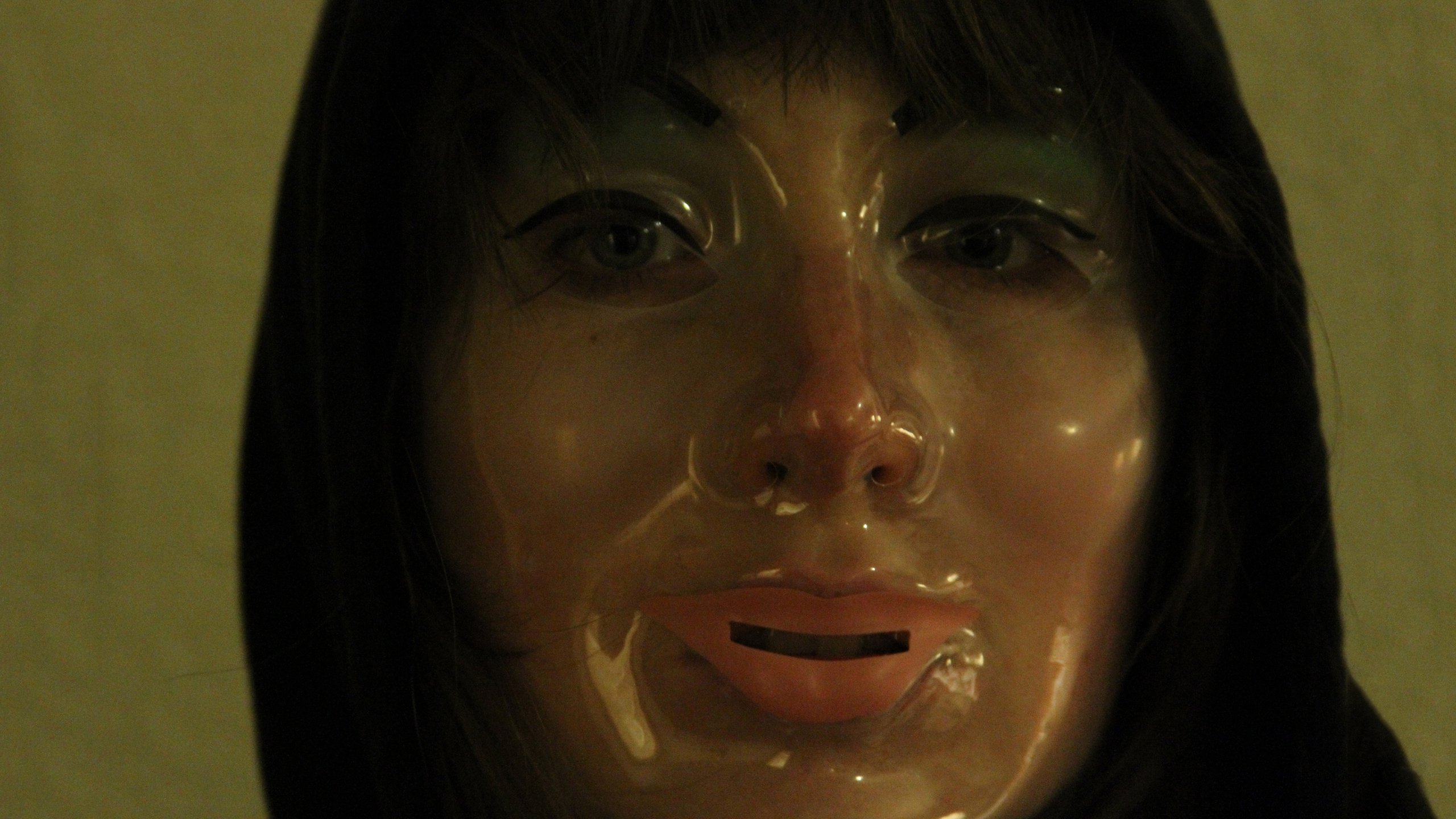
Performances: Overacting and Apathy in Equal Measure
The acting in V/H/S is a reflection of its script: some works, some is a disaster, and most passes without leaving a mark. Adam Wingard, who both directs and acts in his own segment, is the only one who seems to understand found footage isn’t synonymous with screaming like a maniac. His performance is restrained, almost naturalistic, and that makes the horror moments more effective. When Wingard screams, it’s because he actually seems scared, not because the script demands it.
But then there are the others. Lane Hughes, in Swanberg’s segment, is the perfect example of what not to do in a horror film. His performance is so exaggerated it feels like it was lifted from a parody. Every line of dialogue sounds fake, every reaction is too big for the screen. It’s as if Hughes decided that, since it’s a horror movie, he had to act like he was in a 19th-century play. And then there’s Sophia Takal, who in the same segment seems lost, as if she’s not quite sure what she’s doing there. Her character is so flat it’s hard to believe anyone wrote a script with her in mind.
The rest of the cast doesn’t stand out for better or worse. Calvin Lee Reeder and Kentucker Audley, in the framing narrative, are mere spectators in their own film, as if the directors forgot their characters should have something to say. Simon Barrett, who plays one of the thugs, at least tries to give his character some personality, but the script doesn’t make it easy. Overall, the acting in V/H/S is a reminder that found footage isn’t a genre for mediocre actors: when there are no special effects or elaborate sets, all that’s left is performance, and here, that performance is sorely lacking.
Screenplay: Half-Baked Ideas and Filler Dialogue
The script of V/H/S is a collage of ideas that never quite come together. Some segments show promise, like Wingard’s, where dark humor and horror blend intelligently. But then there are others, like Swanberg’s, where the dialogue sounds like filler and the situations are so predictable it’s hard to stay engaged. The problem isn’t a lack of originality—it’s a lack of coherence: each segment has its own tone, its own rhythm, and in some cases, its own quality. It’s as if the writers penned each short separately and then someone decided to stitch them together without considering how they fit.
The framing narrative is the worst example of this. The thugs watching the tape have no motivation, no personality, and worst of all, no fear. They’re mere spectators in their own film, as if the writers forgot found footage is supposed to be immersive. Why do they watch the entire tape? Why don’t they bolt the second they see something weird? These are questions the script doesn’t bother answering because it doesn’t care. The framing narrative is awkward filler, a desperate attempt to give cohesion to a film that doesn’t need it.
And then there’s the dialogue. At best, it’s functional. At worst, it’s laughable. Swanberg’s segment is the prime offender: every line sounds fake, as if the characters are reciting a script they don’t understand. “What’s happening here?” is a question repeated ad nauseam, as if the writers forgot horror is about what’s not said, not what’s screamed. Overall, the script of V/H/S is a reminder that found footage isn’t a genre for lazy writers: when there are no special effects or elaborate sets, all that’s left is dialogue, and here, that dialogue is nowhere to be found.
Technical Aspects: VHS as an Excuse for Mediocrity
The technical aspects of V/H/S are a double-edged sword. On one hand, the VHS format gives the film an air of authenticity that works in some segments. The grainy photography, desaturated colors, and abrupt cuts lend a retro touch that, in the hands of directors like Wingard, can be effective. But on the other hand, that same format becomes an excuse for mediocrity. When a segment doesn’t work, the directors can hide behind “it’s supposed to look like an 80s VHS,” as if that justifies the lack of tension or the shoddy special effects.
The cinematography, handled by Eric Branco, is uneven. In Wingard’s segment, the shots are well-composed and the lighting is effective, creating an atmosphere of grime and chaos that fits the film’s tone. But in other segments, like Swanberg’s, the photography is so flat it looks like it was shot on a home video camera. There are no interesting frames, no play with light and shadow—just static shots that feel like they were captured by a security camera. The editing, meanwhile, is chaotic. There are abrupt cuts that work, like in McQuaid’s segment, where the editing is used to create disorientation. But in other moments, like the framing narrative, the editing is so clumsy it’s hard to follow the action.
Sound is another weak point. In some segments, like Wingard’s, the sound design is effective, using ambient noises and silence to build tension. But in others, like Swanberg’s, the sound is so bad it feels like it was recorded on a phone mic. Dialogue sounds distorted, sound effects are cheap, and the music is nonexistent. Overall, the technical aspects of V/H/S are a reminder that format isn’t everything: no matter how much a film looks like an 80s VHS, without solid direction behind it, the result will be a mess.
The best
- Adam Wingard’s segment: The only one that seems to understand found footage can be grimy, funny, and terrifying all at once. Wingard blends dark humor and horror intelligently, using the format for more than cheap scares. The shot where the camera lingers in a hallway while something crawls just out of frame is one of the best the subgenre has delivered in years.
- Cinematography in some segments: When it works, like in Wingard’s short, the grainy photography and desaturated colors give the film an air of authenticity that fits the VHS format. The shots are well-composed, and the lighting is effective, creating an atmosphere of grime and chaos.
- The attempt to innovate: Though it doesn’t always work, some segments try something different, like Glenn McQuaid’s, which blends found footage with animation and practical effects. It’s confusing and, at times, ridiculous, but at least there’s an attempt to break the mold.
The worst
Joe Swanberg’s segment: A disaster of over-the-top acting and a script that feels like it was written in five minutes. Swanberg tries to mix psychological horror with found footage, but the result is an SNL* sketch directed by someone who’s never seen a horror movie.
- The framing narrative: Unnecessary, predictable, and poorly acted. The thugs watching the tape have no personality, no motivation, and worst of all, no fear. It’s an awkward filler that adds nothing to the film.
The Verdict of Claqueta Ácida
V/H/S is a film that wants to be a love letter to found footage but ends up feeling like a desperate cry for help. It’s not a total disaster—Wingard’s segment alone justifies the price of admission—but it’s far from the revolution Bloody Disgusting promised. The anthology format is a gamble, and here, the house always wins: for every moment of brilliance, there are two of mediocrity. If you’re a found footage purist, you might find something to like. If you’re looking for consistency, look elsewhere. And if you’re Ti West or Joe Swanberg, maybe it’s time to rethink your career choices. The VHS era is dead, and V/H/S is its zombie: it shuffles, it groans, and sometimes it scares you, but mostly, it just makes you wish it would stay buried. 💀
🎬 Tráiler Oficial
Abrir en YouTube
V/H/S: frequently asked questions
- What is the rating of "V/H/S" on Claqueta Ácida?
- "V/H/S" scored 6.2/10 on Claqueta Ácida in the review by Silvia Mordaz.
- Is "V/H/S" worth watching?
- With reservations. We gave it 6.2/10 (Citric Acid), our rating for uneven films with something worth saving.
- Who directed "V/H/S"?
- "V/H/S" was directed by David Bruckner, Chad Villella, Adam Wingard, Tyler Gillett, Glenn McQuaid, Justin Martinez, Joe Swanberg, Ti West, Matt Bettinelli-Olpin.
Theater Collateral Damage Report
Psychophysical impact certificate issued by Silvia Mordaz
1 amago en el tramo intermedio; pestañeo pesado en las transiciones más innecesarias.
El reloj aparece en escena justo cuando la subtrama secundaria pide paciencia.
2 espresso para no dejarse vencer por la mediocridad cómoda.
"A mitad del segundo acto cuando la subtrama secundaria empezó a pesar más de lo que aportaba."
💬 Community Verdict
What did you think of the film? Rate it from 0 to 10 to compare it with the editorial review.
You haven't voted yet
📢 ¿Te ha gustado el ácido?
Comparte esta crítica con tus amigos cinéfilos o desata la polémica en redes.
⚡ THE CINEMATIC VENOM YOUR INBOX CRAVES
No sugarcoated ratings, no corporate fluff. Subscribe for our uncensored weekly analysis or join the private Telegram for press previews, poll clashes, and instant alerts.
Alertas de estrenos en 1 segundo, encuestas en caliente y audios al salir de pases de prensa.
Recibe la dosis semanal en tu mail + regalo inmediato del PDF con 50 joyas ocultas de culto.
Related Reviews
Recommended autopsies for demanding film buffs.
 ⚡ Ácido Cítrico 7.1
 28 Years Later: The Bone Temple: when cult cinema trips over its own shadow
⚡ Afinidad temática directa en atmósfera, estilo y fijaciones visuales.
A sequel that smells rotten from the very first frame. Garland and DaCosta try to revive the genre, but the result is a technical knockout dressed up as a masterpiece.
 ⚡ Ácido Cítrico 5.8
 A Serbian Film: The Snuff That Thought It Was Art (and Ended Up a High-School Nightmare)
⚡ Afinidad temática directa en atmósfera, estilo y fijaciones visuales.
Srđan Spasojević serves up a depravity feast swinging between gratuitous shock and social commentary. Genius or pretentious trash? Claqueta Ácida dissects it with surgical precision.
 ⚡ Ácido Cítrico 6.0
 Adolescence, Sex, and Death at Camp Miasma: The Slasher That Reeks of Teen Sweat and a Recycled Script
⚡ Afinidad temática directa en atmósfera, estilo y fijaciones visuales.
Jane Schoenbrun turns a summer camp into a dumpster fire of hormones and clichés. Art or autopsy of a dying subgenre?
Editorial Ecosystem
Cinephile connections, archive interviews and related analyses.
💬 Debate Cinéfilo & Autopsia de Lectores
0 veredictos¿Discrepas con nuestra nota? ¿Es una obra maestra o veneno puro? Deja tu veredicto abajo sin necesidad de registro.


Aún nadie ha dejado su veredicto para esta película.
Sé el primero en clavarle el colmillo rellenando el formulario de arriba.