28 Years Later — The Bone Temple: when cult cinema trips over its own shadow
A sequel that smells rotten from the very first frame. Garland and DaCosta try to revive the genre, but the result is a technical knockout dressed up as a masterpiece.

28 Years Later: The Bone Temple: full review

As an Amazon Associate, Claqueta Ácida earns from qualifying purchases.
The opening shot is a Technicolor nightmare: a pool of blood spreading like a road map to hell, lit by the sickly glow of a sunset that looks lifted from a Bacon painting. The camera doesn’t blink, doesn’t breathe; it digs into the mud like a vulture waiting its turn. And then, like a punch to the gut, comes the sound: a low, almost organic hum that runs down your spine like an electric shiver. This is not a sequel. It’s a failed experiment dressed up as a masterpiece, a Frankenstein of badly stitched ideas that somebody insisted on selling as cult cinema. But cult cinema, my dears, already has its saints and its heretics, and 28 Years Later: The Bone Temple is neither: it’s an exquisite corpse that smells like someone in production fell asleep on the remote while Garland and DaCosta tried to revive a genre that had been dead and buried for decades. And the worst part is that, at moments, they almost pull it off. Almost, but not quite. Because cinema, like love, doesn’t forgive miscalculations when the budget is 80 million dollars and the script smells rotten from the first act. And this one smells rotten from the first frame, with an airport-movie aroma that not even an industrial fan in the projection booth could clear. But, damn, how sweet that rot smells next to the rest of the garbage they shove at us every Friday. At least this one has style. Or so they think. Or so they want us to think. Because deep down, this is what happens when the director of Candyman and the writer of Ex Machina team up to sequelize a film that was already a walking corpse in 2002. Spoiler: nobody gets resurrected. Only the production credits, which must be rubbing their hands over this recycled slop as if it were pure gold. But the audience, that poor devil, walks out with the feeling of having seen something neither good nor bad: it was unnecessary. And in genre cinema, that is the deadliest of sins. Because genre, when it works, leaves you wanting more. When it doesn’t, it leaves you wanting a refund. And this film, my dears, leaves you wanting a refund on your very soul. But let’s not get ahead of ourselves. Let’s look under the hood of this disaster with masterpiece pretensions, because even a wrecked car has something to teach if you know where to look. And here, what you need to look at is how Garland and DaCosta manage to turn a concept that already smelled bad in 2002 into something that reeks of cheap nostalgia and creative decisions made at 3 a.m. between whiskey bottles and arguments about the color of the blood in frame 47. Because this is not a sequel. It’s an undercover remake, a reboot disguised as a continuation, and the worst part is that it doesn’t even have the decency to be fun. Or at least not fun enough to justify the 80 million dollars somebody spent on it. But, as a drunk boxer in a dive bar would say: “if you’re going to hit, hit hard.” And here, at least, the punch lands. Even if it’s thrown with boxing gloves full of crap.
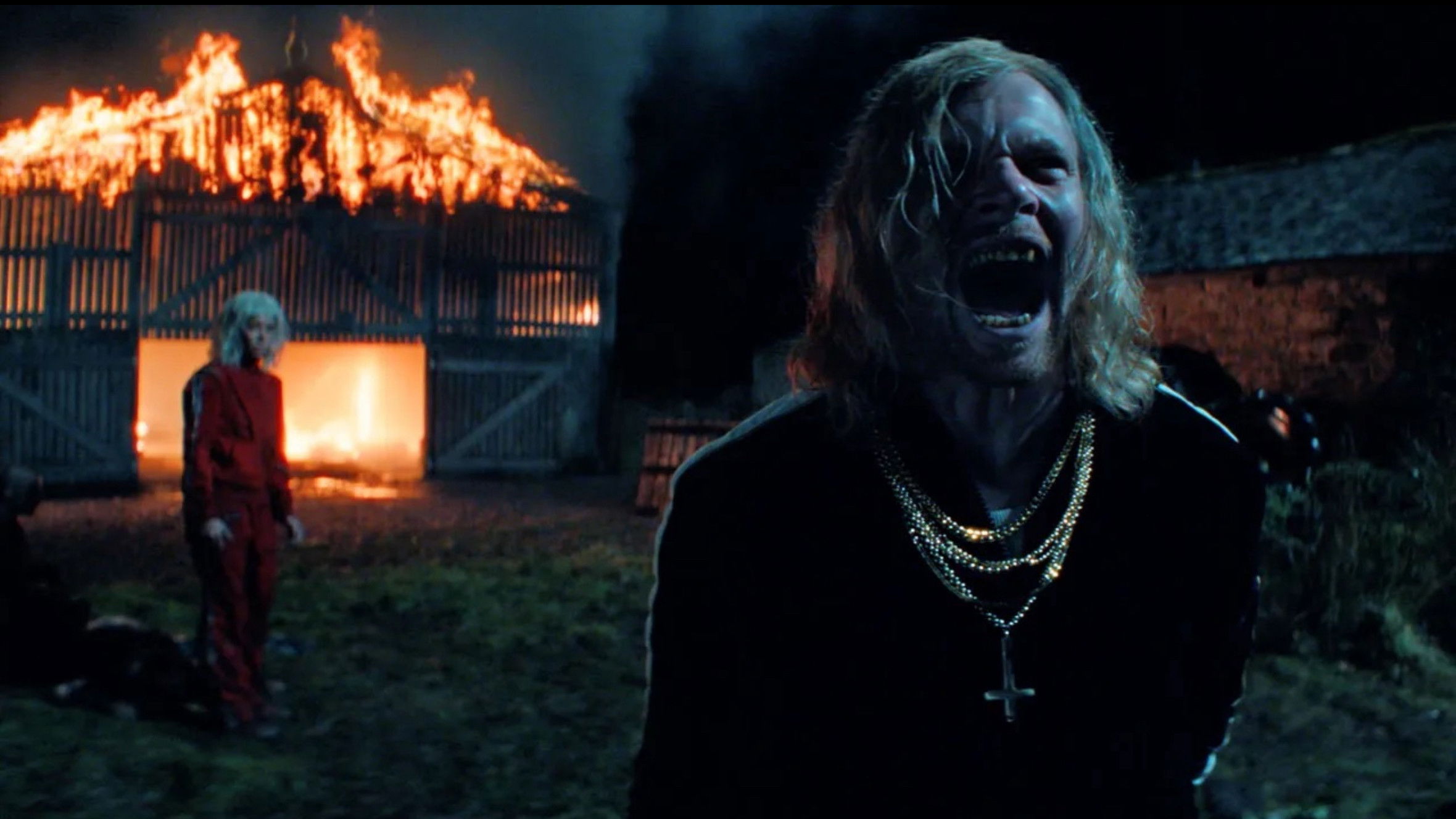
Direction and mise-en-scène: Nia DaCosta, or how to turn an apocalypse into an IKEA catalog
DaCosta arrives with Candyman and The Marvels on her résumé, two films that proved she can handle horror and action with undeniable visual style. But here, that style becomes dead weight. Because what was oppressive atmosphere in Candyman and controlled chaos in The Marvels is pure affectation here. The director insists on filling every shot with cheap symbolism: bones piling up like Halloween decorations, mirrors reflecting not only the characters but their mediocrity, overhead shots that aim for poetry but only make the viewer feel like an insect under a microscope. And the worst part is that, in her eagerness to impress, DaCosta forgets the most basic rule of cinema: telling a story. Because this isn’t a film. It’s a succession of pretty images that lead nowhere. Like when Jimmy Crystal (Jack O’Connell, in a role that seems lifted from a second-rate villain comic) appears on screen in an immaculate white suit while the world crumbles around him. The director wants us to see him as the next great genre villain, but all we see is a guy in an expensive suit with a shark’s grin straight out of a cologne ad. And no, that’s not an exaggeration. It’s the plain truth. Because O’Connell, who proved in SAS: Rogue Heroes that he can do anything, is trapped here in a role that is neither fish nor fowl: an operetta villain who wouldn’t scare you even with a bullet in his head. And DaCosta, instead of correcting course, doubles down on the affectation. Like the sequence in which Spike (Alfie Williams) and the other survivors enter the bone temple, a place that looks designed by an architect who has never seen a bone in his life. The corridors are too clean, the bones too tidy, the lighting too artificial. It’s as if DaCosta had confused horror with interior design. The result is a space that looks like an episode of The Walking Dead directed by Wes Anderson. But mind you, this isn’t a critique of the aesthetic itself. The problem is that DaCosta obsesses over the visuals to the point of forgetting that cinema also has to move, intrigue or at least entertain. And here, the only entertaining thing is watching them stretch a plot that should have lasted 90 minutes into 109 minutes of filler, cameos and shots that add nothing. Like that moment when the camera lingers on a bone glowing under artificial light, as if it were the Holy Grail of horror cinema. Spoiler: it isn’t. It’s just a bone. And DaCosta, desperate to impress, makes it the centerpiece of a shot that should have been left on the cutting-room floor. Because this isn’t cinema. It’s a badly designed PowerPoint with artistic pretensions.
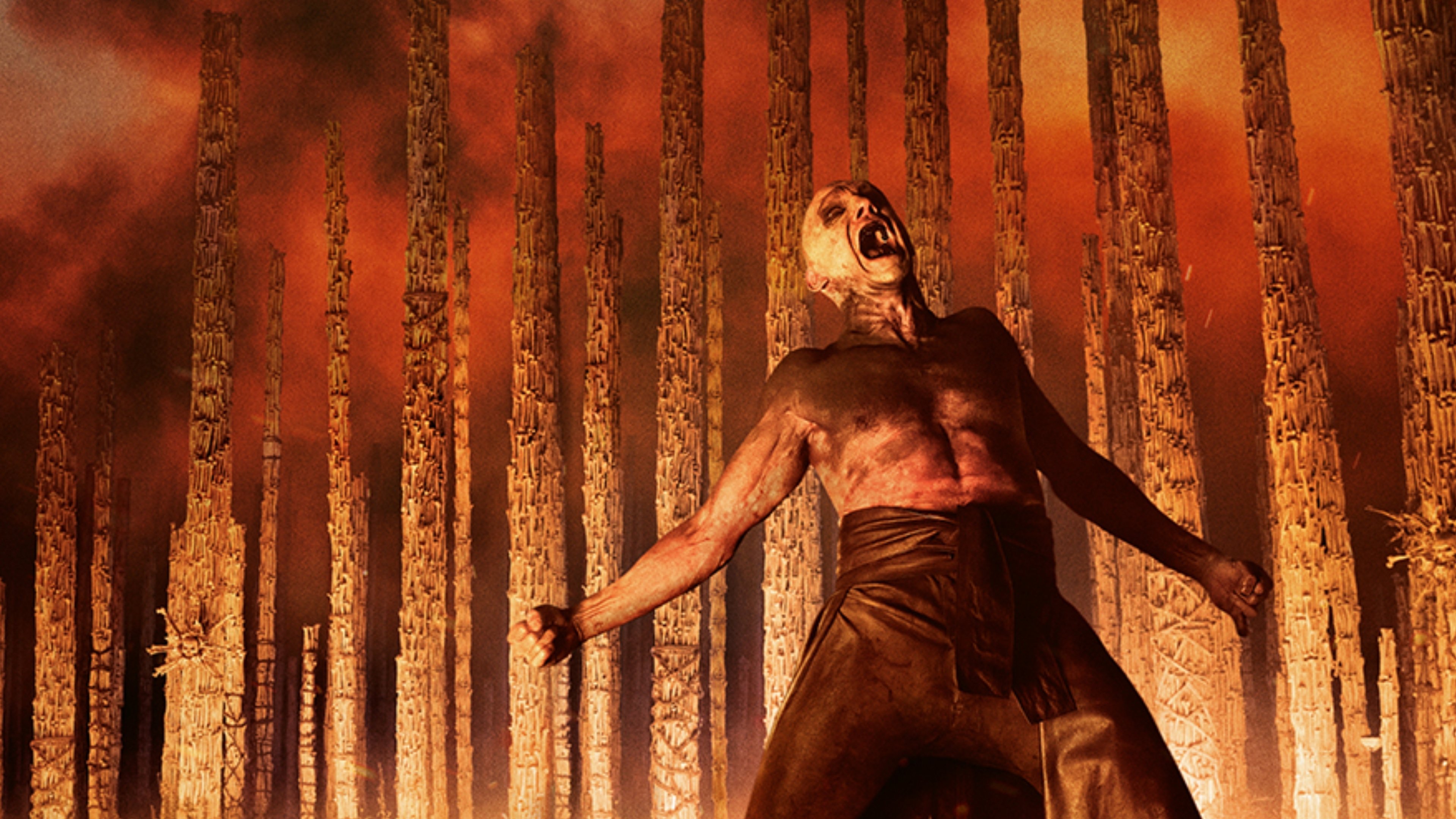
Alex Garland’s script: when intelligence turns into pretension
Garland is a writer who knows what he’s talking about. Ex Machina, Annihilation, Sunshine... all films with ideas, with depth, with that touch of cerebral science fiction that made them stand out. But here, Garland insists on writing a script that smells like somebody forced him to watch 28 Days Later on loop for a week before sitting down to write. The result is a mix of recycled ideas, dialogue that sounds like a machine translation from a language nobody speaks, and a plot that collapses like a house of cards the moment you blow on it. The problem isn’t that the story is bad. The problem is that it’s unnecessary. Garland takes the 28 Days Later universe, adds a bone temple that looks like a five-year-old’s nightmare, and then fills it with characters without depth, motivations that don’t convince and a villain who, instead of terrifying, makes you laugh. Like Jimmy Crystal, that guy with the white suit and the psychopath’s smile who seems to have walked out of an ’80s comic. Garland wants us to see him as a complex villain, a man who survived the apocalypse and now seeks revenge. But all we see is a guy in an expensive suit with a smile that seems to say “I’m the bad guy, but I don’t know why.” And instead of digging into his psychology, the script stuffs the bone temple with cheap symbolism: bones as a metaphor for lost humanity, mirrors as a reflection of madness, corridors as a labyrinth of guilt... All so obvious that a grade-schooler would get it. Worse still, Garland, who in other films knew how to dole out information, here spills the whole plot in the first 20 minutes. As if the viewer were an idiot. As if it weren’t worth waiting to find out what happens. Because the script has no mystery. No tension. None of the spark of genius that made Ex Machina or Annihilation special. All there is here is a bunch of characters running around while Garland whispers pretentious lines in their ears that sound like they were written by an AI trained on Joss Whedon scripts. The result is a script that bores instead of surprising, irritates instead of moving, and instead of entertaining makes you wish the zombie apocalypse would last forever just so you wouldn’t have to watch one more scene with these soulless characters. Because, let’s be honest: Spike (Alfie Williams) is a walking cliché, Jimmy Ink (Erin Kellyman) is a knock-off Furiosa, and the rest are so flat they seem lifted from a ’90s video game. And Garland, instead of correcting course, sinks deeper into mediocrity. Like that moment when the survivors find a bunker full of supplies and, instead of celebrating, start debating the ethics of stealing food in a post-apocalyptic world. Spoiler: it isn’t ethical. But it isn’t the end of the world either. And Garland, desperate to be profound, turns a scene that should be tense into a college debate on morality in times of crisis. The result is so ridiculous that even the characters seem to realize they’re in a bad movie. But, as a drunk boxer would say: “if you’re going to hit, hit hard.” And here, at least, the script has one moment of lucidity: the scene in which Jimmy Crystal explains his survival philosophy to Spike. It’s a dialogue so ridiculous, so full of clichés and cheap symbolism, that for a second you think Garland has realized this is crap and decided to laugh at himself. But no. It’s just another moment of pretension in a film that already has too many. Because Garland, who in other films knew how to dose his intelligence, here drowns the viewer in a sea of pompous lines and forced situations. And the result is a script that isn’t smart, just pretentious. And in cinema, that’s the worst of sins.
Performances: Jack O’Connell, or the art of stealing scenes without trying
The cast of 28 Years Later: The Bone Temple is a parade of familiar and unfamiliar faces who seem to have signed a pact with the devil: work on a bad film in exchange for a fat check. And the only one who seems to realize it’s a trap is Jack O’Connell, who throws himself into Jimmy Crystal with the same intensity a boxer brings to the ring: fearless, but also hopeless. O’Connell is an actor who knows what he’s doing. In SAS: Rogue Heroes he proved he can do anything, from hero to villain to the guy who falls off a horse in slow motion. And here, as Jimmy Crystal, he does the same: he jumps without a net, knowing the script is garbage but that he can at least give some humanity to a character who would otherwise be a walking cliché. The result is a villain who, while not scary, at least has charisma. Because O’Connell makes Jimmy Crystal more than a guy with an expensive suit and a shark’s grin: he gives him layers, motivations, that spark of madness that makes him interesting. And in a film that smells rotten from the first frame, that’s a miracle. The rest of the cast isn’t so lucky. Alfie Williams, as Spike, looks like an actor sedated before every take. His character is a walking cliché: the noble survivor, the guy who is always right, who never makes a mistake. And Williams, instead of bringing him to life, turns him into an emotional zombie. As if the actor had decided that if he couldn’t make the character interesting, he could at least make him boring. And he succeeds. Because Spike isn’t a character. He’s a mannequin in survivor’s clothes. Erin Kellyman, as Jimmy Ink, fares better: at least her character has an arc, even if it’s as flat as an ’80s comic. But Kellyman, instead of seizing it, recites her lines as if she were at a high-school theater rehearsal. The result is an actress who drowns in a role she doesn’t deserve instead of shining. The same goes for the rest of the cast: Maura Bird, Ghazi Al Ruffai, Robert Rhodes and Emma Laird do what they can with characters without depth, unconvincing motivations and a script that drags them along like a river of mud. The result is an ensemble that, instead of lifting the film, sinks it deeper into the muck.
🎬 Tráiler Oficial
Abrir en YouTube
28 Years Later: The Bone Temple: frequently asked questions
- What is the rating of "28 Years Later: The Bone Temple" on Claqueta Ácida?
- "28 Years Later: The Bone Temple" scored 7.1/10 on Claqueta Ácida in the review by Camilo K.O..
- Is "28 Years Later: The Bone Temple" worth watching?
- With reservations. We gave it 7.1/10 (Citric Acid), our rating for uneven films with something worth saving.
- Who directed "28 Years Later: The Bone Temple"?
- "28 Years Later: The Bone Temple" was directed by Nia DaCosta.
Theater Collateral Damage Report
Psychophysical impact certificate issued by Camilo K.O.
3 amagos en el tramo intermedio; pestañeo pesado en las transiciones más innecesarias.
Un par de miradas al reloj en el tramo intermedio, comprobando cuánto quedaba de suplicio.
1 espresso para no dejarse vencer por la mediocridad cómoda.
"A mitad del segundo acto cuando la subtrama secundaria empezó a pesar más de lo que aportaba."
💬 Community Verdict
What did you think of the film? Rate it from 0 to 10 to compare it with the editorial review.
You haven't voted yet
📢 ¿Te ha gustado el ácido?
Comparte esta crítica con tus amigos cinéfilos o desata la polémica en redes.
⚡ THE CINEMATIC VENOM YOUR INBOX CRAVES
No sugarcoated ratings, no corporate fluff. Subscribe for our uncensored weekly analysis or join the private Telegram for press previews, poll clashes, and instant alerts.
Alertas de estrenos en 1 segundo, encuestas en caliente y audios al salir de pases de prensa.
Recibe la dosis semanal en tu mail + regalo inmediato del PDF con 50 joyas ocultas de culto.
Related Reviews
Recommended autopsies for demanding film buffs.
 ⚡ Ácido Cítrico 6.6
28 Years Later: The Rage Virus Returns... Along with the Boredom
⚡ Hermana de saga: otro capítulo diseccionado con rigor forense.
Danny Boyle and Alex Garland attempt to resurrect post-apocalyptic terror with an iPhone 15 Pro Max. Spoiler: it doesn’t work.
 ⚡ Ácido Cítrico 5.8
A Serbian Film: The Snuff That Thought It Was Art (and Ended Up a High-School Nightmare)
⚡ Afinidad temática directa en atmósfera, estilo y fijaciones visuales.
Srđan Spasojević serves up a depravity feast swinging between gratuitous shock and social commentary. Genius or pretentious trash? Claqueta Ácida dissects it with surgical precision.
 ⚡ Ácido Cítrico 6.0
Adolescence, Sex, and Death at Camp Miasma: The Slasher That Reeks of Teen Sweat and a Recycled Script
⚡ Afinidad temática directa en atmósfera, estilo y fijaciones visuales.
Jane Schoenbrun turns a summer camp into a dumpster fire of hormones and clichés. Art or autopsy of a dying subgenre?
Editorial Ecosystem
Cinephile connections, archive interviews and related analyses.
💬 Debate Cinéfilo & Autopsia de Lectores
0 veredictos¿Discrepas con nuestra nota? ¿Es una obra maestra o veneno puro? Deja tu veredicto abajo sin necesidad de registro.

Aún nadie ha dejado su veredicto para esta película.
Sé el primero en clavarle el colmillo rellenando el formulario de arriba.