Adolescence, Sex, and Death at Camp Miasma — The Slasher That Reeks of Teen Sweat and a Recycled Script
Jane Schoenbrun turns a summer camp into a dumpster fire of hormones and clichés. Art or autopsy of a dying subgenre?

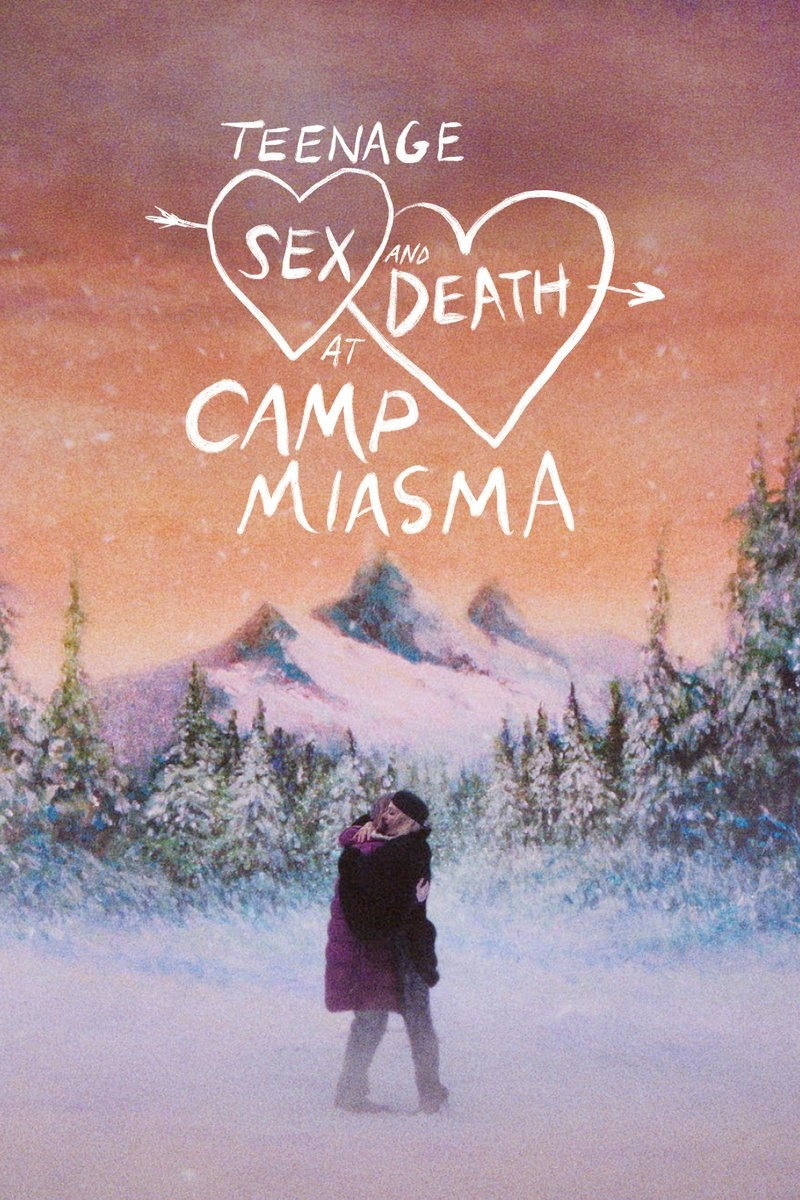
The stench of bug spray, cheap sunscreen, and rancid teen sweat floods the screening room as if Camp Miasma itself decided to teleport its stink directly into our seats. Jane Schoenbrun, the director who gifted us the existential body horror of We’re All Going to the World’s Fair, returns with a film that promises to be the definitive slasher for a generation that thinks they invented trauma, sex, and death just because they saw it in a 15-second TikTok. But alas, friends, what could’ve been a poetic autopsy of adolescence instead feels like a Friday the 13th directed by someone who mistook the mood board of euphoria-echando-la-vista-atras" class="text-amber-400 font-black hover:text-amber-300 transition underline decoration-amber-500/40 hover:decoration-amber-300" title="[3.6/10 ⚠️ Ácido Sulfúrico] Lee nuestra autopsia de «Euphoria»" data-acid-interlink="euphoria-echando-la-vista-atras">Euphoria for a screenwriting manual for dummies. MUBI and Plan B Entertainment have invested in what smells like a failed lab experiment: mix coming-of-age with slasher horror, add a dash of queer horror, and pray the result is more Hereditary than The Final Girls. Spoiler: it’s not. Not even close. And that’s despite the cast featuring Gillian Anderson, an actress who could make even the fine print of an erectile dysfunction medication sound like a Shakespearean monologue, and Hannah Einbinder, whose charisma is so palpable it almost makes you forget she’s reciting lines written by someone who clearly hasn’t spoken to a real teenager in their life. But not even they can save this shipwreck of clichés, predictable twists, and a pace that oscillates between slow burn and slow motion in a car crash filmed in real time.
The problem isn’t that Schoenbrun wants to explore the terrors of adolescence—God knows the genre needs more voices that aren’t just fifty-something white dudes obsessed with hockey-masked killers. The problem is she does it with the subtlety of a rusty hatchet and the depth of a puddle after a summer storm. Adolescence, Sex, and Death at Camp Miasma presents itself as a meditation on identity, desire, and the inherent violence of growing up, but it ends up as a collage of scenes that look like they were plucked from a Blumhouse pitch meeting’s reject pile: teens who talk like they’re in an Iowa MFA workshop, a killer whose motivation is so vague he might as well be an Instagram influencer chasing likes, and a third act that collapses like a house of cards in a hurricane. And let’s not even talk about the production design, which tries to evoke ‘80s aesthetics but ends up looking like a Billie Eilish music video directed by someone who only watched Stranger Things while scrolling through their phone. The cinematography by Eric K. Yue, meanwhile, does what it can with material that looks like it was shot on an iPhone with a VHS filter slapped on in post, as if the goal was to make everything look retro without understanding that retro isn’t just an Instagram filter—it’s a texture, an atmosphere, a soul. Here, the soul is MIA, replaced by a visual glitch that feels more like a rendering error than an aesthetic choice.
But let’s cut to the chase: what the hell is even happening at this camp? Because honestly, after 112 minutes, we still have no clue. Schoenbrun seems more interested in crafting tableaux vivants of angsty teens posing like they’re in a Calvin Klein ad than in building a coherent narrative. Characters drift in and out of scenes like ghosts, their motivations as murky as swamp water, and the killer—because of course there’s a killer—is so generic he might as well be the same guy from every horror movie since Halloween. And let’s be real: the real horror here isn’t the slasher, or the teen trauma, or even the thought of Gillian Anderson having to carry this project on her résumé. The real horror is realizing that Adolescence, Sex, and Death at Camp Miasma is the kind of movie algorithms will love, because it has all the ingredients for instant cult status: it’s queer, it’s millennial, it’s dark, it has awkward teen sex scenes filmed with the grace of a dad recording his baby’s first bath, and—most importantly—it’s confusing enough to spark weeks of Twitter debates about its “deep meaning.” But don’t be fooled, dear readers: this isn’t cult; it’s cultivation of something that’s been rotting since the first frame.
And then there’s the budget. Because let’s be honest, MUBI and Plan B Entertainment aren’t exactly studios known for throwing money at indie horror. But even with a tight budget, you’d hope the cash would show up in something other than the opening credits. Here, the low budget isn’t disguised—it’s worn like a badge of honor, as if lack of resources equals authenticity. But a well-executed low budget is one thing—see The Blair Witch Project or Paranormal Activity—and a cheap low budget is another. In Camp Miasma, the practical effects look like they were cobbled together in a high school makeup class, the sets have the depth of a school play backdrop, and the night scenes look like they were shot with a flashlight and a prayer. Yet there’s something weirdly compelling about this controlled disaster, something that keeps us glued to the screen like we’re watching a live car crash. It’s not that the movie’s good—God forbid—but it has that addictive quality of a train wreck: you know it’s going to be a disaster, but you can’t look away. Maybe it’s because we all have a traumatized teen lurking inside us, or maybe it’s because after seeing so much polished, calculated trash, there’s something refreshing about a failure this honest, this unapologetically flawed. Or maybe it’s just that after two hours, all we want is for someone—anyone—to die already, if only to inject a little excitement into this cinematic nap.
Direction: The Art of Drowning in a Glass of Water
Jane Schoenbrun has a clinical eye for capturing discomfort, and that’s worth acknowledging. In We’re All Going to the World’s Fair, they turned digital alienation into something so tangible you could smell the sweat of loneliness through the screen. But here, their direction feels more like a stylistic exercise than a genuine exploration. Every shot is so calculated, so curated, it ends up feeling like a moving Pinterest mood board. Schoenbrun wants us to feel the weight of adolescence, but all they manage is to weigh down our eyelids. The group scenes, for instance, are filmed with that summer camp aesthetic that looks like it was lifted from a YMCA recruitment video: teens smiling at the camera, hiking with fake grins, like they’re in a cereal commercial instead of a horror movie. And when they try to get dark, the result is so forced it plays like an SNL sketch about how to make an indie horror film. The editing, meanwhile, swings between predictable jump scares and slow burns that burn so slowly they turn to ash before anything interesting happens. In short: Schoenbrun has talent, but here they waste it on a movie that feels more like a collage of references than a work with its own identity.
Actors: Saving Furniture in a Burning House
The cast does what they can with material that looks like it was scribbled on a bar napkin after three tequila shots. Hannah Einbinder is, by far, the best of the bunch: her charisma and comic timing—yes, even in a horror movie—make her scenes feel alive, albeit with the artificial life of a mannequin in a fast-fashion store. Gillian Anderson, on the other hand, seems to be in a different movie, a better one, one that doesn’t exist. Her character, a camp counselor with a shady past, has the depth of a puddle, but Anderson injects her with a gravitas that makes every appearance feel like an oasis in the desert. The rest of the cast, however, drowns in a sea of dialogue that sounds like it was written by a fanfiction algorithm: “Why do we always have to hide?”; “It’s not fair that the world makes us grow up”; “The camp is like a metaphor for life.” Please. If this is what passes for deep in indie cinema these days, no wonder people prefer watching reality shows on TikTok. Amanda Fix and Arthur Conti try to breathe life into their characters, but they end up sounding like two actors in an acting workshop reading Twilight scripts with the enthusiasm of someone reciting a grocery list. And then there’s Zach Cherry, whose character is so irrelevant he might as well be an easter egg for Severance fans. In short: the cast deserved better, something that didn’t sound like a mad libs of teen horror.
Technical Section: When the Glitch Isn’t Art, It’s Just a Mistake
Schoenbrun’s script is a Frankenstein of clichés: the mysterious killer, the group of teens who don’t realize they’re in a horror movie, the final girl who turns out not to be so final, and a plot twist that’s as subtle as a neon sign. But the worst part isn’t that it’s predictable—it’s that it’s boring. The dialogue is flat, the characters’ motivations are nonexistent, and the plot moves like a zombie with arthritis: slowly and aimlessly. The cinematography by Eric K. Yue, meanwhile, tries to evoke that ‘90s grunge aesthetic but ends up looking like a VHS filter applied to a video shot on a Nokia 3310. The night scenes are so dark they might as well have been filmed in a cave, and the daytime scenes are so oversaturated they look like a sunscreen commercial. The sound design is so understated it might as well not exist: the jump scares sound like someone banging a pot with a wooden spoon, and the score is so generic you could hear it in any horror movie from Scream to The Nun. As for the production design, Camp Miasma looks like it was pulled from an IKEA catalog: everything is so clean, so minimalist, it’s hard to believe anything more sinister than burnt marshmallows ever happened there. And let’s not even talk about the makeup and practical effects, which look like they were made by someone who watched The Thing once and decided they could replicate it with Play-Doh and finger paint. In short: the technical side of Adolescence, Sex, and Death at Camp Miasma is like a slasher in itself, but instead of killing characters, it murders the audience’s patience.
The best
Hannah Einbinder: The only one who makes her dialogue sound like it wasn’t written by a BuzzFeed* intern during their lunch break. She has chemistry with the camera and, at times, seems like the only adult in the room.- Gillian Anderson: Every time she appears on screen, the movie remembers it once had ambition. Her presence is like a beacon in the fog, even if the fog eventually swallows her whole.
- Some shots: There are moments when Eric K. Yue’s cinematography captures that oppressive summer camp atmosphere, though they’re few and far between.
The worst
The script: A mad libs of teen horror that sounds like it was written by someone who’s only watched horror movies on streaming* while scrolling through their phone. The dialogue is as deep as instant soup. The pacing: It swings between slow burn and slow motion* in a car crash. Some scenes drag on so long you start wondering if the killer took a coffee break. The killer: So generic he might as well be the same guy from every horror movie since Halloween. His motivation is so vague he could be an influencer chasing likes*.- The characters: None have depth, motivation, or charisma. They’re like cardboard cutouts in a cardboard set.
- The ending: Predictable, anticlimactic, and as satisfying as sugar-free gum. You wait for at least one twist, but no: the twist is that there is no twist.
The Verdict of Claqueta Ácida
Adolescence, Sex, and Death at Camp Miasma is the kind of movie algorithms will love and cinephiles will dread. It’s not bad enough to be fun, nor good enough to be memorable. At best, it’s a failed experiment; at worst, a symptom of an industry that confuses glitch with art and low budget with authenticity. Jane Schoenbrun has talent, but here they waste it on a movie that feels like a soulless collage of references. The cast does what they can, but the script drags them into the abyss like a slasher on a moonless night. In short: if you’re looking for a horror movie that makes you think about adolescence, go watch It Follows. If you want a horror movie that makes you laugh, watch Tucker & Dale vs. Evil. And if you want a horror movie that makes you question the state of indie cinema today, stick with this one. But don’t say we didn’t warn you. 💀
🎬 Tráiler Oficial
Abrir en YouTube
Ending Explained: Adolescence, Sex, and Death at Camp Miasma
Theater Collateral Damage Report
Psychophysical impact certificate issued by Maximiliano Z.
1 amago en el tramo intermedio; pestañeo pesado en las transiciones más innecesarias.
Minuto 48 y minuto 80 (comprobando cuánto quedaba de suplicio).
1 espresso para no dejarse vencer por la mediocridad cómoda.
"A mitad del segundo acto cuando la subtrama secundaria empezó a pesar más de lo que aportaba."
💬 Community Verdict
What did you think of the film? Rate it from 0 to 10 to compare it with the editorial review.
You haven't voted yet
📢 ¿Te ha gustado el ácido?
Comparte esta crítica con tus amigos cinéfilos o desata la polémica en redes.
⚡ THE CINEMATIC VENOM YOUR INBOX CRAVES
No sugarcoated ratings, no corporate fluff. Subscribe for our uncensored weekly analysis or join the private Telegram for press previews, poll clashes, and instant alerts.
Alertas de estrenos en 1 segundo, encuestas en caliente y audios al salir de pases de prensa.
Recibe la dosis semanal en tu mail + regalo inmediato del PDF con 50 joyas ocultas de culto.
Related Reviews
Recommended autopsies for demanding film buffs.
 ⚡ Ácido Cítrico5.0
*Chime: The Japanese Whisper No One Asked For (And Everyone Deserved to Ignore)*
⚡Hermana de saga: otro capítulo diseccionado con rigor forense.
*The Japanese Whisper No One Asked For (And Everyone Deserved to Ignore). Kiyoshi Kurosawa dives into domestic horror with *Chime*, a series that whispers more than it screams and bores more than it terrifies. Art or visual nap time?*
 ⚡ Ácido Cítrico6.0
The Platform: The Prison We Deserve (And the Hunger We Dare Not Name)
⚡Hermana de saga: otro capítulo diseccionado con rigor forense.
A social allegory that moves like a broken elevator: powerful at first, then circling the same floors until you’re bored of your own despair.
 ⚡ Ácido Cítrico6.8
Marrowbone's Secret: The House That Bleeds Memory (And Not Exactly From the Budget)
⚡Hermana de saga: otro capítulo diseccionado con rigor forense.
Sergio G. Sánchez crafts a gothic thriller with textures so rotten they reek of mothballs. Does it escape its own labyrinth of references, or does it drown in them?
Editorial Ecosystem
Cinephile connections, archive interviews and related analyses.
💬 Debate Cinéfilo & Autopsia de Lectores
0 veredictos¿Discrepas con nuestra nota? ¿Es una obra maestra o veneno puro? Deja tu veredicto abajo sin necesidad de registro.

Aún nadie ha dejado su veredicto para esta película.
Sé el primero en clavarle el colmillo rellenando el formulario de arriba.