Together — When Love Becomes a Metastatic Tumor
Michael Shanks turns a couple’s lockdown into a nightmare of body horror and psychological toxicity, where love and physical revulsion merge in grotesque fashion.


Together (2021): When Love Becomes a Metastatic Tumor
The pandemic didn’t just leave us with Among Us-print face masks and a generation of kids who think Zoom is a Greek god. It also gifted us with a flood of "quarantine cinema": films shot on iPhones, actors sweating claustrophobia in their own living rooms, and dialogue that sounded like a couple’s therapy session accidentally recorded. Most of these works were about as thrilling as an IKEA assembly tutorial, but amid the trash emerged Together, the bastard child of Michael Shanks, an Australian filmmaker who decided that if the world was going to end, it might as well go out with style, guts, and a metaphor as subtle as a sledgehammer to the temple.
Two Bodies, One House, and the Virus of Codependency (Or How to Turn Marriage into a Failed Frankenstein Experiment)
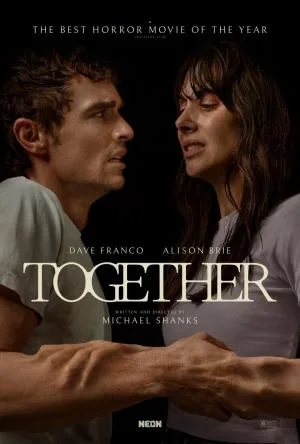
The premise of Together is as simple as it is terrifying: a middle-aged couple—played by Dave Franco and Alison Brie, two actors who until now had only proven they could smile in rom-coms and Netflix series—decide to spend lockdown in an isolated cabin in the Australian countryside. Spoiler: it’s not a spiritual retreat. Their relationship was already an emotional dumpster fire before COVID-19 gave them the perfect excuse to lock themselves together, but Shanks takes the concept of "marital toxicity" to a literal level. What begins as a cold war of death stares and passive-aggressive jabs mutates into something far more grotesque: an unknown force (the universe punishing them? Their own subconscious vomiting up their misery?) starts fusing their bodies, turning them into an amorphous mass of skin, bones, and shared resentment.
Shanks isn’t a director who believes in subtlety. His film is an allegory as subtle as an elephant in a china shop, but it works because it embraces its excess with near-religious conviction. Codependency is no longer an abstract concept—it’s a physical illness: the protagonists are forced to share every breath, every meal, every bathroom trip in a choreography of disgust that would make David Cronenberg blush. Shanks’ camera (he also handles cinematography) traps them in suffocating frames, with lighting straight out of a cheap roadside motel, where the flickering bulb accentuates sweat, grime, and the couple’s gradual moral decay. There’s no escape, not even in the off-screen space: the sound design is saturated with ragged breathing, pained groans, and the wet crunch of fusing flesh.
Performances: When Hollywood Takes Off the Mask (And Almost Loses Its Skin)
Dave Franco and Alison Brie aren’t exactly known for their dramatic depth. Until now, their careers had consisted of smiling in insubstantial comedies and superhero shows where the most dramatic thing that happened was a lycra suit getting stained. But in Together, both shed their public personas with a ferocity that’s genuinely surprising. Brie, in particular, delivers one of the most shocking physical transformations in recent cinema: her character goes from initial revulsion to a domestic resignation so disturbing it makes The Fly look like a rom-com. There’s a scene where, already partially fused with Franco, she tries to cook while her arm twists at impossible angles, and the mix of hysteria and pragmatism is so real it hurts.
Franco, meanwhile, proves he’s more than just James Franco’s little brother (yes, that guy who made a movie about his own bad movie). His character is a pathetic narcissist, a man-child incapable of accepting that his relationship is as dead as a steak forgotten in the back of the freezer. The chemistry between them is unhealthy, toxic—but that’s precisely why it works: there isn’t a single moment where you believe these two should be together, yet the horror of the film lies in the fact that, biologically, they can no longer separate.
Direction and Style: Body Horror as Couples Therapy
Michael Shanks isn’t a director interested in subtlety. His cinema is visceral, grimy, and deliberately uncomfortable, as if David Lynch and John Waters had a bastard child in a slaughterhouse. Together is his most ambitious work to date, and while it doesn’t always hit the mark, when it does, the result is so shocking it leaves you breathless (and possibly nauseous).
The film draws from two very different but equally effective cinematic traditions: the body horror of the '80s (with Cronenberg as its godfather) and psychological confinement thrillers, where films like Buried or 10 Cloverfield Lane proved that being trapped can be as terrifying as any monster. Shanks fuses both genres with a rawness that borders on the pornographic: the body-fusion scenes are executed with practical effects that look like they were pulled from a low-budget special effects lab, but their repulsive authenticity is what makes them so disturbing. There’s no polished CGI here—just flesh, sweat, and poorly glued latex, and that’s what makes it even more unsettling.
The problem is that, unfolding almost entirely in a single enclosed space with only two characters, the film suffers from pacing issues in its second act. Shanks tries to compensate for the lack of spatial variety with changes in lighting and sound, but there are moments where the rhythm stalls, as if the film were as trapped in its own premise as its protagonists. Fortunately, sparks of dark humor—like when the couple argues over who should clean up their shared vomit—and the escalating madness keep things engaging.
Abstraction as a Double-Edged Sword
One of Together’s most interesting (and frustrating) aspects is its refusal to explain what’s causing the protagonists’ fusion. Is it a supernatural force? A psychosomatic manifestation of their mutual hatred? Or just the universe punishing them for being insufferable? Shanks offers no answers, and that can be either liberating or exasperating, depending on your tolerance for ambiguity.
For some viewers, this lack of explanation will come as a relief: the film doesn’t waste time on pseudoscientific monologues or forced plot twists. For others, however, it’ll be a source of frustration. Together isn’t a film that tosses you breadcrumbs to keep you comfortable; it’s a sensory and emotional experience that drags you into its nightmare without anesthesia. If you’re someone who needs everything to fit together with Swiss precision, this isn’t your movie. But if you can surrender to its controlled madness, you’ll find one of the most brutal allegories about love and dependency in years.
Cinematic Comparisons: What Exactly Is This Film?
Together isn’t easy to classify, but if we had to find it some relatives in the family tree of cinema, we could mention:
- David Cronenberg: Of course, the godfather of body horror. Films like The Fly or Dead Ringers explore physical transformation as a metaphor for emotional corruption, but Shanks takes the concept further by making the transformation mutual and symbiotic.
- Roman Polanski: Repulsion and The Tenant are exercises in psychological claustrophobia that Together emulates in its oppressive atmosphere, though with less elegance and more gore.
- Yorgos Lanthimos: The Greek director is a master at portraying toxic relationships with corrosive dark humor. The Lobster and Dogtooth share with Together that mix of absurdity and existential horror, though Shanks is far less cold and much more visceral.
- Lars von Trier: There’s something in the cruelty with which Together treats its characters that recalls von Trier’s cinema, especially in his most misanthropic phase (Antichrist, Melancholia). The difference is that Shanks doesn’t judge his protagonists; he simply watches them rot together.
The Best
- Franco and Brie’s toxic chemistry: Two actors who abandon their comfort zones to wallow in marital misery with a physical commitment that borders on masochism. Watching them fuse is like witnessing a car crash in slow motion—you can’t look away.
The Worst
Pacing fatigue in the middle act: With only one setting and two characters, the film suffers from rhythm dips. There are moments where it feels like you’re watching the same episode of Big Brother* on loop, but with more bodily fluids. The abstraction of the cause: If you’re someone who needs everything to have a logical explanation, Together* will leave you with more questions than answers. Shanks prefers mystery over clarity, and that can be as liberating as it is irritating.The Verdict of Claqueta Ácida (7/10)
Together is a confinement thriller that lives up to its title: it traps you, suffocates you, and leaves you scarred like a third-degree burn. Michael Shanks delivers a film so acidic it dissolves romantic clichés and so grotesque it makes The Human Centipede look like a nature documentary. It’s not a film for every stomach (or every relationship), but if you survive its nightmare, you’ll come out convinced that the real horror isn’t a virus, a monster, or a serial killer—it’s the idea of spending the rest of your life stuck to someone you can’t stand. Hell isn’t other people; hell is not being able to escape them. 🔪💔🎬 Tráiler Oficial
Abrir en YouTube
Ending Explained: Together
Ficha de Daños Colaterales en Sala
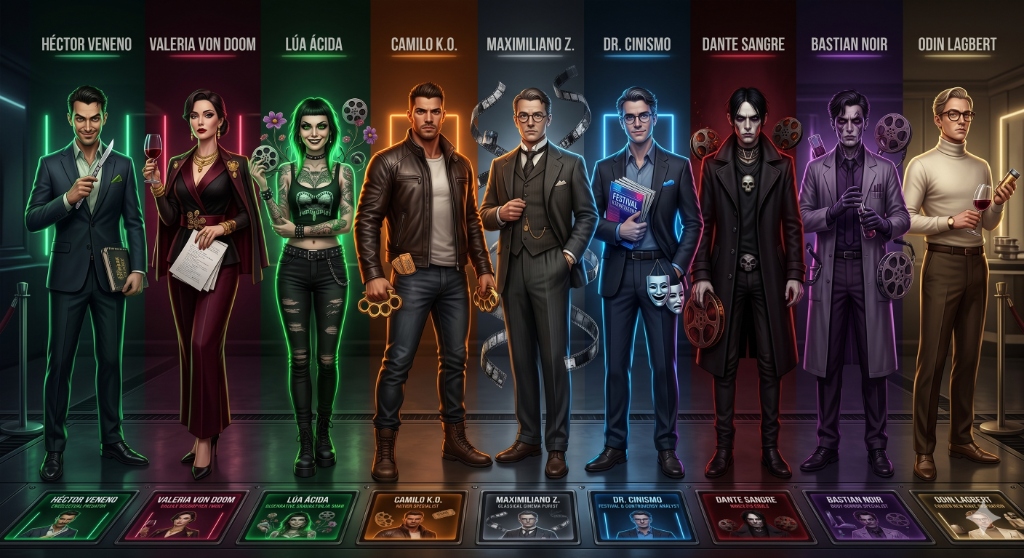
Certificado de impacto psicofísico emitido por Héctor Veneno
2 amagos en el tramo intermedio; pestañeo pesado en las transiciones más innecesarias.
Minuto 52 y minuto 90 (comprobando cuánto quedaba de suplicio).
1 espresso para no dejarse vencer por la mediocridad cómoda.
"A mitad del segundo acto cuando la subtrama secundaria empezó a pesar más de lo que aportaba."
💬 El Veredicto de la Comunidad
¿Qué te ha parecido la película? Deja tu nota de 0 a 10 para contrastarla con el análisis de la redacción.
Aún no has votado
📢 ¿Te ha gustado el ácido?
Comparte esta crítica con tus amigos cinéfilos o desata la polémica en redes.
⚡ THE CINEMATIC VENOM YOUR INBOX CRAVES
No sugarcoated ratings, no corporate fluff. Subscribe for our uncensored weekly analysis or join the private Telegram for press previews, poll clashes, and instant alerts.
Alertas de estrenos en 1 segundo, encuestas en caliente y audios al salir de pases de prensa.
Recibe la dosis semanal en tu mail + regalo inmediato del PDF con 50 joyas ocultas de culto.
Related Reviews
Recommended autopsies for demanding film buffs.
 ⚡ Ácido Cítrico6.5
**Together: The Cave of Shattered Mirrors (or How Toxic Love Tastes Like Stagnant Water)**
⚡Hermana de saga: otro capítulo diseccionado con rigor forense.
Dave Franco and Alison Brie sip from the chalice of codependency in this Australian psychological thriller that reeks of emotional sweat and bargain-bin CGI. Art or autopsy of a relationship?
 ⚡ Ácido Cítrico7.5
*Sinner*: The Analog Nightmare and the Surrealist Labyrinth of Guilt
⚡Del mismo director (Michael Shanks): analiza la evolución o degradación de su estilo.
Michael Shanks blurs the boundaries of sanity in an Australian short film with a sickly atmosphere, where formal distortion and abstract horror converge into a moral abyss.
 ⚡ Ácido Cítrico7.1
28 años después
⚡Afinidad temática directa en atmósfera, estilo y fijaciones visuales.
Una secuela que huele a podrido desde el primer fotograma. Garland y DaCosta intentan revivir el género, pero el resultado es un KO técnico disfrazado de obra maestra.
Editorial Ecosystem
Cinephile connections, archive interviews and related analyses.
🎞️ In Claqueta Cinematheque2
💬 Debate Cinéfilo & Autopsia de Lectores
0 veredictos¿Discrepas con nuestra nota? ¿Es una obra maestra o veneno puro? Deja tu veredicto abajo sin necesidad de registro.

Aún nadie ha dejado su veredicto para esta película.
Sé el primero en clavarle el colmillo rellenando el formulario de arriba.