Wekufe — The Birth of Evil (and Eternal Boredom)
Javier Attridge turns the Chilote myth into a college term paper with delusions of cosmic horror. Spoiler: the only monster here is mediocrity.


Wekufe: full review

Some films are born under the sign of unbridled ambition. Wekufe: The Birth of Evil is one of those unfortunate creatures that mistakes folklore for melodrama, cosmic horror for academic tedium, and directing actors for a beginner’s theater workshop. Javier Attridge, director and screenwriter, seems to have confused Chiloé with George A. Romero’s Land of the Dead—minus the zombies, the gore, and, crucially, any ideas. What remains is an 80-minute pretentious exercise that flirts with ethnographic documentary without ever committing, and with psychological horror without scaring even a five-year-old. Welcome to the most boring found footage in Chilean cinema history, where the only mystery is how the hell they secured funding for this mess.
The context doesn’t help. Released in 2016, Wekufe arrives at a time when Latin American horror cinema was—often successfully—finding its own voice. Films like The Untamed (Amat Escalante, 2016) or Duck Season (Fernando Eimbcke, 2004) proved the continent could produce works with identity, narrative drive, and, above all, the power to unsettle. Attridge, however, takes the easy route: grab a local myth (the wekufe, an evil spirit from Mapuche lore), wrap it in a college research plot, and hope the folklore does the heavy lifting. Spoiler: it doesn’t. What we get is a film that feels like a senior thesis, with dialogue that sounds like Wikipedia recited aloud and a pace that oscillates between soporific and confusing. It’s not horror, it’s not drama, it’s not a documentary. At best, it’s a poorly executed mood board.
The premise is promising: a student (Paula Figueroa) travels with her boyfriend (Matias Aldea) to Chiloé to investigate the link between sexual crimes and local legends. In theory, this should be a perfect breeding ground for atmospheric horror, psychological suspense, or even folk horror à la The Wicker Man. In practice, what we get is an endless succession of long takes where characters wander through forests, stare into the void, and drop lines like “the wekufe is a metaphor for colonial oppression.” Attridge seems more interested in proving he’s read Foucault than in telling a story. And when something finally happens—a scream, a shadow, a whisper—the editing ruins it with clumsy cuts and a soundtrack that sounds like a Nokia ringtone from 2005. The result is a film that vacillates between pretentious and amateurish, never committing to either extreme.
The cast, for their part, doesn’t help salvage the ship. Matias Aldea plays his character like he’s in a beer commercial, with a perpetual grin that clashes violently with the film’s supposed darkness. Juan Pablo Burmeister, as a mysterious local, seems plucked from a El Chavo del 8 sketch, his over-the-top performance veering into parody. The sole exception is Paula Figueroa, who at least attempts to convey something resembling tension. Her look of discomfort during the investigation scenes is the only thing keeping Wekufe from being a total disaster. But even she can’t work miracles: when the script forces her to recite lines like “the wekufe isn’t a monster, it’s a symbol,” even the world’s best actress would throw in the towel.
Direction: The Long Take as a Crutch
Javier Attridge seems obsessed with the idea that a long take is synonymous with auteur cinema. We’ve seen this before with masters like Béla Tarr or Andrei Tarkovsky, who used shot duration to create a hypnotic experience. Attridge, on the other hand, uses them as crutches. His long takes don’t build atmosphere or tension; they just kill time. There’s one scene in particular—where the protagonist walks through a forest while her boyfriend explains the wekufe’s history—that drags on for an interminable four minutes. Four minutes of trees, whispers, and a lateral tracking shot that contributes absolutely nothing. No dread, no mystery, no revelation. Just four minutes of filler that could’ve been condensed into a medium shot and a fade to black.
The issue isn’t the long take itself, but the lack of purpose behind it. Attridge seems to believe duration equals depth, as if a two-minute shot is automatically more artistic than a two-second one. But cinema doesn’t work that way. A long take must serve the narrative, not the director’s ego. In Wekufe, the extended shots only expose the script’s flaws: flat dialogue, mediocre performances, and an utter lack of rhythm. It’s as if Attridge watched Stalker (1979) and decided the only thing needed to make a great film was to mimic its slowness, without understanding that behind that slowness lies a philosophy, a worldview. Here, behind the endless shots, there’s only emptiness.
The editing is equally disastrous. Scenes seem cut at random, as if someone hit the stop button mid-take for no apparent reason. In a film so reliant on atmosphere, these mistakes are unforgivable. The sound, another key element in horror, also fails spectacularly. The score is nonexistent, and when it does appear, it sounds like a loop of free ambient sounds downloaded from some sketchy website. The screams, whispers, and nature sounds—elements that should build tension—sound artificial, like they were recorded in a studio with a toy microphone. In short: Attridge has the tools of horror cinema, but he doesn’t know how to use them.
Performances: Between Beer Commercials and Comedy Sketches
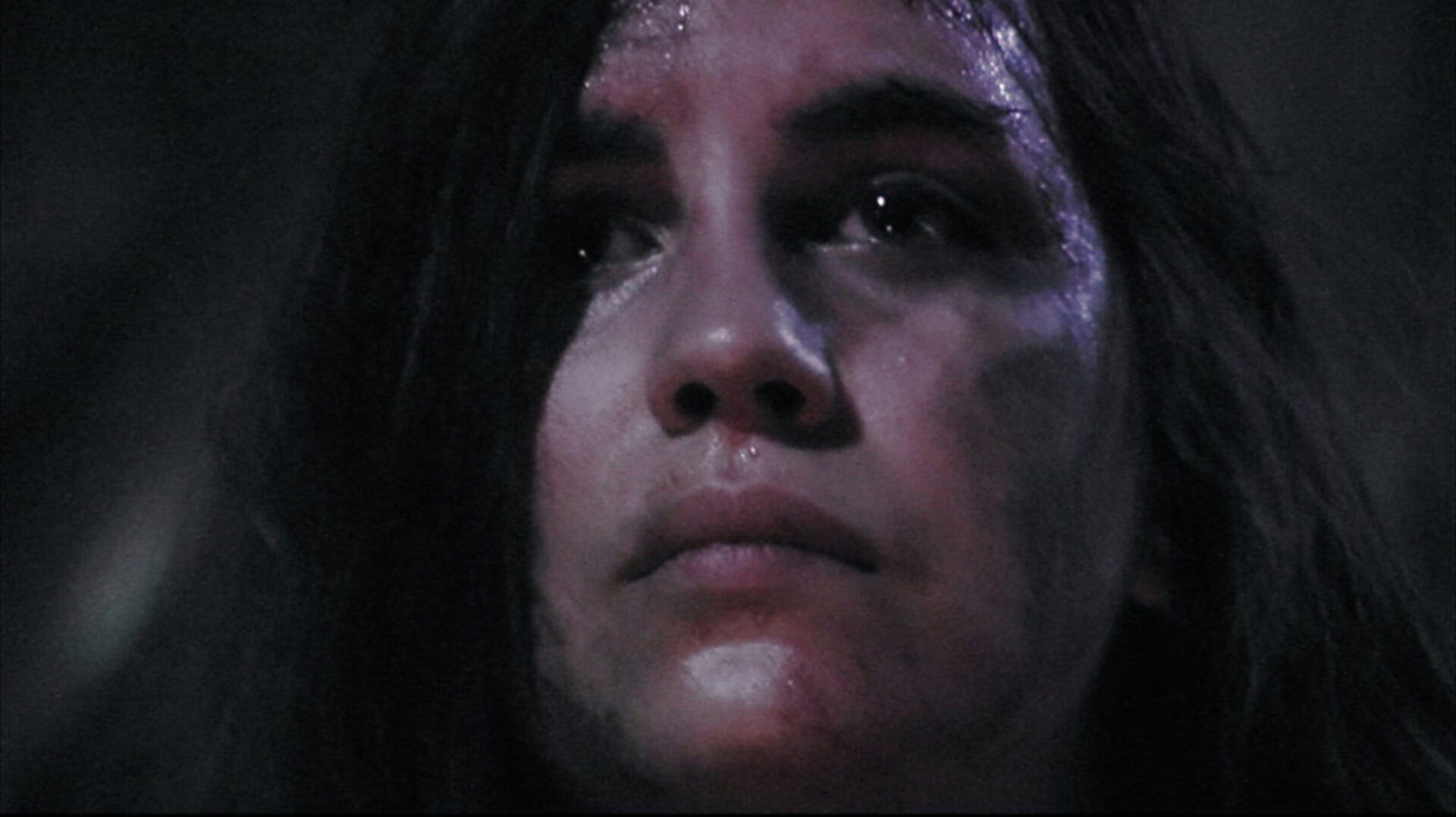
If anything partially saves Wekufe from oblivion, it’s Paula Figueroa’s performance. Her character, the student investigating the crimes, is the only one who seems to understand she’s in a horror film. Figueroa manages to convey genuine discomfort during the investigation scenes, especially in moments when she interacts with locals. There’s one scene in particular—where an elderly woman tells her the wekufe legend—in which her expression of fear and fascination is the only thing keeping the viewer even remotely engaged. It’s a shame the script doesn’t give her more to work with, because when it does, she proves this could’ve been a great film with a lead actress up to the task.
The rest of the cast, however, is a train wreck. Matias Aldea plays his boyfriend like he’s in a beer ad, with a permanent grin and a “everything’s fine” attitude that clashes violently with the film’s dark tone. In a key scene, where they should be discussing the crimes they’re investigating, Aldea acts like he’s on a romantic date, smiling and cracking jokes. It’s jarring, to put it mildly. Juan Pablo Burmeister, as a mysterious local, seems plucked from a 90s comedy. His performance is so exaggerated it borders on parody, with grand gestures and a tone that oscillates between whispering and shouting. Instead of creating mystery, he elicits laughter.
The problem isn’t just that the performances are bad—they’re inconsistent with the film’s tone. Wekufe tries to be a psychological thriller with folk horror elements, but the cast acts like they’re in a college drama or, worse, a telenovela. There’s no chemistry between the characters, no tension in their interactions, and above all, no fear. When the film attempts to scare, the audience feels nothing because the actors don’t convey any real emotion. It’s as if Attridge forgot to direct his cast, leaving them adrift in a script that already gave them little to work with.
Technical Aspects: The Photography That Photographs Nothing
One of Wekufe’s biggest problems is its inability to create a coherent visual atmosphere. The cinematography, whose author doesn’t even appear in the credits, is flat, textureless, and often just plain ugly. Chiloé is a place of undeniable natural beauty: dense forests, desolate beaches, stormy skies. Yet Attridge and his team seem to have decided to ignore all of it, opting for generic frames that could belong to any low-budget horror film. There’s no composition, no play of light and shadow, nothing to make the landscapes stand out. It’s as if they shot the whole thing on a phone camera, without worrying about framing or lighting.
There’s one scene in particular—where the protagonist walks through a forest at dusk—that should be visually striking. Instead, we get a blurry medium shot with flat lighting that highlights neither the trees nor the actress’s face. There’s no depth of field, no contrast, nothing to draw the viewer into the scene. It’s a waste of location and potential. In a film so dependent on atmosphere, these kinds of mistakes are unforgivable. Folk horror feeds on the visual: shadows, faces lit by candlelight, landscapes that seem plucked from a dream. Wekufe has none of that.
The sound design, another key element in horror, also fails spectacularly. The score is nonexistent, and when it does appear, it sounds like a loop of free ambient sounds downloaded from some sketchy website. The screams, whispers, and nature sounds—elements that should build tension—sound artificial, like they were recorded in a studio with a toy microphone. There’s one scene where the protagonist hears a whisper in the forest, but the sound is so bad it’s like someone’s talking through a walkie-talkie. Instead of scaring, it elicits laughter. The editing is equally clumsy, with abrupt cuts that shatter any tension and scenes that seem assembled at random. In short: Wekufe’s technical aspects are a reminder that horror isn’t about budget—it’s about talent.
The best
Paula Figueroa: The only actress who seems to understand she’s in a horror film. Her look of discomfort during the investigation scenes is the only thing saving Wekufe* from being a complete disaster. When the script gives her something to work with, she proves this could’ve been a great film.
- The premise: The idea of exploring the link between Chilote myths and sexual crimes is intriguing and full of potential. Too bad the script doesn’t know how to develop it.
- Some shots of Chiloé: Though the cinematography is generally mediocre, there are a few frames of Chiloé’s landscapes that manage to convey the place’s beauty and mystery. They’re brief moments, but at least they prove Attridge knew where he was filming.
The worst
- The script: Pretentious dialogue, flat characters, and a plot that goes nowhere. Attridge seems more interested in proving he’s read Foucault than in telling a coherent story.
- The performances: Matias Aldea acts like he’s in a beer commercial, and Juan Pablo Burmeister seems plucked from a comedy sketch. Only Paula Figueroa manages to salvage some dignity.
- The pacing: 80 minutes that feel like 8 hours. Endless long takes, clumsy editing, and a total lack of tension make the film a torture for the viewer.
- The cinematography: Flat, textureless, and often just plain ugly. Chiloé deserved better.
- The sound design: The score is nonexistent, and the sound effects sound like they were downloaded from a free website. Instead of scaring, they elicit laughter.
The Verdict of Claqueta Ácida
Wekufe: The Birth of Evil is what happens when folklore meets academic pretension and the budget of a student short film. Javier Attridge had a golden opportunity to explore Chilean folk horror with depth and atmosphere, but instead, he gifted us 80 minutes of boring long takes, pretentious dialogue, and performances that oscillate between amateurish and parodic. Paula Figueroa deserves better, Chiloé deserves better, and above all, the audience deserves better. If this is the best Chilean horror cinema has to offer, then the wekufe isn’t an evil spirit—it’s a metaphor for the industry itself. 💀
🎬 Tráiler Oficial
Abrir en YouTube
Wekufe: frequently asked questions
- What is the rating of "Wekufe" on Claqueta Ácida?
- "Wekufe" scored 3.8/10 on Claqueta Ácida in the review by Odin Lagbert.
- Is "Wekufe" worth watching?
- No. We gave it 3.8/10 (Sulfuric Acid), our rating for films we don't recommend.
- Who directed "Wekufe"?
- "Wekufe" was directed by Javier Attridge.
Theater Collateral Damage Report
Psychophysical impact certificate issued by Odin Lagbert
6 bostezos sonoros distribuidos con inquietante regularidad.
Más miradas al reloj que planos memorables, y ninguna trajo buenas noticias.
3 espressos triples o aceptar la derrota con dignidad.
"Desde el primer acto, cuando quedó claro que nadie en la sala de montaje había visto la película completa."
💬 Community Verdict
What did you think of the film? Rate it from 0 to 10 to compare it with the editorial review.
You haven't voted yet
📢 ¿Te ha gustado el ácido?
Comparte esta crítica con tus amigos cinéfilos o desata la polémica en redes.
⚡ THE CINEMATIC VENOM YOUR INBOX CRAVES
No sugarcoated ratings, no corporate fluff. Subscribe for our uncensored weekly analysis or join the private Telegram for press previews, poll clashes, and instant alerts.
Alertas de estrenos en 1 segundo, encuestas en caliente y audios al salir de pases de prensa.
Recibe la dosis semanal en tu mail + regalo inmediato del PDF con 50 joyas ocultas de culto.
Related Reviews
Recommended autopsies for demanding film buffs.
 ⚠️ Ácido Sulfúrico 4.2
 The Priest: Thanksgiving Massacre – When the Turkey’s a Cannibal and the Sermon Smells Like Blood
⚡ Ambas sentenciadas al vertedero con ⚠️ Ácido Sulfúrico.
Steve Lawson serves up a low-budget terror feast with more salt than scares. Folk horror for microwave fans: fast, cheap, and leaves the same aftertaste.
 ⚠️ Ácido Sulfúrico 4.2
 Good Boy: The Dog That Saved No One (Not Even Itself)
⚡ Ambas sentenciadas al vertedero con ⚠️ Ácido Sulfúrico.
A supernatural canine stars in a film that barks up the wrong tree. *Claqueta Ácida* dissects this rural dud with the precision of a scalpel in a slaughterhouse.
 ⚠️ Ácido Sulfúrico 4.0
 *Humane*: The Family Euthanasia That Leaves Us Deader Than the Weather
⚡ Ambas sentenciadas al vertedero con ⚠️ Ácido Sulfúrico.
Caitlin Cronenberg serves up this nightmare dinner where emotional cannibalism outdoes the ecological kind. Euthanasia or scam? Claqueta Ácida dissects the corpse.
Editorial Ecosystem
Cinephile connections, archive interviews and related analyses.
💬 Debate Cinéfilo & Autopsia de Lectores
0 veredictos¿Discrepas con nuestra nota? ¿Es una obra maestra o veneno puro? Deja tu veredicto abajo sin necesidad de registro.


Aún nadie ha dejado su veredicto para esta película.
Sé el primero en clavarle el colmillo rellenando el formulario de arriba.