The Odyssey — Nolan’s Epic Ego Trip
Christopher Nolan’s The Odyssey: A cinematic masterpiece—or a bloated vanity project drowning in its own pretensions?


The Odyssey: full review
Christopher Nolan’s so-called Odyssey isn’t a film—it’s an act of faith. Blind faith that the director’s name, stamped on the poster like a divine seal of approval, will be enough to make audiences swallow two hours and forty minutes of repackaged Greek mythology, Dolby Atmos sound effects, and a budget that could fund three civil wars. From the very first shot—a sweeping tracking shot of Odysseus (Matt Damon) striding toward his ship, the sun setting over Ithaca like an Instagram filter—you know Nolan isn’t telling a story. He’s selling a premium experience, as if the Odyssey were the latest iPhone: bigger, shinier, and just as hollow inside.
And Nolan, that box-office sorcerer who turned insomnia into art with Memento and time into a broken toy with Inception, seems to have confused ambition with self-indulgence. There’s no breathing script here, just an instruction manual for assembling a spectacle. The dialogue sounds like it was written in a UCLA creative writing workshop: “Glory isn’t for cowards, my son!” Odysseus bellows at Telemachus (Tom Holland), who nods with that wounded-puppy look the actor has perfected in Spider-Man movies. Where’s the Nolan who made us question reality? Here, there are only certainties: the gods are evil, heroes are good, and the audience must applaud because, damn it, it’s the Odyssey!
The cast, meanwhile, appears to have been assembled at a Hollywood star auction with profit-sharing clauses. Matt Damon, still trying to shake off the ghost of The Informant, dives into Odysseus like a Jason Bourne character in a toga. His performance oscillates between dramatic whispers and guttural screams, as if someone told him epicness is measured in decibels. No nuance, just volume. Anne Hathaway, as Penelope, wears the expression of someone who just found out her husband’s been lost at sea for twenty years—and maxed out her credit card. Her most memorable scene involves weaving fabric while staring into the distance, a moment so original even Homer would’ve dozed off.
But if anything partially saves this film from total shipwreck, it’s Hoyte van Hoytema’s cinematography. The man is a lighting genius, and he proves it here. Shots of ships cutting through the sea at sunset are so gorgeous they make you want to cry—though it might be from rage, knowing such beauty serves a script unworthy of the paper it’s printed on. The storm sequence, with waves so massive they look ripped from a BBC documentary, is so visceral it almost makes you forget Odysseus is screaming, “Zeus, help me!” like a lost tourist in Mykonos. Almost.
The problem is Nolan, obsessed with realism, shot most scenes in real Greek locations—then drowned them in digital effects until they’re unrecognizable. The result is an uncomfortable collage: real actors running through landscapes painted by an algorithm. The battle against the cyclopes, for example, is a CGI orgy so over-the-top it feels like a God of War trailer instead of an auteur film. And don’t even get started on the Polyphemus cave scene, where the monster looks like a Sesame Street puppet on steroids. Where’s the Nolan who shot with miniatures and practical effects? Here, everything reeks of cheap rendering and wasted post-production hours.
Ludwig Göransson’s score is a double-edged sword. When it works—like the main theme, a mix of Greek choirs and tribal percussion—it’s electrifying. But when it doesn’t, it sounds like the soundtrack to an Assassin’s Creed game set in ancient Greece. There are moments when the music drowns the characters instead of accompanying them, as if Göransson confused epicness with sheer volume. And no, not everything needs a three-minute leitmotif with fifty people screaming in ancient Greek. Sometimes, silence is more powerful.
But the real sin of Nolan’s Odyssey isn’t its runtime (which, by the way, feels like it was edited with an axe) or even its predictable script. The problem is the lack of soul. Nolan has reduced one of Western culture’s foundational myths to an empty visual spectacle, as if the Odyssey were a summer blockbuster with togas. There’s no reflection on heroism, no price of glory, not even a hint of human condition. Just noise, effects, and a Matt Damon running around like his stockbroker’s chasing him.
And the worst part? Deep down, you know Nolan could’ve done better. This is the same director who gave us The Dark Knight, a film where myth became tangible, where characters breathed and the audience suffered with them. Here, everything is surface. Even the gods—played by a supporting cast plucked from a Game of Thrones casting call—sound like clichés. Poseidon (Idris Elba) is an opera villain, Zeus (Anthony Hopkins) a senile old man speaking in riddles, and Athena (Cate Blanchett) a divine femme fatale popping in and out like she’s in an episode of Xena: Warrior Princess. Where’s the depth?
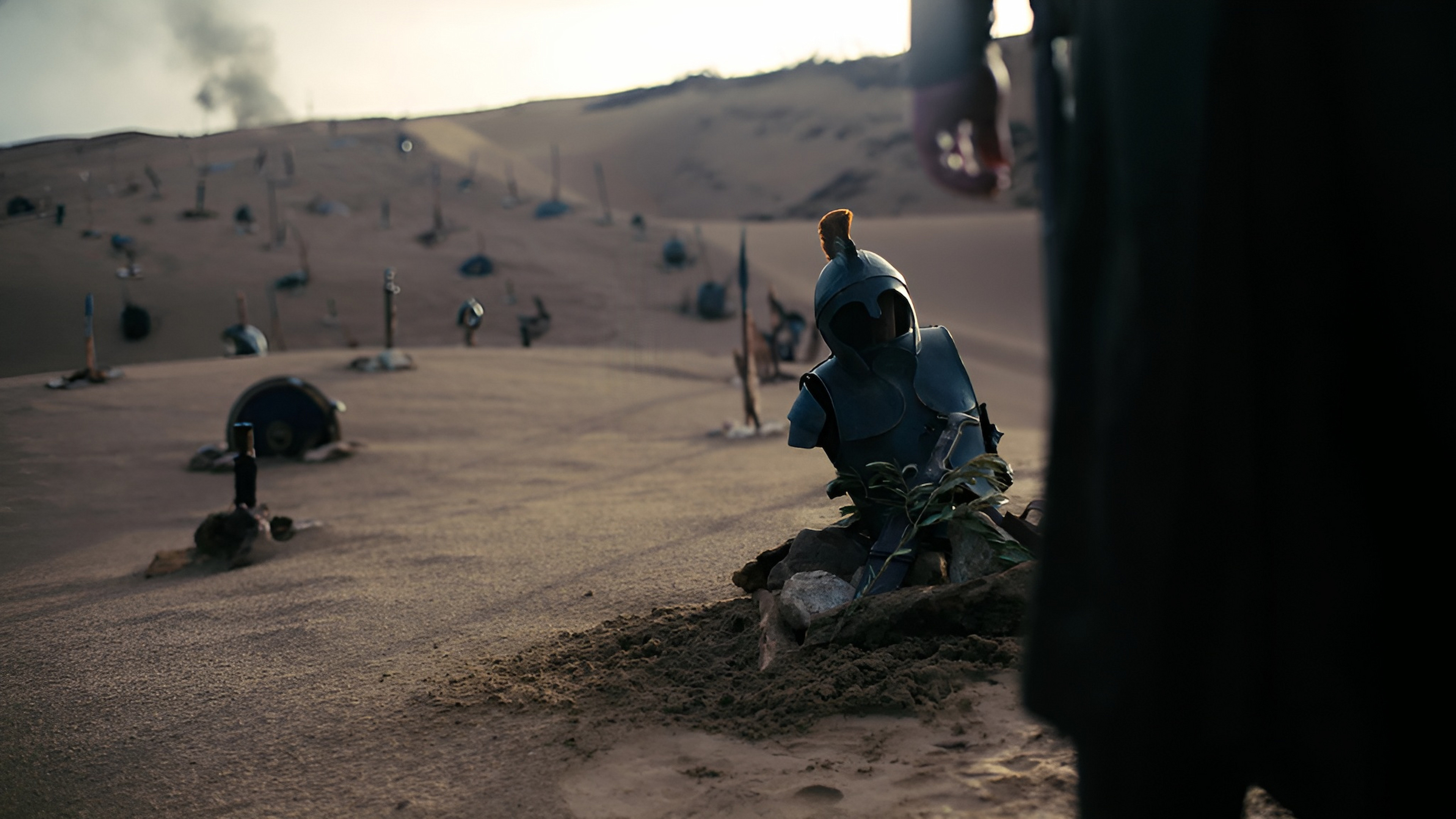
Direction and staging: the kingdom of the obvious
Nolan built his career on the idea that cinema should be intellectual, but The Odyssey proves it can be the opposite: pretentious without substance. Every shot seems designed to impress rather than move. The tracking shots are so long you could order popcorn, the close-ups so exaggerated they look like a YouTube tutorial on “how to make your film look epic,” and the flashbacks so frequent you wonder if Nolan confused the Odyssey with Memento.
There’s one scene that sums up everything wrong with the film: Odysseus, after escaping Circe’s island, stares into the horizon as the camera spins 360 degrees around him. It’s a shot we’ve seen a thousand times, in better and worse films, but here it feels like Nolan’s saying, “Look, this is cinema. Applaud.” No emotion, no surprise—just self-satisfaction. And the worst part? It works, at least for the audience that claps at anything with the Nolan stamp. But for those expecting more than a blockbuster dressed as a classic, it’s a monumental letdown.
Jennifer Lame’s editing (Nolan’s usual collaborator) is another weak point. Some sequences feel timed with a stopwatch: each scene lasts exactly long enough to keep the audience from getting bored, but never long enough to feel anything. The final battle, for example, is a chaos of quick cuts and digital effects that fail to convey either violence or desperation. It’s like watching a two-hour trailer. And don’t get started on the unnecessary jump cuts, as if Nolan just discovered Soviet montage and decided to use it for everything, even dialogue scenes.
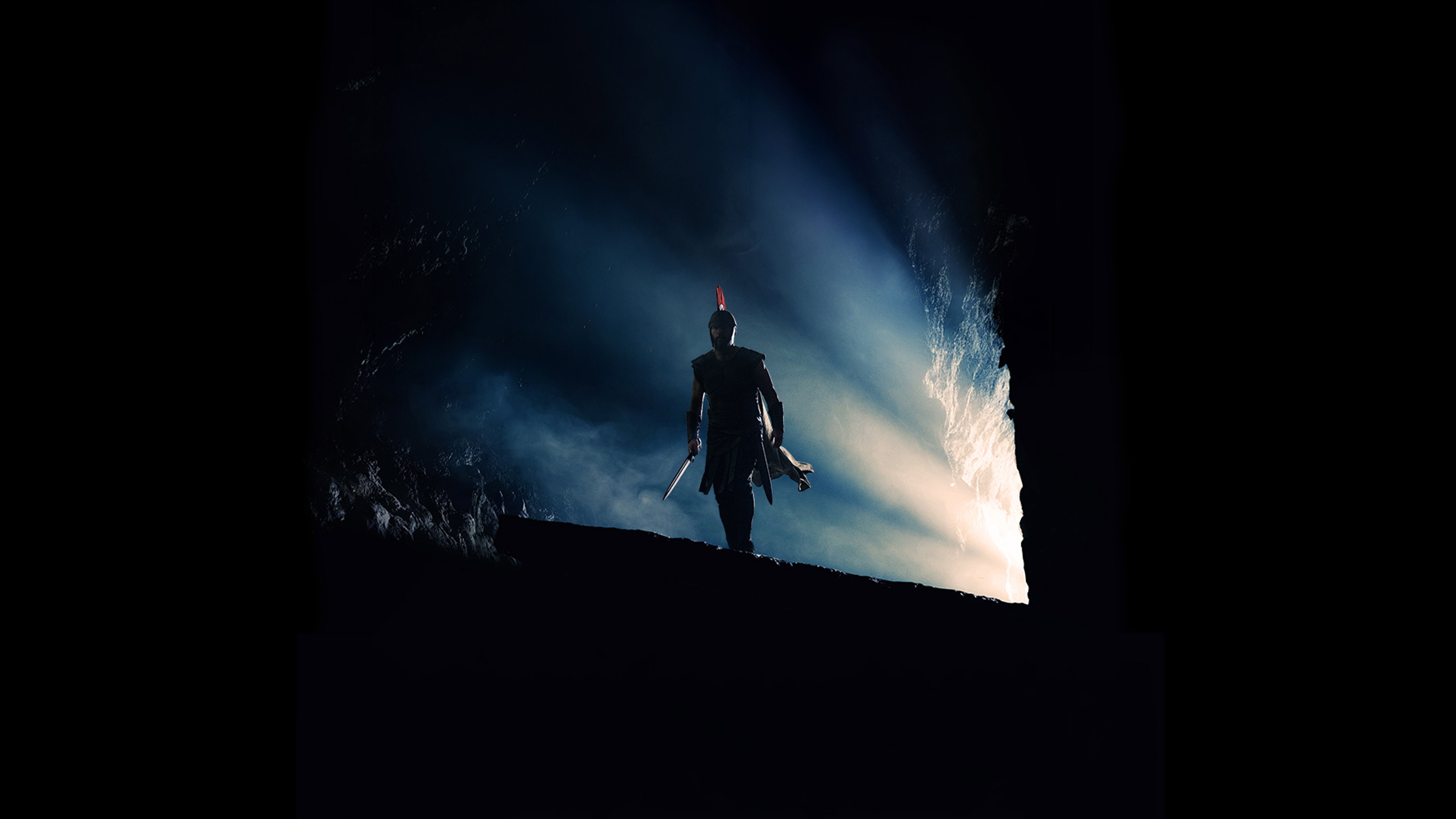
Performances: a cast that deserved better
Matt Damon is a competent actor, but here he’s out of his element. His Odysseus isn’t a tragic hero—he’s a guy with a fake beard yelling a lot. There are moments when he seems to be playing a Gladiator character instead of the King of Ithaca. No vulnerability, no doubt—just a constant pose of “I’m the protagonist and must look important.” Anne Hathaway, meanwhile, does what she can with a character written by someone who’s never spoken to a woman. Penelope is little more than a symbol of wifely fidelity, a passive figure weaving and crying while waiting for her husband. Where’s the cunning Penelope from Homer, the one who outsmarts suitors with her wit? Here, she’s just a mannequin in period costume.
The rest of the cast fares no better. Tom Holland, as Telemachus, looks like a lost teenager on a film set. His performance is so forced it’s cringe-worthy, as if someone told him epicness requires intense stares and dramatic sighs. Robert Pattinson, in a cameo as Achilles, appears for five minutes and leaves without a trace, like he knew this film didn’t deserve his talent. And don’t even talk about the gods: Idris Elba as Poseidon is a waste, Anthony Hopkins as Zeus seems to be on another planet, and Cate Blanchett as Athena wears the expression of someone who just found out her paycheck got cut.
The only one who comes out relatively unscathed is Barry Keoghan, playing a drunk sailor who accompanies Odysseus for part of his journey. Keoghan, with his roguish face and impeccable comic timing, steals every scene he’s in. He’s the only character who feels human, who has a sense of humor, and who isn’t just there to fulfill the script. Why didn’t they give him more screen time? Probably because Nolan was too busy filming boat shots to notice he had a real actor in his cast.
Technical aspects: what shines and what stinks
Hoyte van Hoytema’s cinematography is, without a doubt, the film’s saving grace. The Greek landscapes are captured with a beauty that hurts, as if the cinematographer decided to compensate for the script’s flaws with sheer aesthetics. Sunsets over the Aegean, Ithaca’s cliffs, storms at sea—everything is filmed with a precision bordering on obsession. It’s the kind of cinematography that makes you want to see the film in IMAX, even if it’s just to suffer in high definition.
But even here, there are flaws. Nolan, in his quest to shoot in real locations, has mixed real shots with CGI so clumsily that sometimes the actors seem to be floating over poorly integrated green screens. The Polyphemus cave scene, for example, is a disaster: the cyclops looks like a 1990s stop-motion puppet, and the lighting is so artificial it feels like they’re shooting on a Doctor Who set. Where’s the realism Nolan so fiercely defends?
Nathan Crowley’s production design is another strong point. The ships, temples, armor—everything is designed with an impressive level of detail. But again, the excess of CGI ruins it all. The Greek cities look like they’re from a video game, with textures too clean and saturated colors. No dirt, no wear, no life. It’s as if Nolan wanted to recreate ancient Greece but only watched 300 for reference.
Ludwig Göransson’s score is, as always, competent—but too invasive. There are moments when the soundtrack competes with the dialogue, as if Göransson decided everything had to be epic. The Greek choirs are beautiful but so repetitive they lose their impact. And don’t even talk about the characters’ leitmotifs, which are so obvious they seem plucked from a beginner’s composition manual. Where’s the subtlety?
The sound design, on the other hand, is flawless. The sound effects of waves, wind, battles—everything is designed to immerse you. But again, the excess ruins it. Nolan seems obsessed with surround sound, to the point where it’s sometimes hard to understand the dialogue. What’s the point of a state-of-the-art sound system if you can’t hear what the characters are saying?
The best
- Hoyte van Hoytema’s cinematography: Greek landscapes captured with a beauty that stings, as if every shot were a Renaissance painting. It’s the only thing saving this film from total disaster.
- Nathan Crowley’s production design: The ships, temples, armor—everything is designed with obsessive detail. If you like pretty sets, here’s your fill.
- Barry Keoghan: The only actor who seems to be in a different, more human and less pretentious film. Stealing every scene with his charisma and comic timing.
- The storm sequence: A moment of pure adrenaline, where cinematography, sound, and editing come together to create something truly impactful. Even if it only lasts five minutes, it’s the closest the film comes to being memorable.
The worst
- The script: A string of clichés and forced dialogue that sounds like it was written in a high school creative writing workshop. No depth, no nuance—just noise.
- The performances: Matt Damon yelling, Anne Hathaway crying, Tom Holland sighing... A wasted cast in a script that doesn’t deserve their talent.
- The runtime: Two hours and forty minutes that feel like four. Some scenes seem endless, as if Nolan decided to punish us for daring to question his genius.
- The lack of soul: A film about one of Western culture’s deepest myths, reduced to an empty spectacle. No reflection, no emotion—just effects and noise.
The Verdict of Claqueta Ácida
Christopher Nolan has turned the Odyssey into a summer blockbuster with togas, a film that confuses ambition with self-indulgence and spectacle with depth. It’s not bad—it’s worse: a film that could’ve been great but settles for a hollow style exercise, as if Nolan decided his name on the poster was enough to justify two hours and forty minutes of repackaged mythology. It’s not a total disaster, but it’s a monumental letdown, especially from a director who’s given us masterpieces like The Dark Knight and Memento. If you’re looking for visual beauty, you’ll find it here. If you’re looking for something more, prepare to suffer. Nolan has made a film to applaud, not to feel. And in cinema, that’s the worst sin of all. 💀
🎬 Tráiler Oficial
Abrir en YouTube
The Odyssey: frequently asked questions
- What is the rating of "The Odyssey" on Claqueta Ácida?
- "The Odyssey" scored 9/10 on Claqueta Ácida in the review by Odin Lagbert.
- Is "The Odyssey" worth watching?
- Yes. We gave it 9/10 (Nuclear Fusion), our rating for must-see films.
- Who directed "The Odyssey"?
- "The Odyssey" was directed by Christopher Nolan.
Theater Collateral Damage Report
Psychophysical impact certificate issued by Odin Lagbert
Ni un solo parpadeo voluntario. El asiento, inusualmente cómodo.
El móvil permaneció en el bolsillo donde debía estar.
Ninguna. Guarda el café para la sesión siguiente.
"No aplica. La obra se sostiene sola."
💬 Community Verdict
What did you think of the film? Rate it from 0 to 10 to compare it with the editorial review.
You haven't voted yet
📢 ¿Te ha gustado el ácido?
Comparte esta crítica con tus amigos cinéfilos o desata la polémica en redes.
⚡ THE CINEMATIC VENOM YOUR INBOX CRAVES
No sugarcoated ratings, no corporate fluff. Subscribe for our uncensored weekly analysis or join the private Telegram for press previews, poll clashes, and instant alerts.
Alertas de estrenos en 1 segundo, encuestas en caliente y audios al salir de pases de prensa.
Recibe la dosis semanal en tu mail + regalo inmediato del PDF con 50 joyas ocultas de culto.
Related Reviews
Recommended autopsies for demanding film buffs.
 🔥 Fusión Nuclear 8.5
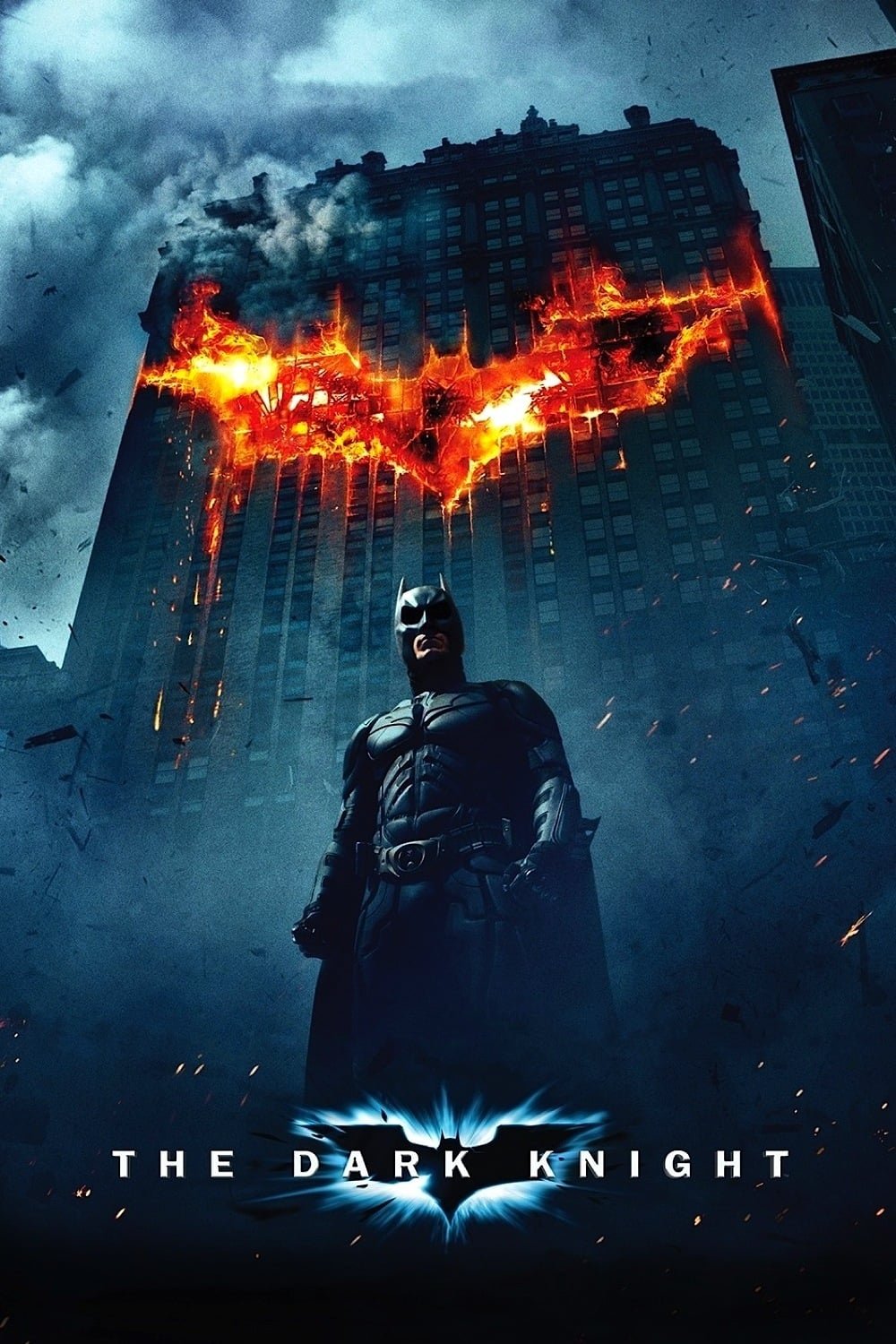
 The Dark Knight: When Nolan Saved Superhero Cinema (And Gave Us a Joker for the Ages)
⚡ Del mismo director (Christopher Nolan): analiza la evolución o degradación de su estilo.
Christopher Nolan turned a comic book into Shakespeare with a blockbuster budget. Heath Ledger stole the Joker’s soul—and ours. Masterpiece or pretentious overkill? Here’s the autopsy.
 🔥 Fusión Nuclear 8.0
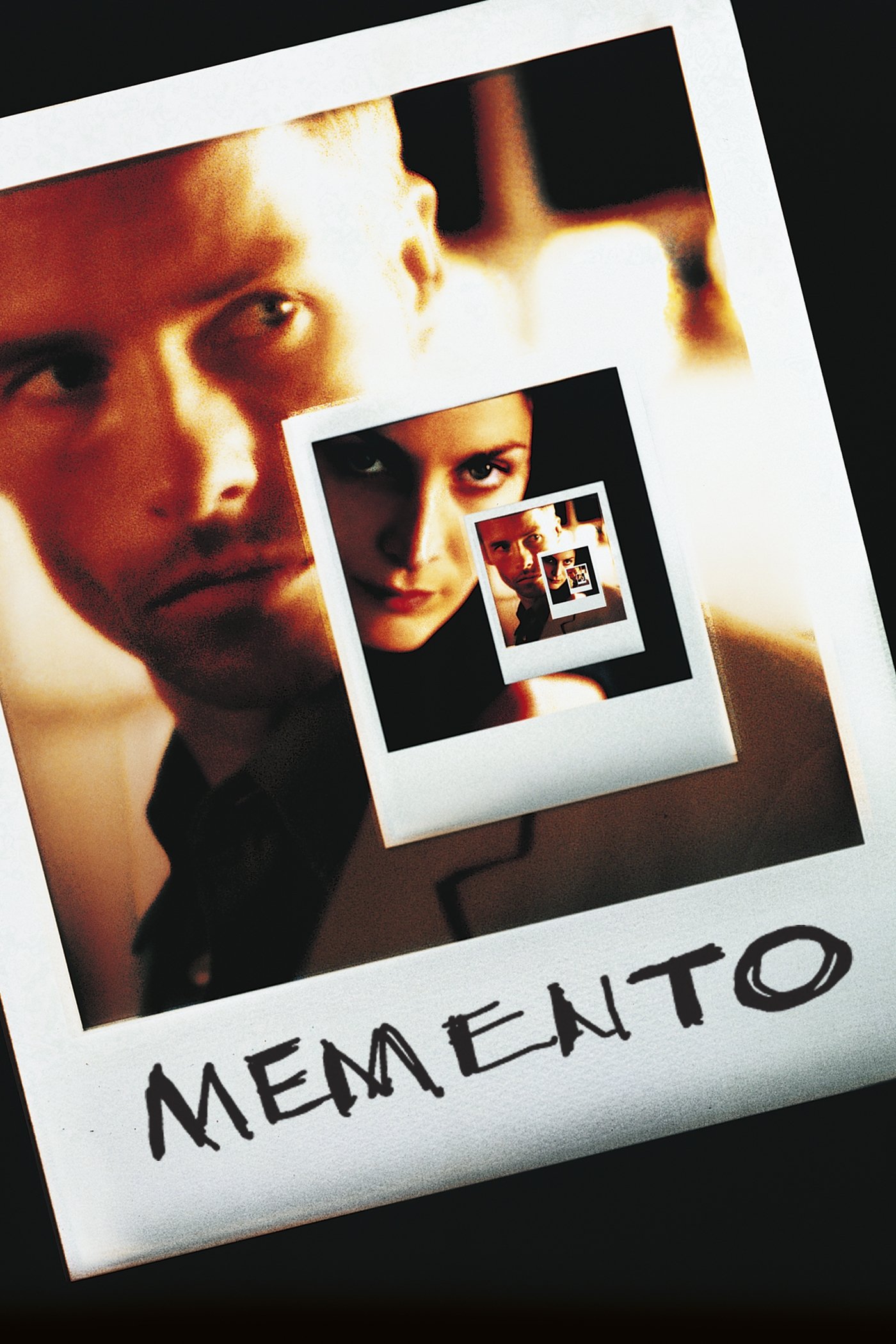
 Memento: The Maze Nolan Built to Fuck With Your Head (And He Nailed It)
⚡ Del mismo director (Christopher Nolan): analiza la evolución o degradación de su estilo.
Christopher Nolan dismantles memory like a Swiss watch in this twisted-structure masterpiece. Guy Pearce shines, but the script is the real monster here.
 🔥 Fusión Nuclear 8.0
 The End of Oak Street: David Robert Mitchell Reinvents Cosmic Horror Without Losing Its Human Core
⚡ Afinidad temática directa en atmósfera, estilo y fijaciones visuales.
Anne Hathaway and Ewan McGregor lead this claustrophobic descent where the unknown isn’t a monster—it’s reality itself unraveling at the seams. Mitchell proves once again that the most terrifying horror is the kind that festers in the intimate.
Editorial Ecosystem
Cinephile connections, archive interviews and related analyses.
🎞️ In Claqueta Cinematheque 2
💬 Debate Cinéfilo & Autopsia de Lectores
0 veredictos¿Discrepas con nuestra nota? ¿Es una obra maestra o veneno puro? Deja tu veredicto abajo sin necesidad de registro.


Aún nadie ha dejado su veredicto para esta película.
Sé el primero en clavarle el colmillo rellenando el formulario de arriba.