Buddy — Chromatic Kidnapping as the Pinnacle of Television Onanism
Casper Kelly pushes the cathodic format toward the abyss of labor retention in this orange-unicorn nightmare.
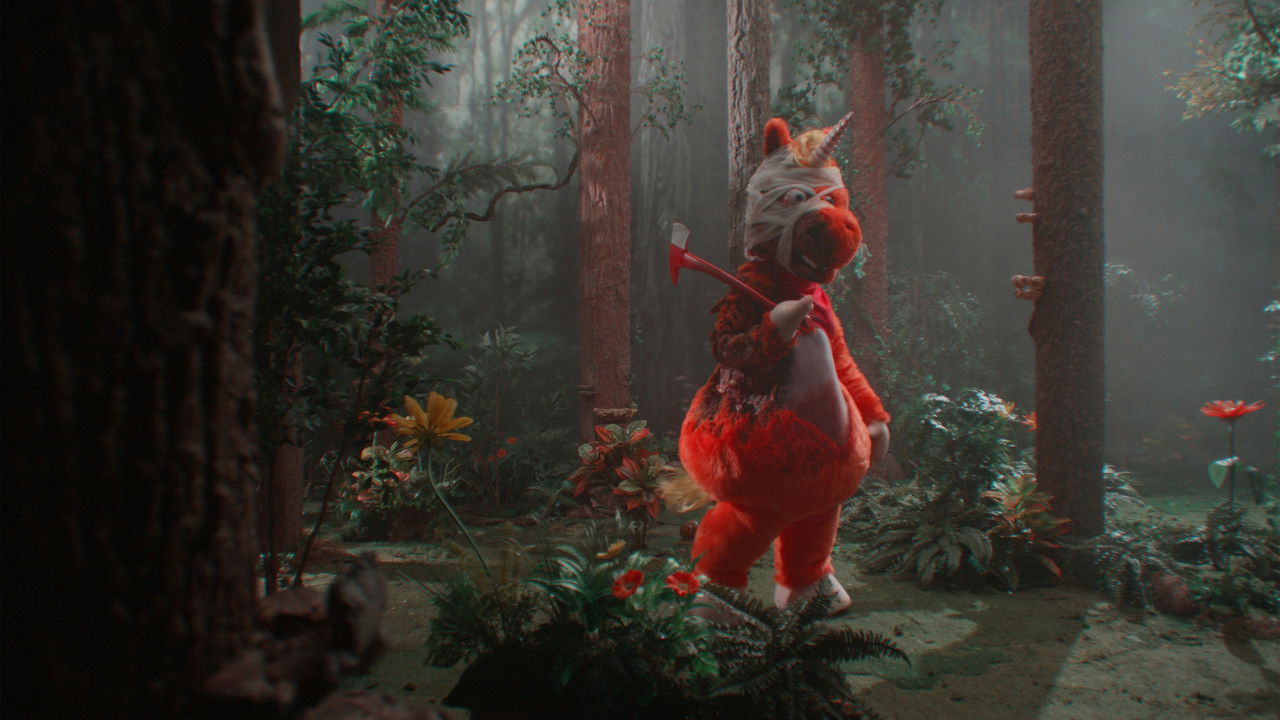
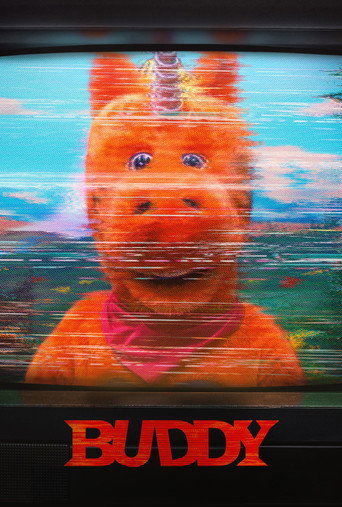
Buddy: full review
Nineties children's television always harbored a substrate of deafening cruelty, a tacit pact between fluorescent neon and cognitive alienation that now, with the hygienic distance of the twenty-first century, reveals itself to us in all its putrefaction. Certain contemporary creators insist on scratching that nostalgic scab seeking a sociological reading, frequently forgetting that the cathodic medium was already, in its genesis, a miniaturized concentration camp for overstimulated infants. When one confronts Casper Kelly's proposal, the sensation is not that of attending a routine post-modern horror exercise, but rather an involuntary confession regarding the parasitic nature of the entertainment industry. We are not facing mere grotesque amusement, but a treatise on how commodified fiction literally devours those who dare to inhabit it. The screen ceases to be a window and becomes a containment wall where employment contracts are sealed with viscera. It is a metaphor so direct it hurts, like a finger in the eye that you cannot rub because they have taped your hands with set duct tape.
The conceptual merit of the work lies in understanding that the structure of a children's variety show does not substantially differ from the coercion mechanisms typical of a low-intensity totalitarian regime. The chromatic innocence of the sets acts as a moral solvent that masks the most absolute corporate depravity, reminding us that authorial onanism sometimes hits the mark when it abandons bourgeois modesty. Far from conforming to the ironic wink for bargain-bin nostalgics, the director articulates a visual device where mandatory joy transforms into a perpetual sentence. The viewer educated in the Nouvelle Wave will recognize here that subtle unease, that ontological discomfort that bubbles up when scenic artifice refuses to disguise its seams and prefers to exhibit the internal rot of its own machinery. It is cinema that bites its own tail, an infinite loop where the product consumes the producer and consumer alike, leaving a trail of synthetic ash on the retina.
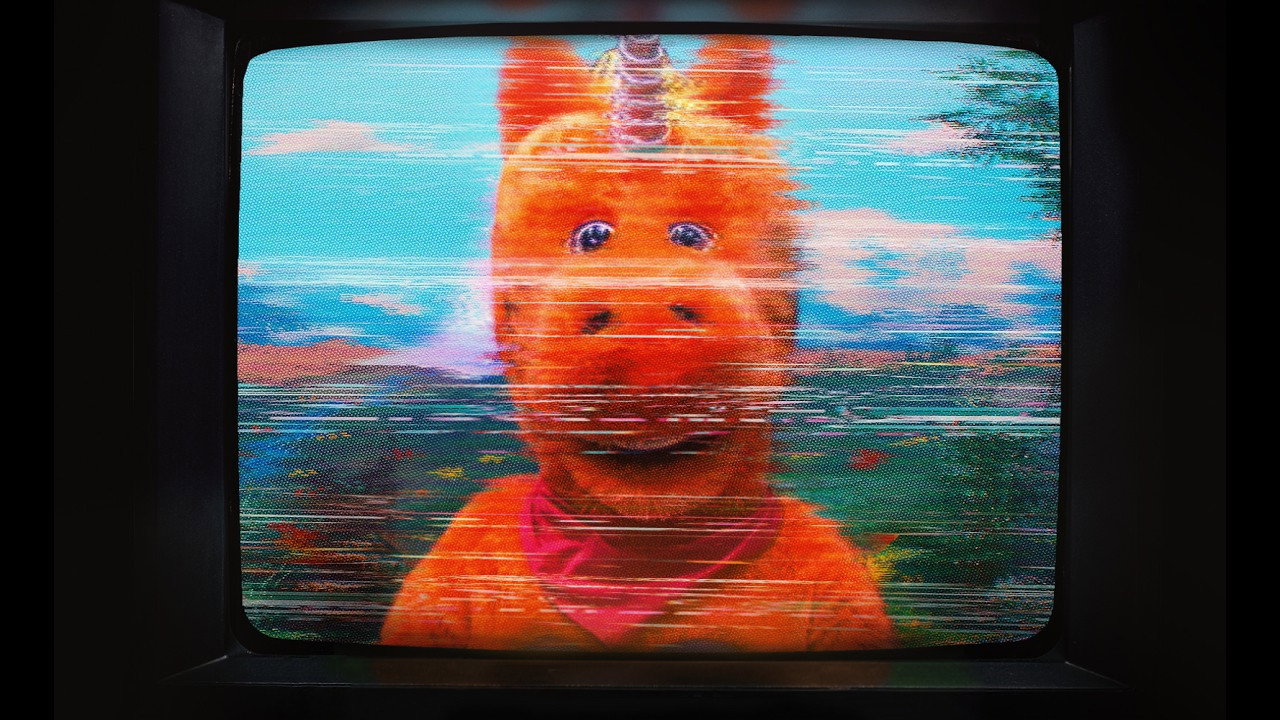
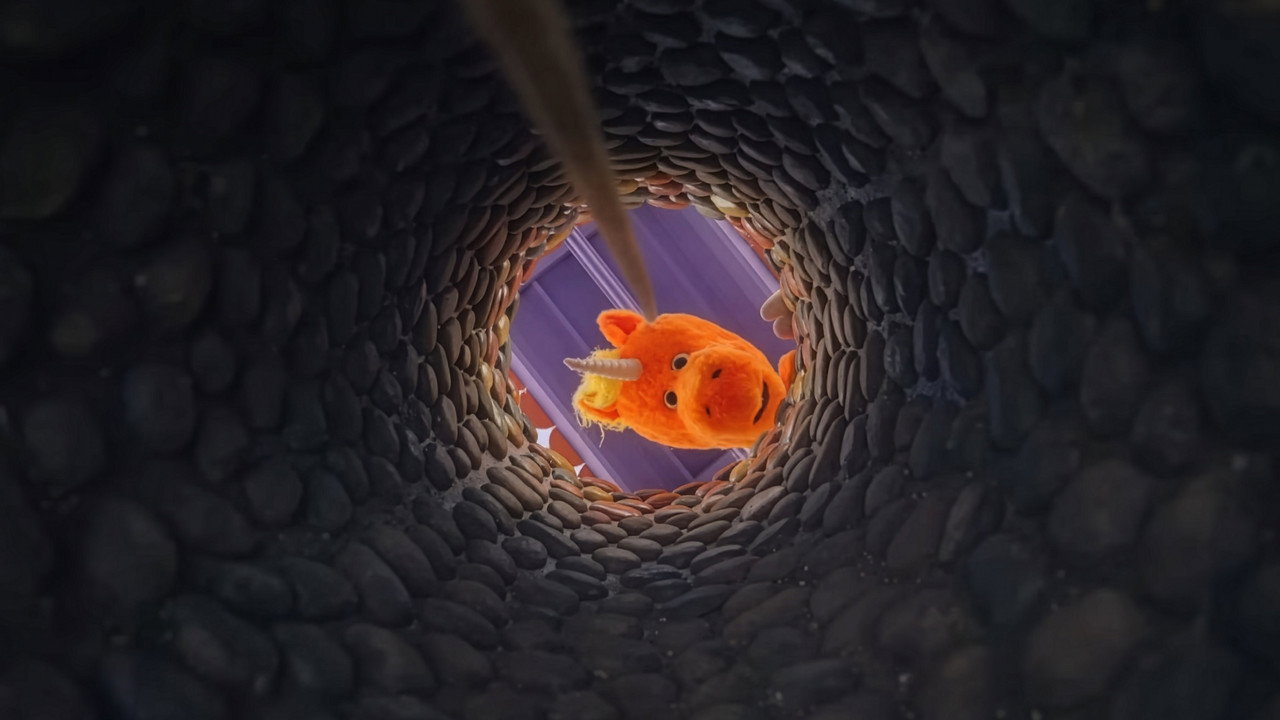
The direction and the pulse of captivity
Casper Kelly assumes dual authorship of the text and staging with surgical precision that disarms any temptation to dismiss the work as mere analog pastiche. The way he choreographs the physical confinement of the actors within that infinite set demonstrates an outstanding command of the geometry of closed space; every static shot breathes a calculated claustrophobia that suffocates any hint of formal escapism. There is no room here for aesthetic complacency or gratuitous mannerism. Zach Kuperstein's lens captures the luminescent degradation of the environment with a raw grit that turns television artifice into a fluorescent dungeon. The direction does not seek to shock the plebeian viewer through cheap jump scares, but to construct an unbreathable atmosphere where the mental collapse of the main characters feels like a logical evolution within systemic aberration. Kelly understands that true horror is not blood, but the bureaucracy of blood, the paperwork that justifies the massacre while the background music keeps playing cheerfully and empty.
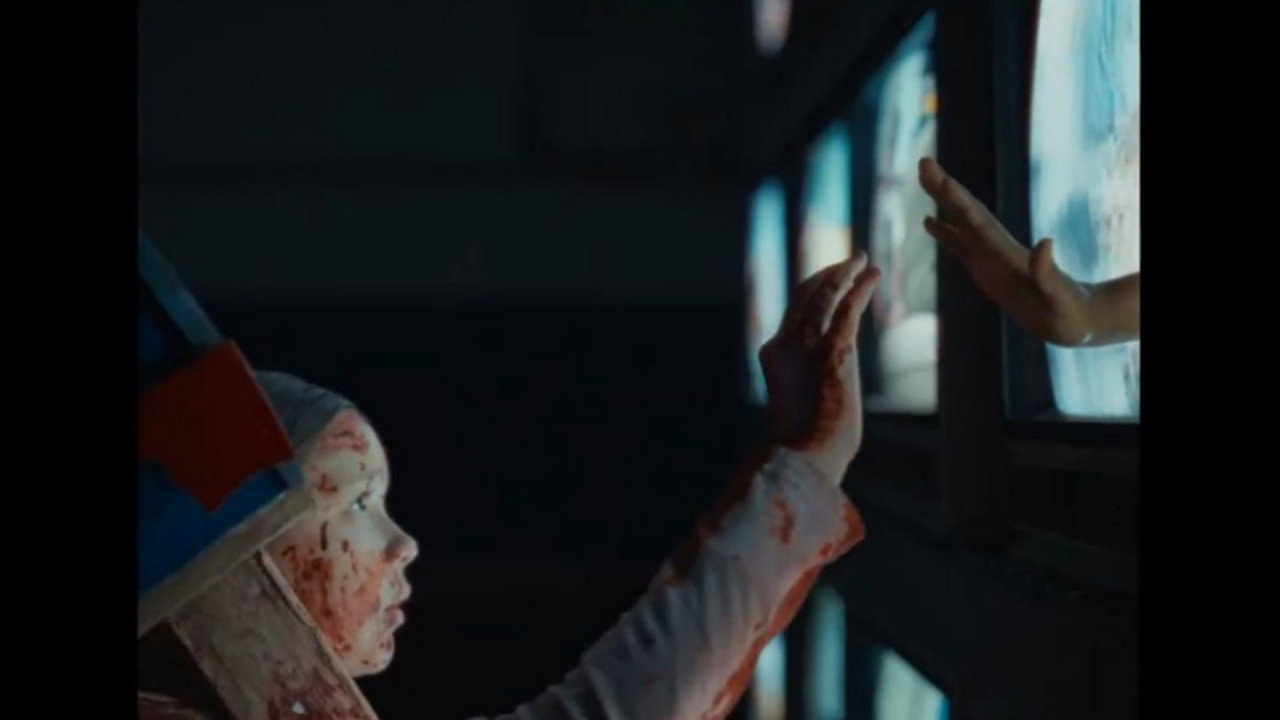
Performances and fissures on the set
At the center of this chromatic delirium, the work of the main cast functions as the exact gear preventing the shipwreck of conceptual absurdity. Keegan-Michael Key endows his central creature with an unsettling density, oscillating between infantile bonhomie and absolute despotism with a horrifying naturalness; his physical presence is the anchor sustaining narrative tension when the script flirts with abstract excess. His smile, that frozen grimace seemingly carved from low-grade plastic, is the perfect symbol of corporate dehumanization. Opposite him, Cristin Milioti brings exemplary metric sobriety, interpreting the descent into the cathodic nightmare with the existential fatigue of someone who realizes too late the trap they have fallen into. Her gaze does not ask for help; it asks for a termination contract that will never arrive. The young actors, led by Delaney Quinn and Caleb Williams, navigate the horror with commendable conviction, steering clear of the usual histrionics of teen genre cinema to embrace a restraint that intensifies the impact of sudden violence. They are puppets who know they are puppets, and that awareness drains the color from their skin.
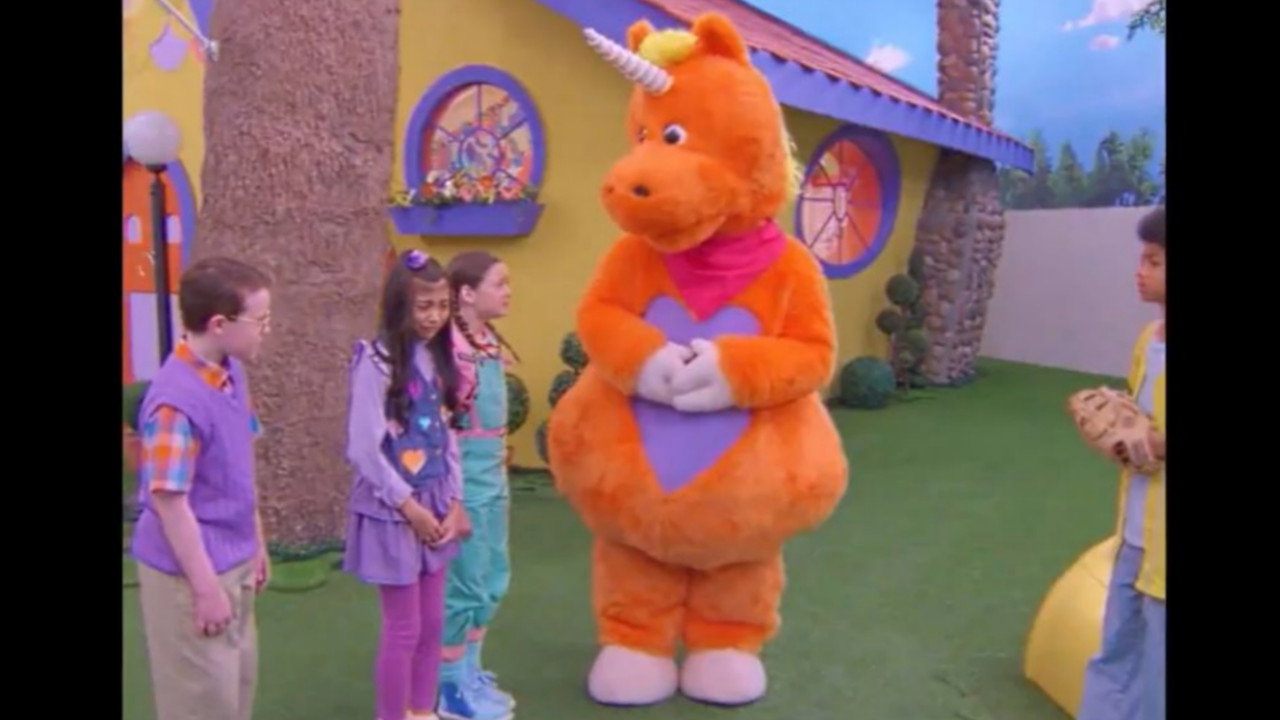
Technical section: The aesthetics of the cage
Zach Kuperstein's cinematography does not merely illuminate; it suffocates. The use of harsh lights and stark shadows creates a contrast reminiscent of prison portraits, yet with the saturated, sickly palette of a cereal commercial. Sound design, meanwhile, is constant sonic torture: the hum of fluorescent tubes becomes an oppressive leitmotif creeping beneath the viewer's skin. Production design is a masterclass in how to build a cage using pastel colors. Every corner of the set is engineered so there is no escape, not even a visual one. It is a space where reality bends to serve fiction, and when fiction shatters, reality has nowhere to go. Editing, swift and nervous during moments of crisis, contrasts with the paralyzing sluggishness of dialogue scenes, creating a rhythm mimicking the mental dissociation of characters trapped in their own workplace hell.
The best
- Risky premise: The transformation of a children's format into an allegory about television labor slavery.
- Central performance: Keegan-Michael Key's physical and vocal composition at the helm of the cathodic steering wheel.
- Cinematography: Zach Kuperstein's ability to mutate studio lighting into a claustrophobic trap.
The worst
- Occasional excess: Certain passages where conceptual delirium threatens to overflow the internal coherence of the tale.
The Verdict of Claqueta Ácida
Casper Kelly has birthed an undisputed oddity that discomforts the lazy viewer and delights the entomologist of audiovisual perversions. We are not before an undisputed masterpiece, but rather a savage artifact wearing the disguise of massacred childhood to settle scores with the very medium financing it. A triumph of formal bad blood that deserves to be celebrated with skepticism and aristocratic distance. It is a film that leaves the taste of bile in your mouth, but it is necessary bile, an acidic reminder that behind every plastic smile lies a contract signed in blood. 💀
Buddy: frequently asked questions
- What is the rating of "Buddy" on Claqueta Ácida?
- "Buddy" scored 6.8/10 on Claqueta Ácida in the review by Odin Lagbert.
- Is "Buddy" worth watching?
- With reservations. We gave it 6.8/10 (Citric Acid), our rating for uneven films with something worth saving.
- Who directed "Buddy"?
- "Buddy" was directed by Casper Kelly.
Theater Collateral Damage Report
Psychophysical impact certificate issued by Odin Lagbert
Cero bostezos: la estupefacción ante semejante desvarío mantiene las pupilas dilatadas.
Ninguna tentación de mirar el cronómetro, atrapados como estamos en la mazmorra fluorescente.
Un espresso bien cargado, tomado con la misma rigidez con la que un niño obedece al líder de la manada.
"El instante exacto en que los objetos inanimados del decorado adquieren conciencia de su propia esclavitud."
The rebuttal from Dante Sangre (Blockbuster Scalpel)
In stark disagreement with the review given by Odin Lagbert.
“Buddy: un cadáver corporativo estropeado Kelly recicla clichés de terror barato. La puesta en escena parece un set de feria, luces parpadeantes sin intención. La fotografía es plana, como si la cámara estuviera cubierta de plástico. Los personajes no evolucionan, solo gritan. El guion se aferra a la nostalgia como un vendaje sucio. La edición corta con la precisión de una lobotomía, destruyendo cualquier tensión. El sonido chirría, como un cassette mal curado. Los blockbusters de los 80 lograron efectos reales con presupuestos modestos. Hoy se vende la misma porquería como “arte” y se la envuelve en lavado de cara. Buddy es basura industrial, una estafa visual que no justifica su existencia.
💬 Community Verdict
What did you think of the film? Rate it from 0 to 10 to compare it with the editorial review.
You haven't voted yet
📢 ¿Te ha gustado el ácido?
Comparte esta crítica con tus amigos cinéfilos o desata la polémica en redes.
⚡ THE CINEMATIC VENOM YOUR INBOX CRAVES
No sugarcoated ratings, no corporate fluff. Subscribe for our uncensored weekly analysis or join the private Telegram for press previews, poll clashes, and instant alerts.
Alertas de estrenos en 1 segundo, encuestas en caliente y audios al salir de pases de prensa.
Recibe la dosis semanal en tu mail + regalo inmediato del PDF con 50 joyas ocultas de culto.
Related Reviews
Recommended autopsies for demanding film buffs.
 ⚠️ Ácido Sulfúrico 3.2
On the Run: A Senseless Sprint
⚡ Afinidad temática directa en atmósfera, estilo y fijaciones visuales.
A marathon of clichés and marketing sweat that leaves the audience feeling like they've run in circles. 💀
 ⚡ Ácido Cítrico 6.8
Azrael: Samara Weaving and the Hell of Silence
⚡ Afinidad temática directa en atmósfera, estilo y fijaciones visuales.
E.L. Katz and Simon Barrett deliver a brutal, relentless mute survival horror film where Samara Weaving once again proves why she is the modern scream queen.
 ⚡ Ácido Cítrico 6.9
Beetlejuice Beetlejuice: Tim Burton Shits the Bed Again—With Style
⚡ Afinidad temática directa en atmósfera, estilo y fijaciones visuales.
Tim Burton resurrects his most iconic creature, but the script is a Frankenstein’s monster of stale jokes and half-digested nostalgia. Keaton still rules, but this reeks of easy money.
Editorial Ecosystem
Cinephile connections, archive interviews and related analyses.
💬 Debate Cinéfilo & Autopsia de Lectores
0 veredictos¿Discrepas con nuestra nota? ¿Es una obra maestra o veneno puro? Deja tu veredicto abajo sin necesidad de registro.


Aún nadie ha dejado su veredicto para esta película.
Sé el primero en clavarle el colmillo rellenando el formulario de arriba.