"Escape — Rodrigo Cortés and the Wet Dream of Prison as a Luxury Resort"
Rodrigo Cortés delivers a prison thriller that reeks of mothballs and a screenwriting workshop script. Mario Casas shines, but not even he can save this self-help pamphlet with handcuffs.

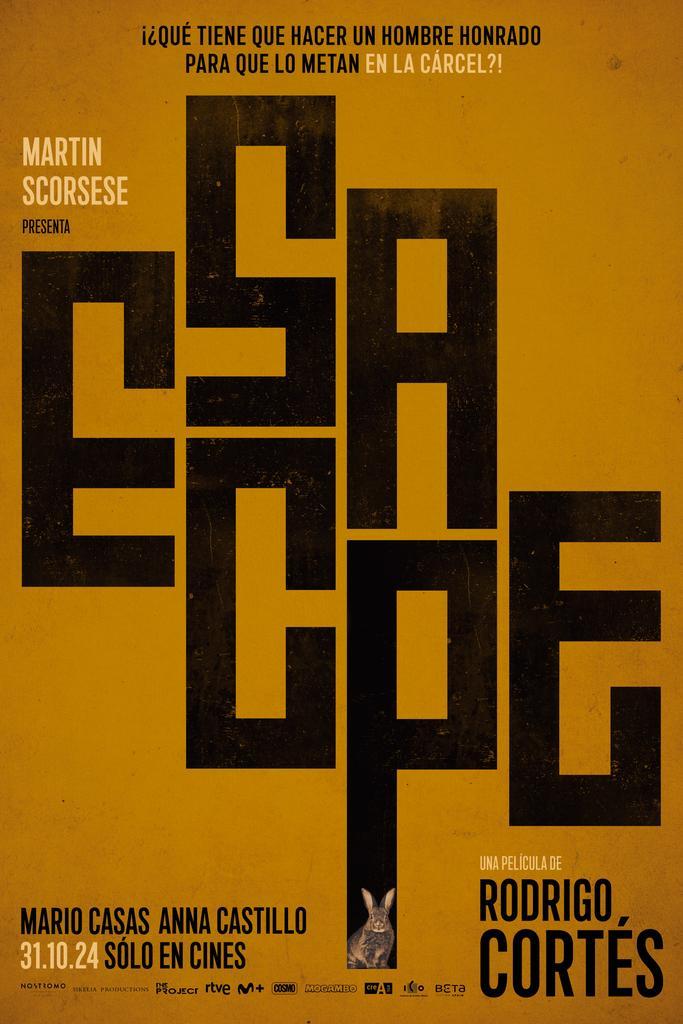


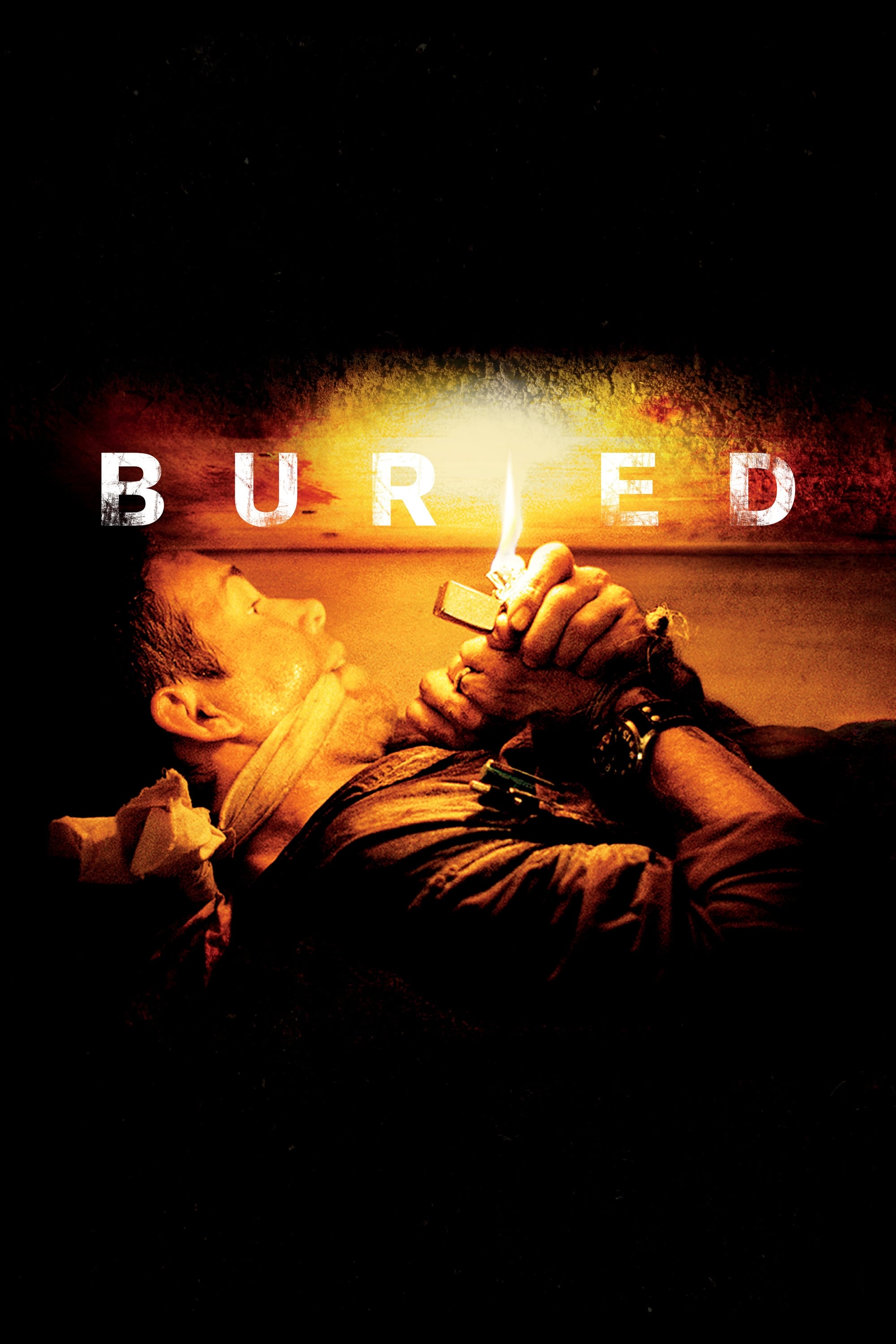
Spanish cinema has spent decades obsessed with the idea that confinement equals depth. From the prison dramas of the Transition era to the claustrophobic thrillers of the 2000s, it seems no director can resist sneaking into a cell to prove they understand human suffering. Rodrigo Cortés, the wunderkind who once gifted us Buried (2010)—a film that fit in a coffin and weighed like a tombstone—returns with Escape, a movie that promises to be the natural evolution of his obsession with enclosed spaces. But alas, friends, this isn’t Buried 2.0, nor is it Buried: The Musical. At best, it’s an extended, nihilistic episode of The Ministry of Time where the protagonist convinces himself that prison is the new trendy co-living space. At worst, it’s an absurdist fable for aspiring inmates with existential grandeur delusions.
Cortés isn’t just any director. He’s the kind of filmmaker who seems to have been born with a storyboard under his arm and a pathological obsession with formal control. His filmography is a journey through the limits of creativity: from the financial delirium of Concursante (2007) to the experiment of Red Lights (2012), where he tried to convince us that Robert De Niro could be a believable medium. But—oh, the irony—his greatest success, Buried, was also his greatest curse. After locking Ryan Reynolds in a pine box for 90 minutes, what do you do next? How do you top that? Apparently, the answer is to flip the script: if before the goal was to escape at all costs, now the game is to get in. The problem is that this time, the gimmick comes with the endorsement of Martin Scorsese as executive producer, raising expectations to the stratosphere only to drop us like a lead balloon into the courtyard of a designer prison.
Enter Mario Casas, the actor who went from being the bad boy flashing abs in Three Steps Above Heaven to becoming the troubled heartthrob of half of Spanish cinema. In Escape, based on Enrique Rubio’s novel and freely adapted by Cortés himself, he plays N., a man shattered by tragedy who decides the only way to avoid making decisions is to live behind bars. Yes, you read that right. He’s not a political prisoner, nor an innocent man wrongly convicted, nor a bumbling robber. He’s just a stand-in for Bartleby the Scrivener who’d prefer not to and thinks prison is the new glamping. And the worst part? The script—written, of course, by Cortés himself—takes it so seriously that the black comedy and metaphysical drama trip over each other while the protagonist muses about freedom, punishment, and the price of having everything handed to you. Spoiler: the price is your sanity, but at least you don’t pay self-employment taxes.
But let’s not blame Cortés entirely. The man tries. The film is produced by Nostromo Pictures, that Catalan powerhouse skilled at packaging thrillers with impeccable craftsmanship and an international flair. The problem is that while the original novel played with biting, unflinching social satire, Escape gets stuck in a weird limbo: an abstract tale with characters who feel like walking ideas, oscillating between slow burn and slow death. It’s as if someone mixed Kafka’s existentialism with Luis García Berlanga’s dry humor, then stripped both of their charm and added a dash of pretentious solemnity. The result is a film that isn’t even weird enough to be a cult hit. It’s just a hollow stylistic exercise.
The Direction: Cortés in Geometric Obsession Mode
Rodrigo Cortés is a director who knows his visual Latin, but in Escape, he seems to have confused virtuosity with clinical coldness. The film is packed with meticulously calculated shots that, in theory, should leave us awestruck but in practice only remind us that auteur cinema sometimes stares at its own navel too much. The issue isn’t the technique—God forbid we criticize a guy who edits his own films with surgical precision—but that there’s no soul behind the walls. It’s like those contemporary art museums built in old prisons: the container is spectacular, but the content leaves you colder than solitary confinement.Cortés’s biggest sin here is his inability to make us empathize with the absurd. In Buried, the confinement was physical: every second Ryan Reynolds spent in that wooden box was a second closer to suffocation. In Escape, the confinement is a philosophical whim so unconvincing that even the prison guards seem bored processing the protagonist’s paperwork. The dialogue... oh, the dialogue. It’s pompous maxims disguised as high literature. "You don’t want to be in prison, you want to be dead," we hear. No, dear screenwriter, what we want is for something to happen that doesn’t sound like a Twitter aphorism written by a dessert philosopher.
The Performances: A Star-Studded Cast in Search of a Real Conflict
If there’s anything holding Escape together-la-cueva-de-los-espejos-rotos" class="text-amber-400 font-black hover:text-amber-300 transition underline decoration-amber-500/40 hover:decoration-amber-300" title="[6.5/10 ⚡ Ácido Cítrico] Lee nuestra autopsia de «Together»" data-acid-interlink="together-la-cueva-de-los-espejos-rotos">together before it collapses under the weight of its own pretentiousness, it’s the stellar cast. Mario Casas gives a titanic effort with an unlikeable, monotonous character who seems plucked from a clinical study on apathy. His performance oscillates between absolute restraint and nervous tics, proving he’s a solid actor, but here he’s doomed to play a guy whose decisions are so unhinged that the audience checks out after half an hour.By his side, Anna Castillo plays his long-suffering sister, a character whose sole purpose is to ground the viewer, though she ends up as lost as the script itself. Juanjo Puigcorbé, as the prison warden, and a stoic Albert Pla bring the most eccentric notes to this universe of characters. Pla, in his usual magnetically weird way, seems to be the only one who gets that the film is, deep down, a cruel joke. Then there’s the ever-reliable José Sacristán, impeccable as one of the judges handling N.’s case—a character who doesn’t know whether to enforce the rules or question the very logic of the situation. Sacristán lends gravitas just by breathing, but even his commanding voice can’t make us buy into the dynamics of this operatic penitentiary.
But if anyone deserves a monument in the town square, it’s Blanca Portillo. The actress plays Dr. Giráldez, one of the figures trying to understand the protagonist’s mental state. Portillo, who could give three dimensions to a lamppost, turns her scenes with Casas into the only truly vibrant moments in the film. She brings sanity, irony, and dramatic weight that the rest of the runtime dilutes into empty long takes.
The Technical Department: When the Wrapper Is Gold and the Gift Is Plastic
Visually, Escape is a marvel—let’s give credit where it’s due. The cinematography by Rafa García is flawless, with a desaturated color palette and lighting that avoids the typical grimy prison realism in favor of a nearly fable-like, timeless aesthetic. The shots are composed with ruler-like precision, the camera movements are astonishingly fluid, and the production design is superb. But like a model home in a luxury development, everything feels too clean, too artificial. It lacks sweat, grime, truth.The editing by Cortés himself is technically impeccable but unable to salvage a narrative structure that becomes repetitive: the protagonist demands punishment, the system refuses, the protagonist insists, the system gives in. Rinse and repeat. The score by Víctor Reyes serves its purpose of underscoring the film’s estrangement, but it falls into the generic atonality of modern psychological thrillers. The production design suffers from the same issue as the direction: the prison feels like a Scandinavian architectural showpiece rather than a state penitentiary. It’s so symmetrical and pristine that you almost understand why Mario Casas wants to move in.
The script is the film’s Achilles’ heel. In adapting the novel, Cortés gets stuck halfway between black comedy and existential drama, losing the satirical bite along the way. The twists become predictable within their own improbability, and the premise wears thin long before the end credits roll. Cortés wanted to make a thesis film about individual freedom versus the comfort of institutional chains, but he’s ended up signing an aestheticist manifesto that bores to tears.
The best
- Blanca Portillo: She turns her role as the doctor into an oasis of intelligence and truthful acting amid the conceptual desert.
- Rafa García’s cinematography: A visual feast proving Spanish technical crews have nothing to envy Hollywood.
- The Sacristán-Pla duo: Watching the classicism of José Sacristán clash with Albert Pla’s eccentricity is one of the film’s most curious highlights.
- The formal risk: Props to Cortés for attempting something radically different from the usual commercial thriller, even if it doesn’t quite work.
The worst
- Indefinite tone: It doesn’t know if it wants to be a Kafkaesque drama, an absurdist comedy, or a moral fable, so it ends up nowhere.
- Lack of tension: Since confinement is the protagonist’s desire rather than his punishment, the suspense evaporates entirely.
- Repetitive gameplay: The plot circles for two hours, hammering the same metaphor over and over.
- Script’s pomposity: Cortés gets so highbrow with the existential dialogue that watching becomes a chore.
- The ending: A conclusion that tries to square the circle but leaves you feeling like you’ve sat through a very long joke with no punchline.
The Verdict of Claqueta Ácida
Escape is the kind of film that proves having Martin Scorsese in the credits and a hefty budget means nothing if you forget to connect with the audience’s guts. The confinement here doesn’t suffocate; it bores. Rodrigo Cortés delivers a technically dazzling but narratively barren film, where the drama feels as contrived as the premise. Mario Casas empties himself on screen, but his N. couldn’t care less about us. Nostromo Pictures crafts a beautiful wrapper for a candy that turns out to be made of cement. Escape isn’t a bad film in the technical sense—it’s something far more frustrating: a visual arrogance exercise without a soul. 💀Ending Explained: "Escape
Ficha de Daños Colaterales en Sala
Certificado de impacto psicofísico emitido por Camilo K.O.
3 amagos en el tramo intermedio; pestañeo pesado en las transiciones más innecesarias.
Minuto 41 y minuto 74 (comprobando cuánto quedaba de suplicio).
2 espressos para no dejarse vencer por la mediocridad cómoda.
"A mitad del segundo acto cuando la subtrama secundaria empezó a pesar más de lo que aportaba."
💬 El Veredicto de la Comunidad
¿Qué te ha parecido la película? Deja tu nota de 0 a 10 para contrastarla con el análisis de la redacción.
Aún no has votado
📢 ¿Te ha gustado el ácido?
Comparte esta crítica con tus amigos cinéfilos o desata la polémica en redes.
⚡ THE CINEMATIC VENOM YOUR INBOX CRAVES
No sugarcoated ratings, no corporate fluff. Subscribe for our uncensored weekly analysis or join the private Telegram for press previews, poll clashes, and instant alerts.
Alertas de estrenos en 1 segundo, encuestas en caliente y audios al salir de pases de prensa.
Recibe la dosis semanal en tu mail + regalo inmediato del PDF con 50 joyas ocultas de culto.
Related Reviews
Recommended autopsies for demanding film buffs.
 🔥 Fusión Nuclear8.5
Buried: 90 Minutes of Methodical Anguish, Where the Coffin is the Best Stage
⚡Del mismo director (Rodrigo Cortés): analiza la evolución o degradación de su estilo.
Ryan Reynolds buried alive in a pine box: 90 minutes of cinematic claustrophobia that redefines minimalist terror. Art or refined exploitation? Both, but with style.
 🔥 Fusión Nuclear9.5
*2001: A Space Odyssey – A Monkey, a Monolith, and Two Hours of Cosmic Pretentiousness*
⚡Comparten trinchera editorial en la sección de Clásicos.
We dissect Stanley Kubrick’s magnum opus. A visual feast of minimalism and space hypnosis that cemented "serious" sci-fi—and bored half of humanity to tears.
 🔥 Fusión Nuclear9.3
2001: A Space Odyssey — The Day Kubrick Left Us Speechless (and Oxygenless)
⚡Comparten trinchera editorial en la sección de Clásicos.
Kubrick turned science fiction into pure art: 149 minutes of eloquent silence, bone-wielding apes, and a psychopathic computer. Masterpiece or pretentious fraud? Here’s the verdict.
Editorial Ecosystem
Cinephile connections, archive interviews and related analyses.
🎞️ In Claqueta Cinematheque1
💬 Debate Cinéfilo & Autopsia de Lectores
0 veredictos¿Discrepas con nuestra nota? ¿Es una obra maestra o veneno puro? Deja tu veredicto abajo sin necesidad de registro.


Aún nadie ha dejado su veredicto para esta película.
Sé el primero en clavarle el colmillo rellenando el formulario de arriba.