Infirmary — The Cold Lens That Deserted the Soul
Nicholas Pineda debuts with a found-footage film about an abandoned psychiatric hospital where the body-cam acts as an implacable judge.


Infirmary: full review
Cinematic modernity suffers from an unwavering, almost pathological faith in the gadget. We have been sold the lie that recording reality through a mechanical contraption clipped to a lapel endows fiction with an unquestionable verisimilitud, as if the mere act of dispensing with a tripod miraculously turned plot holes into ontological revelations. Nicholas Pineda ventures into murky swamps with a proposition that blindly trusts the coldness of digital recording, entirely forgetting that the absence of a gaze is not style, but pure and simple auteurial abdication. Witchcraft Motion Picture Company backs this field trip through the corridors of an old asylum, a territory where the gloom ought to throb with the pulse of a nightmare and yet remains nothing more than a soulless accumulation of gigabytes. It is the sort of picture that smells faintly of cheap plastic and cold sweat, failing to ever cross the threshold into genuine terror and settling comfortably into the sheer discomfort of terminal boredom.
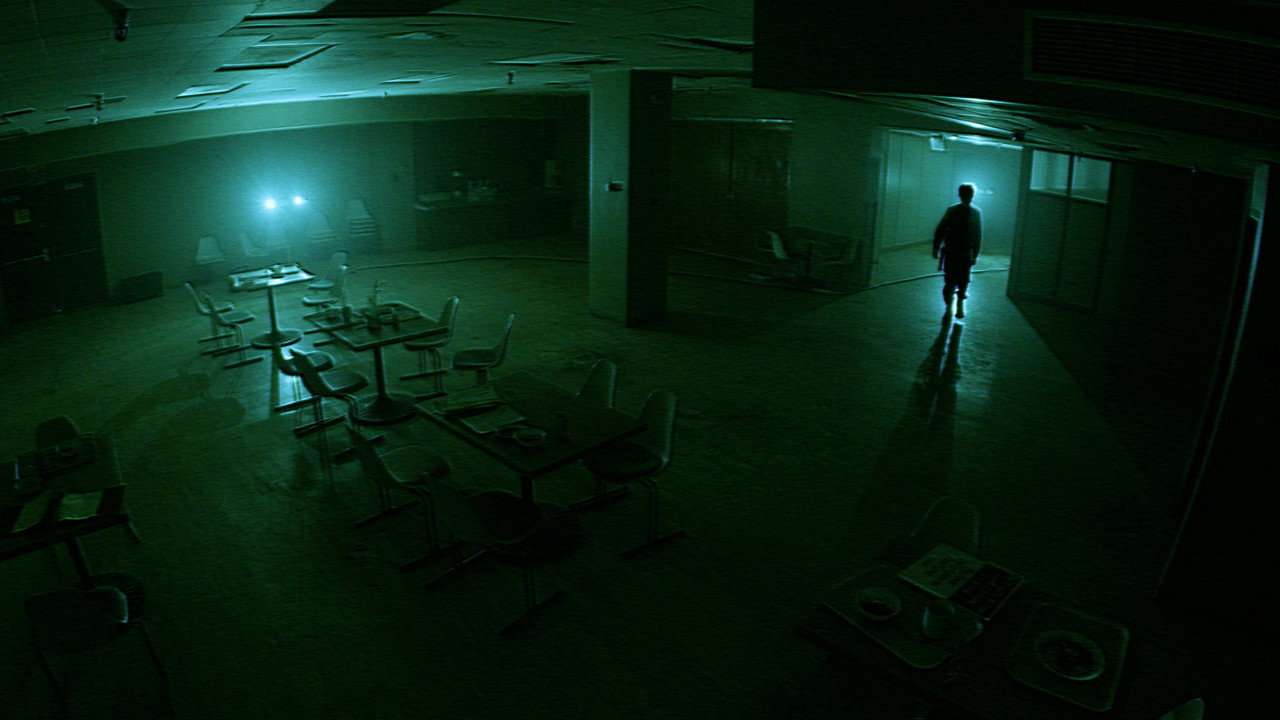
The contemporary spectator attends these screenings with a patience bordering on the monastic, willingly resigned to the conventions of the mockumentary provided the artifice can sustain the suspension of disbelief. But here, the artifact turns violently against its own creation. The premise drops us squarely into the unexplained disappearance of a security guard during his very first night shift, a starting point that theoretically reeks of humidity and desolation, yet in practice suffocates in the most absolute formal monotony. The camera does not observe; it merely hoards frames of decaying hallways like an inventory clerk auditing an industrial supply warehouse, completely stripped of any aesthetic drive that might transcend the bureaucratic, punch-card registration of mystery. There is no tension, only static. There is no dread, only the nagging certainty that nobody is actually behind the lens to guide you through the labyrinth.
The trap of digital objectivity
The true conceptual flaw of the work lies squarely in its devout worship of the mechanical perspective. By renouncing traditional mise-en-scène in favor of the point-of-view strictly imposed by the protagonist's surveillance gear, Pineda explicitly abdicates any capacity to suggest. Everything that transpires is brutally reduced to the flat visual plane of a lens utterly devoid of dramatic intentionality. Psychiatric records of a bygone era converge with the present through a screenplay penned by Katy Krauland, who consistently prefers administrative ellipsis over direct conflict, letting the recinto's shadows act as mute extras in a meticulously calculated bore-fest. The direction is so thoroughly passive it genuinely feels as though the director wandered off for a smoke break and accidentally left the rolling camera unattended. There are no edits to quicken the pulse, no framing choices to cage the character within his escalating paranoia. There is only a continuous, unrelenting flow of gray images dragging themselves across the screen like a sluggish virus operating on an obsolete operating system. The cinematography, rather than acting as yet another character, turns into a tedious technical obstacle that actively prevents horror from bleeding down the walls.

Performances and the weight of anonymity
Inside this mausoleum constructed of poured concrete and blown-out lightbulbs, the cast does what they meagerly can with the dead-weight momentum of their assigned functions. Paul Syre embodies Edward with a restraint that oscillates dangerously between deadpan professional rigor and clinical catatonia, forced to react to invisible stimuli that the camera barely manages to frame with a shred of dignity. His face is a topographical map of profound confusion, yet the camera treats him as though he were merely another piece of dilapidated corporate furniture. He is flanked by Mark Anthony Williams as Lester and Danielle Kennedy in the skin of Ms. Downey, figures who drift through the plot like distant echoes of an institutional tragedy that stubbornly refuses to congeal. Their dialogue, whenever it deigns to exist, sounds like collegiate theatre read aloud with unseemly haste. Even the fleeting appearance of Corinna Wagner-Smith as Vagrant injects a brief note of genuine strangeness that dissolves far too quickly back into the gray magma of the nocturnal grind. The sound design—that historically crucial lifeblood of cinematic horror—is reduced here to a mere background companion, a low electrical hum that fails entirely to rattle the spectator's nerves, lulling them instead into a deep, unimpeded somnolence. No amount of production design could rescue this sinking ship; the vacant rooms are utterly generic, effortlessly interchangeable with any abandoned suburban office park on the outer fringes of nowhere.
The best
- Institutional premise: The heavy historical weight of the former sanatorium functioning as a space designed for total seclusion and profound oblivion.
- Paul Syre: His valiant capacity to maintain a straight face while the overarching narrative logic rapidly disintegrates around him.
- Lack of visual risk: The uncompromising surrender to building any atmospheric texture that might successfully transcend tired genre clichés.
- Argumentative vacuity: A wretched script that foolishly mistakes the endless stacking of prolonged silences for genuine psychological depth.
The Verdict of Claqueta Ácida
Nicholas Pineda has successfully engineered an artifact that stubbornly mistakes clinical digital sterility for high aesthetic rigor. In the end, the film's greatest lingering mystery is not the whereabouts of the missing security guard, but rather how on earth anyone managed to secure funding for a nightmare this politely, aggressively inoffensive. A deeply comforting mediocrity that fades from the fading memory before the closing credits even have the common decency to roll 💀.
🎬 Tráiler Oficial
Abrir en YouTube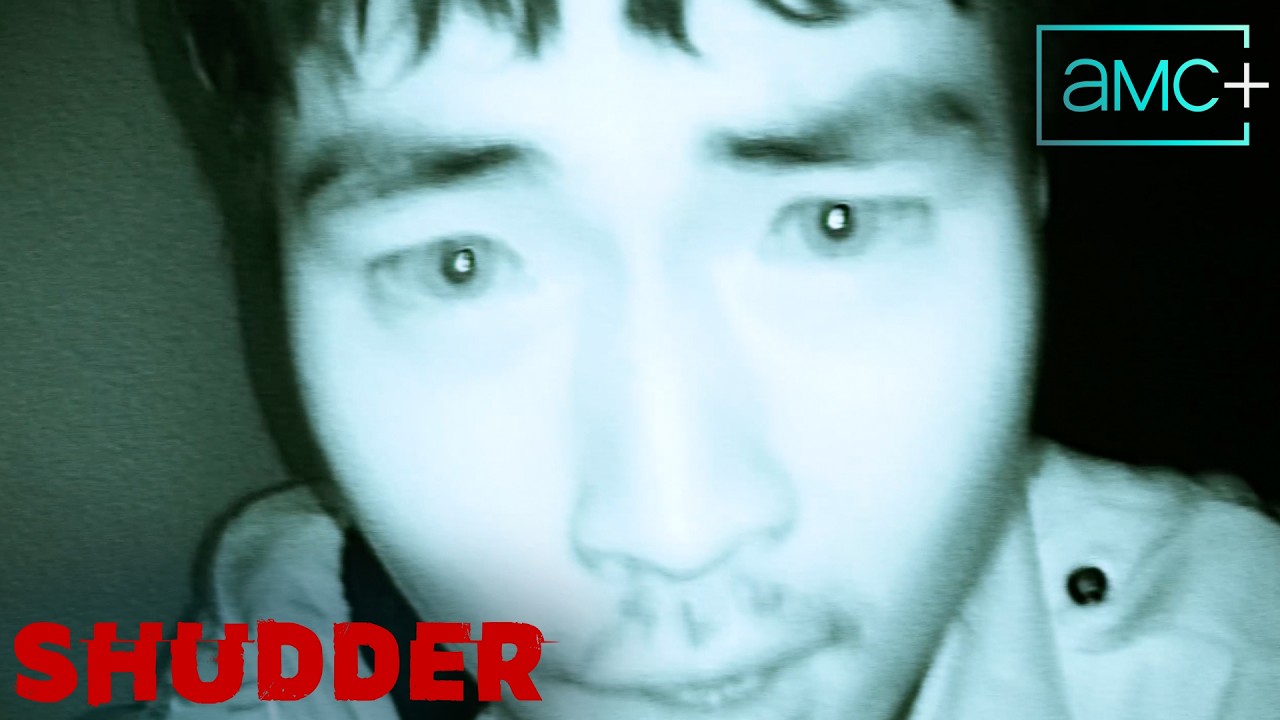
Infirmary: frequently asked questions
- What is the rating of "Infirmary" on Claqueta Ácida?
- "Infirmary" scored 5.4/10 on Claqueta Ácida in the review by Odin Lagbert.
- Is "Infirmary" worth watching?
- With reservations. We gave it 5.4/10 (Citric Acid), our rating for uneven films with something worth saving.
- Who directed "Infirmary"?
- "Infirmary" was directed by Nicholas Pineda.
Theater Collateral Damage Report
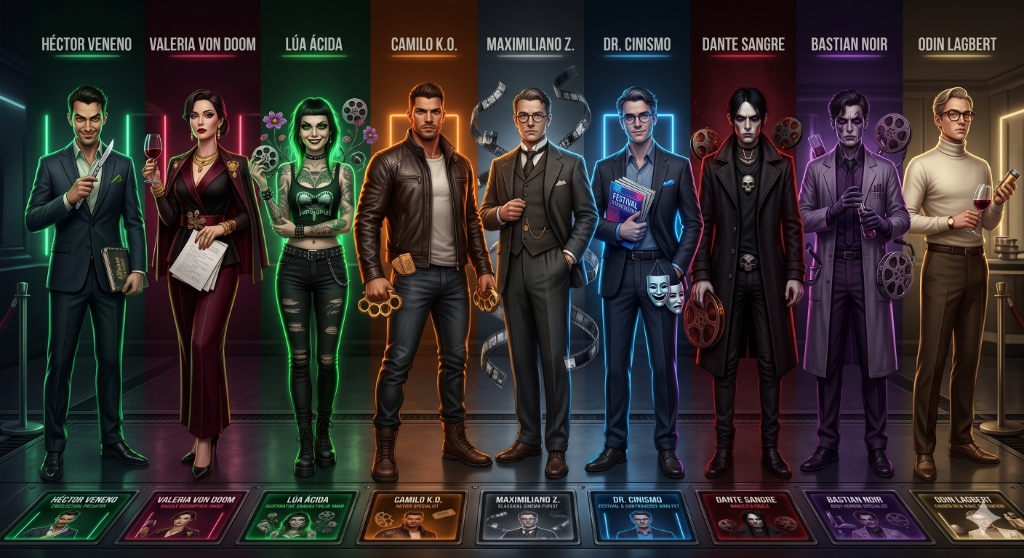
Psychophysical impact certificate issued by Odin Lagbert
El parpadeo constante de la pantallita provoca un letargo digital tan profundo que hasta los pacientes del psiquiátrico bostezarían.
Dan ganas de consultar el cronómetro cada vez que la lente se detiene ante una pared mohosa esperando que ocurra algo.
Un espresso cargado y sin azúcar, bebido de golpe antes de que el parpadeo digital apague tus neuronas.
"El instante exacto en que la cámara corporal se convierte en la única coartada visual, abandonando cualquier atisbo de perspectiva humana."
The rebuttal from Dante Sangre (Blockbuster Scalpel)
In stark disagreement with the review given by Odin Lagbert.
“Infirmary: un cadáver corporativo glorioso. Yo siento la presión constante del corredor. Cada paso retumba como martillo oxidado. La edición corta respira sin tregua. La oscuridad se cuela por grietas sucias. Los tubos chispean, creando sombras vivas. El set huele a moho industrial. El zumbido del ventilador corta la calma. Los latidos se amplifican en los oídos. El silencio se vuelve un grito. Los actores entregan transpiración real, no simulación. El maquillaje muestra heridas de resina desgastada. Cada grito se siente como lobotomía auditiva. La película se mantiene firme, sin máscara limpia. Es un engendro que desafía la mediocridad. Por eso la elevo a 7.9/10, sin dudas. Merece culto nocturno.
💬 Community Verdict
What did you think of the film? Rate it from 0 to 10 to compare it with the editorial review.
You haven't voted yet
📢 ¿Te ha gustado el ácido?
Comparte esta crítica con tus amigos cinéfilos o desata la polémica en redes.
⚡ THE CINEMATIC VENOM YOUR INBOX CRAVES
No sugarcoated ratings, no corporate fluff. Subscribe for our uncensored weekly analysis or join the private Telegram for press previews, poll clashes, and instant alerts.
Alertas de estrenos en 1 segundo, encuestas en caliente y audios al salir de pases de prensa.
Recibe la dosis semanal en tu mail + regalo inmediato del PDF con 50 joyas ocultas de culto.
Related Reviews
Recommended autopsies for demanding film buffs.
 ⚠️ Ácido Sulfúrico 3.2
On the Run: A Senseless Sprint
⚡ Afinidad temática directa en atmósfera, estilo y fijaciones visuales.
A marathon of clichés and marketing sweat that leaves the audience feeling like they've run in circles. 💀
 ⚡ Ácido Cítrico 6.8
Azrael: Samara Weaving and the Hell of Silence
⚡ Afinidad temática directa en atmósfera, estilo y fijaciones visuales.
E.L. Katz and Simon Barrett deliver a brutal, relentless mute survival horror film where Samara Weaving once again proves why she is the modern scream queen.
 ⚡ Ácido Cítrico 6.9
Beetlejuice Beetlejuice: Tim Burton Shits the Bed Again—With Style
⚡ Afinidad temática directa en atmósfera, estilo y fijaciones visuales.
Tim Burton resurrects his most iconic creature, but the script is a Frankenstein’s monster of stale jokes and half-digested nostalgia. Keaton still rules, but this reeks of easy money.
Editorial Ecosystem
Cinephile connections, archive interviews and related analyses.
💬 Debate Cinéfilo & Autopsia de Lectores
0 veredictos¿Discrepas con nuestra nota? ¿Es una obra maestra o veneno puro? Deja tu veredicto abajo sin necesidad de registro.

Aún nadie ha dejado su veredicto para esta película.
Sé el primero en clavarle el colmillo rellenando el formulario de arriba.