Colony — Yeon Sang-ho's Worm or the Architecture of Asphyxiation
Yeon Sang-ho abandons the rails to trap biotech paranoia in a smart building. Analytical critique from Claqueta Ácida.

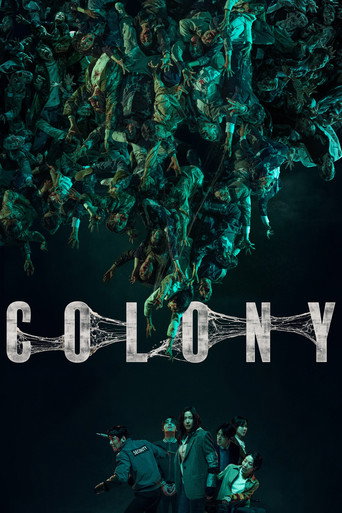
Colony: full review
There is something deeply comforting in verifying that certain film authors, after grazing the edge of industrial self-satisfaction, decide to bite the hand that feeds them. A decade ago, Western cinephile memory applauded with its ears the railway frenzy that propelled Korean director Yeon Sang-ho to the Olympus of contemporary horror with that runaway train. That forward rush functioned as an accelerated metaphor for the Korean class struggle, where carriages delimited social hierarchy in a perpetual flight toward a refuge that never ceased to be an illusion. However, time passes, budgets fatten up, and directors risk becoming civil servants of their own trademark. That is why it is so stimulating to witness this formal shift where speed gives way to the most absolute and asphyxiating immobility.
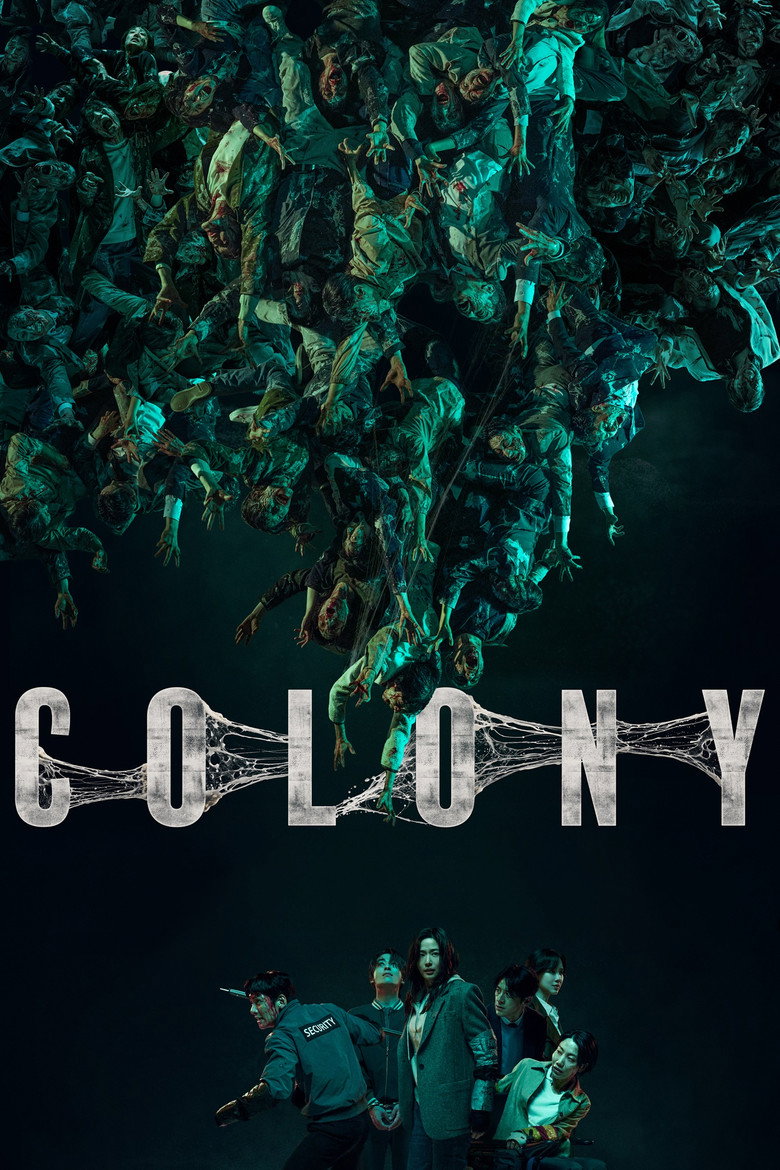
The premise of this new incursion into pandemic horror abandons any pretension of itinerant epic to enclose its creatures in a design architecture as cold as it is lethal. There is no longer any landscape to traverse, no intermediate stations to catch one's breath, nor dead ends that offer a poetic escape from proletarian suffering. The Donguri building becomes from the first frame a panoptic organism, a hive of glass and steel where science and corporate capitalism shake hands to sign a collective death sentence. The biotechnology conference organized by the nefarious Chains Bio company is nothing more than the ritual prologue to an announced execution, a technocratic coven where executives celebrate the miracles of cellular regeneration while ignoring that they are awakening an unfathomable biological nightmare.
In this closed ecosystem, the figure of Professor Se-jeong, interpreted with a perfect mix of existential fatigue and contained terror by Gianna Jun, embodies the absolute bankruptcy of academic merit in the face of corporate cynicism. Her presence at the event, prompted by the remains of a failed marriage pointing toward emigration and oblivion, functions as the moral thermometer of an announced shipwreck. Around her gravitate equally lost figures, such as the security guard interpreted by Ji Chang-wook, tied to the care of his mobility-impaired sister in a subplot that avoids cheap sentimentality to focus on pure physical survival. But it is the appearance of Koo Kyo-hwan in the skin of Seo Young-chul that dynamites any remaining bourgeois order, injecting an experimental serum that transforms corporate terror into a visceral and symbiotic revenge.

The fascinating aspect of the proposal lies in how the director's own script understands that true contemporary horror does not reside in the plague itself, but in the way institutions manage confinement. When the anti-terrorist team leader seals the facilities, the building ceases to be a workplace to become an administrative slaughterhouse where state bureaucracy cheerfully collaborates with the expansion of the mutant organism. The transformation of space becomes the main dramatic engine, forcing survivors to transit through impersonal hallways where every corner hides an architectural trap and every ventilation duct promises a viscous death. The cold and sharp cinematography accentuates that sensation of corporate confinement, stripping the celluloid of any human warmth and reducing the characters to mere pieces on a bacteriological chessboard.
Direction and Staging
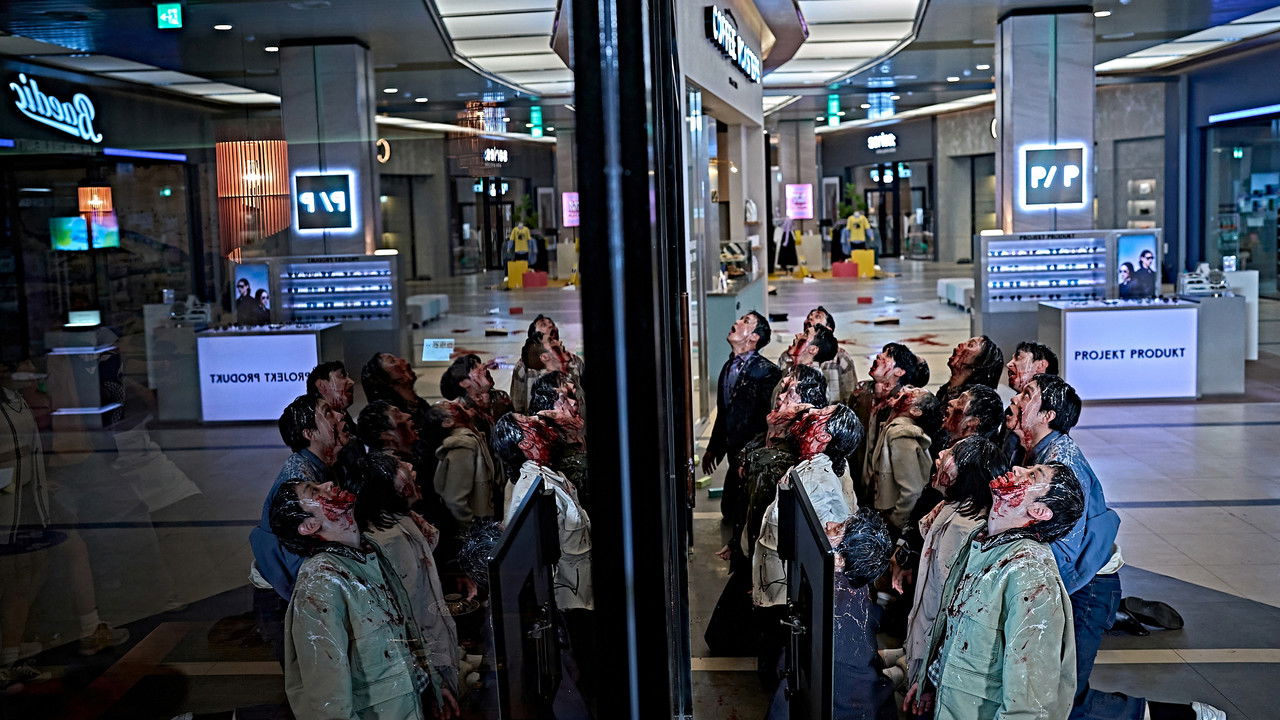
Yeon Sang-ho's work behind the camera demonstrates undeniable formal maturity, renouncing the epileptic editing of his previous incursions in favor of an almost theatrical spatial containment. Each interior shot of the building is calculated to the millimeter to remind us of the laboratory rat condition of its protagonists, using door frames, bulletproof glass, and drop ceilings as elements of constant visual oppression. When the characters manage to activate the fire sprinklers to temporarily paralyze the mutant mold, the staging manages to convey the momentary relief of humidity without ever relaxing the narrative tension. The camera breathes at the same rhythm as the survivors, alternating wide shots that emphasize the dehumanizing magnitude of corporate architecture with close-ups where sweat and fear are branded into the retina of the most demanding spectator.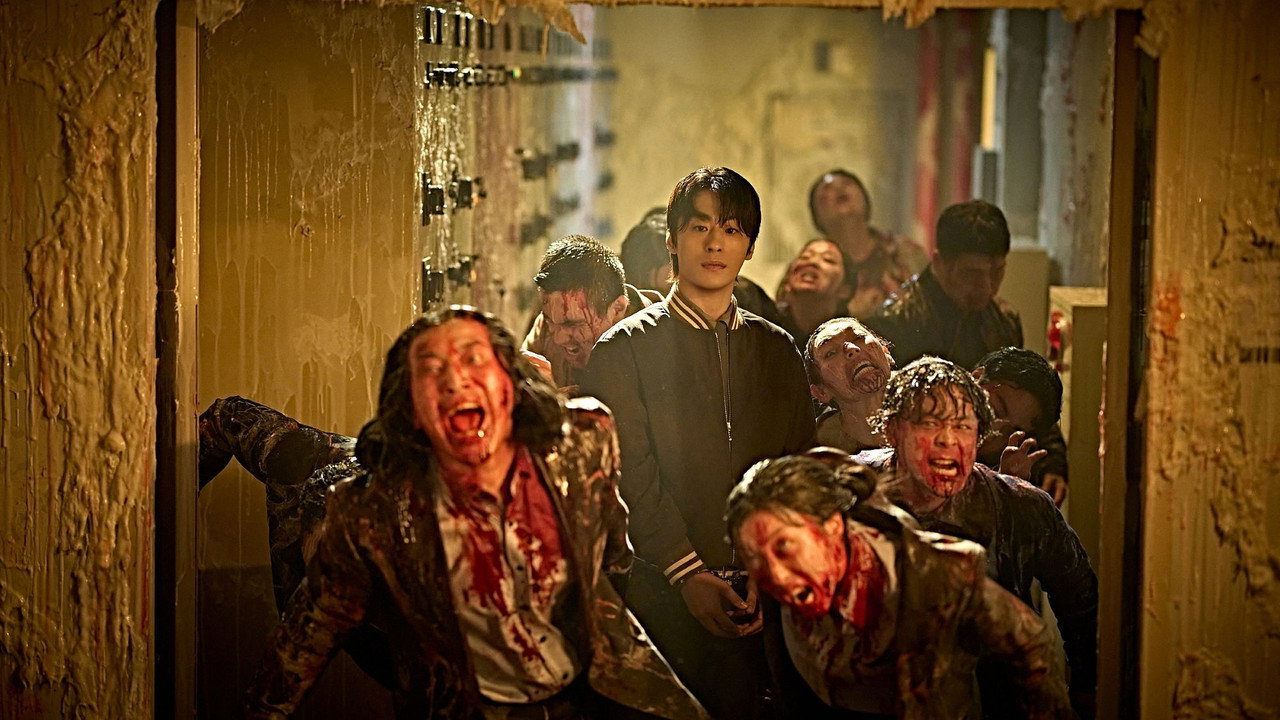
Performances and Characters
The ensemble cast elegantly avoids the hysterical tics habitual in Asian disaster cinema, betting on performances of painful containment and deeply human nuance. Gianna Jun builds a character full of gray shades, a woman marginalized by the system who discovers in the biological apocalypse a strange and unsettling moral autonomy. Opposite her, Koo Kyo-hwan deploys a Mephistophelean energy as the dissident scientist, turning each of his appearances into an exercise of psychological tension where we never know if he acts out of vengeful madness or terrifying lucidity. Special mention deserves the physical work of Ji Chang-wook, whose gestural containment as the guard trapped with his sister provides the necessary emotional anchor so that the subsequent butchery does not result in a purely mechanical and insensitive exercise.The best
- The spatial thesis: The building as an intelligent and claustrophobic hive where architecture designs tragedy.
- Koo Kyo-hwan: His magnetic and disturbing presence as the bioterrorist who sees through the eyes of the plague.
- The dramatic containment: Avoiding melodramatic excess in favor of a deeply coherent narrative dryness.
The worst
- The final stretch: Certain concessions to conventional action thriller that slightly dilute the pure asphyxiation of the second act.
- The over-explanation: Some unnecessary expository dialogues about the nature of the mold that subtract mystery from the biological horror.
The Verdict of Claqueta Ácida
Yeon Sang-ho has signed an artifact as uncomfortable as it is necessary, demonstrating that contemporary horror does not need space monsters when it suffices to lock us in the office with our own moral remains. This hive of asphyxiation and intelligent mold does not seek to shock the easy spectator with cheap jump scares, but to remind them that the cage was already built long before the first biotechnological alarm sounded. A work of undeniable formal maturity that confirms that Korean genre cinema still knows how to cut with a scalpel 💀.🎬 Tráiler Oficial
Abrir en YouTube
Colony: frequently asked questions
- What is the rating of "Colony" on Claqueta Ácida?
- "Colony" scored 7.6/10 on Claqueta Ácida in the review by Odin Lagbert.
- Is "Colony" worth watching?
- Yes. We gave it 7.6/10 (Nuclear Fusion), our rating for must-see films.
- Who directed "Colony"?
- "Colony" was directed by Yeon Sang-ho.
Theater Collateral Damage Report
Psychophysical impact certificate issued by Odin Lagbert
Imposible parpadear cuando la paranoia celular empieza a comerse los tabiques.
El segundero se disuelve en el mismo ácido que devora a los burócratas.
Un espresso cargado y sin azúcar, para mantener el pulso firme ante la mutación del moho.
"El instante exacto en que la inteligencia de enjambre comprende que la puerta de seguridad no se abrirá jamás."
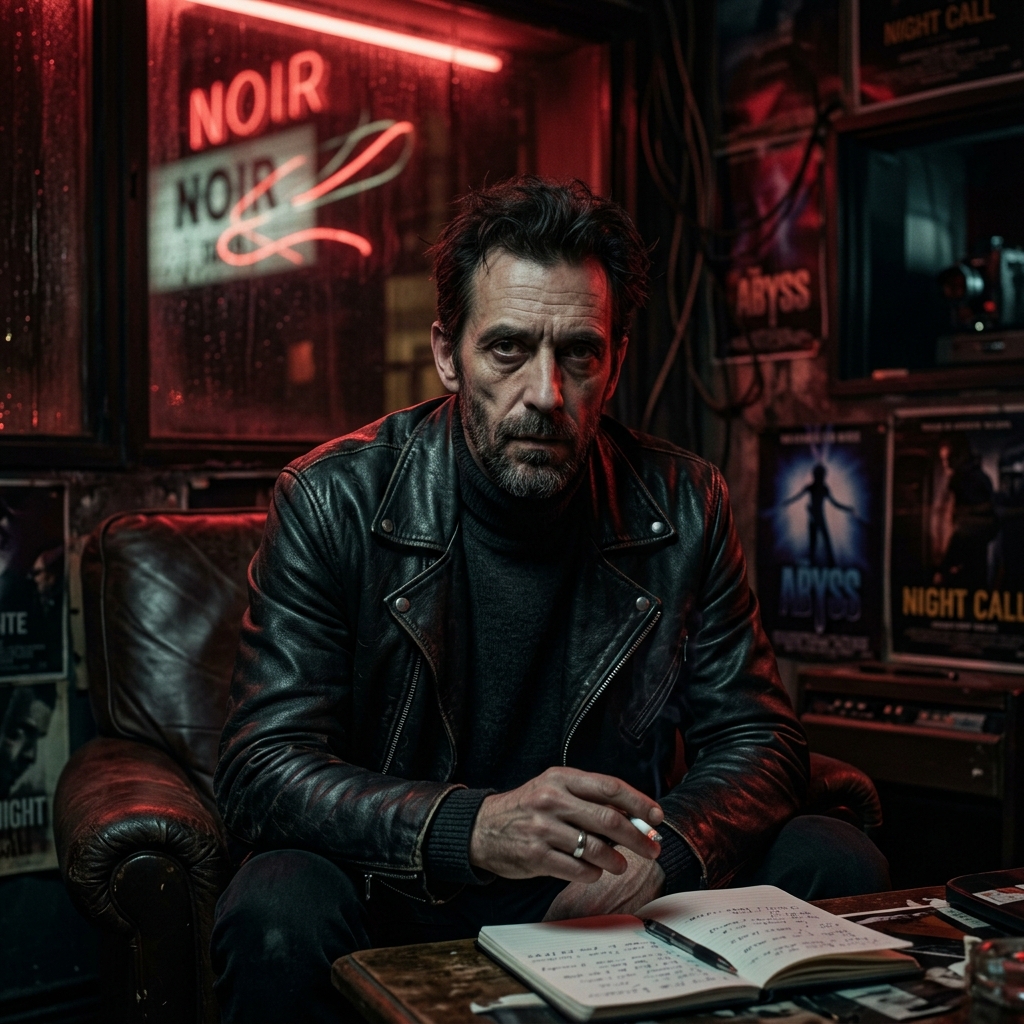
The rebuttal from Dante Sangre (Blockbuster Scalpel)
In stark disagreement with the review given by Odin Lagbert.
“Odin se aburre. Yo también. Yeon Sang-ho ha muerto. Su cadáver corporativo respira plástico. El tren era caos puro. Sangre, hierro, velocidad. Aquí hay un edificio. Frío. Estéril. Un laboratorio de limpieza. No hay lucha de clases. Hay limpieza de imagen. La inmovilidad no es asfixia. Es aburrimiento. Es una reunión de accionistas eterna. Los zombis no muerden. Esperan. Como empleados en una oficina. El presupuesto engordó. La alma se marchitó. Es una estafa visual. Un lavado de cara para el horror. No hay metáfora. Hay decoración. El cristal no sangra. El acero no grita. Es basura industrial envuelta en seda. Odin ve profundidad. Yo veo nada. Un vacío blanco. Un espejo roto. Tres puntos tres. No más. No menos. El director se ha vuelto funcionario. Y los funcionarios no hacen cine. Hacen informes. Y este informe es insoportable.
💬 Community Verdict
What did you think of the film? Rate it from 0 to 10 to compare it with the editorial review.
You haven't voted yet
📢 ¿Te ha gustado el ácido?
Comparte esta crítica con tus amigos cinéfilos o desata la polémica en redes.
⚡ THE CINEMATIC VENOM YOUR INBOX CRAVES
No sugarcoated ratings, no corporate fluff. Subscribe for our uncensored weekly analysis or join the private Telegram for press previews, poll clashes, and instant alerts.
Alertas de estrenos en 1 segundo, encuestas en caliente y audios al salir de pases de prensa.
Recibe la dosis semanal en tu mail + regalo inmediato del PDF con 50 joyas ocultas de culto.
Related Reviews
Recommended autopsies for demanding film buffs.
 🔥 Fusión Nuclear 8.7
 *Train to Busan: Zombies on the Fast Track (First Class, No Refunds)*
⚡ Del mismo director (Yeon Sang-ho): analiza la evolución o degradación de su estilo.
Yeon Sang-ho crafted one of the best action-horror zombie thrillers in recent memory, turning a high-speed train ride into a suffocating social hellscape.
 🔥 Fusión Nuclear 8.0
 The Zone Zero
⚡ Del mismo director (Yeon Sang-ho): analiza la evolución o degradación de su estilo.
A deadly virus unleashes hell at a biotech conference—because nothing says 'team-building' like a lab full of flesh-eating mutants.
 🔥 Fusión Nuclear 8.0
 The End of Oak Street: David Robert Mitchell Reinvents Cosmic Horror Without Losing Its Human Core
⚡ Afinidad temática directa en atmósfera, estilo y fijaciones visuales.
Anne Hathaway and Ewan McGregor lead this claustrophobic descent where the unknown isn’t a monster—it’s reality itself unraveling at the seams. Mitchell proves once again that the most terrifying horror is the kind that festers in the intimate.
Editorial Ecosystem
Cinephile connections, archive interviews and related analyses.
🎞️ In Claqueta Cinematheque 2
💬 Debate Cinéfilo & Autopsia de Lectores
0 veredictos¿Discrepas con nuestra nota? ¿Es una obra maestra o veneno puro? Deja tu veredicto abajo sin necesidad de registro.


Aún nadie ha dejado su veredicto para esta película.
Sé el primero en clavarle el colmillo rellenando el formulario de arriba.