The End of Oak Street — David Robert Mitchell Reinvents Cosmic Horror Without Losing Its Human Core
Anne Hathaway and Ewan McGregor lead this claustrophobic descent where the unknown isn’t a monster—it’s reality itself unraveling at the seams. Mitchell proves once again that the most terrifying horror is the kind that festers in the intimate.


The End of Oak Street: full review


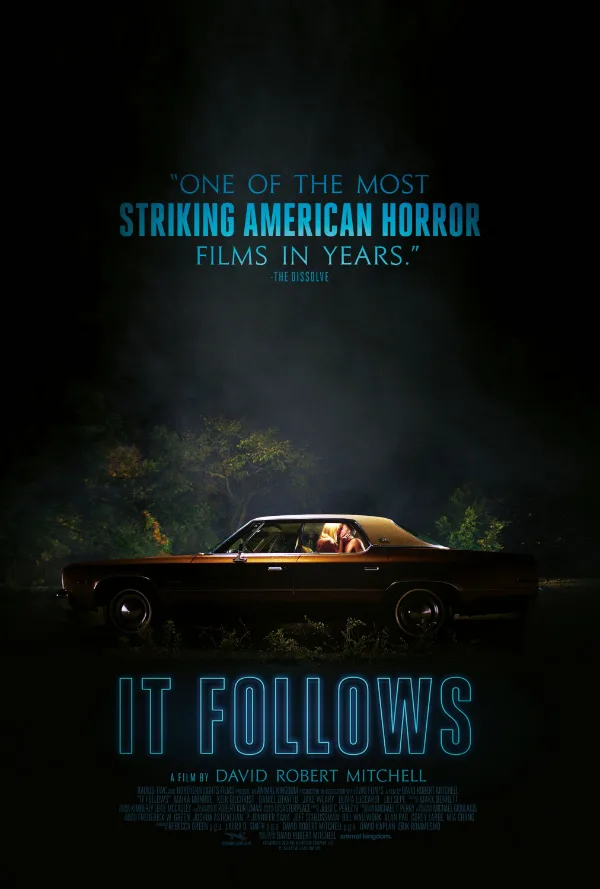
The suburbs have never been this terrifying. Oak Street, with its identical houses, manicured lawns, and neighbors exchanging plastic smiles, becomes the stage for a cosmic nightmare that David Robert Mitchell films with the precision of a surgeon and the sensitivity of a poet. This isn’t the first time the director has probed the edges of reality—just look at It Follows (2014) and its slow, almost hypnotic dread—but here, he takes it a step further. The threat isn’t some external force stalking his characters; it’s a tear in the very fabric of the real. And the most terrifying part? Amid the chaos, the only thing holding steady is the dysfunctional love of a family crumbling as fast as the world around them.
Mitchell isn’t a director who beats around the bush. From the first shot—a lateral tracking shot gliding down Oak Street like a theater set—we know something’s off. Mike Gioulakis’s cinematography, a staple of Mitchell’s work, bathes every scene in a sickly golden light, as if the sun itself has rotted. The colors are oversaturated, the sounds too crisp: the snap of a branch, the hum of a fridge, the whisper of a voice that shouldn’t be there. It’s the kind of film that forces you to sharpen your senses, to wonder if that noise you just heard in the theater—or your own home—is part of the score or something far more sinister. And when the phenomenon hits, when Oak Street peels away from reality like scabbed skin, Mitchell doesn’t rely on flashy CGI or pseudoscientific explanations. He simply lets the void speak for itself.
The script, written by Mitchell himself, is a masterclass in narrative economy. No superfluous dialogue, no filler scenes, no grandstanding monologues that ruin smart horror. Every line, every gesture, every silence drips with meaning. Anne Hathaway, as Denise Platt, is a force of nature: icy, calculating, but with a vulnerability that surfaces in the most unexpected moments. Her chemistry with Ewan McGregor, who plays her husband Greg, crackles with unresolved tension and a love that refuses to die, even as the world conspires to bury it. But if anyone steals the film, it’s Christian Convery, the young actor who brings Brian Platt to life. His performance is so natural, so free of affectation, it’s impossible not to shudder every time his eyes well up. He’s the film’s heart, the constant reminder that when the apocalypse comes, all that matters is protecting your own.
Of course, it’s not flawless. There are a couple of moments where the pacing stumbles, particularly in the second act, when the plot seems to stall in a narrative limbo. Some side characters, like Jeannette Christiansen (Jordan Alexa Davis) or Mel Jacobs (P.J. Byrne), feel underdeveloped, as if Mitchell didn’t have the time—or inclination—to flesh them out. And while Michael Giacchino’s score is, as always, impeccable, a few themes sound recycled from his earlier work. But these are minor quibbles in a film that’s otherwise a masterpiece of psychological terror.
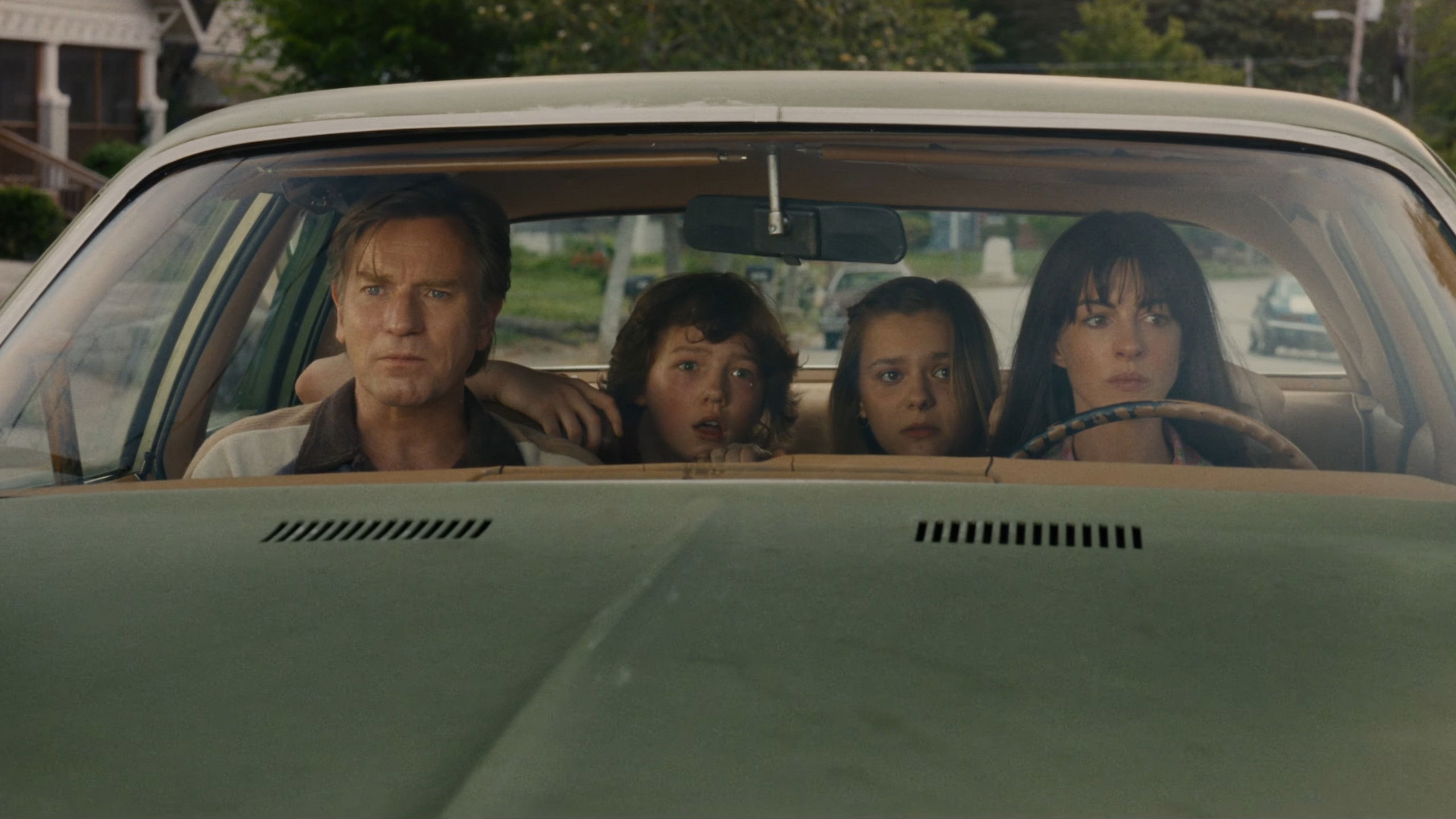
Direction and Mise-en-scène: The Art of the Subtle
David Robert Mitchell has a knack for crafting oppressive atmospheres without resorting to gore or cheap jump scares. In The End of Oak Street, every frame is meticulously composed to breed discomfort, a sense that something’s not quite right. The shots are symmetrical, almost obsessive, as if the director wants to remind us that even in chaos, there’s an underlying order. But it’s a fragile, brittle order, crumbling before our eyes. Mitchell plays with perspective, reflections, empty spaces to create a disorientation that infects the viewer. It’s no accident that some of the film’s most striking shots are those where characters stare directly into the camera, as if they know we’re watching, inviting us to share their confusion.
His collaboration with Mike Gioulakis is, once again, pivotal. The cinematographer makes every scene feel bathed in an unreal light, as if Oak Street’s sun is filtered through a warped lens. The colors are vibrant, almost aggressive, but there’s also a palette of cold grays and blues clashing with the suburb’s apparent warmth. This is cinematography that doesn’t just show—it tells: every shift in tone, every lengthening shadow, every sliver of light through a window is loaded with meaning. And when reality starts to fade, Gioulakis doesn’t rely on flashy digital effects. Instead, he opts for something far more elegant: he lets things disappear. A tree vanishes mid-shot. A house fades as if it never existed. It’s the kind of horror that doesn’t need screams or blood to freeze your veins.
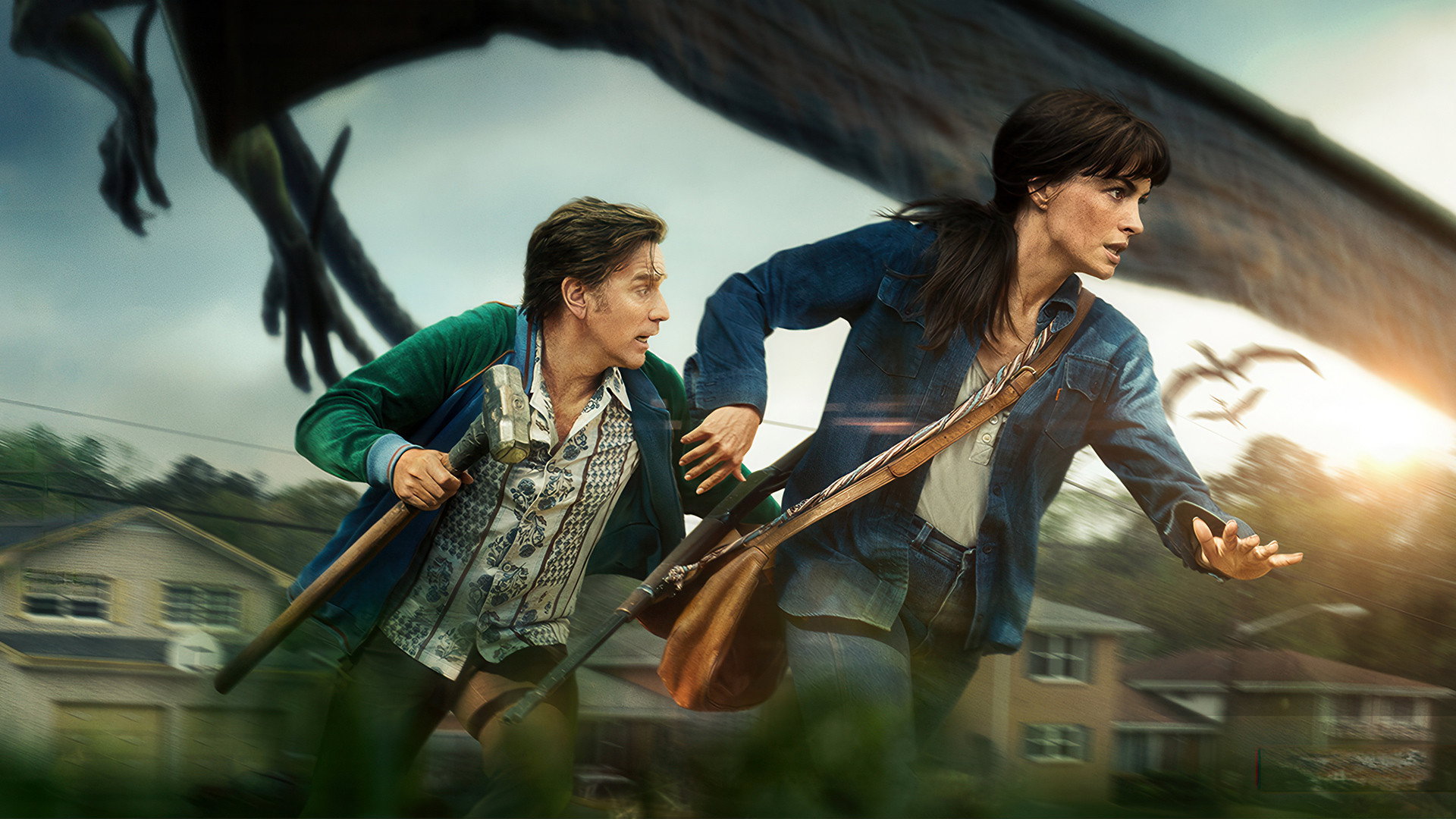
Performances: The Weight of the Human
Anne Hathaway and Ewan McGregor have spent years proving they’re two of the most versatile actors of their generation, but in The End of Oak Street, they reach new heights. Hathaway, in particular, is devastating. Her Denise Platt is a woman who’s built her life on control, on the certainty that if she follows the rules, everything will be fine. But when the world collapses, when the rules cease to exist, she’s forced to confront an uncomfortable truth: deep down, she’s always been afraid. Hathaway conveys that vulnerability with a subtlety that’s almost painful. No grand gestures, no easy tears, no dramatic monologues. Just a woman slowly shedding her layers of protection until she’s exposed, naked, before the void.
Ewan McGregor, meanwhile, delivers one of the most nuanced performances of his career. His Greg Platt is a man in crisis, someone who’s spent years repressing his emotions and is suddenly forced to face them. McGregor makes that internal struggle feel almost physical. There’s a scene—Greg collapsing on the kitchen floor, sobbing like a child while his son watches with a mix of fear and pity—that’s brutal. It’s one of those moments that leaves you breathless, and McGregor plays it with a rawness that hurts.
But if anyone steals the film, it’s Christian Convery. The young actor, who already showed his chops in Sweet Tooth, is astonishing. His Brian Platt is the film’s heart, the constant reminder that when the apocalypse comes, all that matters is protecting your own. Convery balances innocence and wisdom in a way that’s heartbreaking. He’s not a child who doesn’t understand what’s happening; he’s a child who understands too well and still clings to hope. There’s a scene near the end where Brian looks at his mother with an expression that mixes love, fear, and infinite sadness. It’s a moment that shatters you, and Convery plays it with a naturalism that’s almost supernatural.
The best
- Mike Gioulakis’s cinematography: A masterpiece of light and color. Gioulakis makes every frame feel like a painting—one that decays before your eyes. The way he plays with contrast, shadows, and empty spaces is hypnotic.
- Anne Hathaway and Ewan McGregor’s performances: Two brutal, layered performances that hurt with their honesty. Hathaway, in particular, is in a state of grace, conveying a vulnerability that’s almost unbearable.
- David Robert Mitchell’s script: A masterclass in narrative economy. Not a single line of dialogue is wasted. Every scene, every gesture, every silence is loaded with meaning. Mitchell proves, yet again, that the most terrifying horror is the kind that festers in the intimate.
- Michael Giacchino’s score: A soundtrack that oscillates between the ethereal and the oppressive, the beautiful and the terrifying. Giacchino creates an aural atmosphere that clings to your skin and won’t let go.
- David Robert Mitchell’s direction: A master of tension, suspense, and atmosphere. Mitchell knows exactly when to speed up the pace and when to let things breathe. His mise-en-scène is flawless, packed with details that enrich the experience.
The worst
- Some underdeveloped side characters: Jeannette Christiansen and Mel Jacobs, played by Jordan Alexa Davis and P.J. Byrne, feel half-baked. Their stories aren’t fleshed out enough, leaving them as little more than archetypes.
- A sluggish second act: There’s a moment in the middle of the film where the pacing stumbles. The plot seems to stall, as if Mitchell isn’t quite sure how to move forward. Thankfully, the third act regains its lost intensity.
- A few recycled score themes: Michael Giacchino is a genius, but some tracks sound like they’ve been lifted from his earlier work. It’s not a dealbreaker, but it’s noticeable.
An ambiguous ending: Without spoilers, The End of Oak Street*’s finale is open-ended, almost cryptic. Some viewers will love it; others will be left with a bitter aftertaste. It’s not a bad ending, but it’s divisive.
The Verdict of Claqueta Ácida
The End of Oak Street is one of those rare films that balances cosmic horror with a deeply human story. David Robert Mitchell proves, yet again, that he’s one of the most interesting directors in contemporary cinema, capable of turning a suburb into an existential maze and a dysfunctional family into the last bastion of sanity. It’s not a perfect film—it has its weak moments, its forgettable side characters—but it’s one of those works that lingers long after the credits roll. And that, dear readers, is what separates good cinema from cinema that matters. If you walk out of the theater without a knot in your stomach and the sense that the world is a little more fragile than you thought, you haven’t been paying attention. 💀
🎬 Tráiler Oficial
Abrir en YouTube
The End of Oak Street: frequently asked questions
- What is the rating of "The End of Oak Street" on Claqueta Ácida?
- "The End of Oak Street" scored 8/10 on Claqueta Ácida in the review by Valeria Von Doom.
- Is "The End of Oak Street" worth watching?
- Yes. We gave it 8/10 (Nuclear Fusion), our rating for must-see films.
- Who directed "The End of Oak Street"?
- "The End of Oak Street" was directed by David Robert Mitchell.
Theater Collateral Damage Report
Psychophysical impact certificate issued by Valeria Von Doom
Cero bostezos. Pupilas dilatadas y tensión mandibular constante.
Ninguna comprobación del tiempo. Se agradece la rareza.
Ninguna. Guarda el café para la sesión siguiente.
"No aplica. La obra se sostiene sola."
💬 Community Verdict
What did you think of the film? Rate it from 0 to 10 to compare it with the editorial review.
You haven't voted yet
📢 ¿Te ha gustado el ácido?
Comparte esta crítica con tus amigos cinéfilos o desata la polémica en redes.
⚡ THE CINEMATIC VENOM YOUR INBOX CRAVES
No sugarcoated ratings, no corporate fluff. Subscribe for our uncensored weekly analysis or join the private Telegram for press previews, poll clashes, and instant alerts.
Alertas de estrenos en 1 segundo, encuestas en caliente y audios al salir de pases de prensa.
Recibe la dosis semanal en tu mail + regalo inmediato del PDF con 50 joyas ocultas de culto.
Related Reviews
Recommended autopsies for demanding film buffs.
 🔥 Fusión Nuclear 9.0
 *It Follows: The Most Stylish and Slow-Moving STD in Cinema History*
⚡ Del mismo director (David Robert Mitchell): analiza la evolución o degradación de su estilo.
David Robert Mitchell revolutionized indie horror with a hypnotic, beautiful nightmare about teenage paranoia, latent AIDS, and the walking dead.
 🔥 Fusión Nuclear 9.0
 The Odyssey: Nolan’s Epic Ego Trip
⚡ Afinidad temática directa en atmósfera, estilo y fijaciones visuales.
Christopher Nolan’s *The Odyssey*: A cinematic masterpiece—or a bloated vanity project drowning in its own pretensions?
 🔥 Fusión Nuclear 8.0
 Evil Dead Burn: A Family Disaster on Fire
⚡ Afinidad temática directa en atmósfera, estilo y fijaciones visuales.
A scathing review of the horror flick *Evil Dead Rise*—where family drama burns brighter than the demons.
Editorial Ecosystem
Cinephile connections, archive interviews and related analyses.
🎞️ In Claqueta Cinematheque 1
💬 Debate Cinéfilo & Autopsia de Lectores
0 veredictos¿Discrepas con nuestra nota? ¿Es una obra maestra o veneno puro? Deja tu veredicto abajo sin necesidad de registro.


Aún nadie ha dejado su veredicto para esta película.
Sé el primero en clavarle el colmillo rellenando el formulario de arriba.