Running Man — The Televised Humiliation Experiment
Running Man turns the humiliation of its idols into social glue; a series that, against all odds, continues to entertain with wit and resilience.
Running Man: full review
Since SBS launched Good Sunday in 2010, South Korean television needed a lifeboat that was more than just a simple game show. Running Man emerged as the institutional answer to audience fatigue, promising laughs, absurd races, and, above all, a constant dose of controlled humiliation. The formula was marketed as family entertainment, but what was truly offered was a sociological laboratory where the dignity of idols becomes currency. The creators – Jo Hyo-jin, Kim Joo-hyung, Im Hyung-taek, and their co-directors – did not merely design physical challenges; they crafted a stage where hierarchy is inverted every week.
From the pilot episode, where Yu Jae-seok got trapped under a pile of cardboard boxes, to season 15, where Kim Jong-kook had to sing karaoke in a clown suit, the series has maintained an unsettling consistency: humiliation is the glue that keeps the group together. I have watched more than a dozen episodes in a night marathon, and every time the team faces an impossible mission, the audience feels a strange sense of complicity. It is not the superficial laughter that captivates me, but the way the participants accept their role as "pawns" so that the show keeps spinning.
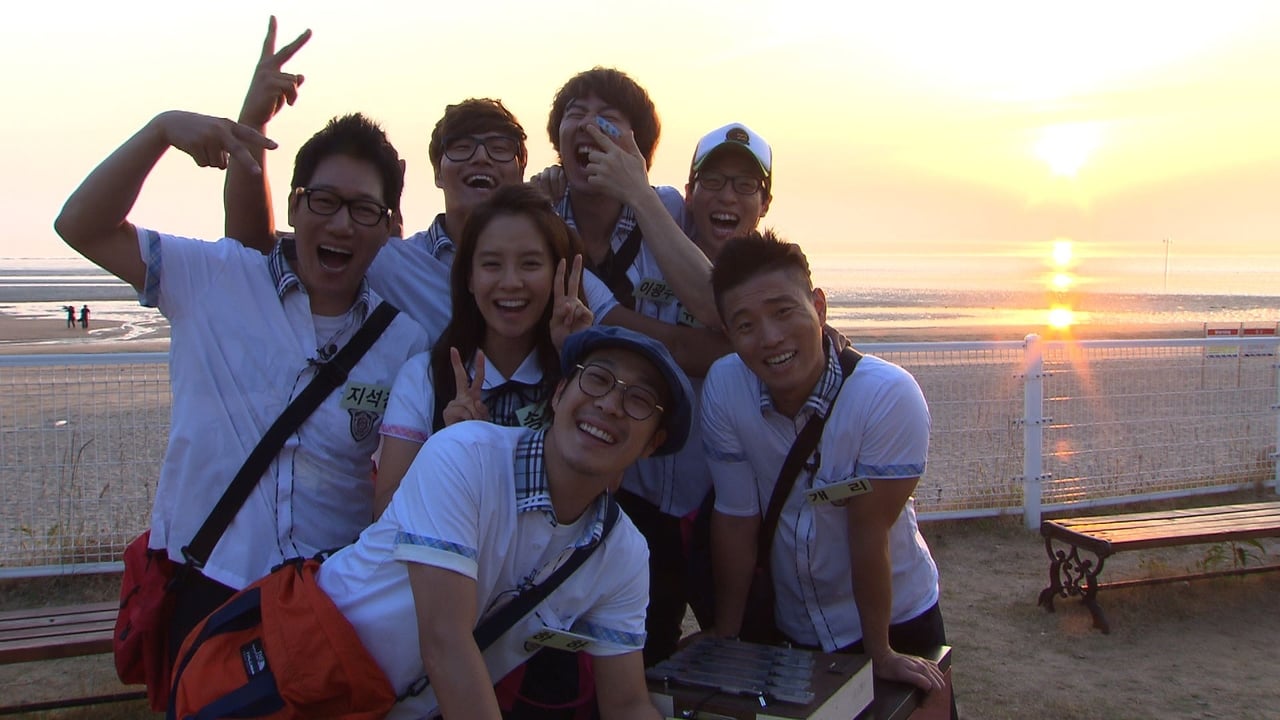
The camera lingers on Haha's sweat as he drags a giant chair, and in that shot, the true essence of the program is revealed: vulnerability put on display for the viewer. The pace of 85 minutes per episode allows each game enough space to escalate from the comic to the ridiculous without losing its pulse. The episodic structure repeats, yes, but repetition is the strong point, because each iteration refines the power dynamic. In episode 101, the wheelbarrow race in the Seoul park, the camera montage follows the participants with a long take that seems justified only to show off the camera operator, but in the end, the shot serves to expose collective fatigue.
In terms of reception, the program has survived schedule changes, member departures, and the arrival of new faces without losing its core. Longevity is no accident; it is proof that the social experiment works. The audience keeps investing time because, deep down, the series offers a window into the fall of K-pop gods, and that, in an era of polished images, is refreshingly raw.
Structure and rhythm
Each episode opens with a brief introduction to the challenge, followed by an explanation that, although it sometimes sounds like a manual instruction script, serves as a pretext for action. The challenges range from hidden object searches to obstacle courses with historical themes. The editing maintains a fast pace, but without sacrificing the pause moments where humor arises from discomfort. A memorable example is the "role reversal" scene in season 8, where Song Ji-hyo, usually the most serious, ends up chasing a group of children with a water gun; the visual contrast underscores the inversion of power that the series celebrates.

Group dynamics and humiliation
The heart of the program is the interaction between the idols and the obligation to submit to humiliation. When Kim Jong-kook loses the "shame box" in episode 57, his red face and the forced laughter of the others create a moment that transcends simple comedy. Humiliation is not an accident; it is choreographed by the producers to reinforce group cohesion. Each fall, each punishment, becomes a ritual that strengthens loyalty among members and, by extension, the loyalty of the public.

Technical aspect
Kang Chan-hee, director of photography, employs a color palette that alternates between warm tones in exteriors and cold lights in studio interiors, creating an atmosphere that sometimes seems more worthy of a thriller than a variety show. The long takes, although sometimes unjustified, serve to highlight the physical endurance of the participants. The sound, although inconsistent in some episodes, relies on percussion effects that mark each step of the race, reinforcing the sense of urgency. The production design, with sets ranging from traditional markets to theme parks, shows an investment that justifies the visual quality of the spectacle.

The best
Cast chemistry: the spontaneous interaction between Yu Jae-seok and the others creates moments that no script could predict. Challenge creativity: the variety of games maintains freshness and avoids absolute monotony. Persistence and evolution: the program's ability to adapt to member departures without losing its essence. Production direction: the logistical coordination of large-scale challenges demonstrates impeccable organization.
The worst
Predictable script: the presentation-development-punishment structure repeats without major innovations. Excess of repetitive format: after several years, the formula begins to feel like a mandatory routine. Handling of guests: external participants often appear as pawns without development. Inconsistent sound: in some episodes the audio mix loses clarity, affecting the understanding of the dialogues.
The Verdict of Claqueta Ácida
Running Man has turned humiliation into a form of popular art, and although the formula feels worn out, the energy of the cast and the cunning of the producers continue to offer an experience that hooks and surprises. The series is proof that forced vulnerability can be as addictive as any thriller plot, and that is why it deserves an applause, even if it is with a sardonic smile. 💀
Running Man: frequently asked questions
- What is the rating of "Running Man" on Claqueta Ácida?
- "Running Man" scored 7.7/10 on Claqueta Ácida in the review by Dr. Cinismo.
- Is "Running Man" worth watching?
- Yes. We gave it 7.7/10 (Nuclear Fusion), our rating for must-see films.
- Who directed "Running Man"?
- "Running Man" was directed by Jo Hyo-jin, Kim Joo-hyung, Im Hyung-taek, Jung Chul-min, Lee Hwan-jin, Choi Bo-pil, Choi Hyung-in, Kang Hyung-seon.
Theater Collateral Damage Report
Psychophysical impact certificate issued by Dr. Cinismo
Este programa mantiene el nivel de atención de un anuncio de detergente a las 3 a.m.
Un par de consultas al reloj por episodio, más por costumbre que por desesperación.
Una taza de espresso doble antes del episodio 50 y otra antes del 150 para sobrevivir al maratón de humillaciones.
"El punto de inflexión llega cuando el reparto se niega a seguir el juego de la “caza del tesoro” y el programa recurre a gimmicks de reality sin sentido."

The rebuttal from Odin Lagbert (Senior Cynicism Academic)
In stark disagreement with the review given by Dr. Cinismo.
“{ "veredicto": "El Dr. Cinismo confunde la humillación con la vulnerabilidad. En Running Man, la humillación es un pastiche de lo que ya se ha visto en programas como Big Brother, donde el entretenimiento se basa en la degradación de los participantes. La vulnerabilidad, sin embargo, es un elemento central en el cine de autor europeo, donde los personajes enfrentan sus miedos y defectos con honestidad. Los directores de Running Man no exploran la psicología de sus participantes, sino que los usan como marionetas en un espectáculo de circo televisivo. La consistencia inquietante a la que se r
💬 Community Verdict
What did you think of the film? Rate it from 0 to 10 to compare it with the editorial review.
You haven't voted yet
📢 ¿Te ha gustado el ácido?
Comparte esta crítica con tus amigos cinéfilos o desata la polémica en redes.
⚡ THE CINEMATIC VENOM YOUR INBOX CRAVES
No sugarcoated ratings, no corporate fluff. Subscribe for our uncensored weekly analysis or join the private Telegram for press previews, poll clashes, and instant alerts.
Alertas de estrenos en 1 segundo, encuestas en caliente y audios al salir de pases de prensa.
Recibe la dosis semanal en tu mail + regalo inmediato del PDF con 50 joyas ocultas de culto.
Related Reviews
Recommended autopsies for demanding film buffs.
 🔥 Fusión Nuclear 9.0
 *Six Feet Under: When Family Drama Smells Like a Decadent Corpse*
⚡ Afinidad temática directa en atmósfera, estilo y fijaciones visuales.
HBO served us a feast of family dysfunction, pitch-black sarcasm, and metaphorical corpses. Alan Ball dug a grave so deep we still haven’t climbed out.
 🔥 Fusión Nuclear 8.5
 *Animal Kingdom: A Descent into Hell (Where Family is the Devil’s Playground)*
⚡ Afinidad temática directa en atmósfera, estilo y fijaciones visuales.
A visceral takedown of *Animal Kingdom*, where "family values" take on a whole new (and deeply criminal) meaning.
 🔥 Fusión Nuclear 8.5
 *Crematorio: Ambition Without Limits – A Masterclass in Moral Rot (Or How to Binge-Watch Your Own Corruption)*
⚡ Afinidad temática directa en atmósfera, estilo y fijaciones visuales.
A scathing, no-holds-barred evisceration of *Crematorio*—the Spanish series that didn’t just show you the sewers of power, but handed you a shovel and dared you to dig deeper.
Editorial Ecosystem
Cinephile connections, archive interviews and related analyses.
💬 Debate Cinéfilo & Autopsia de Lectores
0 veredictos¿Discrepas con nuestra nota? ¿Es una obra maestra o veneno puro? Deja tu veredicto abajo sin necesidad de registro.


Aún nadie ha dejado su veredicto para esta película.
Sé el primero en clavarle el colmillo rellenando el formulario de arriba.