The Zone Zero
A deadly virus unleashes hell at a biotech conference—because nothing says 'team-building' like a lab full of flesh-eating mutants.

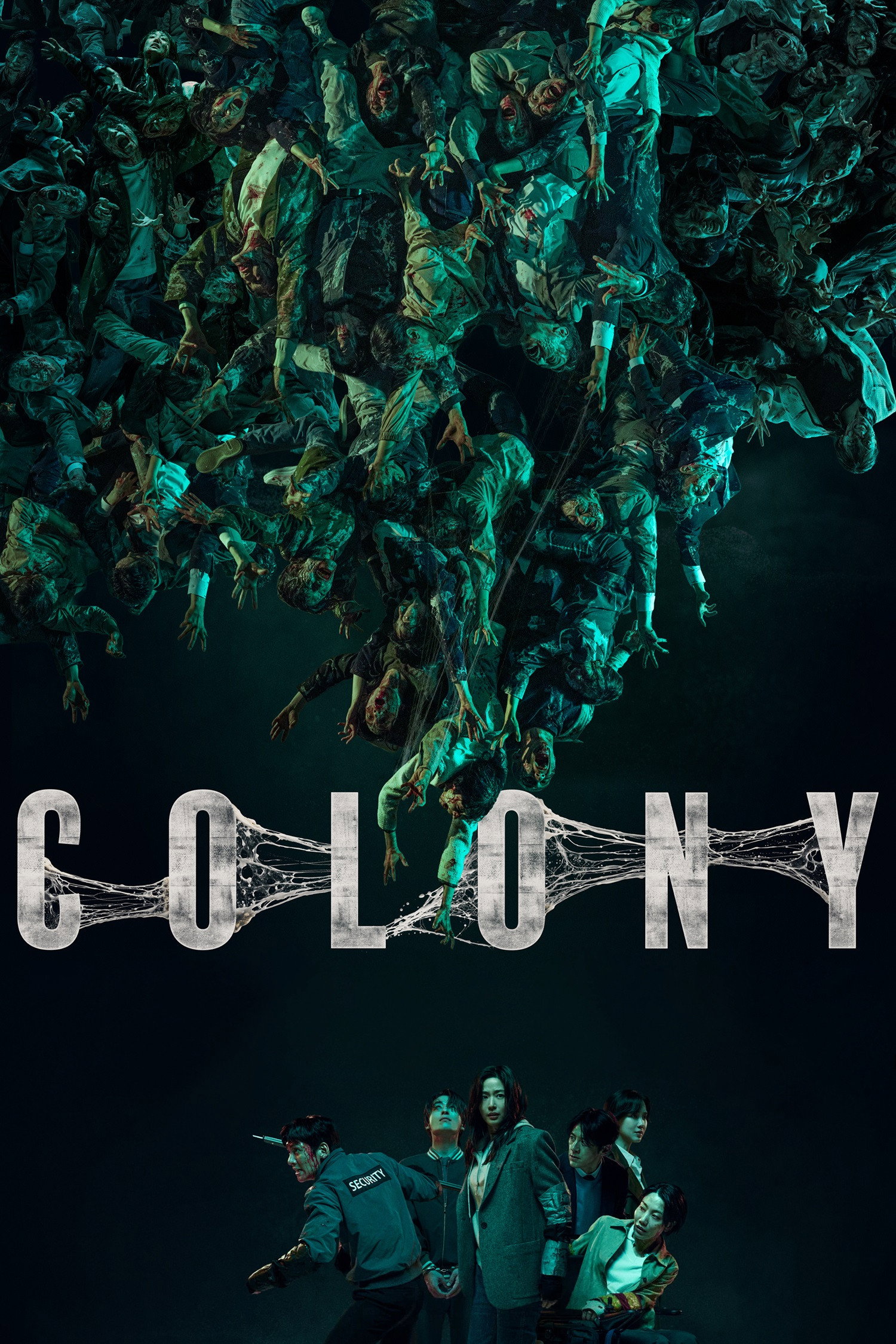
Darkness in Ground Zero isn’t just the absence of light. It’s a character, a slimy entity coiling into the lungs of survivors, whispering that they’re already dead. Yeon Sang-ho—that Korean maestro who turned social horror into an Olympic sport with The Flu and Seoul Station—returns with a biotech nightmare that reeks of sweat, blood, and the unmistakable stench of a lab gone to hell. This isn’t a horror movie. It’s an instruction manual for when the world decides we’ve abused nature one too many times and sends the bill with usurious interest. And damn, does it hurt when the collector comes in the form of a mutating virus and your only currency is your own rotting flesh.
The setting is painfully classic: a group of survivors trapped in a high-tech building while the outside world becomes an all-you-can-eat buffet for creatures that used to be human. But Yeon Sang-ho isn’t content with recycling the same old 28 Days Later formula. Here, the real monster isn’t the virus—it’s desperation. The kind that makes you eye your fellow survivor and wonder if their cough is from the AC or because they’re already carrying the bug that’s about to tear your throat out. Professor Se-jeong (Jeon Ji-hyun) isn’t your typical heroine. She’s a scientist who’s watched her creation slip through her fingers like a child letting go of a balloon on a windy day. And the worst part isn’t that the balloon floats away—it’s that it comes back as something that wants to eat you. The sequence where Se-jeong realizes the virus doesn’t just kill—it transforms—is the kind that nails you to your seat. Not because of the effects—though they’re brutal—but because of the close-up on her eyes: first disbelief, then horror, and finally that cold resignation only those who’ve just signed their death warrant understand. No screams. No histrionics. Just the silence of someone who knows every second from now on is a loan death has begrudgingly granted.
Shooting Ground Zero wasn’t a walk in the park. According to Yeon Sang-ho himself at the Sitges Festival, the initial budget ballooned by 30% thanks to practical effects—yes, those that make the mutations look real and not like a shoddy Unreal Engine render. The crew built a 3,000-square-meter set simulating a biotech research complex, complete with labs, claustrophobic hallways, and a quarantine zone that, ironically, became the safest spot on set when COVID-19 forced a three-month hiatus. The actors lived in a sanitary bubble, which, as Jeon Ji-hyun put it, “was like starring in the movie before we even shot it.” And it shows. There’s a chemistry on screen that can’t be faked, especially in the group scenes where fear isn’t a special effect but something they sweat, spit, and pass around like a real virus.
But let’s talk about the direction, because this is where Yeon Sang-ho trades his craftsman’s hat for a surgeon’s scalpel. The man has an unhealthy obsession with long takes that leave you breathless. The most memorable opens the film: a steadycam follows Se-jeong through the complex’s hallways as chaos erupts around her. No cuts. No respite. Just the sound of her footsteps, the muffled screams of the infected, and the constant beep of machines monitoring the collapse. It’s as if Yeon Sang-ho grabs you by the scruff of the neck and whispers, “You’re here too. Don’t move.” And we don’t. Because, damn, it hurts. It hurts to watch the camera linger on the exact moment an infected pounces on a guard and rips half his face off. This isn’t gore for gore’s sake. It’s a reminder that in this world, humanity is a luxury we can no longer afford.
The script, co-written by Yeon Sang-ho and novelist Kim Young-ha, is a rare beast: it has the classic structure of a survival thriller but with dialogue that sounds like more than just exposition. There’s a scene where Se-jeong and the soldier protecting her (played by a superb Ma Dong-seok) debate whether to open the door to a group of civilians begging for help. The soldier says, “If we open that door, we all die.” Se-jeong replies, “If we don’t, we’re already dead.” It’s not Shakespeare, but in the context of a horror movie, that line is a gut punch. Because ultimately, Ground Zero isn’t about zombies or viruses. It’s about choices. And how, in extreme situations, they’re all bad.
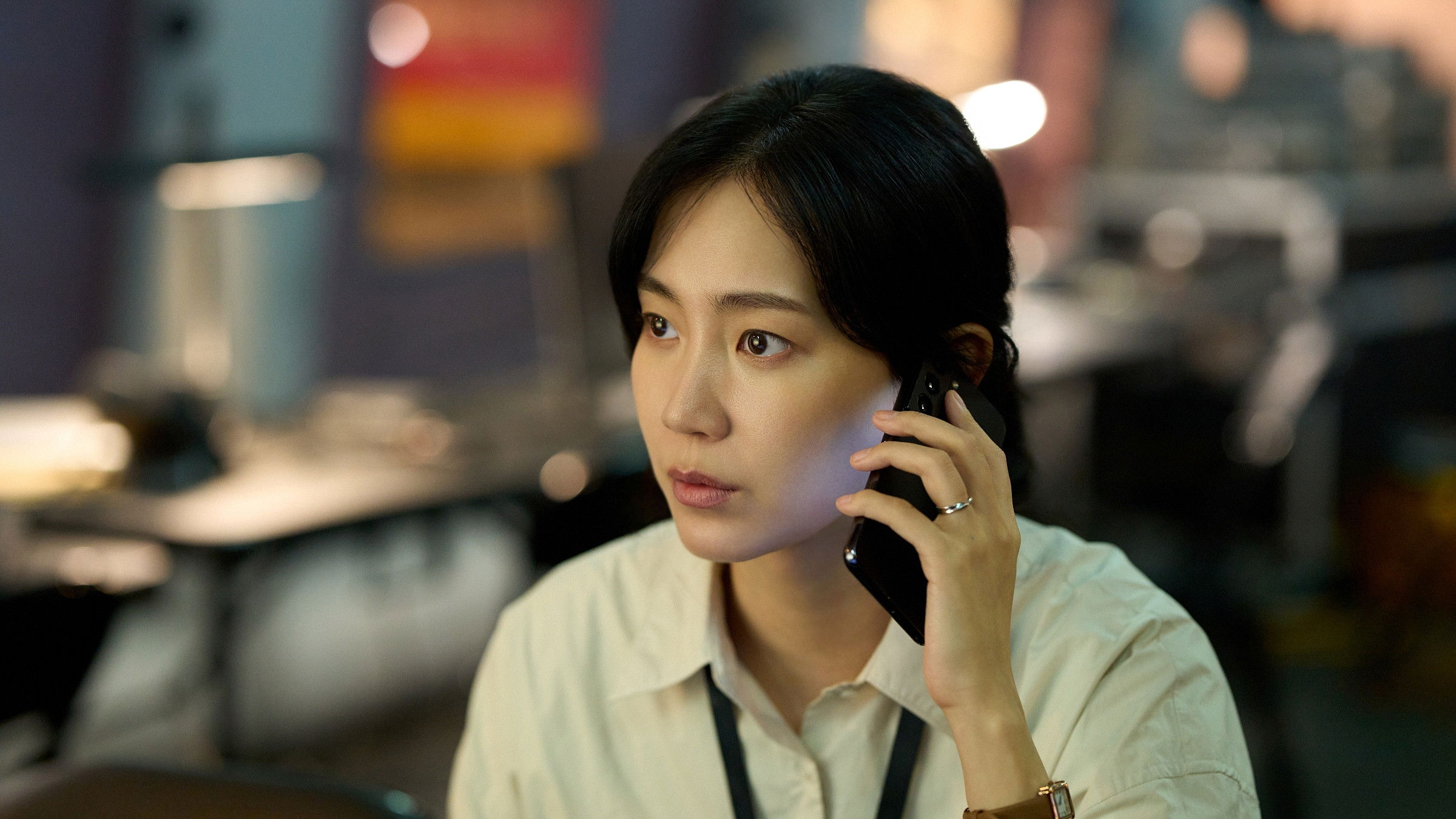
Direction and staging: Terror as choreography
Yeon Sang-ho doesn’t film terror. He choreographs it. Every action scene is calculated to the millimeter, like a macabre dance number where the infected are the lead dancers and the survivors are the poor bastards who bought front-row tickets to the show. The use of space is masterful: narrow hallways, endless staircases, rooms with doors that slam shut on their own. Everything is designed to make the viewer feel that claustrophobia only horror masters like Carpenter or Romero knew how to convey. But one detail elevates Ground Zero above the rest: sound. Or rather, the absence of it. Yeon Sang-ho knows silence is the most terrifying sound effect there is. And he wields it like a weapon. There’s a sequence where Se-jeong hides in a closet while an infected sniffs the air just inches away. No music. No screams. Just the sound of her ragged breathing and the click of the infected’s nails scratching the door. It’s the kind of scene that makes you hold your breath until your chest aches.
Cinematographer Byeon Bong-seon’s work is another highlight. The man has a clinical eye for contrasts: the cold whites of the labs, the bloody reds of the alarms, the sickly greens of the monitors tracking the virus’s spread. But the most impressive thing is how he captures the transformation of the infected. They’re not your typical slow, clumsy zombies. They’re agile creatures, almost elegant in their brutality, with movements that recall a predator stalking its prey. Byeon Bong-seon uses a desaturated color palette for the “normal” world and more vivid tones for the infected, as if to underscore that in this universe, disease is more real than health. And damn, does he pull it off. There’s a shot of an infected crawling across the ceiling like a human spider, the camera angled down to show its silhouette against the fluorescent light. It’s the kind of image that etches itself into your retinas and haunts you for days.
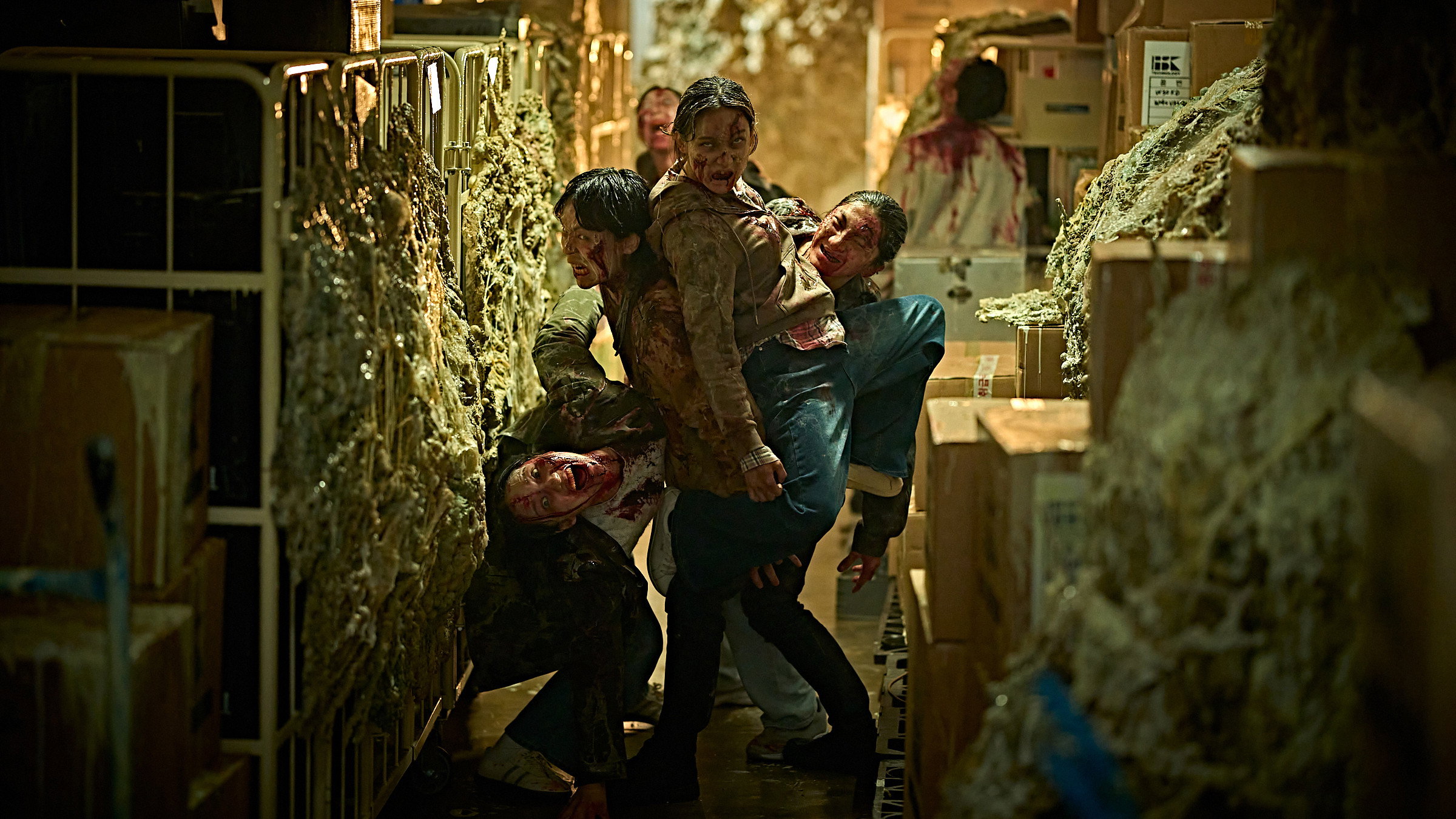
Performances: Fear as a universal language
Jeon Ji-hyun isn’t your typical horror actress. She’s a star of romantic comedies and family dramas who suddenly finds herself in a movie where she has to scream, cry, and bludgeon infected with a fire extinguisher. And yet, she nails it. Her portrayal of Se-jeong is a masterclass in restraint: no overacting, no grand gestures. Just a woman trying to keep her sanity in a world that’s lost its mind. There’s a moment after she watches an infected devour a child where Se-jeong collapses in a corner and cries silently. No music. No dramatic close-ups. Just her, her pain, and the camera observing her like a specimen in a lab. It’s heart-wrenching. And it’s real.
But if Jeon Ji-hyun is the heart of the film, Ma Dong-seok is its fist. The actor, known for his roles in action films like Train to Busan, plays the soldier escorting Se-jeong on her escape. And he does it with a mix of brutality and humanity that’s utterly compelling. Ma Dong-seok isn’t the typical invincible action hero. He’s a regular guy with fears and doubts, trying to protect others even when he knows there’s no hope. There’s a scene where he fights off a group of infected with a metal pipe. It’s not an epic battle. It’s a desperate, dirty scuffle where every hit hurts. And Ma Dong-seok conveys that rawness in a way that leaves you breathless.
The rest of the cast delivers, though it’s fair to say some secondary characters are a bit underdeveloped. The cowardly scientist, the protective mother, the soldier who loses his mind... They’re archetypes more than characters, and while they serve their purpose in the plot, they don’t leave a mark. That said, there’s one exception: the kid playing Min-joon, the son of one of the scientists. The boy has a scene where, after being infected, he looks at his mother with a mix of terror and sadness that’s hard to forget. He doesn’t say a word. He doesn’t need to. His eyes say it all.
Technical aspects: When sound and music become characters
Jung Jae-il’s score is another of the film’s triumphs. It’s not an epic or grandiose soundtrack. It’s a constant whisper, a near-subliminal presence that seeps into your subconscious and reminds you there’s no escape in this world. There are moments when the music vanishes entirely, leaving only ambient sounds: footsteps, screams, the click of a gun being loaded. And then, suddenly, a minimalist, almost hypnotic theme appears, raising the hairs on your neck. It’s as if the music is alive, another infected lurking in the shadows.
The sound design is another strong point. The infected’s effects—those guttural growls, the sounds of bones breaking—are so realistic they make your toes curl. But the most terrifying thing isn’t the sounds they make, but the ones they don’t. The silence before an attack. The absence of breathing when one of them stands still, watching. It’s the kind of detail that proves Yeon Sang-ho and his team have thought through every aspect of the film, down to the smallest nuance.
The production design, by Lee Ha-nee, is another deserving mention. The biotech research complex is designed with obsessive attention to detail: monitors with real virus data, lab equipment that looks like it came from an actual research center, hallways that seem endless. Everything is crafted to make the viewer feel like they’re inside that world, like they can smell the disinfectant and feel the chill of the AC. And, of course, there are the infected. They’re not your typical cheaply made-up zombies. They’re grotesque creatures with deformities straight out of a pathology textbook. There’s one in particular with a dislocated jaw and bloodshot eyes. It’s the kind of image that makes you look away, but you can’t stop looking.
The best
- Jeon Ji-hyun’s performance: A restrained, heart-wrenching acting that elevates the film above conventional horror. She doesn’t scream. She doesn’t sob uncontrollably. She simply suffers, and makes you suffer with her.
- Byeon Bong-seon’s cinematography: A masterclass in light and color that turns terror into art. The contrasts between the cold tones of the lab and the bloody reds of the infected are simply hypnotic.
- Yeon Sang-ho’s direction: A master of suspense who knows exactly when to pull the trigger and when to let silence do the dirty work. His long takes are a cinema lesson.
- Sound design: The infected’s effects are so realistic they make your toes curl. And the use of silence is downright terrifying.
- Choreography of action scenes: These aren’t epic fights. They’re desperate, dirty brawls where every hit hurts. And that makes them more real.
The worst
- Flat secondary characters: Some characters are little more than undeveloped archetypes. The cowardly scientist, the protective mother... They serve their purpose but don’t leave a mark.
- Predictable twists: Though the film is thrilling, some plot twists are easy to see coming. Especially in the second half, where the script seems to rely too much on cheap scares.
- The ending: No spoilers, but it leaves a bitter aftertaste. Not because it’s bad, but because it feels more like a concession to the audience than a narrative decision consistent with what had been built.
- Some CGI effects: While the practical effects are excellent, a couple of CGI sequences stick out. They don’t ruin the film, but they’re noticeable.
- Pacing in the first 30 minutes: The film takes a while to get going. The first half-hour is slow, with too much exposition and not enough character development.
The Verdict of Claqueta Ácida
Ground Zero isn’t a perfect film. It has its flaws: forgettable secondary characters, uneven pacing in the first half, and an ending that feels like a missed opportunity. But when it works—and it does more often than it fails—it’s terrifying. Not because of cheap scares or gore, but because of its ability to put you in its characters’ shoes and make you feel their desperation. Yeon Sang-ho has crafted a biotech nightmare that hurts because it feels real. And in a genre as saturated with clichés as horror, that’s an achievement worth celebrating. Just don’t go to the bathroom during the screening. Because in Ground Zero, even the air you breathe might be infected. 💀
tweets_alternativos:
🎬 Tráiler Oficial
Abrir en YouTube
Ficha de Daños Colaterales en Sala
Certificado de impacto psicofísico emitido por Dr. Cinismo
Cero. La pantalla absorbió cada segundo de atención disponible.
Ninguna comprobación del tiempo. Se agradece la rareza.
Ninguna. Guarda el café para la sesión siguiente.
"Inexistente: pulso de hierro hasta los créditos finales."
💬 El Veredicto de la Comunidad
¿Qué te ha parecido la película? Deja tu nota de 0 a 10 para contrastarla con el análisis de la redacción.
Aún no has votado
📢 ¿Te ha gustado el ácido?
Comparte esta crítica con tus amigos cinéfilos o desata la polémica en redes.
⚡ THE CINEMATIC VENOM YOUR INBOX CRAVES
No sugarcoated ratings, no corporate fluff. Subscribe for our uncensored weekly analysis or join the private Telegram for press previews, poll clashes, and instant alerts.
Alertas de estrenos en 1 segundo, encuestas en caliente y audios al salir de pases de prensa.
Recibe la dosis semanal en tu mail + regalo inmediato del PDF con 50 joyas ocultas de culto.
Related Reviews
Recommended autopsies for demanding film buffs.
 🔥 Fusión Nuclear8.7
*Train to Busan: Zombies on the Fast Track (First Class, No Refunds)*
⚡Del mismo director (Yeon Sang-ho): analiza la evolución o degradación de su estilo.
Yeon Sang-ho crafted one of the best action-horror zombie thrillers in recent memory, turning a high-speed train ride into a suffocating social hellscape.
 🔥 Fusión Nuclear8.5
*Alleluia: Love as a Terminal Illness (or How to Turn Crimes of Passion into a Sweaty, Fleshy Spectacle)*
⚡Afinidad temática directa en atmósfera, estilo y fijaciones visuales.
Fabrice Du Welz reimagines the myth of the lonely hearts killers in a feverish whirlwind of jealousy, submission, and blood, led by Lola Dueñas in a performance that’s equal parts hypnotic and harrowing.
 🔥 Fusión Nuclear8.5
*High Tension (Haute Tension): The Brutal Birth of the New French Extremism – Or How to Turn Flesh into Poetry with a Machete*
⚡Afinidad temática directa en atmósfera, estilo y fijaciones visuales.
Alexandre Aja shocked global screens with a relentless rural bloodbath, redefined by breakneck pacing and a divisive twist that splits serious cinephiles right down the middle.
Editorial Ecosystem
Cinephile connections, archive interviews and related analyses.
🎞️ In Claqueta Cinematheque1
💬 Debate Cinéfilo & Autopsia de Lectores
0 veredictos¿Discrepas con nuestra nota? ¿Es una obra maestra o veneno puro? Deja tu veredicto abajo sin necesidad de registro.

Aún nadie ha dejado su veredicto para esta película.
Sé el primero en clavarle el colmillo rellenando el formulario de arriba.