Coven Academy — The Witch's Spell: When the Private Boarding School Disguises Itself as a Grimoire
Tim Federle signs a Disney teen fantasy where the magic of New Orleans hides a machinery of social capital and institutional abuse.

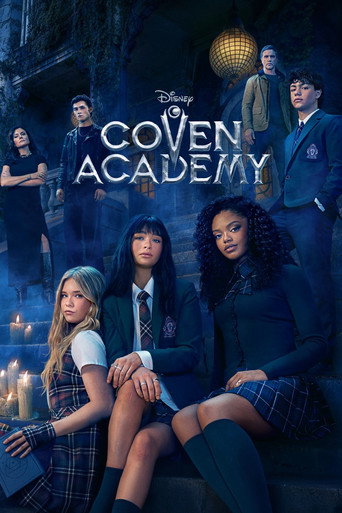
Coven Academy: The Witch's Spell: full review
Contemporary television suffers from a pathological compulsion to turn any high school hallway into a waiting room for metaphysical purgatory. When a product of these characteristics lands in the catalog under the seal of major corporations, the seasoned viewer mentally prepares to receive a standardized ration of cheap digital effects and cardboard romances. However, in this approach signed by Tim Federle for a young audience, the swampy territory of New Orleans does not function merely as an exotic set designed to disguise the emptiness of the plots. The choice of this historical enclave of rigid social stratification serves as a constant reminder that invisible hierarchies weigh as much as any millennial enchantment. The geography ceases to be a simple backdrop to become the mortar that supports a caste system well disguised under designer robes.
The narrative plunges us with alacrity into an elite boarding school where aspiring teenage witches protecting the city discover that the true danger does not lurk in the shadows of the swamp, but at the tables of the main dining hall. The power dynamics among students operate under the relentless logic of the financial market, where each spell equals a stock with variable pricing in the exchange of privileges. It is refreshing to observe how the narrative avoids the usual manichaeism of good versus absolute evil to immerse us in a quagmire of everyday micro-violences. Status becomes the only true god to whom both teachers and pupils pay homage during their long hours of study.
The construction of this fictional universe abandons the laziest clichés of the fantasy genre to explore the mechanisms by which institutions shape obedience. Throughout the episodes, the boarding school operates with the millimetric precision of an extractive corporation that commoditizes the supernatural talent of its residents for its own benefit. Attraction and desire are not here mere engines for romantic plot twists, but dangerous tactical disadvantages on a board where mistakes are paid for with social ostracism. The discipline imposed by adults responds to a systemic need to neutralize any onset of true dissent before it germinates.

In contrast to the usual parade of brainless puppets that populate this type of television fiction, the cast manages to endow their roles with an unusual physicality within the standards of the medium. Malina Weissman embodies with a calculated rigidity a protagonist trapped between dynastic expectations and her own contrarian inertia, supported by a cast that perfectly understands the tone of contained farce required. For their part, the veteran presence of figures like Tiffani Thiessen and Devon Sawa in the teaching staff brings that patina of worn authority and corporate cynicism so necessary to sustain the credibility of the sham. The faces of the adults reflect the moral fatigue of those who have been administering an unjust system for too long.

The Architecture of School Oppression
The episodic structure of the season unfolds with a deliberately sluggish cadence that prioritizes the sociological dissection of the hallways over gratuitous fantasy effects. Each chapter dissects a different layer of this pyramidal hierarchy, demonstrating that magic here is not a liberating force, but the legal tender with which silences and complicity are bought. The spell classes suspiciously resemble executive seminars where one learns to optimize performance and discard defective elements of the group. The staging emphasizes closed spaces, endless hallways, and the suffocating symmetry of the architecture to remind us that we are facing a golden prison.
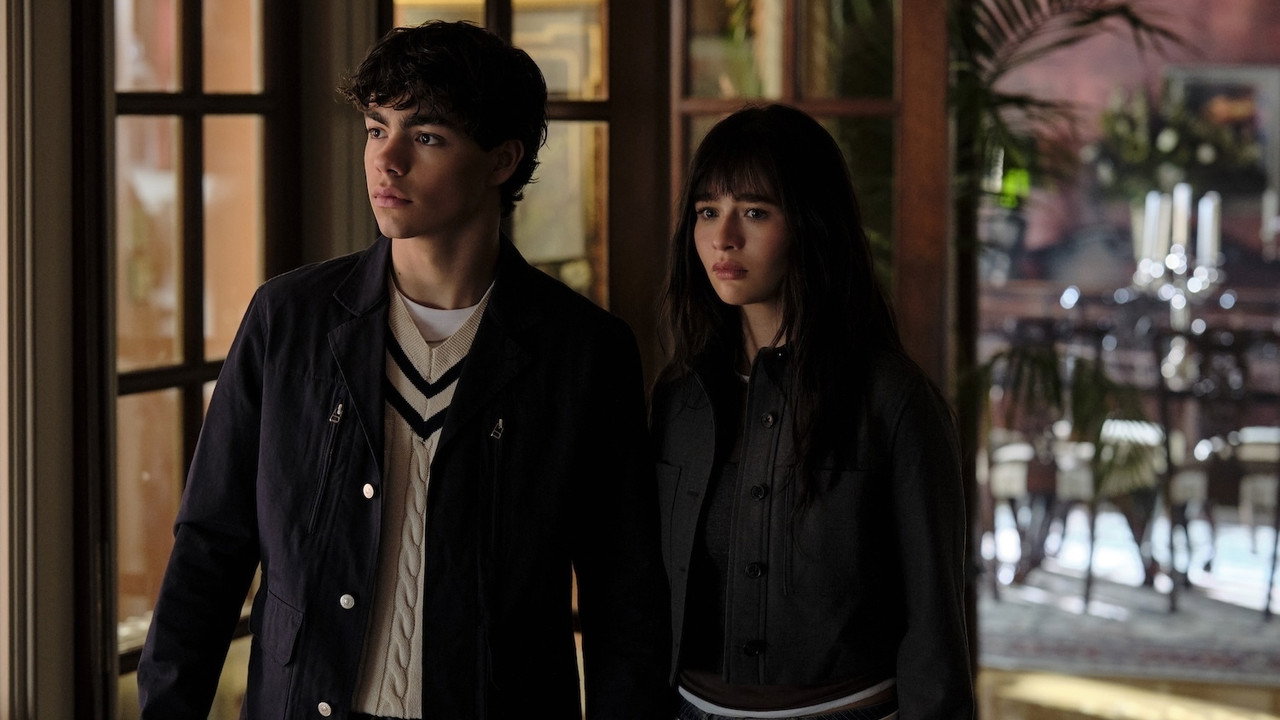
The Weight of Caste and Blood
The script signed by Tim Federle himself intelligently avoids the temptation of turning the plot into a mere parade of episodic digital monsters and opts to focus the conflict on the emotional suffocation of its characters. The rivalry among the young witches does not respond to childish personal grudges, but to the unmasked competition to secure a place in the high spheres of established supernatural power. The witch companions orbiting around them act as dispensable pawns in a chess game where the true winner is always the institution itself. The complicity of the victims with their own executioners constitutes the most lucid and bitter core of the entire proposal.
The best
- Institutional Design: The ability to portray the boarding school as an extractive multinational of magical talents.
- Young Cast: The interpretive containment of Malina Weissman leading a group that avoids adolescent hysteria.
The worst
- Formal Hangover: A certain tendency to stretch out romantic subplots at the expense of the main sociological tension.
- Predictability: The resolution of some power conflicts that can be guessed with too many minutes of advance notice.
The Verdict of Claqueta Ácida
Tim Federle has perpetrated a television artifact that confuses the distracted viewer by refusing to be a simple fantastic candy for the masses. Beneath the surface of plastic and designer spells hides a very lucid dissection of how privilege is inherited, whitewashed, and defended with a wand or a checkbook. We are not facing a peak of audiovisual genius, but it has enough grit to expose the competition. A commendable exercise that demonstrates that Disney also knows how to sign fables about bourgeois cruelty without needing to ask for forgiveness. 💀
🎬 Tráiler Oficial
Abrir en YouTube
Coven Academy: The Witch's Spell: frequently asked questions
- What is the rating of "Coven Academy: The Witch's Spell" on Claqueta Ácida?
- "Coven Academy: The Witch's Spell" scored 6.8/10 on Claqueta Ácida in the review by Odin Lagbert.
- Is "Coven Academy: The Witch's Spell" worth watching?
- With reservations. We gave it 6.8/10 (Citric Acid), our rating for uneven films with something worth saving.
- Who directed "Coven Academy: The Witch's Spell"?
- "Coven Academy: The Witch's Spell" was directed by Tim Federle.
Theater Collateral Damage Report
Psychophysical impact certificate issued by Odin Lagbert
Un parpadeo constante ante la previsibilidad del drama adolescente, salvado por destellos puntuales de cinismo institucional.
Provoca el impulso irrefrenable de consultar el cronómetro digital cada vez que aparece una reunión del consejo escolar.
Un espresso doble servido en taza de porcelana fina, necesario para soportar la solemnidad burguesa del aquelarre.
"El instante en que los conflictos de pasillo eclipsan por completo la amenaza sobrenatural de Nueva Orleans."

The rebuttal from Dante Sangre (Blockbuster Scalpel)
In stark disagreement with the review given by Odin Lagbert.
“Basura industrial. Seis puntos y ocho. Ridículo. Odin hiede. Ve castas. Ve jerarquías. Ve profundidad. Yo veo plástico. Veo un cadáver corporativo. Tim Federle dirige. Dirige a adolescentes. Adolescentes que actúan. Actúan como robots. Robots de cartón. El pantano no pesa. No pesa nada. Es un filtro. Filtro de Instagram. Nueva Orleans como fondo. Fondo de pantalla. No es argamasa. Es pegamento barato. Pegamento que suelta. Suelta la trama. La trama es una estafa. Estafa a los jóvenes. Jóvenes que pagan. Pagan por ver esto. Ver esto es una lobotomía. Lobotomía voluntaria. Voluntaria y dolorosa. Dolorosa y vacía. Vacía como una botella. Botella de refresco. Refresco de cola. Cola de dragón. Dragón de plástico. Plástico que arde. Arde lento. Lento como el aburrimiento. Aburrimiento puro. Puro y estéril. Estéril como un quirófano. Quirófano de Hollywood. Hollywood muere. Muere de pie. De pie y sonriendo. Sonriendo a cámara. Cámara que graba. Graba la nada. Nada absoluto. Absoluto y caro. Caro y vacío. Vacío y tonto. Tonto y largo. Largo y aburrido. Aburrido y malo. Malo y caro. Caro y malo. Malo y caro.
💬 Community Verdict
What did you think of the film? Rate it from 0 to 10 to compare it with the editorial review.
You haven't voted yet
📢 ¿Te ha gustado el ácido?
Comparte esta crítica con tus amigos cinéfilos o desata la polémica en redes.
⚡ THE CINEMATIC VENOM YOUR INBOX CRAVES
No sugarcoated ratings, no corporate fluff. Subscribe for our uncensored weekly analysis or join the private Telegram for press previews, poll clashes, and instant alerts.
Alertas de estrenos en 1 segundo, encuestas en caliente y audios al salir de pases de prensa.
Recibe la dosis semanal en tu mail + regalo inmediato del PDF con 50 joyas ocultas de culto.
Related Reviews
Recommended autopsies for demanding film buffs.
 🔥 Fusión Nuclear 9.0
 *Six Feet Under: When Family Drama Smells Like a Decadent Corpse*
⚡ Afinidad temática directa en atmósfera, estilo y fijaciones visuales.
HBO served us a feast of family dysfunction, pitch-black sarcasm, and metaphorical corpses. Alan Ball dug a grave so deep we still haven’t climbed out.
 🔥 Fusión Nuclear 8.5
 *Animal Kingdom: A Descent into Hell (Where Family is the Devil’s Playground)*
⚡ Afinidad temática directa en atmósfera, estilo y fijaciones visuales.
A visceral takedown of *Animal Kingdom*, where "family values" take on a whole new (and deeply criminal) meaning.
 🔥 Fusión Nuclear 8.5
 *Crematorio: Ambition Without Limits – A Masterclass in Moral Rot (Or How to Binge-Watch Your Own Corruption)*
⚡ Afinidad temática directa en atmósfera, estilo y fijaciones visuales.
A scathing, no-holds-barred evisceration of *Crematorio*—the Spanish series that didn’t just show you the sewers of power, but handed you a shovel and dared you to dig deeper.
Editorial Ecosystem
Cinephile connections, archive interviews and related analyses.
💬 Debate Cinéfilo & Autopsia de Lectores
0 veredictos¿Discrepas con nuestra nota? ¿Es una obra maestra o veneno puro? Deja tu veredicto abajo sin necesidad de registro.


Aún nadie ha dejado su veredicto para esta película.
Sé el primero en clavarle el colmillo rellenando el formulario de arriba.