Six Feet Under — When Family Drama Smells Like a Decadent Corpse
HBO served us a feast of family dysfunction, pitch-black sarcasm, and metaphorical corpses. Alan Ball dug a grave so deep we still haven’t climbed out.

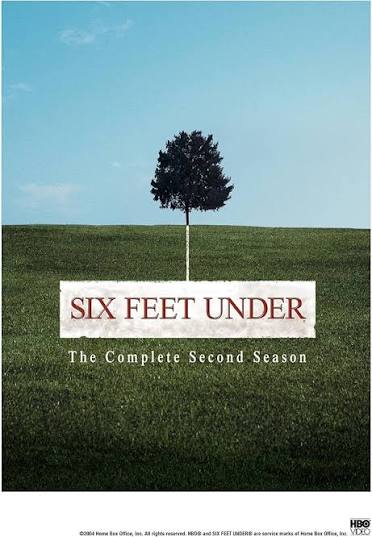


The year 2001-una-odisea-del-espacio-kubrick-y-el-monolito-que-nos-dejo-mudos" class="text-amber-400 font-black hover:text-amber-300 transition underline decoration-amber-500/40 hover:decoration-amber-300" title="[9.3/10 🔥 Fusión Nuclear] Lee nuestra autopsia de «2001»" data-acid-interlink="2001-una-odisea-del-espacio-kubrick-y-el-monolito-que-nos-dejo-mudos">2001 was a graveyard of illusions. While the world teetered between the shock of 9/11 and the hangover of the dot-com bubble, HBO decided it was the perfect time to bury conventional family drama and plant a family tree rotted to its roots in its place. Alan Ball, that screenwriter with the face of someone who’s seen too much (and none of it in a good way), landed at the network with a project that reeked of formaldehyde and black humor: Six Feet Under. It wasn’t a show about death—it was about how life stinks when you’re forced to live with it. And boy, did it deliver. With a budget that probably wouldn’t have covered Nathaniel Fisher’s luxury casket, Ball and his team turned a funeral into a macabre reality show, where every episode was a reminder that, in the end, we all end up in the same place: six feet under, just with very different styles of rotting along the way.
The genesis of Six Feet Under is as twisted as its plot. Ball, fresh off writing American Beauty (yes, that movie where Kevin Spacey fixates on a teenager and then dies like a dog), decided his next masterpiece wouldn’t be about the rot of suburbia but about the rot of the family as an institution. HBO, which had already proven with The Sopranos that audiences were ready to love morally ambiguous (or outright monstrous) characters, gave the green light to this project, blending razor-sharp black humor with gut-wrenching melodrama. The result was a series that didn’t just redefine TV drama—it proved death could be the best joke of the evening. Because, let’s be honest, what’s more absurd than life itself? And if you don’t believe me, ask Ruth Fisher, who spends five seasons trying not to drown in her own mediocrity while her husband lies in a mahogany casket, probably laughing at her from the great beyond.
But Six Feet Under wasn’t born in a vacuum. The show is a child of its time: that post-Clinton, pre-Obama America, where the American Dream was crumbling like a poorly baked meatloaf, and people were starting to question whether they really wanted to keep pretending everything was fine. In that context, the Fishers were the perfect mirror of a society decomposing in real time. Nate, the prodigal son who returns home to find his father has died (literally, not metaphorically—though that too), is the archetypal millennial before the term even existed: a lost, selfish guy so full of contradictions it’s embarrassing. David, the repressed gay man running the family funeral home with an iron fist and a heart of ice, embodies a generation that still didn’t dare come out of the closet without society’s permission. And Claire, the rebellious teen who smokes joints like they’re candy, is a reminder that youth has always been a battleground between self-destruction and the search for identity. together-la-cueva-de-los-espejos-rotos" class="text-amber-400 font-black hover:text-amber-300 transition underline decoration-amber-500/40 hover:decoration-amber-300" title="[6.5/10 ⚡ Ácido Cítrico] Lee nuestra autopsia de «Together»" data-acid-interlink="together-la-cueva-de-los-espejos-rotos">Together, they formed such a dysfunctional portrait that it was impossible not to fall in love with them, even if it was reluctantly.
The most fascinating thing about Six Feet Under is how it turned the mundane into something extraordinary. There were no dragons, no superheroes, no government conspiracies—just a family trying to survive itself while burying its dead (and its dreams). Alan Ball didn’t need special effects or explosions to keep audiences glued to the screen; a single tracking shot of Frances Conroy crying silently while her husband decomposed in the basement, or a loaded double entendre between Nate and Brenda making it clear their relationship was as toxic as it was necessary, was enough. The series was a reminder that the real horror isn’t in fictional monsters but in reality: loneliness, guilt, the fear of not being enough. And, above all, the certainty that, in the end, we’ll all end up in the same place, just with very different ways of getting there. Because, as Nathaniel Fisher himself put it in one of his famous post-mortem monologues: "Death isn’t the opposite of life—it’s a part of it." And boy, did it prove that.
The Direction: A Funeral with Style (and No Plastic Flowers)
If there’s one thing Alan Ball understood from the first episode, it’s that drama doesn’t need shouting to be effective. In fact, the quieter it is, the more it hurts. His direction in Six Feet Under is an exercise in almost sadomasochistic restraint, where every shot seems designed to torture the viewer with truth. There’s no grand music or epic dialogue—just life in its rawest, most unfiltered, and sometimes unbearably boring form. Because, let’s be honest, what’s more real than a family dinner where no one dares to say what they’re really thinking? Ball knew this, and that’s why he turned every scene into a minefield of awkward silences and glances that said it all. The camera, instead of moving with the elegance of a ballet, drags itself like a corpse refusing to be buried. Long takes, claustrophobic framing, and a color palette oscillating between funeral beige and the bilious green of envy. Everything in this series smells like formaldehyde and broken dreams.
But where Ball truly shines is in his ability to blend the grotesque with the sublime. One moment, you’re laughing at David Fisher’s obsession with order (and his boyfriend Keith, who looks like he stepped out of an Abercrombie & Fitch catalog), and the next, you’re crying like a child because Ruth just found out her husband was cheating on her. And not with just any mistress—with a woman who sold discount caskets at a mall. The show’s tone is as unpredictable as life itself: one second, you’re in a dark comedy about funeral homes, and the next, you’re plunged into a family drama so intense you need a drink (or three) to recover. Ball isn’t afraid to show the ugly, the uncomfortable, or the outright ridiculous. Because, in the end, what’s more ridiculous than death? And yet, the series never falls into easy cynicism. There’s a humanity in every episode, a compassion for these characters that makes you hate and love them in equal measure.
Ball’s real genius, however, lies in his use of post-mortem monologues. Each episode begins with the death of an anonymous character (an old man dying in front of the TV, a teenager drowning in a pool, an executive having a heart attack in an airplane bathroom) and ends with Nathaniel Fisher (or his ghost, or his mental projection, or whatever the hell he is) reflecting on life, death, and the absurdity of it all. These moments, which could have been cheesy or pretentious in lesser hands, become little gems of writing and direction. Ball films them with almost clinical coldness, as if dissecting the corpse of human existence. And yet, there’s a strange beauty to them, a kind of macabre poetry that leaves you with the feeling that, in the end, we’re all just stories someone will tell when we’re no longer here. Death, in Six Feet Under, isn’t the end—it’s the beginning of something far more interesting: the chance to laugh at ourselves before the worms do.
The Performances: A Cast That Smells Like Death (And That’s a Compliment)
If Six Feet Under is a masterpiece, much of the credit goes to its cast, an ensemble of actors who seem to have made a pact with the devil to deliver performances so raw they hurt. Peter Krause, as Nate Fisher, is the living portrait of self-destruction disguised as charm. His Nate is the kind of guy who could sell you a discount casket while convincing you it’s a great idea. He’s selfish, immature, and so full of contradictions it’s impossible not to want to strangle him (or hug him, depending on the day). Krause plays him with an eerie naturalism, as if he’s not acting but living a real-time existential crisis. Then there’s Michael C. Hall, whose David Fisher is one of the best performances in modern television. David is a walking closet: repressed, controlling, and so cold you could use him to preserve corpses. But Hall makes you love him, suffer with him, and, above all, laugh at his neuroses. His chemistry with Mathew St. Patrick (boyfriend Keith) is so explosive you can almost smell the repressed desire and sexual frustration in every scene they share.
But if there’s one actress who steals the show in Six Feet Under, it’s Frances Conroy. Her Ruth Fisher is a character so complex she seems lifted from a Tennessee Williams play. Ruth is a woman who spent her whole life being the perfect wife, the perfect mother, the perfect widow… and yet, she’s an emotional wreck. Conroy plays her with a mix of fragility and ferocity that takes your breath away. There’s a scene in the second season where Ruth, drunk and desperate, tries to seduce a man in a bar, and it’s so painful, so real, you have to look away. But you can’t, because Conroy has you by the throat and won’t let go until you’ve felt every ounce of her humiliation. Lauren Ambrose, meanwhile, is the Claire Fisher we all carry inside: the rebellious teen who smokes joints, falls for the wrong guys, and spends her life trying to figure out who the hell she is. Ambrose makes Claire insufferable and adorable in equal measure, and her evolution over five seasons is one of the most satisfying arcs in the series.
And then there’s Freddy Rodríguez, whose Federico Díaz is the beating heart of the show. Federico is the funeral home employee who, against all odds, becomes part of the family. Rodríguez plays him with a warmth and humanity that contrasts with the coldness of the rest of the cast. He’s the only character who seems grounded, and his presence is like a balm amid the Fishers’ emotional chaos. Mathew St. Patrick, on the other hand, is the Keith Charles we all need: a strong, self-assured guy who’s just as vulnerable as everyone else. His relationship with David is one of the best portrayals of gay love on television, full of ups and downs, passion, and moments so awkward you want to hide behind the couch. Together, this cast forms a chorus of dissonant voices that somehow create a symphony of emotions so powerful it leaves you breathless. They’re not actors playing characters—they’re lost souls who’ve decided to tell you their story before it’s too late.
The best
- Alan Ball’s writing: A masterpiece of scriptwriting that blends razor-sharp black humor with gut-wrenching drama. Every line is a knife disguised as a compliment, and every episode is a lesson in how to tell a story without veering into sentimentality.
- The cast’s performances: An ensemble of actors who seem to have sold their souls to the devil for performances so raw they hurt. Frances Conroy, Michael C. Hall, and Peter Krause are simply unforgettable.
- The post-mortem monologues: Little gems of writing and direction that turn death into something poetic, absurd, and deeply human. They’re a reminder that, in the end, we’ll all end up in the same place—just with very different ways of getting there.
- Alan Ball’s direction: An almost sadomasochistic exercise in restraint, where every shot seems designed to torture the viewer with truth. Ball isn’t afraid to show the ugly, the uncomfortable, or the ridiculous, and that’s what makes the series so special.
- The characters’ evolution: Five seasons allow for a lot, and the Fishers grow, change, and crumble in such an organic way that it’s impossible not to grow attached to them (despite their flaws).
The worst
- Some forced plotlines: There are moments when the series seems to lose its way, especially in the fourth season, where some twists smell more like TV filler than narrative necessity.
- Brenda Chenowith’s character: Rachel Griffiths does a decent job, but her character is so inconsistent and, at times, so insufferable that it’s hard to empathize with her. Her relationship with Nate is toxic to the point of exhaustion.
- The pacing in the third season: Some episodes feel like they’re marking time, especially when the series focuses too much on side plots involving secondary characters.
- The finale: No spoilers, but let’s just say the last episode is so ambitious it borders on pretentious. It’s not bad, but it’s not up to the rest of the series.
- Some family drama clichés: Though the series subverts many genre tropes, there are moments when it falls into the same traps it criticizes, especially in its portrayal of women.
The Verdict of Claqueta Ácida
Six Feet Under isn’t just a show about death—it’s a show about life, with all its ugliness, beauty, and absurdity. Alan Ball and his team created a work that smells like formaldehyde and tears, but also like laughter and moments of such raw humanity it hurts. It’s not perfect (no series is), but it’s so honest, so brutal, and so deeply human that it’s impossible not to fall in love with it. The Fishers are a dysfunctional, selfish, and sometimes insufferable family, but they’re also real. And in a world where TV drama often falls into sentimentality or easy cynicism, that’s a miracle. HBO gave us a series that didn’t just redefine the genre—it reminded us that, in the end, we’ll all end up in the same place: six feet under, just with very different ways of rotting along the way. And, let’s be honest, what’s more poetic than that? 💀
🎬 Tráiler Oficial
Abrir en YouTube
Ending Explained: Six Feet Under
Ficha de Daños Colaterales en Sala
Certificado de impacto psicofísico emitido por Silvia Mordaz
Cero bostezos. Pupilas dilatadas y tensión mandibular constante.
Ninguna comprobación del tiempo. Se agradece la rareza.
Ninguna. Guarda el café para la sesión siguiente.
"No aplica. La obra se sostiene sola."
💬 El Veredicto de la Comunidad
¿Qué te ha parecido la película? Deja tu nota de 0 a 10 para contrastarla con el análisis de la redacción.
Aún no has votado
📢 ¿Te ha gustado el ácido?
Comparte esta crítica con tus amigos cinéfilos o desata la polémica en redes.
⚡ THE CINEMATIC VENOM YOUR INBOX CRAVES
No sugarcoated ratings, no corporate fluff. Subscribe for our uncensored weekly analysis or join the private Telegram for press previews, poll clashes, and instant alerts.
Alertas de estrenos en 1 segundo, encuestas en caliente y audios al salir de pases de prensa.
Recibe la dosis semanal en tu mail + regalo inmediato del PDF con 50 joyas ocultas de culto.
Related Reviews
Recommended autopsies for demanding film buffs.
 🔥 Fusión Nuclear8.5
*Animal Kingdom: A Descent into Hell (Where Family is the Devil’s Playground)*
⚡Afinidad temática directa en atmósfera, estilo y fijaciones visuales.
A visceral takedown of *Animal Kingdom*, where "family values" take on a whole new (and deeply criminal) meaning.
 🔥 Fusión Nuclear8.5
*Crematorio: Ambition Without Limits – A Masterclass in Moral Rot (Or How to Binge-Watch Your Own Corruption)*
⚡Afinidad temática directa en atmósfera, estilo y fijaciones visuales.
A scathing, no-holds-barred evisceration of *Crematorio*—the Spanish series that didn’t just show you the sewers of power, but handed you a shovel and dared you to dig deeper.
 🔥 Fusión Nuclear8.5
**Goliath: Justice as a Power Play (Or How to Make a Legal Drama Without Tripping Over Your Own Pretensions)**
⚡Afinidad temática directa en atmósfera, estilo y fijaciones visuales.
A caustic takedown of *Goliath*, where justice isn’t blind—it’s just another rigged game in a courtroom circus.
Editorial Ecosystem
Cinephile connections, archive interviews and related analyses.
💬 Debate Cinéfilo & Autopsia de Lectores
0 veredictos¿Discrepas con nuestra nota? ¿Es una obra maestra o veneno puro? Deja tu veredicto abajo sin necesidad de registro.


Aún nadie ha dejado su veredicto para esta película.
Sé el primero en clavarle el colmillo rellenando el formulario de arriba.