Animal Kingdom — A Descent into Hell (Where Family is the Devil’s Playground)
A visceral takedown of Animal Kingdom, where "family values" take on a whole new (and deeply criminal) meaning.

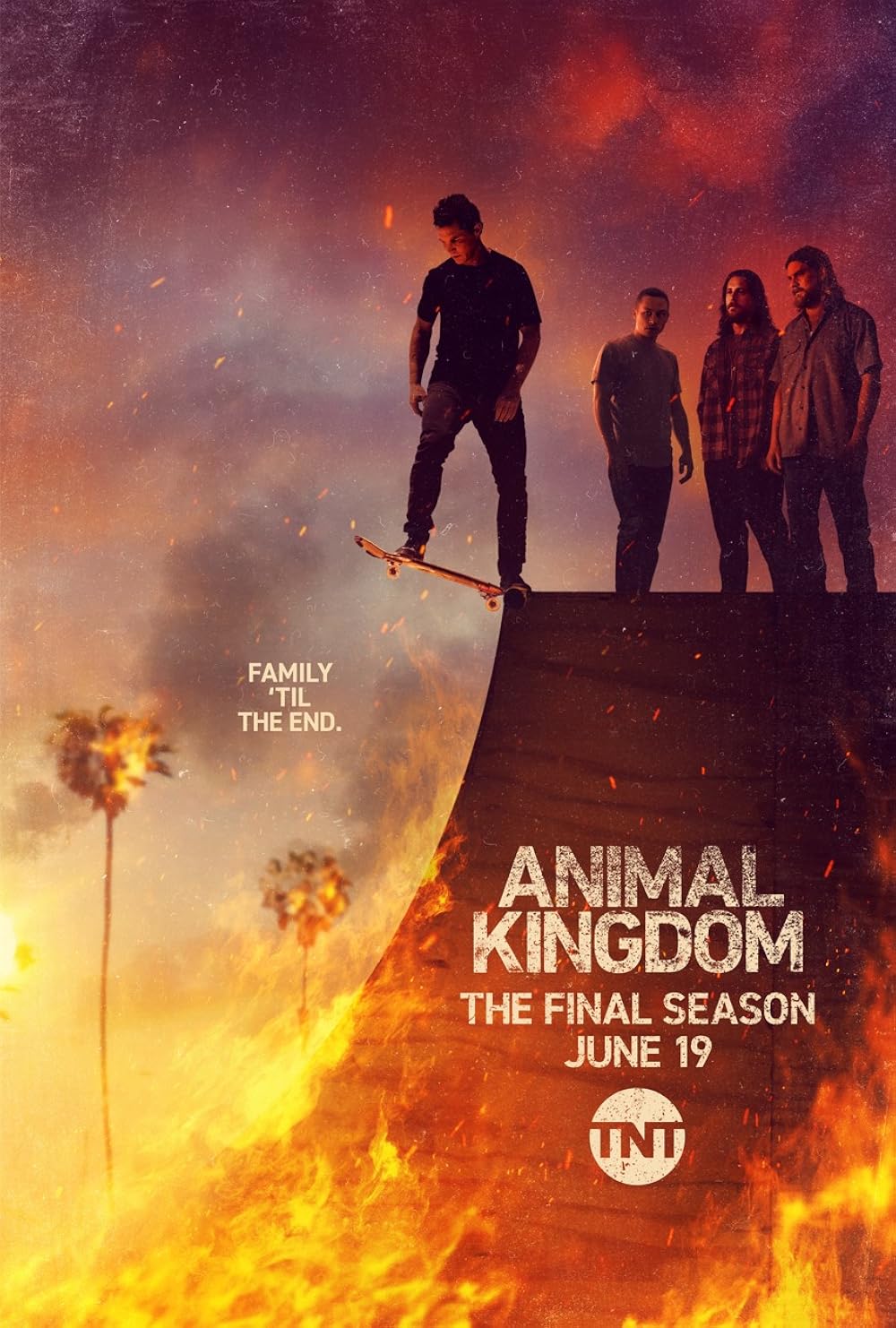

In the vast, rotting ocean of contemporary television—where series are as predictable as an episode of Keeping Up with the Kardashians and as deep as a puddle in the Mojave—Animal Kingdom emerges like a mirage of calculated decay, a feast of rotten meat served on a silver platter for those who still believe family drama can be something more than a Jerry Springer rerun. Adapted from David Michôd’s Australian film (which, by the way, already reeked of genius from a mile away), this TNT series (yes, that TNT—the channel that used to air Law & Order marathons and documentaries about monster trucks) pulls off the impossible: turning a family of criminals into the most accurate mirror of deep America, the one Trump promised to "make great again" while its citizens bled out on IKEA sofas.
finalExplicado: "La familia Cody se desmorona por completo en el clímax: J delata a sus tíos y a Smurf ante la policía, provocando una masacre final donde Pope se suicida tras matar a su hermano Craig, mientras Deran y J quedan vivos pero rotos. Smurf, ya muerta, observa desde el más allá como la matriarca que lo corrompió todo. Simbólicamente, el desenlace significa que el “reino animal” devora a sus crías: la lealtad familiar era una ilusión tóxica. No hay redención ni escape real; solo supervivencia darwiniana. J hereda el trono vacío convertido en el nuevo depredador, probando que el infierno Cody no se destruye, solo muta."
The Direction: When Chaos Has a Method (And the Method is Crime)
Jonathan Lisco and John Wells don’t just direct this series—they orchestrate it like a symphony of bullets, heists, and betrayals. Lisco, known for his work on Southland (where he proved he could depict urban misery with more dignity than a Michael Moore documentary), and Wells, the TV veteran who went from producing ER to showing that family trauma can be as addictive as meth, complement each other like two thieves in a perfectly executed robbery. Their greatest achievement? Avoiding cheap sensationalism. There are no unnecessary slow-motion shots or grand speeches about "the price of loyalty." No, in Animal Kingdom, tension is built through awkward silences, glances that speak louder than words, and the constant feeling that, at any moment, someone’s going to pull a gun and ruin everything (spoiler: it always happens).
The series drinks straight from the well of California noir, but with a twist: instead of weary detectives and femmes fatales, we get a grandmother with more killer instinct than John Wick and grandsons who’d make the Sopranos weep. Lisco and Wells aren’t afraid to show violence in all its rawness, but they do it with a surgical coldness that recalls the best of Michael Mann. There’s no glorification of crime—just a brutal portrayal of how poverty, addiction, and lack of opportunity turn ordinary people into monsters. Or, in the Codys’ case, into animals.
The Cinematography: Southern California as a Hell of Asphalt and Scorching Sun
Loyd Ahlquist, the director of photography, doesn’t just light scenes—he burns them. His work is so raw you can almost smell the characters’ sweat, the cigarette smoke, and the rust on stolen cars. Ahlquist uses a color palette that oscillates between earthy tones and cold blues, creating an atmosphere that’s both suffocating and desolate. Southern California, that paradise of beaches and palm trees Hollywood sells us as the American Dream, is exposed here for what it really is for many: a dumping ground for broken dreams, where the sun doesn’t illuminate—it burns.
The night scenes, lit by neon signs and headlights, have a Drive (2011) vibe, minus Ryan Gosling’s romanticism. There are no heroes here, just survivors. And the interiors—those seedy motels, the Codys’ ramshackle houses, the bars where heists are planned between shots of cheap whiskey—are filmed with a claustrophobic intimacy that makes you feel like you’re sitting at the kitchen table, listening to Smurf plot the next job while she pours you a cup of coffee that tastes like poison.
The Performances: When Talent Outshines the Script (And Sometimes Saves It)
If there’s one thing that keeps Animal Kingdom from collapsing into the abyss of "steroid-fueled crime drama," it’s the cast. And at the center of this hurricane of testosterone and bad decisions is Ellen Barkin as Janine "Smurf" Cody, the family matriarch. Barkin doesn’t act—she possesses the character like a demon refusing to leave its host. Smurf isn’t your typical villain, nor even an antihero: she’s a predator in grandma’s clothing, a woman who’s turned crime into a family business with the same ease other grandmothers bake cookies. Barkin conveys her character’s calculating coldness, but also those fleeting moments of vulnerability that make you, against all odds, care about what happens to her.
Around her, a cast of actors who seem plucked from a "hotheaded criminals with anger issues" casting call. Scott Speedman (Felicity, The Strangers) plays Barry "Baz" Brown, the prodigal son returning to the family fold with more emotional scars than physical ones. Speedman has that "I’ve seen too much, and I didn’t like any of it" look, and his chemistry with the rest of the cast is so tense you could cut it with a knife. Shawn Hatosy (The Faculty, Alpha Dog) brings Pope to life, Smurf’s most unstable grandson, a guy who swings between blind loyalty and self-destruction with the grace of a drunk tightrope walker. Then there are the others: Jake Weary as Deran, the surfer with a dark past; Ben Robson as Craig, the womanizing Scarface wannabe; and Finn Cole as Joshua "J" Cody, the young man who arrives as a lamb and ends up a wolf.
What’s fascinating about this cast is that they all seem to be playing distorted versions of themselves. There are no "theatrical" performances or grandiose monologues—here, people talk like they do in real life: in half-truths, white lies, and veiled threats. It’s a style reminiscent of The Wire, where realism isn’t a gimmick—it’s a religion.
The Narrative: Loyalty, Betrayal, and the Price of Being a Cody
Animal Kingdom isn’t a series about crime—it’s a series about family. And not that sanitized, yogurt-commercial family, but one where love is measured in loyalty, and loyalty is paid for in blood. The plot unfolds like a chess game where every move could be the last, and where the pawns (the Codys) are willing to sacrifice themselves for the queen (Smurf). But, as in all great family dramas, alliances are fragile, secrets are currency, and betrayal is always just around the corner.
The series explores universal themes—survival, the cost of ambition, the impossibility of redemption—but it does so from such a gritty angle it almost feels like a parody. The Codys aren’t elegant gangsters like those in Boardwalk Empire, nor honor-bound mafiosi like The Sopranos; they’re small-time crooks, petty thieves who dream of the big score that’ll lift them out of poverty but who, time and again, end up trapped in their own mediocrity. And yet, it’s impossible not to feel some sympathy for them, because, let’s face it—who hasn’t dreamed of telling the world to fuck off and living outside the rules?
The music, curated with exquisite taste, reinforces this sense of fatalism. From the dirty rock of The Black Keys to the streetwise hip-hop of Kendrick Lamar, the soundtrack is like another character, a constant reminder that this isn’t a fairy tale—it’s a nightmare with its own score.
The Production Design: Poverty as a Supporting Character
If there’s one thing Animal Kingdom portrays with brutal honesty, it’s poverty. Not the romanticized poverty of Ken Loach films, where characters suffer with dignity and debate politics over tea, but real poverty—the kind that smells like cheap beer, fast food, and desperation. The settings—roadside motels, houses with ‘80s furniture, bars where the stench of tobacco and sweat never fades—are designed to evoke claustrophobia, as if the characters are trapped in a cycle they’ll never escape.
The costume design is equally impeccable. The Codys don’t dress like movie gangsters; they dress like what they are—people who shop at thrift stores and only dress up when they need to impress a drug dealer. Smurf, with her floral blouses and fake-gold necklaces, looks like she was plucked from a ‘90s thrift store, and that’s the genius of it: she doesn’t need to dress like a Dallas villain to be terrifying. All she needs is a smile while planning the next heist.
The Best
Ellen Barkin as Smurf Cody, or how to turn a grandma into TV’s most terrifying villain: If the devil had a mother-in-law, it’d be her. Barkin doesn’t play Smurf—she inhabits* her with a mix of tenderness and sadism that leaves you breathless. She’s like if Norma Desmond and Tony Soprano had a daughter and raised her on whiskey and bad decisions. Loyd Ahlquist’s cinematography, or how to make Southern California look like hell: Ahlquist turns California’s sunny landscapes into a nightmare where the sun doesn’t illuminate—it burns*, and the shadows hide more secrets than a mafia confessional.The Worst
The graphic violence, or a reminder that this isn’t an episode of Peppa Pig: Some scenes will leave you nauseated—not because they’re gratuitous, but because they’re too real. If you’re the type who covers your eyes during Game of Thrones* bloodshed, brace yourself.- Some secondary characters, or the art of being forgettable: Not all the Codys have the same depth, and some side characters (like certain love interests or rivals) feel like they wandered in from an ‘80s soap opera. Thankfully, Smurf and company usually steal the spotlight before you even notice.
The Verdict of Claqueta Ácida (8.5/10)
Animal Kingdom isn’t a series for the faint of heart, nor for those seeking caped heroes and happy endings. It’s a raw portrait of a family that’s turned crime into a family business, where love is measured in bullets and loyalty in betrayals. With flawless direction, cinematography that sears the retina, and performances that leave you breathless, this series is like a gut punch: it hurts, but you can’t look away. So, if you’re ready to dive into a world where morality is as flexible as chewed gum and the only rule is "survive," welcome to the animal kingdom. Just don’t say we didn’t warn you: the weak don’t last an episode here. 🔪💀🎬 Tráiler Oficial
Abrir en YouTube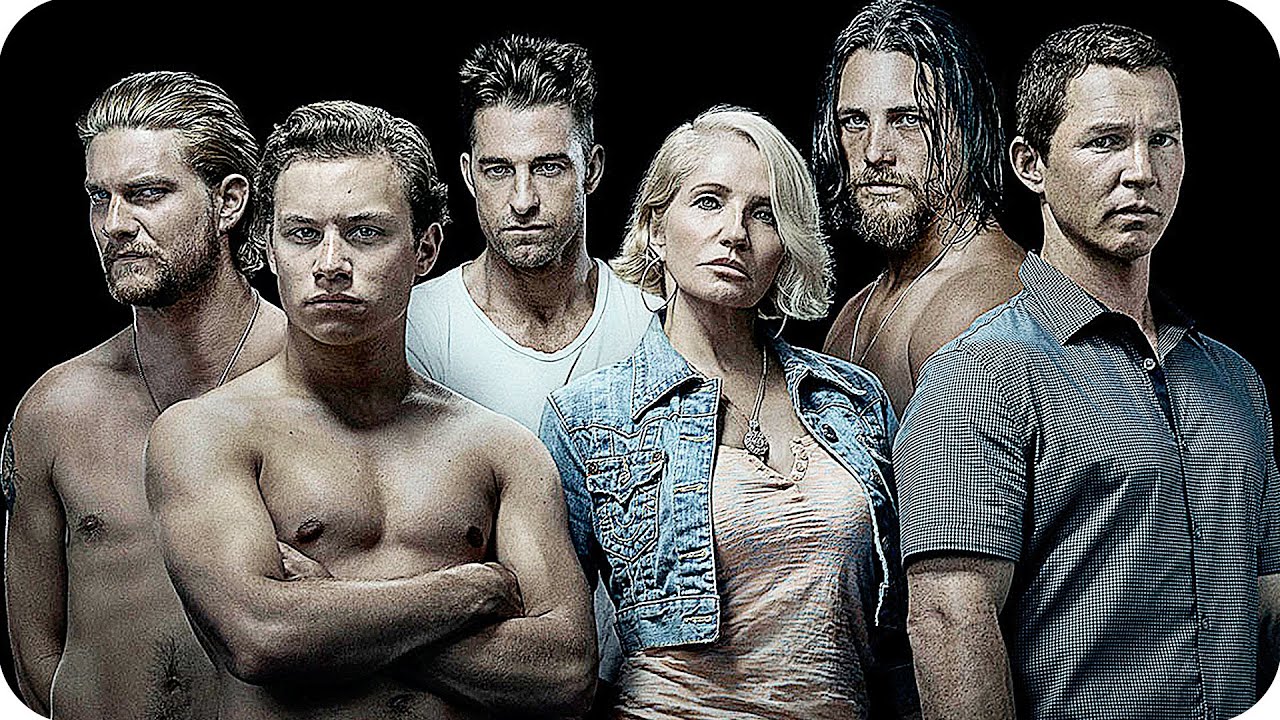
Ending Explained: Animal Kingdom
Ficha de Daños Colaterales en Sala
Certificado de impacto psicofísico emitido por Bastian Noir
Ni un solo parpadeo voluntario. El asiento, inusualmente cómodo.
Ni una sola mirada al móvil.
Ninguna: la adrenalina cinematográfica es suficiente.
"No aplica. La obra se sostiene sola."
💬 El Veredicto de la Comunidad
¿Qué te ha parecido la película? Deja tu nota de 0 a 10 para contrastarla con el análisis de la redacción.
Aún no has votado
📢 ¿Te ha gustado el ácido?
Comparte esta crítica con tus amigos cinéfilos o desata la polémica en redes.
⚡ THE CINEMATIC VENOM YOUR INBOX CRAVES
No sugarcoated ratings, no corporate fluff. Subscribe for our uncensored weekly analysis or join the private Telegram for press previews, poll clashes, and instant alerts.
Alertas de estrenos en 1 segundo, encuestas en caliente y audios al salir de pases de prensa.
Recibe la dosis semanal en tu mail + regalo inmediato del PDF con 50 joyas ocultas de culto.
Related Reviews
Recommended autopsies for demanding film buffs.
 🔥 Fusión Nuclear9.0
*Six Feet Under: When Family Drama Smells Like a Decadent Corpse*
⚡Afinidad temática directa en atmósfera, estilo y fijaciones visuales.
HBO served us a feast of family dysfunction, pitch-black sarcasm, and metaphorical corpses. Alan Ball dug a grave so deep we still haven’t climbed out.
 🔥 Fusión Nuclear8.5
*Crematorio: Ambition Without Limits – A Masterclass in Moral Rot (Or How to Binge-Watch Your Own Corruption)*
⚡Afinidad temática directa en atmósfera, estilo y fijaciones visuales.
A scathing, no-holds-barred evisceration of *Crematorio*—the Spanish series that didn’t just show you the sewers of power, but handed you a shovel and dared you to dig deeper.
 🔥 Fusión Nuclear8.5
**Goliath: Justice as a Power Play (Or How to Make a Legal Drama Without Tripping Over Your Own Pretensions)**
⚡Afinidad temática directa en atmósfera, estilo y fijaciones visuales.
A caustic takedown of *Goliath*, where justice isn’t blind—it’s just another rigged game in a courtroom circus.
Editorial Ecosystem
Cinephile connections, archive interviews and related analyses.
💬 Debate Cinéfilo & Autopsia de Lectores
0 veredictos¿Discrepas con nuestra nota? ¿Es una obra maestra o veneno puro? Deja tu veredicto abajo sin necesidad de registro.

Aún nadie ha dejado su veredicto para esta película.
Sé el primero en clavarle el colmillo rellenando el formulario de arriba.