Eastern Promises — A Dark Journey into the Heart of the Mafia – Cronenberg’s Scalpel Meets Russian Rot
A scathing takedown of David Cronenberg’s Eastern Promises—where the mafia gets the autopsy it deserves.

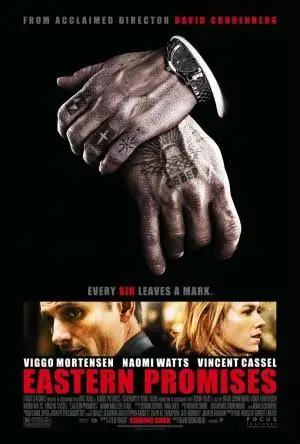


Eastern Promises (2007): David Cronenberg Dissects the Russian Mafia with a Silver Scalpel
The celluloid crackles to life with a wet snap, as if the film reel itself were bleeding black ink across the screen. David Cronenberg, that surgeon of festering dreams and bodily nightmares, drags us once again into his cinematic operating theater—but this time, it’s not the human body he’s dissecting with his silver scalpel, but the putrid soul of the Russian mafia in London. Eastern Promises (2007) isn’t just a movie; it’s a real-time autopsy of loyalty, identity, and betrayed flesh, served on a stainless-steel tray with a side of coagulated blood and cheap vodka. Cronenberg, that poet of elegant disgust, proves here that he can film a scene of violence with the same delicacy a jeweler uses to set a diamond in a ring of bone. And damn, does he pull it off. This isn’t one of those mob flicks with Armani suits and Godfather dialogue; here, the suits are stained with sweat, the conversations reek of stale tobacco, and kisses taste like rusted metal. Welcome to Cronenberg’s rawest, most political, and—paradoxically—most human work in recent memory. Yes, human, that species he’s equally fascinated and repulsed by, the Canadian sicko of contemporary cinema.
The genesis of Eastern Promises is almost as twisted as its plot. Steven Knight, the British screenwriter behind gems like Dirty Pretty Things (2002), originally penned this script under the title The Absolute Threshold, but the project gained momentum when Focus Features and Intermedia decided to produce it as part of their strategy to fund auteur-driven films with commercial appeal. Knight, a master at depicting the underbelly with near-anthropological realism, drew inspiration from real stories of human trafficking and Russian prostitution rings in London, a theme he’d already explored in Dirty Pretty Things but now takes to its most brutal extreme. The script circulated efficiently through the industry, and while British directors like Stephen Frears (who had just helmed Knight’s previous screenplay) were initially considered, scheduling and industry interests landed it on Cronenberg’s desk. Thank God it did—because who better than the man who made Videodrome (1983) and Crash (1996) to portray the symbiosis between flesh and power, between the body and corruption? The Canadian, fresh off A History of Violence (2005)—another gem about duality and violence as language—saw in Eastern Promises the perfect opportunity to continue his obsession with bodies as battlegrounds. And damn, did he deliver. This film is, in many ways, the dark twin of A History of Violence: both explore fractured identity, violence as inheritance, and the hypocrisy of institutions, but while the former did so from the heart of rural America, Eastern Promises plunges into the cosmopolitan underbelly of London, where tattoos aren’t decorations but maps of bloody allegiances.
The shoot, as expected from Cronenberg, was an exercise in total immersion. Obsessed with authenticity, the director supported Viggo Mortensen in his research, which included learning Russian and spending entire days getting his body covered in exact replicas of the symbols used by criminal mafia members (Vory v Zakone). Urban legend had it that Mortensen got real tattoos for the role—he didn’t. Instead, he spent four hours daily in the makeup chair, getting intricate designs painted on, including the infamous Bratva stars on his knees and collarbones. The actor, who had already worked with Cronenberg on A History of Violence, dove into the role with method-acting precision taken to its extreme. He traveled incognito through Russia, studied the underworld of Siberian prisons, learned to move like them, and mastered their accent. The result is a performance that reeks of sweat, fear, and vodka spilled on rotting wood. Mortensen doesn’t play Nikolai Luzhin, the mob chauffeur/enforcer—he becomes him, as if the character had been extracted from his guts with a corkscrew. And then there’s the Turkish bath scene, that sequence of violence shot like a luxury slaughterhouse, where Cronenberg proves he can film a knife fight with the same elegance a ballet choreographer uses for a pas de deux. The violence here isn’t gratuitous; it’s ritualistic, almost religious, as if every stab were a pagan sacrament. And Mortensen, naked and covered in blood, looks like a gladiator stripped of all dignity, a survivor whose only faith in that moment is to keep breathing.
But Eastern Promises wouldn’t be the masterpiece it is without the perfect counterbalance provided by Naomi Watts as Anna Khitrova, the midwife dragged into the Russian mafia’s hell after finding the diary of a young woman who died in childbirth. Watts, that actress capable of conveying vulnerability and strength in a single glance, crafts one of her most restrained yet explosive performances here. Anna isn’t a typical heroine; she’s a woman gnawed by guilt and curiosity, an unwilling witness to a world she doesn’t understand but is inexorably tied to. Her chemistry with Mortensen is electric, dangerous, like a live wire that could electrocute the audience at any moment. And then there’s Vincent Cassel, that French actor with wild magnetism and unpredictable eyes, playing Kirill, the mob boss’s son—a character as pathetic as he is fascinating, a spoiled child craving approval who struts through the film like he owns everyone’s souls. Cassel, who had already proven his intensity in La Haine (1995) and Irréversible (2002), takes his performance to a level of subtle immaturity and desperation, as if his character were a sad clown in a €1,000 suit with a leaden heart. His acting captures a twisted vulnerability, and under Cronenberg’s gaze, that fragility becomes a fierce critique of nepotism and corruption, both in the mafia and the shadowy family dynasties that operate behind closed doors.
Direction: Cronenberg as Surgeon of Flesh and Power
David Cronenberg doesn’t direct films—he operates on them. And in Eastern Promises, his cinematic scalpel doesn’t just cut flesh; it slices through the rotting seams of identity, loyalty, and power. From the first shot—a man’s slit throat bleeding out in a barbershop—followed later by the lifeless body of a young Russian woman on a hospital gurney, the director sets the tone: this is going to hurt, but watch closely, because pain is the only truth left. Cronenberg uses space as another character, turning London into a labyrinth of claustrophobic alleys, steamy Turkish baths, and Russian restaurants decorated with rancid opulence. The cinematography by Peter Suschitzky, a frequent Cronenberg collaborator, is a masterclass in realistic chiaroscuro, where light seems to filter through layers of London’s cold and rain, as if the very air were tainted by corruption. The palette is dominated by cold tones, somber golds, and shadows, creating an atmosphere that reeks of danger and dirty money, while the wide shots of London under winter skies evoke the mood of a Dostoevsky novel.
But where Cronenberg shines brightest is in his direction of actors, especially in the Turkish bath scene—that sequence filmed in what looks like the very gates of hell. The fight between Nikolai and two Chechen hitmen isn’t just a display of choreographed violence; it’s a ballet of flesh and steel, where every movement seems calculated to the millimeter, as if the linoleum and tiles were designed to make them slip. Cronenberg shoots the scene with precise cuts and dynamic yet clean editing, avoiding false long takes to force the audience to endure every stab, every splash of blood, every groan of pain, feeling the physical fragmentation of the attack. The camera moves with unflinching proximity, closing in on sweaty bodies, bleeding tattoos, and the combatants’ bulging eyes, as if it wants to burn every detail into our retinas forever. And then there’s the sound: the dull thud of metal hitting flesh, the choked gasps, the crunch of bodies hitting the floor. Cronenberg doesn’t let us look away; he forces us to be accomplices to the violence, to feel the weight of every slash as if it were our own skin being cut. This sequence isn’t just one of the film’s best—it’s one of the most brutal and realistic depictions of violence ever filmed, a reminder that cinema, in the right hands, can be as visceral as a gut punch and as sobering as the rawest realism.
The Performances: When Actors Become Carrion
If anything defines Eastern Promises, it’s its cast of actors willing to wallow in the moral and physical filth of their characters. Viggo Mortensen, in a role tailor-made for his magnetic coldness after their previous collaboration, delivers a performance that transcends method acting and borders on genius. Nikolai Luzhin isn’t a flat monster; he’s a walking enigma with a steel gaze, a man whose true loyalty remains hidden beneath his tattooed skin. Mortensen doesn’t just speak Russian with impeccable phonetics; he moves with the restraint of a soldier, watches in Russian, falls silent in Russian. His performance is a choreography of minimal gestures and lethal glances, where a simple nod can convey more than a dramatic monologue. And then there’s that scene—the Turkish bath—where Mortensen, naked and covered in blood, looks like a gladiator stripped of all dignity, a survivor whose only faith in that moment is to keep breathing. It’s impossible to look away, not out of morbid curiosity, but because his on-screen presence is hypnotic, magnetic, and utterly raw.
Opposite him, Naomi Watts crafts Anna Khitrova with a humanity that contrasts with the brutality surrounding her. Anna isn’t an action heroine; she’s an ordinary woman trapped in a nightmare she can’t wake up from, a bystander forced to look where no one else wants to. Watts, with her expressive face and silent determination, conveys a vulnerability that transforms into courage, reminding us of the real danger her family faces. Her chemistry with Mortensen is the film’s beating heart—a relationship built on mutual distrust yet an eerie need for protection that never crosses into conventional romance. It’s as if both know that trust, in this world, is a deadly luxury. And then there’s Vincent Cassel, who commands the screen every time he appears. Kirill, his character, is a broken man trapped in an expensive suit, a desperate son craving his father’s approval. Cassel, with his nervous energy and unstable gaze, turns Kirill into one of the most pathetic and fascinating figures in crime cinema, a weak link trying to fake a cruelty he can’t pull off. His performance edges on the pathetic, and in Cronenberg’s hands, that desperation becomes a scathing critique of criminal dynasties and the rot of family legacies.
The Technical Aspect: When Detail Becomes Obsession
What defines Eastern Promises is its obsessive attention to detail, a hallmark of Cronenberg’s best work, which here reaches peaks of excruciating verisimilitude. Let’s start with the costumes, designed by Denise Cronenberg (yes, the director’s sister), which don’t just dress the characters but tell their status through texture. The Russian mobsters’ suits aren’t gala costumes; they’re dark, heavy coats and leather jackets, symbols of their need to blend into London’s cold climate without losing their hierarchy. The long overcoats, dark collars, and shirts unbuttoned to reveal tattoos that narrate convictions—everything is calculated to convey a dangerous sobriety, as if the characters themselves know discretion is their best defense. And then there are the tattoos, those maps of loyalty and crimes covering Nikolai’s body like a second skin. Cronenberg and his team studied police catalogs and documentaries on Russian prisons to ensure every symbol, every line, every placement had real criminal meaning. The tattoos aren’t decoration; they’re a criminal autobiography written in flesh and ink, a reminder that in this world, skin is the only penal code they respect.
The cinematography by Peter Suschitzky is another standout. Suschitzky, a frequent Cronenberg collaborator, uses a cold, urban, and realistic color palette, far from exaggerated stylization, where grays, blues, and ochres dominate London’s streets. Light seems to filter through the British winter and fogged-up windows, creating an atmosphere of isolation and clandestinity. The interiors, especially those of the Trans-Siberian restaurant where the clan gathers, are lit with a deceptive golden warmth, with dense shadows partially obscuring the elders’ faces. And then there are the shots of London, filmed in real locations in the city’s east under leaden skies that visually extend the secrecy at the heart of the plot. Suschitzky isn’t after tourist postcards; he portrays the everyday life of residential and industrial neighborhoods, showing the contrasts of the metropolis with impeccable sobriety. But where his work truly shines is in the violent scenes, particularly the Turkish bath sequence. The camera hugs the floor and uses tight angles to capture the humidity, the thick steam, and the helplessness of nakedness against steel. The cold, white light of the tiles contrasts sharply with the blood’s red, creating a crushing physical rawness that turns the sequence into an unflinching portrait of survival.
The score by Howard Shore, another key Cronenberg collaborator, is a masterpiece of Slavic melancholy and restrained tension. Shore, who has a perfect symbiosis with the director, takes a beautiful approach here, centering on a solo violin combined with dense orchestral textures to evoke displacement and nostalgia for a lost homeland. The music doesn’t go for cheap scares; it underscores the characters’ internal tragedy, giving the film a lyrical, sorrowful aura. The main themes, especially the violin solo that opens the film, have a classical elegy feel, as if Shore were composing a lament for the innocent victims trapped in this criminal machinery. And then there are the silences—those moments when the music vanishes entirely during key assaults or discussions, leaving only ambient sound, the rustle of clothes, or held breath. Cronenberg understands that the absence of music can be far more terrifying, and in Eastern Promises, he uses it to ground the story’s hyperrealism.
The editing by Ronald Sanders, another Cronenberg veteran, is a lesson in classic storytelling and precise pacing. Sanders doesn’t go for flashy, music-video editing; he holds shots just long enough to build dramatic tension. The transitions are elegant and logical, making Anna’s investigation and Nikolai’s movements unfold in parallel with total clarity. But where his work is most meticulous is in the action and suspense sequences, like the ambush in the Turkish bath. Sanders times the shots of the attackers approaching and edits the fight with astonishing spatial clarity: we understand exactly where each knife, each blow, and each wound is, creating a massive emotional impact thanks to the physical precision of the cuts. In tense dialogue scenes, like the dinners at the family restaurant, Sanders uses shot/reverse shot masterfully to sustain the characters’ probing gazes, trapping the audience in the same paranoia and constant danger that envelops the protagonists.
The best
- Viggo Mortensen’s performance: A masterclass in restraint and body language. A magnetic Nikolai Luzhin, capable of conveying danger and mystery with a single blink. Mortensen immersed himself in the accent and culture with flawless dedication.
- David Cronenberg’s direction: A masterstroke of cinematic maturity, where he abandons his old biological effects for a dry, mature, and realistic crime thriller. His control over atmosphere and pacing is total.
- Tattoo authenticity: The incredible research to faithfully reproduce the criminal code of Russian prisons, turning the characters’ bodies into an authentic reflection of their criminal pasts.
- Howard Shore’s score: The use of a solo violin adds a deep Slavic melancholy that elevates the film, giving it a tragic, beautiful tone that contrasts with the sordidness of the mob’s actions.
- Denise Cronenberg’s costume design: Excellent realistic characterization that gives the characters urban authenticity, reflecting both the clan’s false respectability and their hidden nature.
- The Turkish bath scene: An iconic sequence in modern cinema, notable for its rawness and hyperrealism. The combination of naked vulnerability against the brutality of knives creates an unforgettable impact.
The worst
- Secondary characters: While Nikolai, Anna, and Kirill anchor the film brilliantly, other characters like Semyon (the patriarch, impeccably played by Armin Mueller-Stahl) or Anna’s family could have had more depth to flesh out the cultural clash.
🎬 Tráiler Oficial
Abrir en YouTube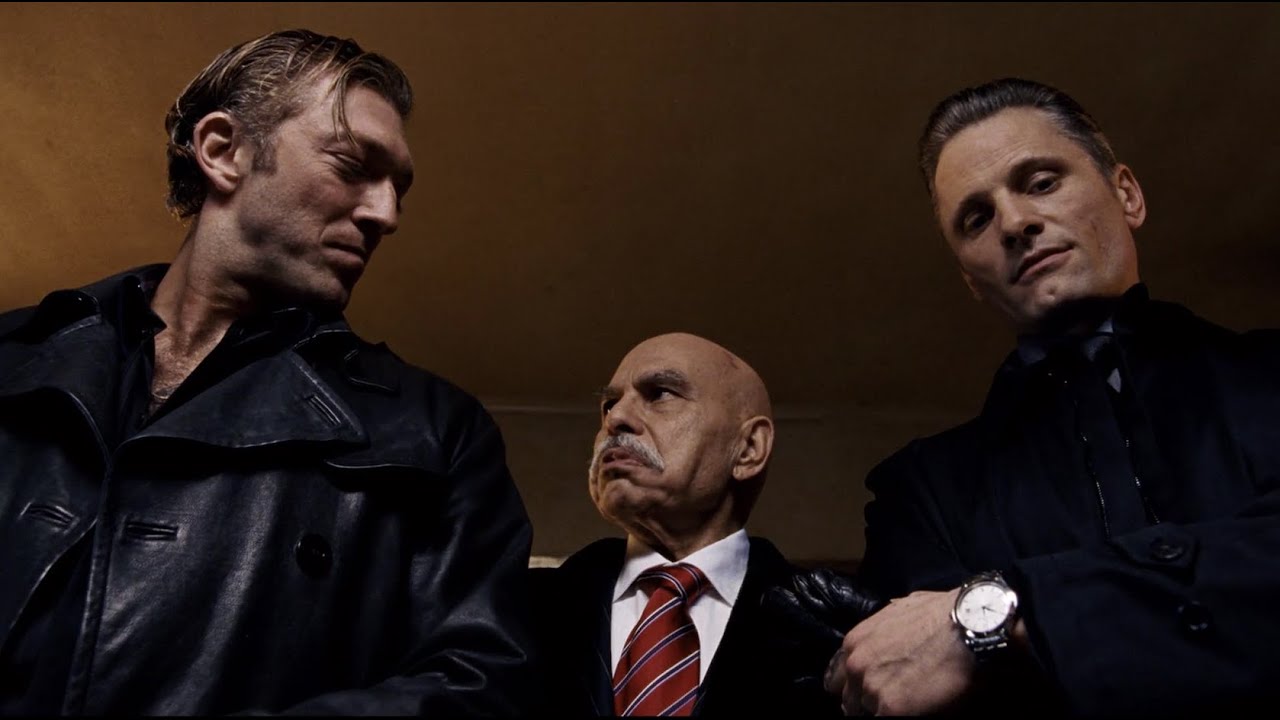
Ficha de Daños Colaterales en Sala
Certificado de impacto psicofísico emitido por Maximiliano Z.
Cero bostezos. Pupilas dilatadas y tensión mandibular constante.
Ninguna comprobación del tiempo. Se agradece la rareza.
Ninguna: la adrenalina cinematográfica es suficiente.
"No hubo. La coherencia se mantuvo hasta el último fotograma."
💬 El Veredicto de la Comunidad
¿Qué te ha parecido la película? Deja tu nota de 0 a 10 para contrastarla con el análisis de la redacción.
Aún no has votado
📢 ¿Te ha gustado el ácido?
Comparte esta crítica con tus amigos cinéfilos o desata la polémica en redes.
⚡ THE CINEMATIC VENOM YOUR INBOX CRAVES
No sugarcoated ratings, no corporate fluff. Subscribe for our uncensored weekly analysis or join the private Telegram for press previews, poll clashes, and instant alerts.
Alertas de estrenos en 1 segundo, encuestas en caliente y audios al salir de pases de prensa.
Recibe la dosis semanal en tu mail + regalo inmediato del PDF con 50 joyas ocultas de culto.
Related Reviews
Recommended autopsies for demanding film buffs.
 🔥 Fusión Nuclear8.1
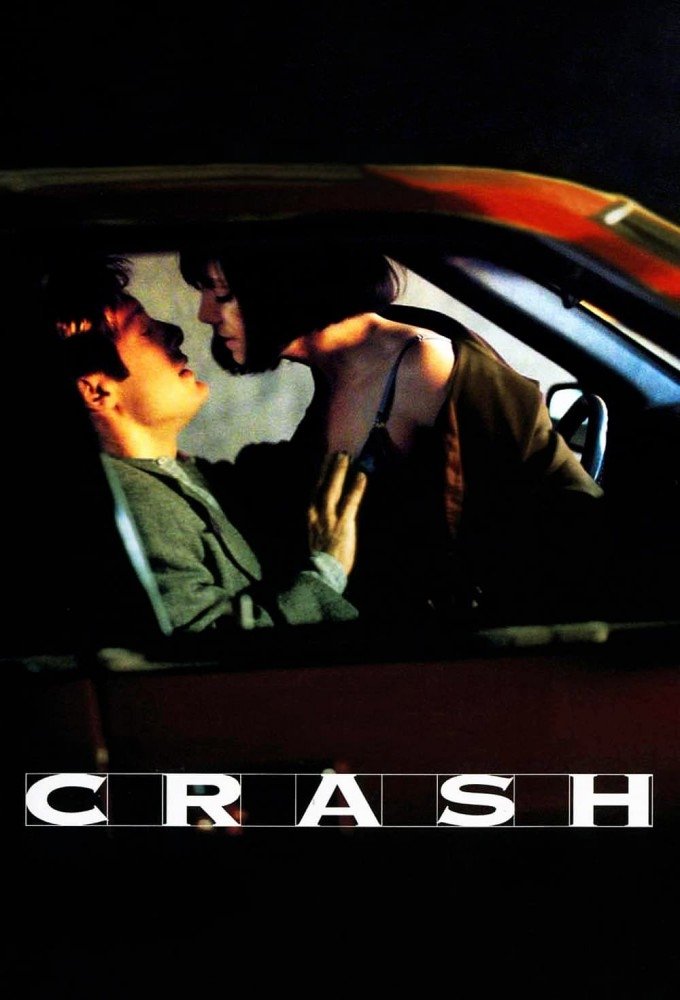
Crash: Cronenberg’s Carnal Collision That Left Us in a (Sexual) Coma
⚡Del mismo director (David Cronenberg): analiza la evolución o degradación de su estilo.
David Cronenberg turns a traffic accident into a carnival of flesh, metal, and perversion. Art or autopsy? Here’s the acidic verdict.
 🔥 Fusión Nuclear9.2
The Fly: Cronenberg and the Art of Turning Love into Pus
⚡Del mismo director (David Cronenberg): analiza la evolución o degradación de su estilo.
David Cronenberg delivers a masterpiece of body horror that transforms Jeff Goldblum into an insect with a human soul. Revolting, poetic, and profoundly heartbreaking.
 ⚡ Ácido Cítrico7.5
A Ghost Story: A Journey Through Time and Memory
⚡Afinidad temática directa en atmósfera, estilo y fijaciones visuales.
The Claqueta Ácida review of A Ghost Story, a film that explores existence and human connection.
Editorial Ecosystem
Cinephile connections, archive interviews and related analyses.
🎞️ In Claqueta Cinematheque2

💬 Debate Cinéfilo & Autopsia de Lectores
0 veredictos¿Discrepas con nuestra nota? ¿Es una obra maestra o veneno puro? Deja tu veredicto abajo sin necesidad de registro.


Aún nadie ha dejado su veredicto para esta película.
Sé el primero en clavarle el colmillo rellenando el formulario de arriba.