
Ghost in the Cell — The Invisible Architecture of Penitentiary Violence
Joko Anwar shifts his brand of terror to an Indonesian prison where the real threat isn't a ghost, but the system itself.

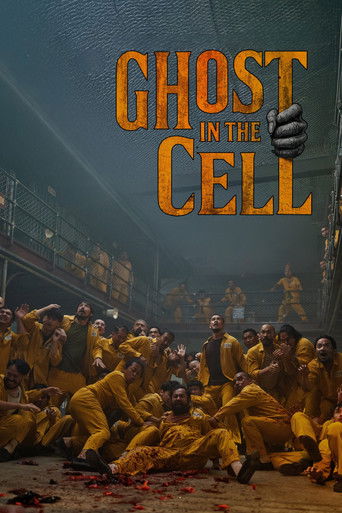
Ghost in the Cell: full review
Recent Southeast Asian filmography insists on reminding us that physical confinement is never a geographical accident, but the logical outcome of a state machinery perfectly lubricated for dehumanization. When Joko Anwar abandons the sweeping rural spaces of his previous works to confine his gaze within the Labuhan Angsana penitentiary, the shift is not merely aesthetic, but profoundly political. The decision to place the origin of the conflict in a newsroom that silences mining massacres in Borneo before dragging the protagonist into captivity functions as a brutal statement of intent. The cell does not isolate from the outside world; it concentrates it, purifies it, and returns it in the form of institutional violence that was already operating long before any supernatural entity decided to make an appearance. The Letterboxd viewer who rates the work with a lukewarm 3.48 was perhaps looking for cheap fairground scares, ignoring that the auteur has in mind a much gloomier diagnosis on the forced coexistence between criminals and corrupt wardens. It is a risky, almost suicidal bet for a cinema that often settles for cheap shocks, yet Anwar prefers sustained discomfort over timely jumpscares.
The opening drops us into the newsroom where journalist Dimas tries to publish an uncomfortable truth about mining exploitation, only to crash against the administrative sordidness of an editor-in-chief suffocated by debts. That prologue, seemingly disconnected from the subsequent prison bloodbath, establishes the true backbone of the premise. The reflection that refuses to obey in the office is not a mere fantastic gimmick; it is the realization that civil identity dissolves the exact moment capital decides to sacrifice human life. When Dimas crosses the prison gates after being sentenced for a crime he did not commit, the penitentiary space is not presented to us as a social anomaly, but as the natural destination for anyone who dares to challenge the de facto powers of Borneo. The dense atmosphere permeating every shot signed by Ical Tanjung turns the grey corridors into a territory where individual dignity is an expired luxury. Here, light does not illuminate, but rather exposes the cracks of a morality rotted to the core.

The geometry of captivity and invisible hierarchies

Joko Anwar's staging bypasses the cheap gimmickry of the prison subgenre to build a human map where rival gangs and corrupt guards share the exact same plane of moral degradation. Characters like Anggoro, played with unusual sobriety by Abimana Aryasatya, bear the weight of maintaining an archaic code of honor in a place where the rules are dictated by the systematic cruelty of the administration. The appearance of the grotesque entity with its face covered in black dots in the showers does not interrupt the daily order of the prison, but rather catalyzes it. Far from unleashing absolute chaos, the invisible threat forces traditional antagonists to negotiate their survival in the very same dark offices where routine beatings were once signed off. The direction articulates this process through static shots and oppressive angles that underscore the inmates' impotence against power structures infinitely more lethal than any ghost. Anwar uses the framing as yet another cage, trapping the characters in static compositions that suggest that, even if the monster moves, they are doomed to remain in place, watching their world crumble without being able to intervene. It is a choreography of paralysis that proves more disturbing than any frantic chase.
The performances as a counterweight to allegory
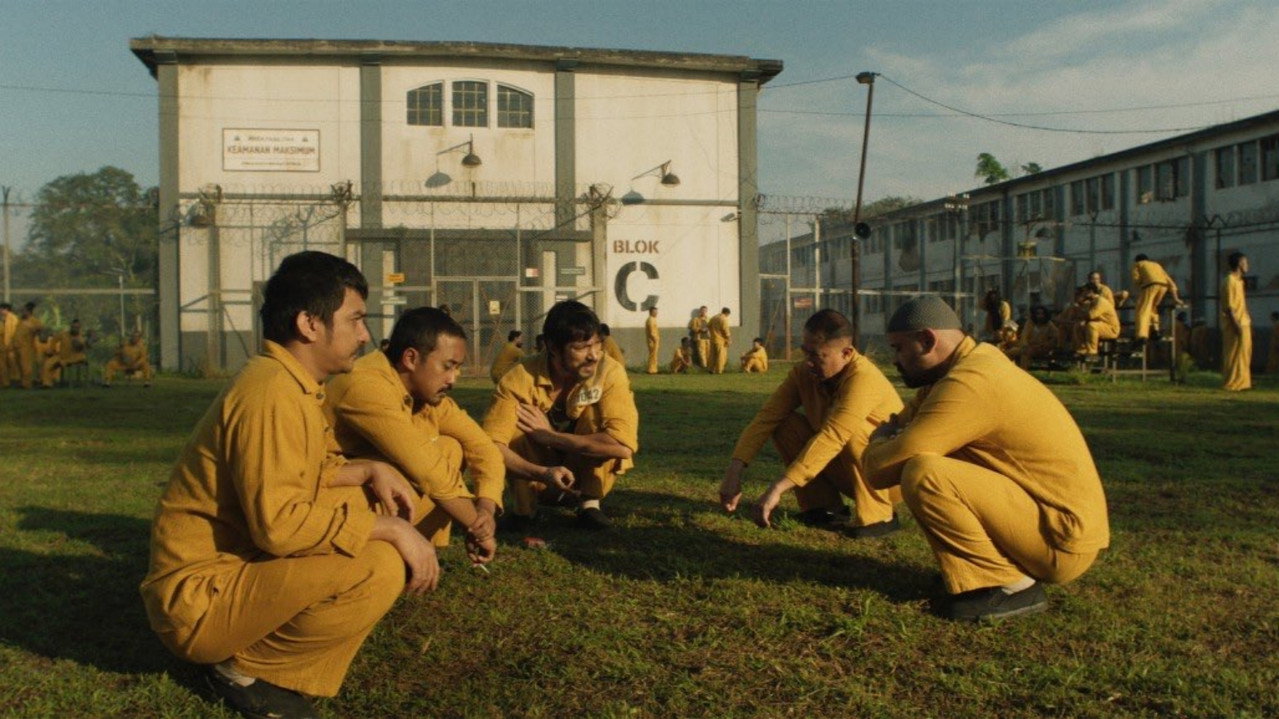
The ensemble cast avoids falling into the caricature of celluloid toughs thanks to performances that prioritize existential exhaustion over cheap bravado. Arswendy Bening Swara brings a Mephistophelian authority as Prakasa, embodying the warden who has normalized extortion as just another public service. His gaze does not shout; it whispers, and it is precisely that calm that makes his cruelty unbearable. Opposite him, Almanzo Konoralma and the rest of the inmates sketch a mosaic of religious resignation and secular despair where personal beliefs become the sole refuge against institutional exposure. Aghi Narottama's score accompanies this descent with metallic sound textures that grate on the eardrum without resorting to predictable orchestral thunder, ceding the spotlight to the tense silence of solitary cells. Sound is not mere accompaniment; it is another character: the constant electrical hum, the echo of footsteps on concrete, and the intermittent dripping of water create a soundtrack of pure anxiety that settles in the viewer's ear long after the theater lights go out. It is a sound design that doesn't seek to frighten, but to exhaust, mimicking the chronic fatigue of those who live locked away.
The best
- The sociological dissection: the way the script uses the supernatural pretext to expose the seams of systemic corruption in Indonesia, transforming terror into an uncomfortable mirror for local political reality.
- Ical Tanjung's cinematography: an exercise in light and shadow that transforms every corridor of Labuhan Angsana into a claustrophobic rat trap, where shadows do not conceal, but rather accentuate the squalor of the environment.
- Abimana Aryasatya's performance: he brings a tragic restraint that elevates the material above mere macabre entertainment, turning his character into the emotional anchor of a story that could easily have been lost in excess.
The worst
- Concessions to episodic gore: some deaths in the showers yield too soon to visual gimmickry, breaking the psychological tension achieved in the first act and reminding the viewer that, ultimately, this remains a genre product.
- Expository weight: certain stretches of the script rely excessively on verbalizing the external political conflict instead of letting the interior claustrophobia breathe, interrupting the oneiric flow with dialogue that sounds like a sociology textbook.
The Verdict of Claqueta Ácida
Joko Anwar signs an artifact that unsettles not due to its otherworldly underpinnings, but because of its relentless X-ray of the cell as a scale model of an irredeemable world. Whoever seeks a simple prison slasher will walk away disappointed; anyone who understands that true monstrosity always inhabits the flowchart of power will find here a reminder as sober as it is unappealable of our own servitude. This film invites not pleasure, but resistance, and that resistance is both its greatest virtue and its greatest flaw. It is cinema that leaves scars, not smiles. 💀
🎬 Tráiler Oficial
Abrir en YouTube
Ending Explained: Ghost in the Cell
Ghost in the Cell: frequently asked questions
- What is the rating of "Ghost in the Cell" on Claqueta Ácida?
- "Ghost in the Cell" scored 6.8/10 on Claqueta Ácida in the review by Odin Lagbert.
- Is "Ghost in the Cell" worth watching?
- With reservations. We gave it 6.8/10 (Citric Acid), our rating for uneven films with something worth saving.
- Who directed "Ghost in the Cell"?
- "Ghost in the Cell" was directed by Joko Anwar.
- How does "Ghost in the Cell" end?
- Spoilers in Ghost in the Cell ending explained .
Theater Collateral Damage Report
Psychophysical impact certificate issued by Odin Lagbert
Atención sostenida gracias al ritmo constante, aunque la tesis sociológica asome más rápido que el sobresalto.
El minutero pasa desapercibido mientras el espectador intenta averiguar si el monstruo es real o un simple funcionario con placa.
How much second-hand embarrassment the film causes (10 = maximum). It is not the review score.
Un espresso bien cargado para no perder detalle de las jerarquías que oprimen a Anggoro entre rejas.
"Cuando la criatura sin ojos aparece por primera vez en las duchas, arriesgando la atmósfera opresiva por el sustento puramente gráfico."
Another critic from the newsroom scores the same film. The main score is still the one at the top of the review.

The rebuttal from Lúa Ácida (Queen of the Box Office)
In stark disagreement with the review given by Odin Lagbert.
4.3/10 Me quedé con la epidermis raspada por la luz mortecina del set; la cámara se arrastra como una serpiente sin veneno, sin mordida. El ritmo se vuelve una autopsia de planos estáticos, cada corte una mutilación lírica que no avanza, solo observa. La atmósfera huele a feromona de desesperación, pero el guion no la destila, la diluye en monólogos que se arrastran como mucosidad. La puesta en escena de la prisión de hormigón es un grotesco sagrado sin altar, un escenario vacío que no genera pulsión de muerte, solo un eco sordo. La intención política se queda en la sombra, sin cuerpo, sin sangre que corra por la pantalla. El sonido golpea, pero la narrativa se deshace en un susurro que no deja huella. No es un choque, es una anestesia prolongada.
📋 Ficha Técnica
| Año | 2026 |
| Duración | 106 min |
| País | Indonesia, South Korea |
| Guión | Joko Anwar |
| Fotografía | Ical Tanjung |
| Productora | Come and See Pictures, Rapi Films, Barunson E&A, Legacy Pictures |
| Dónde ver | |
| Letterboxd | Ver Ficha ↗ |
⭐ Estrella Emergente
Abimana Aryasatya
He brings austere restraint as Anggoro, endowing a trapped inmate with tragic dignity caught in gears far larger than himself.
💬 Community Verdict
What did you think of the film? Rate it from 0 to 10 to compare it with the editorial review.
You haven't voted yet
📢 ¿Te ha gustado el ácido?
Comparte esta crítica con tus amigos cinéfilos o desata la polémica en redes.
⚡ THE CINEMATIC VENOM YOUR INBOX CRAVES
Every Sunday: the week’s reviews, a recommended antidote and the editors’ verdict (in Spanish). No sugarcoated ratings, no corporate fluff. Or join the private Telegram for press previews, poll clashes, and instant alerts.
Alertas de estrenos en 1 segundo, encuestas en caliente y audios al salir de pases de prensa.
Get the weekly dose in your email, every Sunday.
By subscribing you agree that we use your email only to send you the newsletter. Unsubscribe at any time. Privacy policy
Related Reviews
Recommended autopsies for demanding film buffs.
 ⚡ Ácido Cítrico 7.5
A Ghost Story: A Journey Through Time and Memory
⚡ Hermana de saga: otro capítulo diseccionado con rigor forense.
The Claqueta Ácida review of A Ghost Story, a film that explores existence and human connection.
 ⚡ Ácido Cítrico 7.1
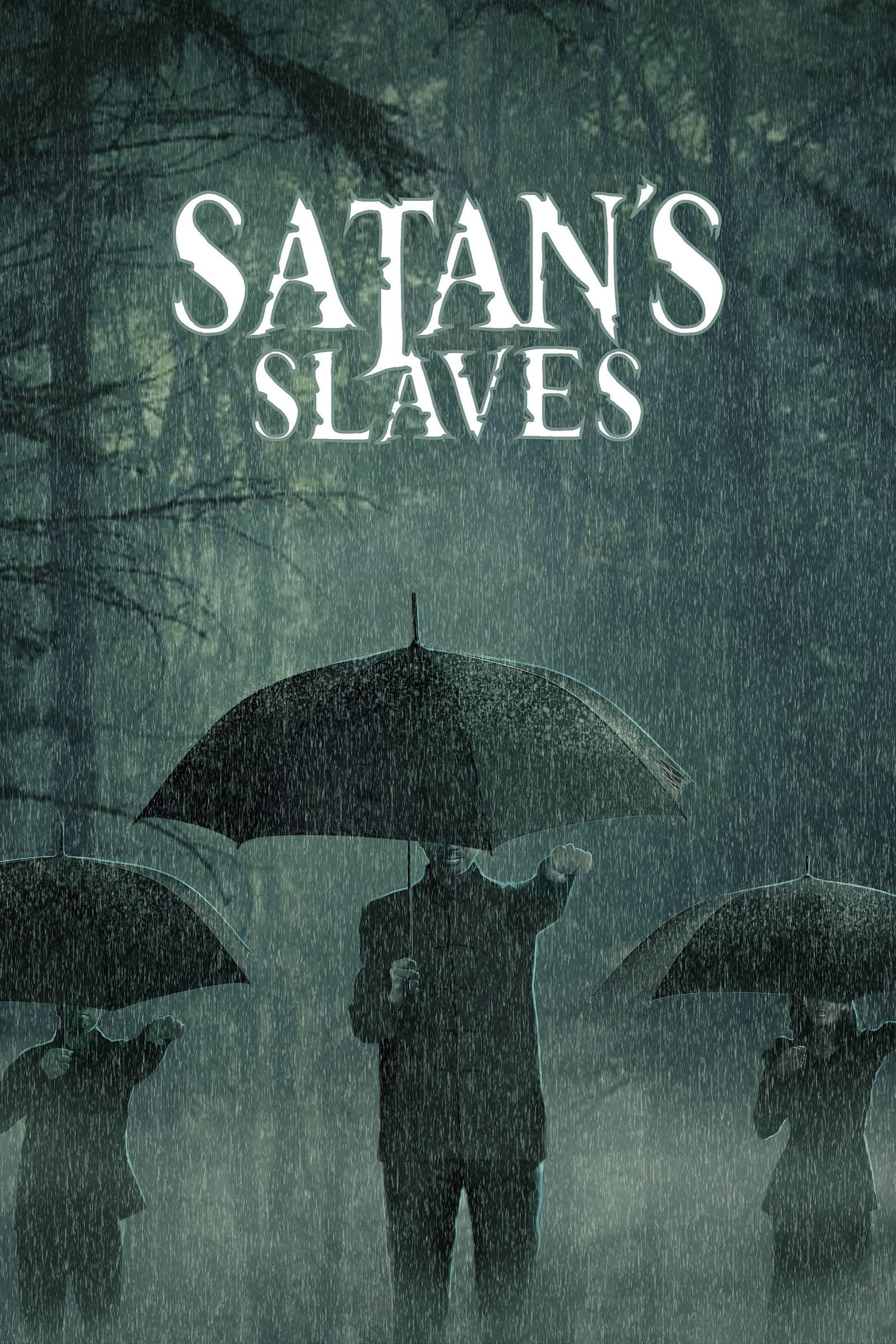
Satan’s Slaves: The Mud-Wrestling Match from Hell
⚡ Del mismo director (Joko Anwar): analiza la evolución o degradación de su estilo.
The Indonesian horror flick that’ll leave you gasping for air—or praying for a quick death
 ⚠️ Ácido Sulfúrico 3.2
On the Run: A Senseless Sprint
⚡ Afinidad temática directa en atmósfera, estilo y fijaciones visuales.
A marathon of clichés and marketing sweat that leaves the audience feeling like they've run in circles. 💀
Editorial Ecosystem
Cinephile connections, archive interviews and related analyses.
🎞️ In Claqueta Cinematheque 1
💬 Debate Cinéfilo & Autopsia de Lectores
¿Discrepas con nuestra nota? ¿Es una obra maestra o veneno puro? Deja tu veredicto abajo sin necesidad de registro.
📏 Normas: se critica la película, no a las personas. Los insultos y los ataques personales se pueden borrar.