

Jitters — The Involuntary Autopsy of a Cinematic Crime Without an Alibi
Jitters exposes the seams of British independent cinema with a lack of resources that becomes its sole aesthetic truth.


Jitters: full review
There is something profoundly revealing about cinema that cannot hide its own seams. When a production crashes against the wall of its own budget, the result is usually an involuntary comedy or an exercise in navel-gazing endurance born of sheer desperation. Marc Zammit signs off on a piece that oscillates dangerously between both shores, forcing the viewer to contemplate the wreckage of an advertised shipwreck with a mixture of perplexity and marginal respect. We are not dealing with a polished artifact meant for the big screen, but rather with a document that oozes urgency and limitations from every single empty frame, reminding us that good intentions never pay the lighting bills.
British independent cinema has spent decades stubbornly attempting to emulate the dry pulse of the polar without possessing the fuel required to keep the engine running. Here, one can palpably sense that exact same overinflated ambition crashing headfirst against the reality of a production helmed by Aptitude Films. The director attempts to inject rhythm using prolonged silences and sidelong glances, yet the staging constantly stumbles over its own inability to generate a dense atmosphere. Scarcity ceases to be a stylistic device and instead becomes a persistent reminder of what the film desperately wants to be and never quite manages to attain in the purely physical realm, leaving completely exposed the papier-mâché scaffolding of a plot that was screaming out for much more meat on the bones.
Far from the grand clockwork mechanisms to which contemporary thrillers have accustomed us, this feature film prefers formal muteness over disguising its absolute lack of narrative ambition. The proposal rests upon a fragile framework where every staging decision seems to have been made with the handbrake firmly engaged. There is no pursuit of gratuitous stylization here, but rather a tacit renunciation of artifice that, paradoxically, saves the film from descending into absolute irrelevance. The spatial emptiness ends up dictating the law of a narrative that lurches forward, sustained solely by the inertia of its own dark alleyways and by the sheer stubbornness of a technical crew doing what they can with what little they have.
El resultado final es un recorrido por los lugares comunes del cine negro de sobremesa, despojado de cualquier atisbo de brillantez pero impregnado de una melancolía involuntaria. Las conversaciones entre los personajes discurren con una parsimonia desesperante, como si el propio tiempo cinematográfico se hubiera negado a avanzar por culpa de una maldición presupuestaria. Es en ese desierto creativo donde la película se desangra lentamente, perdiendo la poca fuerza acumulada en sus primeros compases y entregándose a un bucle de repeticiones formales que agotan la paciencia del espectador más benévolo.
The final result is a journey through the tired clichés of midday television neo-noir, stripped of any glimmer of brilliance yet thoroughly soaked in an involuntary melancholy. The conversations between the characters unfold with a despairing parsimony, as if cinematic time itself had refused to advance due to a budgetary curse. It is within that creative desert that the film slowly bleeds out, losing what little momentum it gathered in its opening stages and surrendering to a loop of formal repetitions that exhausts the patience of even the most benevolent viewer.

Direction and Staging
Marc Zammit's work behind the camera utterly lacks the punch required to jolt the audience from their lethargy. Every single unbroken long take lingers far longer than prudence dictates, not out of any pursuit of sustained tension, but due to the blatant necessity of stretching out the runtime in the face of a severe shortage of solid material. The camera wanders through spaces looking for a point of interest that rarely materializes, trapped in rooms where the echo of voices sounds more like a theatrical table read than genre cinema. That formal rigidity destroys any semblance of naturalism, turning each scene into an exercise in wasted geometry that marginalizes the actors' talent and stifles any hint of visual dynamism during the editing process.
The blocking and planning of the sequences denote a troubling lack of resources when it comes to resolving complex dramatic situations, invariably opting for the most conservative static shot or uninspired tracking shots that contribute precisely nothing to the dramatic progression. Spatial rigidity takes over every corner, proving that the filmmaker is completely out of his depth when it comes to handling pacing and managing cinematic space. There is no visual texture to rescue the whole affair; the color palette oscillates between depressing gray and opaque brown, transforming the viewing experience into an ocular endurance test from which very few emerge completely unscathed.
Performances and Characters

At the head of the cast, Fabrizio Santino in the skin of Detective Collymore shoulders the heavy burden of keeping a straight face with an unfaltering seriousness bordering on stoicism. His counterpart, Daniel Jordan giving life to Jitters, strolls across the screen with the sheer bewilderment of someone who knows full well that the script penned by George Willcox is never going to offer him a single logical way out. The interactions between the two teeter precariously between dramatic stiffness and forced improvisation, leaving moments where the supporting actors seem to be waiting just out of frame for someone to feed them their next line—an exercise in astonishing acting apathy that utterly sinks the meager virtues of the original text.
The supporting players wander around like lost souls across desolate, uninspired sets, reciting their lines with the exact same level of conviction as a bank teller filling out paperwork on a Friday afternoon. It is a cast trapped in a creative dead end, where character motivations shift purely at the whim of the script's convenience rather than through any coherent psychological evolution. The widespread disinterest of the ensemble infects the audience, turning the police procedural into a succession of pained facial expressions and hollow dialogue that triggers more than a few knowing smirks in the darkness of the theater.
Technical and Sound Department
The film's sound design deserves a special mention for its absolute refusal to pad out the silences with gimmicky sonic crutches. Instead of saturating the audio track with screeching melodies meant to artificially force tension, the proposal opts to let ambient noises and the echo of footsteps shoulder the weight of the police investigation. Silence thus becomes the sole real ally of a cinematography helmed by Luke Bryant, who can barely play with lighting contrasts due to unavoidable material constraints, ultimately opting for flat, functional lighting that blatantly betrays the scarcity of lighting instruments available on the set.
The production design, meanwhile, is reduced to a couple of hastily rented locations decorated with the bare minimum props available in the production company's storage room. There is not a trace of personality in the sets, nor a single detail that builds a world beyond what is strictly necessary to keep the camera from pointing at a blank wall. This visual poverty extends directly to the editing, which suffers from a galloping anemia incapable of trimming dead air, treating us to transitions so abrupt they look like lazy jump cuts executed on a rainy post-production afternoon.
The best
- Formal honesty: It renounces any kind of unnecessary digital pyrotechnics to bare its own budgetary limitations with total, unvarnished crudeness.
- Fabrizio Santino's commitment: He maintains his composure and acting dignity right in the middle of a glaring narrative shipwreck.
- The dry atmosphere: The bold decision to dispense with screeching incidental music allows the spaces to breathe on their own terms.
The worst
- The narrative pulse: Marc Zammit constantly confuses slow pacing with sheer, unadulterated inaction.
- George Willcox's script: A predictable police plot that falls apart the absolute second the characters open their mouths.
- Spatial rigidity: Direction of actors that utterly squanders the available urban locations.
The Verdict of Claqueta Ácida
Jitters is precisely what happens when independent cinema looks into the mirror and discovers nobody is staring back from the other side. We are not facing a monumental disaster that begs for public mockery, but rather an exercise in artistic survival as limited as it is endearing in its failure. An involuntary autopsy proving that a lack of means can strip a work down until it is left as nothing more than pure bone. The absence of false tinsel is deeply appreciated, yet the final result leaves behind a feeling of emptiness as cold as a dead-end alleyway in the dead of night. 💀
🎬 Tráiler Oficial
Abrir en YouTube
Jitters: frequently asked questions
- What is the rating of "Jitters" on Claqueta Ácida?
- "Jitters" scored 5.4/10 on Claqueta Ácida in the review by Camilo K.O..
- Is "Jitters" worth watching?
- With reservations. We gave it 5.4/10 (Citric Acid), our rating for uneven films with something worth saving.
- Who directed "Jitters"?
- "Jitters" was directed by Marc Zammit.
Theater Collateral Damage Report
Psychophysical impact certificate issued by Camilo K.O.
Un parpadeo constante que oscila entre la intriga formal y la pura resignación ante la pantalla.
Te obliga a mirar el segundero con la esperanza de que el metraje decida acelerar de una vez por todas.
Doble expreso cargado de mala leche para no caer rendido ante el misterio de bolsillo.
"Ese instante exacto en el que el guion de George Willcox intenta explicar lo inexplicable y el artificio se derrumba."
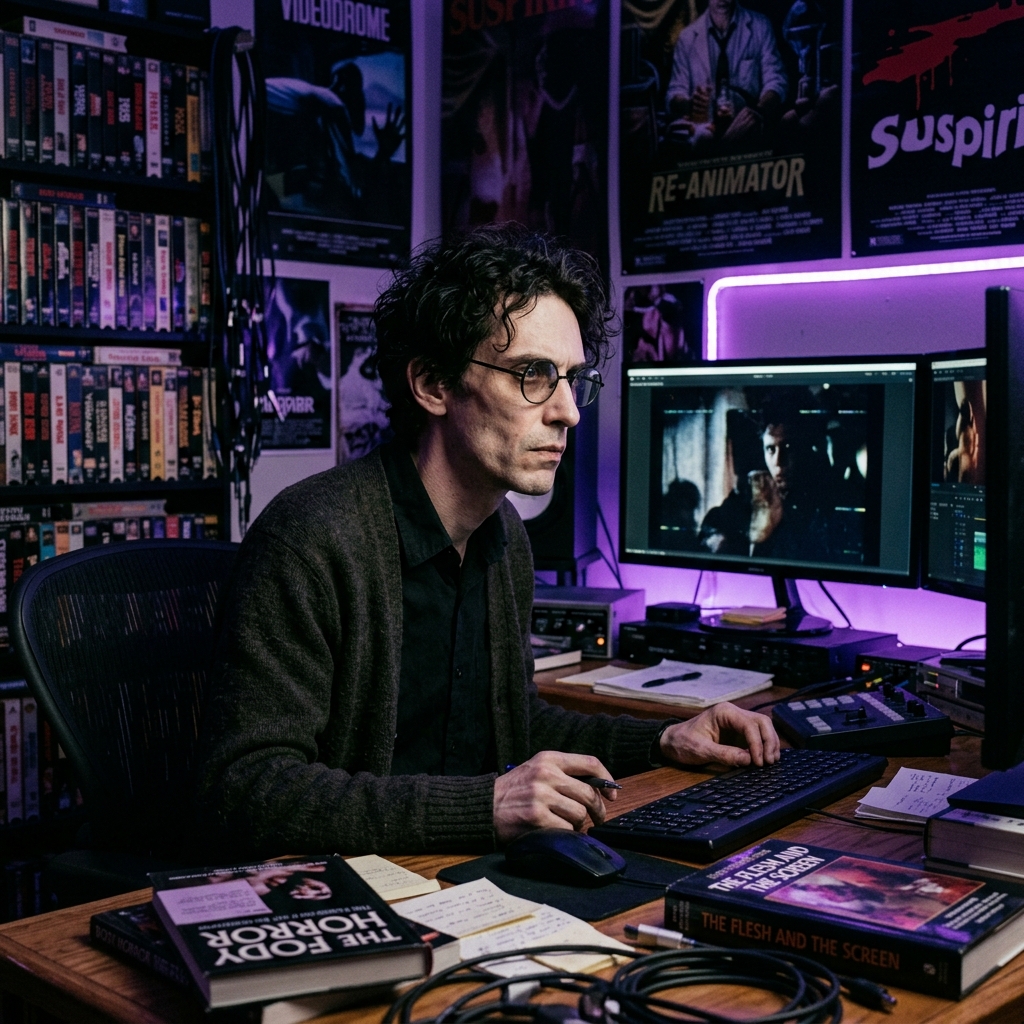
The rebuttal from Bastian Noir (Anatomist of the Visceral)
In stark disagreement with the review given by Camilo K.O..
“Camilo K.O. comete un error de diagnóstico elemental. Confunde la indigencia presupuestaria con un fallo orgánico, cuando en realidad estamos ante un estado de **necropsia** voluntaria. Al despojar a la puesta en escena de cualquier prótesis industrial, Marc Zammit expone la osamenta pura del relato. Esos supuestos baches rítmicos y vacíos lumínicos funcionan como una **incisión** precisa que deja al descubierto el tejido purulento de la desesperación urbana; no hay cartón piedra, sino la **degradación celular** del género negro británico reducido a su mínima expresión visceral. Mi **patología** difiere de la suya: valoro la obra no por su pulido superficial, sino por su capacidad de latir con espasmos genuinos a pesar del *rigor mortis* financiero. Una hemorragia estética de 7.9 sobre 10 que demuestra que la carne fílmica más honesta es aquella que se deja desgarrar hasta el hueso.
💬 Community Verdict
What did you think of the film? Rate it from 0 to 10 to compare it with the editorial review.
You haven't voted yet
📢 ¿Te ha gustado el ácido?
Comparte esta crítica con tus amigos cinéfilos o desata la polémica en redes.
⚡ THE CINEMATIC VENOM YOUR INBOX CRAVES
No sugarcoated ratings, no corporate fluff. Subscribe for our uncensored weekly analysis or join the private Telegram for press previews, poll clashes, and instant alerts.
Alertas de estrenos en 1 segundo, encuestas en caliente y audios al salir de pases de prensa.
Recibe la dosis semanal en tu mail + regalo inmediato del PDF con 50 joyas ocultas de culto.
Related Reviews
Recommended autopsies for demanding film buffs.
 ⚠️ Ácido Sulfúrico 3.2
On the Run: A Senseless Sprint
⚡ Afinidad temática directa en atmósfera, estilo y fijaciones visuales.
A marathon of clichés and marketing sweat that leaves the audience feeling like they've run in circles. 💀
 ⚡ Ácido Cítrico 6.8
Azrael: Samara Weaving and the Hell of Silence
⚡ Afinidad temática directa en atmósfera, estilo y fijaciones visuales.
E.L. Katz and Simon Barrett deliver a brutal, relentless mute survival horror film where Samara Weaving once again proves why she is the modern scream queen.
 ⚡ Ácido Cítrico 6.9
Beetlejuice Beetlejuice: Tim Burton Shits the Bed Again—With Style
⚡ Afinidad temática directa en atmósfera, estilo y fijaciones visuales.
Tim Burton resurrects his most iconic creature, but the script is a Frankenstein’s monster of stale jokes and half-digested nostalgia. Keaton still rules, but this reeks of easy money.
Editorial Ecosystem
Cinephile connections, archive interviews and related analyses.
💬 Debate Cinéfilo & Autopsia de Lectores
0 veredictos¿Discrepas con nuestra nota? ¿Es una obra maestra o veneno puro? Deja tu veredicto abajo sin necesidad de registro.



Aún nadie ha dejado su veredicto para esta película.
Sé el primero en clavarle el colmillo rellenando el formulario de arriba.