Kamen Rider — The Legacy of the Cheap Mask
A marathon of toxic nostalgia where scant imagination disguises itself as a superhero with an insect helmet.


Kamen Rider: full review
As an Amazon Associate, Claqueta Ácida earns from qualifying purchases.
Kamen Rider has been one of the most influential franchises in Japanese pop culture for more than fifty years. The first 1971 episode — produced by Toei Company for TV Asahi on a budget the production team itself must have found embarrassing — established a visual language that tokusatsu still uses today. That this language is deficient is beyond dispute. That it is foundational is too.
Hiroshi Fujioka plays Takeshi Hongo with a seriousness that clashes completely with the absurdity of the costume. The latex suit with its insect helmet wobbles in every action shot like a paper puppet; the joints don’t obey basic physics, and every one of the Rider’s jumps ends with a duct-tape sound that echoes through the room. Its creator, manga artist Shōtarō Ishinomori, leaned on the henshin formula to sell cheap heroism to a young audience that, in 1971, demanded no more coherence than Ultraman offered.

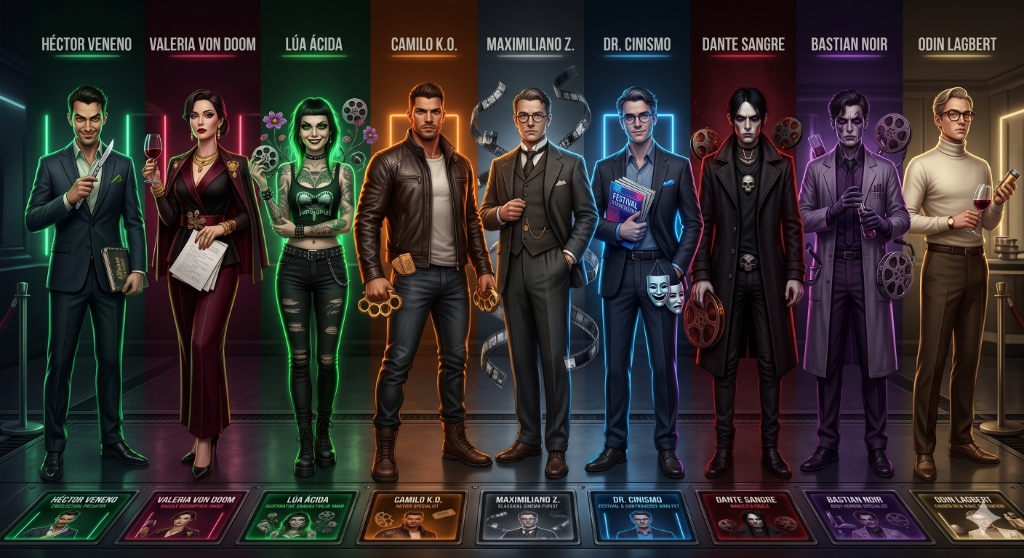
Odin, always so fond of context when it suits him, dares to praise the series as “a pioneering work of the genre.” Lúa, for her part, celebrates any puddle of blood on screen. I, however, see Kamen Rider as a monument to the ego of the producer who, with the help of broadcast television, decided the audience needed a hero with an insect mask and a rusty bike.
Direction and mise-en-scène
The direction of these early episodes relies on a string of static shots that seem lifted from a 1960s camera manual. The famous “tape cuts” used to simulate the Rider’s transformation are the clearest sign of the team’s lack of imagination. It isn’t an aesthetic choice; it’s an emergency fix turned into convention for lack of alternatives.

The fights against Shocker’s monsters are shot with a shaky camera that looks as if it were mounted on an actual bicycle. The editing is so clumsy that the pacing becomes a 24-minute drag of monotonous repetition, with cuts that break any build-up of tension just as the viewer starts to get invested. The production design is a parade of cardboard sets and duct-tape effects that, seen from 2026, are comical in a way that was probably not intended.
The villain’s vehicles show up with blinking lights that recall a cheap Christmas tree. The soundtrack is limited to a synthesizer trying to imitate the sound of an engine, but it ends up as an irritating buzz. The sound of the blows is amplified to excess, creating an echo that makes every punch sound like a firework going off at a neighborhood party.
Performances and script
Hiroshi Fujioka carries the lead with a seriousness that contrasts with the ridiculousness of the costume. His cry of “Henshin!” — the word that defines the whole franchise — sounds like a megaphone at a village wedding, but it has conviction. In the moments when the script allows him more than shouting and running, the real performer shows up.

Akiji Kobayashi, as the mentor Tobei Tachibana, repeats words of encouragement that sound like ’70s motivational clichés. The scripts, mostly written by Masaru Igami, are made of dialogue that seems to have been written directly on set: “Don’t worry, the power of the insect will save you!”. The lack of character development turns every episode into a succession of fights with no real narrative consequences.
The problem isn’t just the scarcity of means. It’s that the series doesn’t even try to hide it. Where Ultraman built a coherent internal mythology episode by episode, Kamen Rider in its early seasons settles for repeating the formula: threat, transformation, punch, victory. No variation. No surprise. Not the slightest interest in what happens between transformations.
The best
- Hiroshi Fujioka: His charismatic presence lifts the cheap material to something tolerable. He is the only element of the series that ages with some dignity.
- Iconography: The insect mask has become a pop symbol that completely transcends the series that spawned it.
- Historical value: For anyone interested in the origins of tokusatsu, the series documents the invention of a visual language that is still alive fifty years later.
The worst
- A ridiculous budget, not even disguised: The duct tape and cheap latex suits aren’t handcrafted charm; they’re desperation.
- Textbook direction: The lack of an identifiable vision produces static shots that kill any potential dynamism.
- A non-existent script: Textbook dialogue and a total absence of a narrative arc sustained across the season.
- Sound: Irritating synthesizers and blows amplified to the point of absurdity that destroy immersion.
The Claqueta Ácida Verdict 💀
Kamen Rider (1971) is a monument to the ego of the producer who, with the help of Japanese broadcast television, decided the audience needed a hero with an insect mask and a rusty bike. The mask shines more for its nostalgia than for any intrinsic artistic merit. A marathon of pretension wrapped in cheap plastic that only deserves a second look if you’re searching for the starting point of something that later became much better. 💀

🎬 Tráiler Oficial
Abrir en YouTube
Kamen Rider: frequently asked questions
- What is the rating of "Kamen Rider" on Claqueta Ácida?
- "Kamen Rider" scored 3.2/10 on Claqueta Ácida in the review by Dr. Cinismo.
- Is "Kamen Rider" worth watching?
- No. We gave it 3.2/10 (Sulfuric Acid), our rating for films we don't recommend.
Theater Collateral Damage Report
Psychophysical impact certificate issued by Dr. Cinismo
4
La barra de progreso del episodio se convirtió en el verdadero suspense.
How much second-hand embarrassment the film causes (10 = maximum). It is not the review score.
Un espresso antes de cada episodio. La serie no exige más, pero tampoco merece menos.
"Las peleas contra los monstruos de Shocker, filmadas con una cámara que parece montada en una bicicleta"
Another critic from the newsroom scores the same film. The main score is still the one at the top of the review.

The rebuttal from Odin Lagbert (Senior Cynicism Academic)
In stark disagreement with the review given by Dr. Cinismo.
Obra fundacional del tokusatsu moderno y, como tal, merece ser juzgada en contexto histórico. El traje de látex y los cortes de cinta adhesiva son la pobreza de una industria que inventó un lenguaje visual. Cometemos el error habitual de juzgar el origen desde la perspectiva del resultado.
💬 Community Verdict
What did you think of the film? Rate it from 0 to 10 to compare it with the editorial review.
You haven't voted yet
📢 ¿Te ha gustado el ácido?
Comparte esta crítica con tus amigos cinéfilos o desata la polémica en redes.
⚡ THE CINEMATIC VENOM YOUR INBOX CRAVES
No sugarcoated ratings, no corporate fluff. Subscribe for our uncensored weekly analysis or join the private Telegram for press previews, poll clashes, and instant alerts.
Alertas de estrenos en 1 segundo, encuestas en caliente y audios al salir de pases de prensa.
Recibe la dosis semanal en tu mail + regalo inmediato del PDF con 50 joyas ocultas de culto.
By subscribing you agree that we use your email only to send you the newsletter. Unsubscribe at any time. Privacy policy
Related Reviews
Recommended autopsies for demanding film buffs.
 ⚠️ Ácido Sulfúrico 3.2
On the Run: A Senseless Sprint
⚡ Afinidad temática directa en atmósfera, estilo y fijaciones visuales.
A marathon of clichés and marketing sweat that leaves the audience feeling like they've run in circles. 💀
 ⚠️ Ácido Sulfúrico 3.2
Head to Head: Marfil – Acid Review
⚡ Afinidad temática directa en atmósfera, estilo y fijaciones visuales.
A review that unearths the industrial garbage of 'Head to Head: Marfil', the Pokeepsie Films scam that leaves you with a red account and a headache.
 ⚠️ Ácido Sulfúrico 4.1
War of the Worlds (2025): Ice Cube vs. the Martians, or How to Waste 90 Minutes of Your Existence
⚡ Afinidad temática directa en atmósfera, estilo y fijaciones visuales.
Universal Pictures gifts us an alien invasion thriller so predictable even the extraterrestrials are yawning. Ice Cube and Eva Longoria try to salvage something, but the script is flatter than a roadmap.
Editorial Ecosystem
Cinephile connections, archive interviews and related analyses.
💬 Debate Cinéfilo & Autopsia de Lectores
¿Discrepas con nuestra nota? ¿Es una obra maestra o veneno puro? Deja tu veredicto abajo sin necesidad de registro.
📏 Normas: se critica la película, no a las personas. Los insultos y los ataques personales se pueden borrar.