My Other Self
A scathing critique of María José Araújo's sparse work, where the mirror shatters in six minutes of pretension and talent.
My Other Self: full review
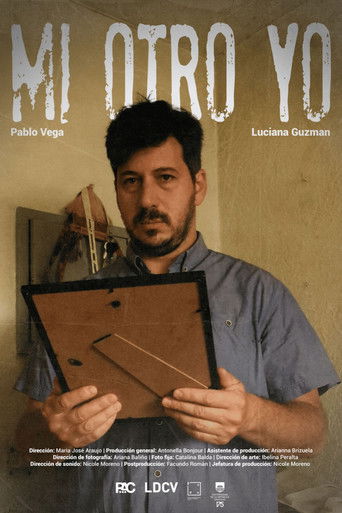
The air conditioning in the small hall of the University of Valencia blew like a blizzard while the projector sputtered with the cadence of a failing heart. When the title 'My Other Self' appeared in white letters, the silence became uncomfortable; the teenager in row 3 chewed popcorn with the same violence as an Instagram critic looking for material for their reel. We paid €9.50, and in two minutes, director María José Araújo threw us a broken mirror that never came together. There was no grand budget, no festival pretensions; just a static camera and the voice of Pablo Vega, repeating like an echo in an empty room.
It's the kind of cinema that makes you question whether the art is the suffering of the spectator or the director, and in this case, both seem to have met in a room that smelled of stale coffee and desperation. María José Araújo, known for her micro-documentaries from 2018-2022, seems to have decided that the future of cinema lies in six minutes of experimentation. In a Reddit interview, she confessed that the filming was done in her apartment, with the natural light of sunset filtering through a broken window. The budget was so scarce that the production was marked as 'N/A' on TMDB.
That austerity is felt in every shot: the camera remains still while the painting, also played by Pablo Vega, becomes a presence that doesn't belong to the space. It's a bet on radical nudity, but sometimes nudity, without underwear, is simply a lack of preparation. The first shot that struck me was that of Luciana Guzmán, standing outside the frame, staring into the void. The photography by Ariana Baliño, though limited, captures the texture of the dust in the air, as if time had stopped. However, the editing is a rhythm disaster; the second act, which should be the middle of the short, stretches into a pause that feels like a failed test cut. The sound, with no official soundtrack, consists of a refrigeration hum that accompanies every breath of the characters, creating an atmosphere that is more monotonous than unsettling.
It's like listening to a cat purr while someone explains the theory of relativity: you don't care, but you can't stop listening. By the fourth minute, the script (also by Araújo) attempts a deus ex machina when the painting comes to life and speaks to Nicolás. The line, 'I am what you fear,' sounds like a cheap trap pulled from a high school theater manual. When a character has to explain what they feel because the scene doesn't convey it, the director should hand in their card. The implausibility of the moment breaks any attempt at suspense and leaves the audience wondering if the screenwriter mistook a plot hole the size of Jupiter for a brilliant twist. It's the moment when the short stops being an experiment and becomes a confession of failure.
Direction and Staging
Araújo bets on minimalism as if it were a statement of intent, but the result is an empty room that says nothing. The framing is fixed, with no camera movements to justify the tension. The only movement occurs when the painting, played by Pablo Vega, shifts slightly, as if gravity had decided to take a break. That decision, though bold, lacks narrative justification and feels like a broken arc that never closes. The direction is so static that it seems the camera fell asleep in the second minute and didn't wake up until the end. It's a bet on immobility that, instead of generating tension, generates drowsiness. The space doesn't breathe, doesn't expand, doesn't contract; it simply exists, indifferent to the drama that's supposed to be happening within it.
Performances and Script
Pablo Vega, in his dual role as Nicolás and The Painting, shows a chameleonic ability that deserves recognition. His vacant gaze and slow gestures turn every minute into a masterclass in physical acting. Luciana Guzmán, on the other hand, brings an ethereal presence that contrasts with the rigidity of the set. However, the script gives them nothing to hold onto; the dialogues are mere expositions that try to explain the duality of the self without offering a concrete solution. The trigger fails in the third minute, when the conversation between Nicolás and Clara becomes a list of rhetorical questions that don't advance the plot. The actors are juggling a script that's a wooden plank, and yet, they manage to make the audience believe they're holding something. It's a feat of acting that unfortunately can't save the narrative structure, which is as fragile as a broken windowpane.
Technical Aspects
The photography by Ariana Baliño is the high point: the natural light filtering through the broken window creates shadows that seem to sketch the fragmented psyche of the characters. The sound, with no soundtrack, relies on the hum of the air conditioning, creating a dissonance that distracts more than complements. The editing, done in free software, shows abrupt cuts that break continuity; the jump from the fifth to the sixth minute is so jarring it feels like an editing error. The lack of production design is evident: the room is so generic it could be any rental apartment in Valencia. There are no details that anchor the story in a specific place, making the short feel dislocated, both in space and time. It's a film that doesn't know where it is, and it shows in every frame.
The best
- Photography by Ariana Baliño: Captures the texture of dust and natural light with a precision that surpasses the limited budget.
- Performance by Pablo Vega: Dual role that showcases a rare stage intensity in six-minute shorts.
- Soundscape: The hum of the air conditioning becomes an unexpected atmospheric element.
The worst
- Script by María José Araújo: Expository dialogues and a deus ex machina that ruins credibility.
- Editing: Abrupt cuts that break fluidity and make the rhythm feel forced.
- Nonexistent budget: The lack of resources is evident in the sparse sound production and production design.
The Verdict of Claqueta Ácida
'My Other Self' is an experiment that remains in intention. The director achieves a minimal atmosphere, but the script and editing make the six minutes feel like a wasted eternity. If you paid €9.50, you expected more than a reflection without substance; all you got was a shadow that never materialized. In short, a short film with potential that drowns in its own pretension. 💀
My Other Self: frequently asked questions
- What is the rating of "My Other Self" on Claqueta Ácida?
- "My Other Self" scored 5.5/10 on Claqueta Ácida in the review by Héctor Veneno.
- Is "My Other Self" worth watching?
- With reservations. We gave it 5.5/10 (Citric Acid), our rating for uneven films with something worth saving.
- Who directed "My Other Self"?
- "My Other Self" was directed by María José Araújo.
Theater Collateral Damage Report
Psychophysical impact certificate issued by Héctor Veneno
2 amagos en el tramo intermedio; pestañeo pesado en transiciones.
Suficientes miradas al reloj para saber que el metraje sobra, no tantas como para huir.
1 espresso doble bien cargado para no desmayarse.
"A mitad del segundo acto cuando intentaron justificar la subtrama innecesaria."

The rebuttal from Lúa Ácida (Queen of Transgressive Cinema)
In stark disagreement with the review given by Héctor Veneno.
“Duelo editorial natural entre las visiones antagónicas de Héctor Veneno y el consejo de redacción. "Prefiero mil veces una carnicería honesta que este melodrama aséptico de festival burgués."
💬 Community Verdict
What did you think of the film? Rate it from 0 to 10 to compare it with the editorial review.
You haven't voted yet
📢 ¿Te ha gustado el ácido?
Comparte esta crítica con tus amigos cinéfilos o desata la polémica en redes.
⚡ THE CINEMATIC VENOM YOUR INBOX CRAVES
No sugarcoated ratings, no corporate fluff. Subscribe for our uncensored weekly analysis or join the private Telegram for press previews, poll clashes, and instant alerts.
Alertas de estrenos en 1 segundo, encuestas en caliente y audios al salir de pases de prensa.
Recibe la dosis semanal en tu mail + regalo inmediato del PDF con 50 joyas ocultas de culto.
Related Reviews
Recommended autopsies for demanding film buffs.
 ⚠️ Ácido Sulfúrico 3.2
 On the Run: A Senseless Sprint
⚡ Afinidad temática directa en atmósfera, estilo y fijaciones visuales.
A marathon of clichés and marketing sweat that leaves the audience feeling like they've run in circles. 💀
 ⚡ Ácido Cítrico 6.8
 Azrael: Samara Weaving and the Hell of Silence
⚡ Afinidad temática directa en atmósfera, estilo y fijaciones visuales.
E.L. Katz and Simon Barrett deliver a brutal, relentless mute survival horror film where Samara Weaving once again proves why she is the modern scream queen.
 ⚡ Ácido Cítrico 6.9
 Beetlejuice Beetlejuice: Tim Burton Shits the Bed Again—With Style
⚡ Afinidad temática directa en atmósfera, estilo y fijaciones visuales.
Tim Burton resurrects his most iconic creature, but the script is a Frankenstein’s monster of stale jokes and half-digested nostalgia. Keaton still rules, but this reeks of easy money.
Editorial Ecosystem
Cinephile connections, archive interviews and related analyses.
💬 Debate Cinéfilo & Autopsia de Lectores
0 veredictos¿Discrepas con nuestra nota? ¿Es una obra maestra o veneno puro? Deja tu veredicto abajo sin necesidad de registro.


Aún nadie ha dejado su veredicto para esta película.
Sé el primero en clavarle el colmillo rellenando el formulario de arriba.