Rebuilding — The Art of Rebuilding (Or How to Make an Indie Drama Without Pissing Anyone Off)
Josh O’Connor delivers a subtle, introspective performance in this heartfelt indie drama about resilience and family healing against endless Midwestern landscapes.

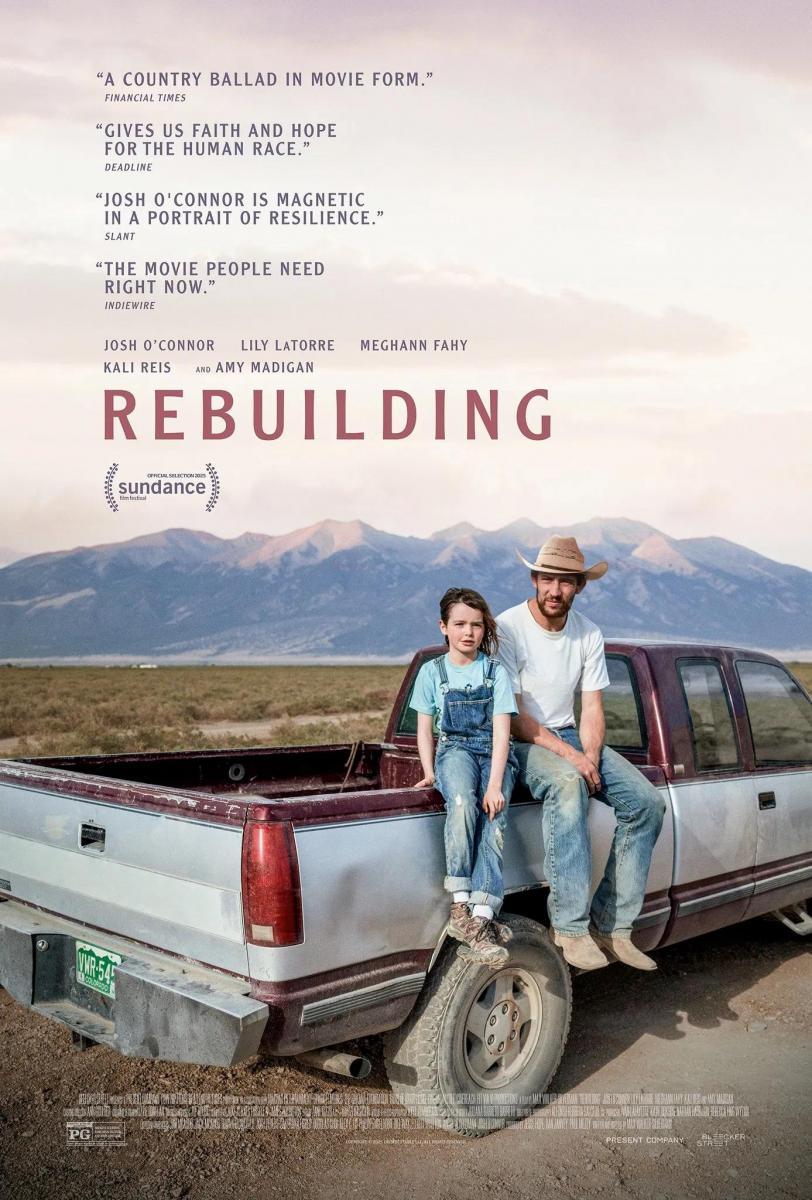

Rebuilding: The Art of Rebuilding (Or How to Craft an Indie Film Without Offending a Single Soul)
Max Walker-Silverman gifts us Rebuilding, a film seemingly designed in a How to Make Indie Cinema Without Alienating Anyone workshop. It’s the kind of movie Sundance and Tribeca will embrace with misty eyes—not because it’s groundbreaking, but because it checks every box on the contemporary rural drama checklist: vast landscapes, eloquent silences, a protagonist with a three-day beard, and an acoustic guitar soundtrack whispering "everything’s gonna be alright" every time the plot dares to move forward. If Nomadland was the manual, Rebuilding is the study guide—less ambitious, but just as polished in its execution.
The premise is as universal as an insurance commercial: a family in the American Midwest tries to rebuild after a loss. There are no villains, no unexpected twists, not even a clear conflict beyond existential grief. Walker-Silverman, who already proved in A Love Song that he’s a master at filming people staring melancholically into the distance, repeats the formula here with almost religious devotion. The film breathes tranquility, yes, but also the risk of lulling you to sleep if you’re not in the right headspace (read: depressed but with good taste).
finalExplicado: "Josh O’Connor, tras años de mudo duelo por la muerte de su esposa, decide finalmente derruir la casa familiar en ruinas del medio oeste. En el clímax, padre e hija se enfrentan en medio de los escombros bajo un atardecer implacable: ella le grita que destruir no es reconstruir, él llora sin palabras. La secuencia culmina con ambos sentados en silencio sobre los restos mientras el viento arrastra polvo y fragmentos de madera. Simbólicamente, el derrumbe final no representa liberación, sino la constatación de que la melancolía del medio oeste es infinita: no se reconstruye nada porque la pérdida ya ha redefinido el paisaje interior. La casa era solo un pretexto; lo que realmente se derrumba es la ilusión de que el duelo puede tener un final limpio. El silencio final es la derrota resignada del varón blanco sensible."
Direction: Minimalism as an Excuse (Or How to Film Nothing with Style)
Walker-Silverman directs with the precision of a Swiss watchmaker—minus the hands. Every frame is composed with obsessive care, as if he fears a miscalculated shot might ruin the experience of watching Josh O’Connor cry in silence. The influence of filmmakers like Kelly Reichardt (Certain Women) or even Terrence Malick (Days of Heaven) is evident, but without the philosophical depth of the latter or the social rawness of the former. Here, minimalism isn’t a bold aesthetic choice—it’s a safety net: if there’s nothing to say, at least make it look pretty.
The problem isn’t the slowness—contemplative cinema has its place—but the lack of purpose behind it. Rebuilding takes its time to show how the wind ripples through wheat fields, how sunset light filters through rural curtains, or how a father and daughter share an awkward silence over breakfast. But why? In The Rider (Chloé Zhao), wide-open landscapes contrasted the protagonist’s physical and emotional prison with the freedom of nature. In Rebuilding, the landscapes are just… pretty. Like a Windows XP wallpaper, but shot on 35mm.
Performances: Josh O’Connor and the Art of Suffering with Elegance
If anything saves Rebuilding from being a self-indulgent exercise, it’s the cast, led by Josh O’Connor—this British actor who seems born to play sensitive men with unresolved emotional baggage. Here, O’Connor plays a widowed father trying to reconnect with his teenage daughter (Lily LaTorre) while grappling with his own grief. His performance is a masterclass in restraint: every glance, gesture, and sigh feels calculated to convey a sadness bordering on the poetic. It’s the kind of acting critics adore because it’s "subtle" and "profound," though in reality, it’s the acting equivalent of chamomile tea: soothing, but hardly unforgettable.
Lily LaTorre holds her own in a role that doesn’t ask much more of her than scowling and side-eyeing her dad. Her chemistry with O’Connor is believable, but the film never truly explores their dynamic beyond genre clichés: she’s angry at the world, he’s trying to be patient, and they learn to love each other again. Meghann Fahy, playing a neighbor who becomes a supportive figure, has charming moments, but her character is so generic she might as well be named "The Kind Small-Town Woman."
Cinematography: When Pretty Isn’t Enough
The cinematography in Rebuilding is, without a doubt, its greatest technical achievement. The DP, whose name deserves reverence in indie circles, uses vintage lenses to capture the Midwest with a desaturated color palette evoking nostalgia for an era that never existed. The ochres, muted greens, and cool blues create a melancholic atmosphere that, in theory, should complement the story. In practice, though, the visual beauty sometimes feels like a substitute for substance.
There are shots that are pure postcards: a wheat field under golden sunset light, a wooden house surrounded by snow, a close-up of O’Connor with a look of pain so studied it could’ve come from an acting tutorial. But what do these shots say beyond "look how beautiful sorrow is"? In The Assassination of Jesse James by the Coward Robert Ford (Andrew Dominik), the cinematography wasn’t just beautiful—it deepened the characters’ psychology and the story’s tone. In Rebuilding, the photography is like a painting in a gallery: you can admire it, but it won’t change you.
Soundtrack: The Acoustic Guitar as an Emotional Crutch
The music in Rebuilding is the sonic equivalent of a warm hug: comforting, predictable, and slightly annoying if it goes on too long. Composed by an artist whose name probably ends in "-son" or "-berg," the soundtrack consists of acoustic guitar melodies designed to soundtrack an organic coffee commercial. Every time the plot threatens to move forward, a guitar strum reminds you, "Yes, this is a movie about pain—but don’t worry, everything’s gonna be okay."
There’s nothing inherently wrong with using minimalist music to reinforce emotion, but here it feels like a crutch. In Manchester by the Sea (Kenneth Lonergan), the absence of music in key moments made the pain feel even rawer. In Rebuilding, the music is there to ensure you never feel too uncomfortable. It’s the auditory equivalent of someone telling you "just breathe" during a panic attack: well-intentioned, but counterproductive.
Editing: The Art of Dragging Out the Inevitable
The editing in Rebuilding is so slow you could step out for coffee, return, and barely notice the scene has progressed. It’s not that the film is technically bad—the pacing is deliberate, almost meditative—but there are moments when you wonder if Walker-Silverman mistook "leisurely" for "stagnant." Entire sequences could be summed up in a single shot: a character walks through a field, stares at the horizon, sighs. Cut. Another character does the same. Cut. Repeat until the audience accepts that life is painful and landscapes are pretty.
In contemporary indie cinema, there’s a dangerous tendency to confuse slowness with depth. Rebuilding falls right into that trap. It’s not that there aren’t effective moments—like a scene where father and daughter bond while fixing a fence—but they’re drowned in a sea of contemplative shots that add nothing new. It’s as if the film is afraid to move forward, as if its characters’ grief is so fragile a sharp cut might shatter it.
Plot and Atmosphere: Drama as Group Therapy
The plot of Rebuilding is so light you could blow it away. There’s no central conflict beyond the characters’ generic grief, no dramatic arc forcing them to change in any meaningful way. Josh O’Connor’s character loses his wife, his daughter pulls away, and they both try to find a way to move forward. That’s it. No shocking revelations, no plot twists, not even a moment where tension reaches a climax. It’s like watching someone assemble a 1,000-piece puzzle that, in the end, turns out to be a picture of a sunset.
The atmosphere, however, is where the film connects. There’s an authenticity in how it portrays rural life—its awkward silences, small joys, and slow pace. But even here, Rebuilding romanticizes country living. There’s no poverty, no racial conflicts, no real economic struggles. It’s the Midwest as a postcard, not as a real place. Compared to films like Winter’s Bone (Debra Granik), where rural life is harsh, violent, and complex, Rebuilding feels like a tourist brochure.
Cinematic Comparisons: What Did Indie Cinema Do Better?
Rebuilding isn’t a bad movie, but it’s an unnecessary one. In a genre—the indie grief drama—that’s already been explored with more depth and originality by other filmmakers, this film feels like a distant echo of superior works. If you liked Manchester by the Sea, you’ll find a watered-down version of its pain here. If you enjoyed The Rider, you’ll miss its rawness. And if you were looking for the melancholic beauty of Nomadland, Rebuilding offers a saccharine version.
Even within Walker-Silverman’s filmography, A Love Song (2021) was a riskier, more personal proposition. There, the intimacy between characters felt urgent, alive. In Rebuilding, that intimacy has become generic, as if the director chose to play it safe instead of taking risks.
The best
- Josh O’Connor’s performance: A masterclass in suffering with class, dignity, and a perfectly tousled beard.
- The period-accurate cinematography: So beautiful you could frame every shot and hang it in your meditation room.
The worst
Excessively slow pacing: If this movie were a road trip, the GPS would say "4 hours remaining"* when you’ve only gone 10 miles.- Lack of dramatic peaks: It’s like a marathon of hugs—comforting at first, but by the end, you just want someone to scream or do something interesting.
The Verdict of Claqueta Ácida (6.5/10)
Rebuilding is that well-meaning friend who hugs you tightly when you’re sad but has nothing new to say. It’s a pretty film, well-acted, with impeccable cinematography, but it mistakes slowness for depth and melancholy for emotion. If you’re looking for an indie drama to accompany a rainy afternoon, here it is. If you want something that shakes you, keep searching. At least Josh O’Connor cries very well. 💀🎬 Tráiler Oficial
Abrir en YouTube
Ending Explained: Rebuilding
Ficha de Daños Colaterales en Sala
Certificado de impacto psicofísico emitido por Odin Lagbert
3 amagos en el tramo intermedio; pestañeo pesado en las transiciones más innecesarias.
Minuto 48 y minuto 67 (comprobando cuánto quedaba de suplicio).
2 espresso para no dejarse vencer por la mediocridad cómoda.
"A mitad del segundo acto cuando la subtrama secundaria empezó a pesar más de lo que aportaba."
💬 El Veredicto de la Comunidad
¿Qué te ha parecido la película? Deja tu nota de 0 a 10 para contrastarla con el análisis de la redacción.
Aún no has votado
📢 ¿Te ha gustado el ácido?
Comparte esta crítica con tus amigos cinéfilos o desata la polémica en redes.
⚡ THE CINEMATIC VENOM YOUR INBOX CRAVES
No sugarcoated ratings, no corporate fluff. Subscribe for our uncensored weekly analysis or join the private Telegram for press previews, poll clashes, and instant alerts.
Alertas de estrenos en 1 segundo, encuestas en caliente y audios al salir de pases de prensa.
Recibe la dosis semanal en tu mail + regalo inmediato del PDF con 50 joyas ocultas de culto.
Related Reviews
Recommended autopsies for demanding film buffs.
 ⚡ Ácido Cítrico7.5
A Ghost Story: A Journey Through Time and Memory
⚡Afinidad temática directa en atmósfera, estilo y fijaciones visuales.
The Claqueta Ácida review of A Ghost Story, a film that explores existence and human connection.
 ⚡ Ácido Cítrico7.2
Acid in the Veins: Fede Álvarez Revives the Tactile Panic of Alien
⚡Afinidad temática directa en atmósfera, estilo y fijaciones visuales.
Industrial claustrophobia and pure physical terror. A merciless critique of Ian Holm's CGI and the cheap nostalgia that stains the franchise's return.
 🔥 Fusión Nuclear8.0
Backrooms: A Descent into the Void
⚡Afinidad temática directa en atmósfera, estilo y fijaciones visuales.
A film that flings wide the door to mystery and terror—if you dare to step through
Editorial Ecosystem
Cinephile connections, archive interviews and related analyses.
💬 Debate Cinéfilo & Autopsia de Lectores
0 veredictos¿Discrepas con nuestra nota? ¿Es una obra maestra o veneno puro? Deja tu veredicto abajo sin necesidad de registro.


Aún nadie ha dejado su veredicto para esta película.
Sé el primero en clavarle el colmillo rellenando el formulario de arriba.