‘The Night Of’ — When Justice is a Shattered Mirror and the Darkness Holds More Truths Than the Prosecutor
The night can be very dark, but The Night Of is even darker.

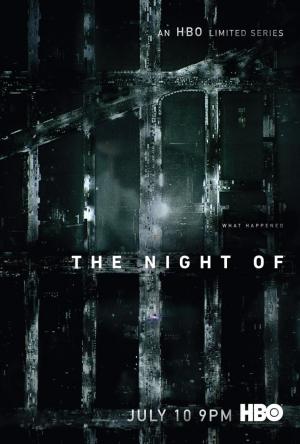


finalExplicado: "Naz es absuelto en el juicio gracias a las maniobras de su abogado John Stone y a las dudas razonables sembradas sobre la investigación policial. Sin embargo, en el clímax final, Naz se queda mirando fijamente a la cámara en un plano sostenido, con la cara ya marcada por la cárcel, mientras la verdadera asesina queda libre y el sistema se cierra sin haber encontrado al culpable real. Simbólicamente, el desenlace significa que la justicia es un espejismo inútil: Naz sale “inocente” pero está corrompido para siempre. La noche lo ha devorado. El sistema no busca la verdad, solo un culpable que encaje en su maquinaria, y una vez que te traga, aunque te escupa, ya eres otro. La oscuridad gana."
‘The Night Of’: When Justice is a Shattered Mirror and the Darkness Holds More Truths Than the Prosecutor
There’s something deeply obscene about the way The Night Of slithers under your skin. It’s not just the literal darkness of its frames—though that viscous blackness, that chiaroscuro smeared with the sweat of prison cells, would be reason enough for its existence. No. What’s truly disturbing is how the series turns the pursuit of justice into a hall of funhouse mirrors, where every reflection throws back a distorted version of the truth, of morality, and, above all, of yourself. Richard Price and Steven Zaillian, those two surgeons of human misery, don’t settle for telling a story about a crime; they want to dissect the system around it, expose its rotting guts, and force you to stare until your eyes burn.
And damn, do they succeed.
Crime as an Excuse: When Murder is Just the MacGuffin
The plot, at its core, is simple: Nazir "Naz" Khan (Riz Ahmed), a Pakistani-American kid from Queens with big dreams and a life so bland it hurts, gets tangled up in a girl’s murder after a night of booze, drugs, and bad luck. What starts as a miscalculation—taking the wrong cab, accepting the wrong party invitation—spirals into a descent into the bureaucratic hell of New York’s justice system. But reducing The Night Of to a whodunit would be like saying The Godfather is just a movie about the mafia. Here, the crime is the pretext; what really matters is Naz’s journey through the bowels of the legal system, a journey that strips him of his humanity layer by layer, like a rotten onion.
And let’s be honest: deep down, we all know Naz didn’t kill that girl. Or at least, there’s no conclusive evidence. But that’s beside the point. What’s fascinating about The Night Of is how it exposes the justice system as a ravenous beast that needs a scapegoat—any scapegoat—to justify its own existence. The system doesn’t seek truth; it seeks a fall guy. And Naz, with his brown skin, his Muslim surname, and his record of "suspicious behavior" (read: being young and poor in post-9/11 America), is the perfect candidate. The series doesn’t bother hiding its critique: justice isn’t blind, it’s nearsighted, and it only sees what it wants to see.
Richard Price and Steven Zaillian: The Architects of Despair
If there’s one thing that unites Richard Price (The Wire, Clockers) and Steven Zaillian (Schindler’s List, Moneyball), it’s their obsession with broken systems and the men trapped in them. Price, the chronicler of New York’s streets, brings that grimy realism, that dialogue that sounds like it was recorded with a hidden mic in a dive bar. Zaillian, meanwhile, brings the surgical precision of a storyteller who knows exactly where to cut to make it hurt. together-la-cueva-de-los-espejos-rotos" class="text-amber-400 font-black hover:text-amber-300 transition underline decoration-amber-500/40 hover:decoration-amber-300" title="[6.5/10 ⚡ Ácido Cítrico] Lee nuestra autopsia de «Together»" data-acid-interlink="together-la-cueva-de-los-espejos-rotos">Together, they create an oppressive, almost claustrophobic atmosphere, where every scene seems drenched in cold sweat and the antiseptic smell of a hospital.
The series’ direction is a study in contrasts. On one hand, there’s the bright, cosmopolitan New York of Upper West Side parties, where the rich snort designer cocaine and talk about art like it’s just another accessory. On the other, there’s the underground New York: the dungeons of Rikers Island, roadside motels, the Queens apartments where mold grows on the walls like a constant reminder of decay. Igor Martinović’s cinematography (The Wire, House of Cards) is key here: he plays with the dim light of streetlamps, the fluorescent glare of courthouses, and the elongated shadows of prison hallways to create the sense that, no matter where you are, something—or someone—is always watching from the darkness.
And then there’s the editing. It’s not fast, it’s not flashy, but it’s relentless. Every cut, every transition, seems designed to remind you that time is running out, that opportunities are slipping away, that Naz’s life is crumbling like a house of cards. There’s one scene in particular, in the second episode, where Naz is transferred from the police station to jail: the editing alternates between close-ups of his terrified face and wide shots of Rikers’ corridors, while the score—that minimalist, dying-heartbeat soundtrack by Jeff Russo—blends with the inmates’ screams. It’s uncomfortable, it’s brutal, and it’s brilliant.
The Cast: When the Actors Eat the Script (and You)
If there’s an absolute protagonist in The Night Of, it’s Riz Ahmed. Naz isn’t a hero, not even an antihero; he’s just a regular guy who gets kicked in the teeth by life and then spat on. Ahmed plays him with a vulnerability that hurts, but also with a contained rage that erupts in the most unexpected moments. There’s a scene in the third episode where Naz, already in Rikers, faces a group of inmates harassing him. It’s not an epic fight, there’s no choreography or memorable dialogue; it’s dirty, clumsy, real. And Ahmed sells it with an authenticity that leaves you breathless. It’s no coincidence this role catapulted him to projects like Sound of Metal or Rogue One: Ahmed has that rare quality of making even the most ordinary character feel like an entire universe.
But if Ahmed is the heart of the series, John Turturro is its twisted brain. As John Stone, Naz’s lawyer, Turturro creates one of those supporting characters who steal every scene they’re in. Stone is a pathetic figure: a washed-up ambulance chaser with eczema on his hands, an obsession with expensive shoes, and a morality as flexible as his spine. But he’s also brilliant, cunning, and, deep down, more human than anyone in that courtroom. Turturro plays him with a mix of sarcasm and despair that makes him the perfect counterpoint to Naz’s silent anguish. There’s a moment when Stone, drunk and defeated, confesses to Naz that "justice is like sex: everyone talks about it, but nobody really knows what it’s like." It’s a line that sums up the entire series.
And then there’s the rest of the cast, a who’s who of character actors who make even the most minor roles feel like they’re straight out of a documentary. Bill Camp as Detective Box, a guy who seems plucked from a Raymond Chandler novel but with the ethics of a vulture; Peyman Maadi as Salim Khan, Naz’s father, whose silent dignity speaks louder than any dialogue; and Jeannie Berlin as prosecutor Helen Weiss, a woman who believes in the system until the system forces her to swallow her own lies. Even the cameos are memorable: who could forget Poorna Jagannathan as Safar Khan, Naz’s mother, whose grief is so palpable it feels like an open wound?
The Script: James Gandolfini and the Art of Making You Hate the System
Originally, The Night Of was going to be a James Gandolfini project, who wrote the pilot script before his death in 2013. And it shows. There’s something in the series’ tone, in its mix of rawness and humanity, that echoes Gandolfini the actor: that guy who could make you laugh and then break your heart in the same scene. The script has no mercy. There are no cartoonish villains, no heroes redeemed by a heartfelt speech in the final act. Instead, there’s a ruthless portrait of how the justice system—and, by extension, society—devours the weak and spits out their bones.
The series takes its time to develop every aspect of the story, and that’s both its greatest virtue and its Achilles’ heel. The early episodes are slow, almost contemplative, but that slowness is deliberate: Price and Zaillian want you to feel the weight of every decision, every mistake, every small detail that leads Naz to his downfall. There’s a sequence in the first episode, where Naz and the victim, Andrea, spend the night together, that’s a masterclass in narrative tension. No music, no grand speeches; just two people in a room, with their insecurities, their desires, and their bad decisions. And when the scene ends, you know something terrible is going to happen, but you don’t know what, or how, or why. That’s The Night Of in a nutshell: a series that forces you to look, even when you don’t want to.
Cinematic Comparisons: When Film and TV Meet in Hell
The Night Of doesn’t exist in a vacuum. It’s heir to a tradition of stories about injustice and systemic corruption that runs from 12 Angry Men (1957) to The Wire (2002-2008). But where The Wire was an epic fresco of an entire city, The Night Of is an intimate, almost claustrophobic study of one man trapped in the machine. Comparing it to True Detective (2014) would be tempting—both are dark, atmospheric series with a crime as their starting point—but The Night Of lacks the mysticism and grandiosity of Nic Pizzolatto’s show. Here, there are no philosophical monologues or dreamlike landscapes; just raw, ugly, hopeless reality.
There are also echoes of The Night Of in films like Jacques Audiard’s A Prophet (2009), in its portrayal of prison life, or Denis Villeneuve’s Prisoners (2013), in its exploration of morality in extreme situations. But where Prisoners opts for psychological thriller territory and A Prophet for survival drama, The Night Of stays in a more ambiguous space: neither thriller, nor drama, nor even a traditional courtroom drama. Above all, it’s a modern Greek tragedy, where Naz’s fate is sealed from the first frame, and the only thing that changes is how much he’ll suffer before accepting his role in the play.
The best
Riz Ahmed: An actor who turns vulnerability into art. Naz isn’t a hero, not even a particularly interesting guy, but Ahmed makes him human, fragile, and, above all, real*. When he cries, it’s not for dramatic effect; it’s because he has no other choice.- John Turturro as John Stone: The lawyer we all deserve (but don’t want). Stone is pathetic, selfish, and brilliant in equal measure. Turturro plays him with a mix of dark humor and despair that makes him the most memorable character in the series.
The worst
- The pacing of the early episodes: Patience is a virtue, but only up to a point. If the tone doesn’t hook you from the start, the 60 minutes of the first episode can feel like an eternity in purgatory.
- Some supporting characters get left in limbo. Safar Khan (Peyman Maadi) and Helen Weiss (Jeannie Berlin) have brilliant moments, but other characters, like Detective Box (Bill Camp), deserved more development. Though, to be fair, maybe that was the point: to leave you with the feeling that the system had reduced them to mere cogs.
The Verdict of Claqueta Ácida (8.5/10)
The Night Of is one of those series that doesn’t leave you unscathed. It’s not perfect—its pacing can be exasperating, and some supporting characters get lost along the way—but its ambition, its rawness, and its honesty make it a necessary work. Price and Zaillian don’t offer easy answers, happy endings, or even the satisfaction of seeing the system redeem itself. What they give you is something much more valuable: the truth, ugly as it may be. And the truth, dear cinephiles, is that justice isn’t blind. It’s nearsighted, it’s rotten, and sometimes, it doesn’t even exist. The Night Of doesn’t ask you to believe it; it rubs your face in it until you have no choice but to swallow. And that, in the end, is all that matters. 💀🎬 Tráiler Oficial
Abrir en YouTube
Ending Explained: ‘The Night Of’
Ficha de Daños Colaterales en Sala
Certificado de impacto psicofísico emitido por Bastian Noir
Cero bostezos. Pupilas dilatadas y tensión mandibular constante.
Ninguna comprobación del tiempo. Se agradece la rareza.
Ninguna. Esta obra no necesita muletas estimulantes.
"No aplica. La obra se sostiene sola."
💬 El Veredicto de la Comunidad
¿Qué te ha parecido la película? Deja tu nota de 0 a 10 para contrastarla con el análisis de la redacción.
Aún no has votado
📢 ¿Te ha gustado el ácido?
Comparte esta crítica con tus amigos cinéfilos o desata la polémica en redes.
⚡ THE CINEMATIC VENOM YOUR INBOX CRAVES
No sugarcoated ratings, no corporate fluff. Subscribe for our uncensored weekly analysis or join the private Telegram for press previews, poll clashes, and instant alerts.
Alertas de estrenos en 1 segundo, encuestas en caliente y audios al salir de pases de prensa.
Recibe la dosis semanal en tu mail + regalo inmediato del PDF con 50 joyas ocultas de culto.
Related Reviews
Recommended autopsies for demanding film buffs.
 🔥 Fusión Nuclear9.0
*Six Feet Under: When Family Drama Smells Like a Decadent Corpse*
⚡Afinidad temática directa en atmósfera, estilo y fijaciones visuales.
HBO served us a feast of family dysfunction, pitch-black sarcasm, and metaphorical corpses. Alan Ball dug a grave so deep we still haven’t climbed out.
 🔥 Fusión Nuclear8.5
*Animal Kingdom: A Descent into Hell (Where Family is the Devil’s Playground)*
⚡Afinidad temática directa en atmósfera, estilo y fijaciones visuales.
A visceral takedown of *Animal Kingdom*, where "family values" take on a whole new (and deeply criminal) meaning.
 🔥 Fusión Nuclear8.5
*Crematorio: Ambition Without Limits – A Masterclass in Moral Rot (Or How to Binge-Watch Your Own Corruption)*
⚡Afinidad temática directa en atmósfera, estilo y fijaciones visuales.
A scathing, no-holds-barred evisceration of *Crematorio*—the Spanish series that didn’t just show you the sewers of power, but handed you a shovel and dared you to dig deeper.
Editorial Ecosystem
Cinephile connections, archive interviews and related analyses.
💬 Debate Cinéfilo & Autopsia de Lectores
0 veredictos¿Discrepas con nuestra nota? ¿Es una obra maestra o veneno puro? Deja tu veredicto abajo sin necesidad de registro.


Aún nadie ha dejado su veredicto para esta película.
Sé el primero en clavarle el colmillo rellenando el formulario de arriba.