Saint Maud — The Hypnotic Crucifixion of Sanity and Mystical Delirium – Or How Rose Glass Turned Fanaticism into Degenerate Art
Rose Glass delivers one of the most dazzling directorial debuts in modern psychological horror with A24, blurring the razor-thin line between religious ecstasy and clinical psychosis.

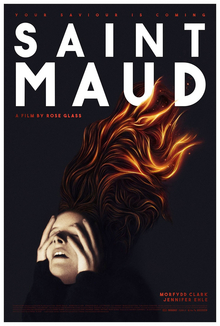


Saint Maud (2019): The Ecstasy of Self-Destruction – Or How Rose Glass Turned Fanaticism into Degenerate Art
Contemporary horror cinema has been hijacked, for the most part, by two equally tedious factions: on one side, the Blumhouse heirs, who’ve reduced the genre to a string of jump scares as predictable as a McDonald’s menu; on the other, the pretentious festival darlings who disguise their lack of ideas with vacuous symbolism and endless long takes that only impress critics suffering from Stockholm Syndrome. Amid this wasteland, Rose Glass emerges as a necessary heretic—a director who understands that true terror doesn’t lurk in the dark, but festers within the human mind, devouring it from the inside like a theological parasite. Saint Maud isn’t just a film; it’s a real-time autopsy of a decaying psyche, a descent into the heart of darkness where God and madness sleep together-la-cueva-de-los-espejos-rotos" class="text-amber-400 font-black hover:text-amber-300 transition underline decoration-amber-500/40 hover:decoration-amber-300" title="[6.5/10 ⚡ Ácido Cítrico] Lee nuestra autopsia de «Together»" data-acid-interlink="together-la-cueva-de-los-espejos-rotos">together like sick lovers.
Salvation as Pathology: When Faith Becomes Cancer
The premise of Saint Maud is deceptively simple: a newly converted Catholic nurse, Maud (Morfydd Clark, in a performance that should be studied in acting schools as a masterclass in conveying mental collapse through every pore), becomes obsessed with "saving the soul" of her patient, Amanda (Jennifer Ehle), a terminally ill ex-dancer whose only sin seems to be living—and dying—on her own terms. What begins as a caregiver-patient relationship morphs into a psychological duel where Maud’s faith feeds on Amanda’s skepticism like a vampire on blood. Glass avoids the trap of demonizing Amanda or sanctifying Maud; both are victims and executioners in a macabre game where redemption is just another word for submission.
Glass’s genius lies in her refusal to moralize. Saint Maud doesn’t judge religious fanaticism; it dissects it with the precision of a surgeon who knows the tumor isn’t the problem—the body feeding it is. Maud isn’t a villain or a hero; she’s a woman broken by an undisclosed trauma (though we sense her past as a hospital nurse is steeped in blood and guilt), who’s found in religion a control mechanism as fragile as her sanity. Her faith isn’t spiritual; it’s physical: God manifests in her body like a divine orgasm, in levitations that could just as well be hallucinations, in self-inflicted pain (those tacks in her shoes, that daily martyrdom reminiscent of medieval saints, but with a sadistic performance art twist). Glass films these scenes with deliberate ambiguity: Is Maud truly in contact with the divine, or has her mind collapsed under the weight of her own need to believe? The answer, like everything in this film, is uncomfortably ambiguous.
Style as Symptom: Cinematography, Editing, and Score Inside a Fanatic’s Mind
If Saint Maud works as a hypnotic nightmare, it’s thanks to Glass’s obsessive control over every formal element. Ben Fordesman’s cinematography is a masterclass in visual suffocation: Amanda’s home interiors are bathed in a sickly golden light, as if the sun itself were rotten, while Scarborough’s exteriors are a landscape of concrete and fog—a purgatory on Earth where salvation is as unlikely as a sunny day. Every frame is composed with surgical precision; Glass leaves nothing to chance, including the claustrophobic sensation each shot conveys. The rooms seem to close in on Maud (and the viewer) like a trap, and Clark’s close-ups—those bulging eyes, that smile oscillating between beatitude and terror—are so invasive you’ll feel the urge to look away.
Mark Towns’s editing is another highlight. Glass and Towns understand that psychological horror isn’t about what’s shown, but what’s implied, so Saint Maud’s rhythm is deliberately uneven: moments of tense calm are shattered by bursts of physical or emotional violence, as if the film itself were suffering the same spasms as its protagonist. Take the party scene, for example—a study in cinematic discomfort. The camera prowls among the guests like a predator, capturing looks of pity and disdain toward Maud, while pop music plays in the background like a taunt. It’s a scene reminiscent of Cronenberg at his best, where the grotesque isn’t in what’s seen, but in the dissociation between the characters’ inner and outer selves.
Then there’s the score by Adam Janota Bzowski, which functions as an extension of Maud’s psyche. Gregorian chants blend with industrial sounds and electronic distortions, creating an atmosphere that oscillates between the sacred and the profane. In one of the film’s most memorable scenes, Maud "feels" God coursing through her body as the music grows increasingly intense, reaching a climax that’s almost sexual. It’s a sequence that could’ve been ridiculous in less capable hands, but Glass infuses it with an erotic and religious tension that makes it one of the most disturbing moments in recent cinema.
The Acting Duel: Morfydd Clark and Jennifer Ehle, or the Art of Devouring Each Other
If Saint Maud is a film about obsession, its emotional core lies in the toxic chemistry between Morfydd Clark and Jennifer Ehle. Clark, who’d already showcased her talent in His Dark Materials and The Personal History of David Copperfield, delivers a performance that borders on the superhuman. Maud is a character who could’ve been caricatured in less skilled hands—a religious fanatic with hints of misery porn—but Clark endows her with a lethal fragility: she’s both victim and executioner, a woman whose faith is so brittle she needs to inflict pain to feel alive. Her performance is a masterclass in physical and emotional control; from the way she walks (as if literally carrying the weight of the world on her shoulders) to how her voice cracks when she prays, Clark makes Maud unforgettable.
Opposite her, Jennifer Ehle crafts Amanda as a distorted mirror of Maud: where Maud is blind faith, Amanda is skepticism; where Maud is repression, Amanda is hedonism; where Maud seeks salvation, Amanda just wants to die in peace. Ehle, an often-underrated actress, proves here why she’s one of the best of her generation. Her Amanda is a woman who’s lived intensely and has no intention of repenting, even in her final days. There’s a hardness to her cynicism that clashes head-on with Maud’s devotion, and it’s in this collision that the film finds its power. When the two share the screen, the tension is palpable: it’s not just a conflict between two worldviews, but between two ways of understanding existence. And, as in any good duel, only one can survive.
The Climax: When God Falls Silent
The ending of Saint Maud is, without exaggeration, one of the most devastating moments in modern horror cinema. Without spoilers, suffice it to say that Glass subverts all genre expectations with a narrative scythe-stroke that leaves the viewer breathless. What makes this climax so effective isn’t just its brutality, but its economy: in a single shot, Glass dismantles Maud’s entire religious framework, exposing the fragility of her faith and the cruelty of a universe that doesn’t reward devotion, but punishes it. It’s a moment reminiscent of Rosemary’s Baby’s (1968) ending, but with even rawer crudeness—because here, there’s no external evil, just a malignancy born from the protagonist’s own mind.
And then there’s that final frame, that split-second of footage that encapsulates the entire film: an image so powerful it hurts to look at, because it condenses Maud’s loneliness, fanaticism, and despair into a single instant. It’s the kind of shot that justifies a film’s existence, the kind of moment that makes cinema worth it.
Cinematic Comparisons: Between Ecstasy and Body Horror
Saint Maud doesn’t exist in a vacuum; it’s the heir to a cinematic tradition that explores the boundaries between faith and madness, the sacred and the profane. Its most obvious influence is Robert Eggers’s The Witch (2015), another film that uses historical horror to dissect the psychology of a devout woman. But while The Witch focuses on external fears (the devil, nature, the community), Saint Maud internalizes the horror: here, the true monster is Maud’s mind, and God is just an excuse to justify her self-destruction.
There are also echoes of Polanski’s Repulsion (1965), particularly in how Glass portrays her protagonist’s mental collapse. Like Catherine Deneuve in that film, Clark conveys the sense that her character is on the edge of the abyss in every scene, and that any small push could send her over. But where Polanski used surrealism to reflect psychosis, Glass opts for an almost documentary realism, making the horror even more unsettling.
And, of course, there’s the specter of David Cronenberg, especially in how the film explores the relationship between the body and faith. The scenes where Maud feels God coursing through her body have an erotic, physical component reminiscent of Crash (1996) or Videodrome (1983), where pleasure and pain blur into indistinction. Glass takes this idea further by suggesting that, for Maud, religion isn’t about spirituality, but flesh: God isn’t an abstract idea, but a physical presence that possesses, excites, and ultimately destroys her.
The best
- Morfydd Clark and Jennifer Ehle: An acting duel so intense you’ll leave the theater feeling like you’ve witnessed an exorcism. Clark is a force of nature, and Ehle proves skepticism can be as magnetic as faith.
- The absolute final shot: A visual and narrative coup de grâce that leaves the viewer speechless, breathless, and—above all—without excuses for not recognizing they’ve just witnessed something great.
The worst
Its initial restraint: If you’re looking for jump scares or cheap thrills, Saint Maud* will leave you as cold as a Latin mass. Here, terror is slow, psychological, and sometimes frustrating for those craving cheap adrenaline.- The brevity of its secondary development: Maud’s past as a nurse is barely sketched, and you can’t help but wonder what other traumas lurk beneath her surface. Glass opts for mystery, but sometimes mystery leaves you wanting more.
The Verdict of Claqueta Ácida (9.1/10)
Saint Maud isn’t a horror film; it’s an autopsy of faith as a mechanism of self-destruction, a journey into the hell of a mind that would rather burn in the fire of its own devotion than face the loneliness of reality. Rose Glass debuts with a masterpiece that not only revitalizes the genre, but elevates it to the category of degenerate art—the kind of cinema that hurts to watch but is impossible to forget. With flawless direction, performances that scorch the screen, and an ending that’ll leave you feeling like you’ve witnessed a miracle (or a curse), Saint Maud cements itself as one of the smartest, most beautiful, and terrifying films of the decade. And the best—or worst—part? When you leave the theater, you won’t be able to shake the question: What if Maud was right? 🔥💀🎬 Tráiler Oficial
Abrir en YouTube
Ending Explained: Saint Maud
Ficha de Daños Colaterales en Sala
Certificado de impacto psicofísico emitido por Héctor Veneno
Cero. La pantalla absorbió cada segundo de atención disponible.
El móvil permaneció en el bolsillo donde debía estar.
Ninguna. Esta obra no necesita muletas estimulantes.
"No aplica. La obra se sostiene sola."
💬 El Veredicto de la Comunidad
¿Qué te ha parecido la película? Deja tu nota de 0 a 10 para contrastarla con el análisis de la redacción.
Aún no has votado
📢 ¿Te ha gustado el ácido?
Comparte esta crítica con tus amigos cinéfilos o desata la polémica en redes.
⚡ THE CINEMATIC VENOM YOUR INBOX CRAVES
No sugarcoated ratings, no corporate fluff. Subscribe for our uncensored weekly analysis or join the private Telegram for press previews, poll clashes, and instant alerts.
Alertas de estrenos en 1 segundo, encuestas en caliente y audios al salir de pases de prensa.
Recibe la dosis semanal en tu mail + regalo inmediato del PDF con 50 joyas ocultas de culto.
Related Reviews
Recommended autopsies for demanding film buffs.
 🔥 Fusión Nuclear8.0
Abigail: Ballet, Rivers of Hemoglobin, and the Worst Nightmare of a Discount Kidnapping Gang
⚡Consagradas en el olimpo transgresor con 🔥 Fusión Nuclear.
Radio Silence signs a delightfully entertaining, bloody, and hyperbolic vampire slasher within a mansion where a twelve-year-old ballerina is the monster.
 🔥 Fusión Nuclear8.5
*Alleluia: Love as a Terminal Illness (or How to Turn Crimes of Passion into a Sweaty, Fleshy Spectacle)*
⚡Consagradas en el olimpo transgresor con 🔥 Fusión Nuclear.
Fabrice Du Welz reimagines the myth of the lonely hearts killers in a feverish whirlwind of jealousy, submission, and blood, led by Lola Dueñas in a performance that’s equal parts hypnotic and harrowing.
 🔥 Fusión Nuclear8.5
*High Tension (Haute Tension): The Brutal Birth of the New French Extremism – Or How to Turn Flesh into Poetry with a Machete*
⚡Consagradas en el olimpo transgresor con 🔥 Fusión Nuclear.
Alexandre Aja shocked global screens with a relentless rural bloodbath, redefined by breakneck pacing and a divisive twist that splits serious cinephiles right down the middle.
Editorial Ecosystem
Cinephile connections, archive interviews and related analyses.
💬 Debate Cinéfilo & Autopsia de Lectores
0 veredictos¿Discrepas con nuestra nota? ¿Es una obra maestra o veneno puro? Deja tu veredicto abajo sin necesidad de registro.


Aún nadie ha dejado su veredicto para esta película.
Sé el primero en clavarle el colmillo rellenando el formulario de arriba.