Alleluia — Love as a Terminal Illness (or How to Turn Crimes of Passion into a Sweaty, Fleshy Spectacle)
Fabrice Du Welz reimagines the myth of the lonely hearts killers in a feverish whirlwind of jealousy, submission, and blood, led by Lola Dueñas in a performance that’s equal parts hypnotic and harrowing.

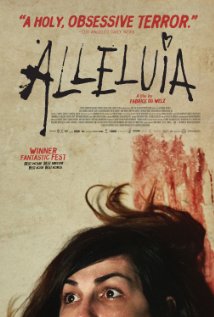
Alleluia: Love as a Terminal Illness (or How to Turn Crimes of Passion into a Sweaty, Fleshy Spectacle)
American true crime has always had a soft spot for monsters with membership cards to the broken hearts club. Raymond Fernandez and Martha Beck—those 1940s serial killers who posed as siblings to seduce and slaughter lonely women—have been the subject of morbid fascination for decades. From Leonard Kastle’s The Honeymoon Killers (1970) to Arturo Ripstein’s Deep Crimson (1996), the myth has been dissected with a surgeon’s scalpel and a voyeur’s gaze. But Belgian filmmaker Fabrice Du Welz, that enfant terrible of European cinema who already left us slack-jawed with Calvaire (2004) and Vinyan (2008), decides to grab this legend’s corpse and shake it until sparks fly. The result? Alleluia, a film that’s less a thriller and more a macabre waltz disguised as an exorcism, where love is measured in liters of blood and jealousy is the only universal language.
Du Welz doesn’t bother with academic niceties or period recreations dusted with nostalgia. Oh no. He grabs the myth, rips it from its historical context, and plants it in contemporary rural Belgium—a landscape of dive gas stations, cheap rental apartments, and roadside bars where the stench of stale beer mingles with the sweat of desperation. There’s no glamour or gothic romance here: just quivering flesh, clammy skin, and glances that reek of rot. Alleluia is the definitive version of the "lonely hearts killers" legend because, instead of mythologizing, it decomposes. And it does so with a rawness that lays bare the tendons of love’s madness.
finalExplicado: "Gloria, consumida por los celos, apuñala repetidamente a Michel mientras copula con otra víctima, lo mata y lo descuartiza. Luego, en un acto final de posesión absoluta, devora parte de su carne cruda y se acuesta junto a los restos, sonriente y serena, como si por fin hubieran logrado la unión eterna. Simbólicamente, el desenlace revela que el amor romántico, llevado a su extremo patológico, solo se consuma a través de la aniquilación y la incorporación literal del otro. Gloria no quiere a Michel vivo: lo quiere dentro de sí para siempre. El canibalismo es la metáfora más pura y repulsiva del amor romántico totalitario: la fusión que solo se logra devorando al amado."
The Blood Pact: When Love Is a Contagious Disease
Gloria (Lola Dueñas, in a performance that should come with a "risk of interpretive heart attack" warning) is a single mother who works in a morgue—a symbolic detail Du Welz doesn’t bother to hide: this woman is already used to dealing with corpses, just not her own. Her life is a wasteland of loneliness, a succession of empty nights and gray days where the only comfort is the cold touch of the dead she prepares for burial. Until, in a fit of digital desperation, she signs up for a dating site and meets Michel (Laurent Lucas), a small-time con artist with the smile of an encyclopedia salesman and the smooth talk of a carnival gigolo.
Michel isn’t a sophisticated criminal. He’s a third-rate scammer, a guy who swindles middle-aged lonely women with promises of eternal love before robbing them blind. But Gloria, instead of reporting him or telling him to take a hike, falls for the monster with an intensity that borders on the pathological. Not only that: she decides to join him in his criminal crusade, posing as his sister to accompany him on his scams. The condition, of course, is clear: Michel must keep seducing other women, even sleeping with them in front of her. Because Gloria, in her sick mind, would rather share her lover than lose him. In this toxic ecosystem, love isn’t possession—it’s absolute submission.
What Michel doesn’t know—or maybe he does but prefers to ignore—is that he’s playing with fire. Gloria isn’t just another accomplice: she’s a volcano erupting, a woman whose pathological jealousy turns the slightest hint of affection between Michel and his victims into an excuse for violence. Du Welz films this spiral of madness with a claustrophobic, carnal mise-en-scène, where the shots close in on sweaty faces, ragged breathing, and bodies twisting in an embrace that’s half passion, half strangulation. There’s no romance here, just a macabre dance where love and murder merge into a single movement.
Direction: A Circus of Flesh and Sweat
Fabrice Du Welz isn’t a director who does things by halves. His cinema is visceral, uncomfortable, a gut punch that leaves you gasping and nauseous. In Alleluia, he replaces his usual collaborator, Benoît Debie (the genius behind the cinematography of Climax and Enter the Void), with Manuel Dacosse, and the shift is revelatory. Dacosse doesn’t film beauty—he films the texture of human skin in its rawest state: sweat, dilated pores, veins pulsing beneath the surface, lips chapped by desire and anxiety. The close-ups are so tight you can almost smell the characters’ breath—a breath that reeks of lies, cheap sex, and dried blood.
The film is divided into chapters, each named after one of Michel and Gloria’s victims. This structure not only sets the frenetic pace of the plot but also underscores the sick mechanics of their relationship: each new scam, each new murder, is another step in their descent into hell. Du Welz doesn’t judge his characters, but he doesn’t redeem them either. He shows them in all their misery, in all their rotting humanity, and lets the audience decide whether to feel pity, revulsion, or both at once.
The editing, by Anne-Laure Guégan, is another of the film’s strengths. The cuts are abrupt, almost violent, mirroring Gloria’s emotional instability. Some sequences seem lifted from a conventional thriller, but suddenly a flash of violence erupts on screen with a brutality that pins you to your seat. There’s no music to soften the blow, no elegant shots to cushion the barbarity. Everything is dirty, immediate, real. The score, composed by Vincent Cahay, is minimal but effective: a few distorted guitar chords that sound like the heartbeat of a heart about to burst.
The Performances: Lola Dueñas as a Hurricane of Madness and Flesh
If there’s one thing that elevates Alleluia above mere stylistic exercise, it’s Lola Dueñas’s tour de force performance. The Spanish actress, known for her work with Almodóvar and Álex de la Iglesia, throws herself into this role with a physical and emotional abandon that borders on self-destruction. Gloria isn’t an easy character: she’s a broken woman, jealous to the point of obsession, capable of shifting from childlike tenderness to brutal violence in seconds. Dueñas doesn’t just play Gloria—she embodies her. Her gaze is a bottomless pit, her smile a mask that cracks with every new outburst of madness. There’s one scene in particular—where Gloria cuts her hair with scissors while watching Michel with another woman—that’s almost unbearable in its intensity. It’s not just a jealous gesture; it’s a ritual of possession, a desperate attempt to mark territory in a game where the rules have long since vanished.
Facing her, Laurent Lucas crafts Michel as a pathetic yet magnetic gigolo, a man who thinks he’s in control until he realizes he’s awakened a monster. Lucas avoids caricature: his Michel is weak, selfish, but not entirely evil. He’s, at heart, another victim of his own inability to love, a guy who’d rather live a lie than confront the truth of his feelings. The chemistry between Dueñas and Lucas is electric, a mix of attraction and repulsion that makes every scene between them an emotional minefield.
The rest of the cast delivers, though with fewer nuances. Héléna Noguerra, Stéphane Bissot, and the other actresses playing Michel and Gloria’s victims are solid, but their characters are reduced to archetypes: the naive woman, the desperate spinster, the abandoned mother. Du Welz doesn’t give them much room to develop, and maybe that’s the point: in Gloria and Michel’s world, victims are just that—victims. Cannon fodder in their sick game.
Cinematic Comparisons: From Bonnie & Clyde to Possession
Alleluia doesn’t exist in a vacuum. Its DNA is stitched together-la-cueva-de-los-espejos-rotos" class="text-amber-400 font-black hover:text-amber-300 transition underline decoration-amber-500/40 hover:decoration-amber-300" title="[6.5/10 ⚡ Ácido Cítrico] Lee nuestra autopsia de «Together»" data-acid-interlink="together-la-cueva-de-los-espejos-rotos">together from other films that have explored love’s madness and crimes of passion. The most obvious is, of course, The Honeymoon Killers, but while Kastle’s film is a cold, almost documentary-like portrait of psychopathy, Du Welz opts for a more lyrical, visceral approach—almost poetic in its rawness. There are also echoes of Arthur Penn’s Bonnie & Clyde (1967), especially in how the couple feeds off their own criminal legend, but without the outlaw glamour of Warren Beatty and Faye Dunaway’s characters. Here, there are no folk ballads or classic cars: just two losers dragging themselves through life’s gutter.
But if there’s one film Alleluia shares the most affinity with, it’s Andrzej Żuławski’s Possession (1981). Both are studies in emotional possession taken to the extreme, where love becomes a destructive force that levels everything in its path. The difference is that while Isabelle Adjani and Sam Neill tear each other apart in a West Berlin apartment, Gloria and Michel do it in roadside motels and cheap rental flats. Du Welz doesn’t have Żuławski’s budget or visual delirium, but he compensates with a rawness that hurts more—because it hurts more real.
The Best
- Lola Dueñas in a state of grace (or disgrace, depending on how you look at it): A performance that scorches the screen and leaves scars on the retina. Terror and pathos in equal measure.
- Manuel Dacosse’s cinematography: Dirty, grainy, and as carnal as a drunk’s embrace. Every frame is a visual slap that reeks of sweat and dried blood.
The Worst
The rawness isn’t for everyone: If you’re looking for a conventional thriller with clever twists and a redemptive ending, Alleluia* will leave you twisted up and desperate for a shower.- The victims, cannon fodder: Some secondary characters are little more than walking clichés. Du Welz doesn’t give them depth, and maybe that’s fair: in this hell, no one deserves a happy ending.
The Verdict of Claqueta Ácida (8.5/10)
Alleluia is a spew of blood, sweat, and tears, a portrait so unflinching of emotional dependency that it aches down to the bone. Fabrice Du Welz doesn’t make movies—he performs autopsies on rotting souls, and he does it with a ferocity that puts most of today’s psychological thrillers to shame. Lola Dueñas and Laurent Lucas strip down (literally and metaphorically) in a macabre dance that confirms that when love turns pathological, it’s the perfect crime. An uncomfortable, brutal, and necessary masterpiece for those brave enough to stare into the abyss without blinking. 🩸💀🔥🎬 Tráiler Oficial
Abrir en YouTube
Ending Explained: Alleluia
Ficha de Daños Colaterales en Sala
Certificado de impacto psicofísico emitido por Héctor Veneno
Ni un solo parpadeo voluntario. El asiento, inusualmente cómodo.
Ni una sola mirada al móvil.
Ninguna: la adrenalina cinematográfica es suficiente.
"No hubo. La coherencia se mantuvo hasta el último fotograma."
💬 El Veredicto de la Comunidad
¿Qué te ha parecido la película? Deja tu nota de 0 a 10 para contrastarla con el análisis de la redacción.
Aún no has votado
📢 ¿Te ha gustado el ácido?
Comparte esta crítica con tus amigos cinéfilos o desata la polémica en redes.
⚡ THE CINEMATIC VENOM YOUR INBOX CRAVES
No sugarcoated ratings, no corporate fluff. Subscribe for our uncensored weekly analysis or join the private Telegram for press previews, poll clashes, and instant alerts.
Alertas de estrenos en 1 segundo, encuestas en caliente y audios al salir de pases de prensa.
Recibe la dosis semanal en tu mail + regalo inmediato del PDF con 50 joyas ocultas de culto.
Related Reviews
Recommended autopsies for demanding film buffs.
 🔥 Fusión Nuclear9.0
*Calvaire: The Belgian Nightmare Hollywood Will Never Understand (And That’s Why It’s Perfect)*
⚡Del mismo director (Fabrice Du Welz): analiza la evolución o degradación de su estilo.
Fabrice Du Welz makes his debut with a masterpiece of European transgressive cinema—a fog-drenched, deeply unsettling ordeal that dissects loneliness and rural madness.
 ⚡ Ácido Cítrico7.5
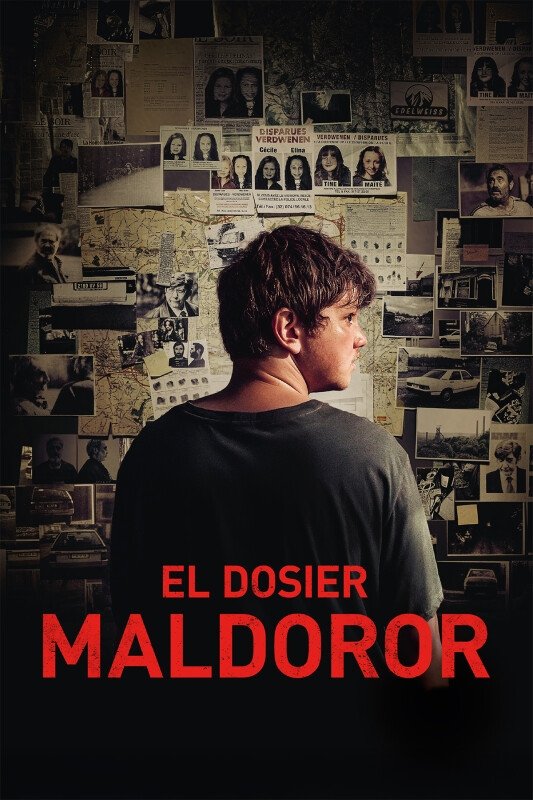
*The Maldoror Dossier: Claqueta Ácida’s Verdict*
⚡Del mismo director (Fabrice Du Welz): analiza la evolución o degradación de su estilo.
Fabrice Du Welz and his shadow ballet in the Belgian underworld. Du Welz delivers a gothic thriller teetering between visual virtuosity and baroque excess—155 minutes of nightmare and obsession.
 🔥 Fusión Nuclear8.0
*Inexorable* – The Literary Parasite and the Decaying Bourgeoisie’s Obsession
⚡Del mismo director (Fabrice Du Welz): analiza la evolución o degradación de su estilo.
Fabrice Du Welz crafts an obsessive, elegant, and relentless psychological thriller set in a mansion hiding unspeakable creative secrets.
Editorial Ecosystem
Cinephile connections, archive interviews and related analyses.
🎞️ In Claqueta Cinematheque3
💬 Debate Cinéfilo & Autopsia de Lectores
0 veredictos¿Discrepas con nuestra nota? ¿Es una obra maestra o veneno puro? Deja tu veredicto abajo sin necesidad de registro.


Aún nadie ha dejado su veredicto para esta película.
Sé el primero en clavarle el colmillo rellenando el formulario de arriba.