Sightseers — Caravan Holidays, Homicidal Hillbillies, and a Hilariously Dark British Comedy
Ben Wheatley delivers a pitch-black, quintessentially British, and uproariously funny comedy about a pair of rural serial killers touring England in a retro caravan.

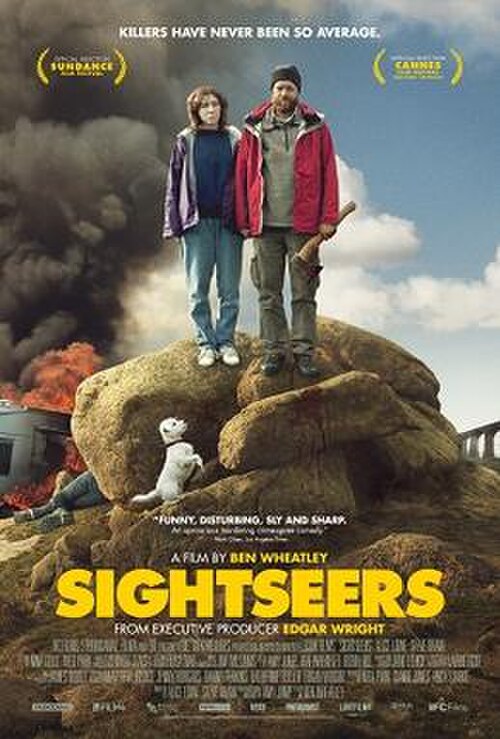


Sightseers (2012) isn’t just a film—it’s a social experiment shot in a 1978 Abbey Oxford caravan, starring a couple of actors who look like they grew up sniffing too many pine-scented air fresheners, with the unshakable conviction that true horror isn’t lurking in dark forests but in bed & breakfasts with lace curtains and mandatory afternoon tea. Ben Wheatley, the British cinema’s resident enfant terrible—who already left us slack-jawed and queasy with Kill List—decides here that the slasher genre doesn’t need much more than two misfits, a tourist route through the arse-end of England, and a premise so simple it’s genius: What if Bonnie and Clyde were a pair of civility-obsessed nerds with a fetish for local museum brochures? The result is a black comedy that reeks of wet grass, burnt petrol, and that special brand of secondhand embarrassment that makes you laugh until you realize, deep down, you kind of relate to the protagonists.
finalExplicado: "Chris atropella deliberadamente al ciclista que se burla de él y, a partir de ahí, la pareja desata una espiral de asesinatos cada vez más deliberados y eufóricos: un arquitecto arrogante, una pareja de campistas ruidosos y, finalmente, la propia madre de Tina, a la que estrangulan con saña en su casa. El clímax llega cuando Tina, ya completamente convertida, empuja a Chris al vacío desde un acantilado para quedarse sola con la caravana y su nueva identidad de asesina libre. Simbólicamente, el final significa la liberación total a través del asesinato: el viaje turístico británico no era una escapada romántica, sino un rito de paso donde la mediocridad cotidiana se transmuta en éxtasis homicida. Tina ya no es víctima ni acompañante; se convierte en la auténtica monstruo, dueña absoluta de su aburrida existencia. El paisaje idílico inglés se revela como un matadero perfecto."
Tourism as an Extreme Sport: When the Roadmap Becomes a Crime Scene
The plot of Sightseers is so straightforward it hurts: Tina (Alice Lowe), a thirty-something woman trapped in a toxic relationship with her mother (Eileen Davies, playing passive-aggressive dynamite in human form), sees Chris (Steve Oram) as her ticket out of domestic servitude. Chris, an aspiring writer with the charisma of a tax inspector and the vacant stare of someone who’s read one too many pamphlets on wetland conservation, proposes a caravan trip through the most quintessentially British attractions imaginable: the Keswick Pencil Museum (yes, it exists, and yes, it’s as thrilling as it sounds), the Crich Tramway Village (where pensioners go to die of boredom in style), and other temples of provincial leisure where the biggest threat—until now—was death by tedium. But Chris has one tiny problem: he hates people. Not in Schopenhauer’s philosophical sense, but in the practical sense of "if that cyclist is wearing his helmet wrong, he deserves to be run over."
The first murder is almost an accident—a homicide by civic duty: a smug tourist litters, Chris calls him out, the guy laughs in his face, and then the steering wheel jerks left as naturally as someone double-parking. What’s brilliant here is that Wheatley doesn’t bother justifying the violence with childhood trauma or dramatic twists. Chris and Tina kill for no reason—because they can, because the world is full of posers in designer hiking boots, and they’ve got a caravan to crush them with. It’s the wet dream of every introvert who’s ever fantasized about strangling a group of rowdy teens at a campsite.
What follows is a macabre road movie where the couple leaves a trail of corpses in their wake, each more absurd than the last. A camper who dirties a public toilet? A rock to the temple. A woman with a purebred dog who side-eyes Tina? A shove off a cliff. A hiker complaining about the caravan taking up too much parking space? A hit-and-run in reverse. The violence in Sightseers isn’t spectacular or stylized—it’s grubby, clumsy, and mundane, like your small-town neighbor committing crimes after three pints of cider. And that’s the genius of it: Wheatley turns the slasher into a kitchen-sink subgenre, where kitchen knives are replaced by flying teacups and jump scares by the honk of a horn on a backroad.
Direction and Cinematography: When the English Countryside Becomes an Accomplice to Murder
Ben Wheatley proves here why he’s one of the most interesting British directors of his generation. His mise-en-scène is deceptively understated: long shots of grey roads stretching into the horizon, symmetrical frames of the caravan parked against landscapes that look like they’ve been lifted from a Constable painting (if Constable had painted crime scenes instead of grazing cows), and cinematography by Ryan Castle that turns the English weather into a character in its own right. The leaden skies, the drizzle that never quite lets up, the damp forests where the trees seem like silent witnesses to the murders… Everything contributes to an atmosphere that oscillates between the bucolic and the sinister, as if Hot Fuzz and The Wicker Man had an illegitimate lovechild in a motorway service station.
The editing is another strong point. Wheatley alternates between sequences of dry, quick violence (a shove, a blow, a hit-and-run) and moments of absurd tension, like when Chris and Tina argue in the caravan about whether to kill a witness, all while "Tainted Love" by Soft Cell plays on the radio. The soundtrack is another masterstroke: a selection of pop and new wave classics that clash with the brutality on screen, creating an ironic effect reminiscent of Tarantino’s use of music, but with a very British twist (imagine Reservoir Dogs directed by Mike Leigh after a bender with The League of Gentlemen).
Performances: When Psychopathy Becomes Oddly Charming (And That’s a Problem)
Alice Lowe and Steve Oram didn’t just co-write the script—they became the architects of two of the most fascinating, pathetic, and repulsive characters in recent cinema. Lowe, as Tina, pulls off the near-impossible: making a woman who goes from domestic doormat to serial killer somehow sympathetic. Tina is written with a depth that borders on clinical: her obsession with pleasing Chris, her need to feel special, her repressed rage toward her mother (an Eileen Davies who steals every scene she’s in, especially that opening moment where she gifts her daughter a necklace with the name of the dog she “accidentally” ran over). Lowe plays Tina with a mix of fragility and ferocity that recalls Gena Rowlands in A Woman Under the Influence, but with a psychopathic twist.
Steve Oram, meanwhile, is Chris: a man who fancies himself an intellectual because he’s written a short story about a train (that no one has read) and justifies his crimes with pseudo-philosophical ramblings about “the purity of the landscape” and “respect for the rules.” Oram has a knack for making a character who should be loathsome hilariously pedantic. His scene at the Pencil Museum, where he delivers a speech on the importance of local craftsmanship before offing a tourist, is one of the film’s highlights: it’s like Alan Partridge turned serial killer, but without losing his pathos.
The problem—and here’s the only significant but—is that the more you like these characters, the more uncomfortable you feel. Sightseers plays with moral ambiguity so effectively that, at some point, you realize you’re laughing with (not at) two psychopaths. And that, dear readers, is an artistic achievement, but also a cinematic experience that leaves a bitter aftertaste, like that English tea that tastes like dishwater but you keep drinking out of politeness.
Cinematic Comparisons: Where Does Sightseers Fit in the Pantheon of Comic Horror?
Sightseers isn’t an easy film to classify. It’s not a traditional slasher (no masked killer, no bikini-clad teens, no final girl facing off against evil), it’s not a conventional black comedy (the humor doesn’t come from witty dialogue but from absurd situations), and it’s not a psychological drama (though it has moments of surprising emotional rawness). Instead, it occupies that hazy territory where British cinema has historically shone: social realism tinged with dark humor and unexpected violence.
You could say it’s the sick little sister of Withnail & I (1987), but where Withnail and Marwood’s trip was an odyssey of alcoholic self-destruction, Chris and Tina’s is a homicidal crusade through the English countryside. It also echoes The League of Gentlemen (1999-2017), that cult series that portrayed the inhabitants of a small English town as grotesque monsters, but with a more intimate and less surreal approach. And, of course, the comparison to Natural Born Killers (1994) is inevitable, though where Oliver Stone opted for hyperkinetic visual style and grandstanding social critique, Wheatley prefers minimalism and social realism.
But if there’s one film Sightseers shares DNA with most obviously, it’s In Bruges (2008). Both are black comedies about killers touring tourist hotspots, but where McDonagh’s hitmen were professional criminals with existential dilemmas, Chris and Tina are amateurs who kill out of boredom, love, and that repressed rage only the British can express with a cup of tea in hand and a forced smile.
The Climax: When the Viaduct Becomes a Psychopath’s Altar of Love
The film reaches its peak on a spectacular viaduct (the Ribblehead Viaduct, for cinephile trivia lovers), where Chris and Tina decide their love can only be sealed with one final act of shared madness. The sequence is a tour de force of tension and dark humor: the couple argues, reconciles, plans their escape, and finally leaps into the void in a gesture that’s both romantic and profoundly stupid. Wheatley films the moment with the cold precision of Hitchcock, but with a final twist that’s pure British comedy: the caravan, that symbol of their love and freedom, is left abandoned in the middle of nowhere, a monument to their insanity.
The epilogue, with Tina in hospital and Chris in prison, is ambiguous and perfect. There’s no redemption, no poetic justice—just the realization that sometimes true love is a psychopathic alliance forged in the wrong place (or the right one, depending on how you look at it). The final scene, with Tina smiling as she gazes out the window, is as unsettling as it is hilarious: she’s gone from victim to killer, and she’s never been happier.
The best
- The script by Alice Lowe and Steve Oram: Two small-town psychopaths who are both repulsive and oddly endearing, like if Norman Bates and Dawn French had a lovechild in a Blackpool caravan park.
- The dark, irreverent humor: A ferocious satire of the British middle class, where an obsession with civility and manners becomes the perfect excuse for murder.
The worst
- The discomfort of certain scenes: There are moments where the cruelty toward secondary characters (especially the more innocent ones) borders on unbearable, as if Wheatley enjoys torturing his victims a little too much.
- Structural repetition: The "travel-argue-kill" formula repeats a little too faithfully in the second half, as if the script ran out of ideas but not bloodlust.
The Verdict of Claqueta Ácida (8.5/10)
Sightseers is that kind of film that makes you laugh out loud while making you wonder what the hell that says about you as a viewer. Ben Wheatley delivers a black comedy that’s as intelligent as it is uncomfortable, where the slasher genre sheds its conventions to become a scathing portrait of rural England, its neuroses, and its rusty caravans. It’s like Mike Leigh directing an episode of Criminal Minds after overdosing on Earl Grey and misanthropy. If you’ve ever fantasized about running over a cyclist with no lights, this is your feel-good movie of the year. Just don’t expect to look at an Abbey Oxford caravan the same way ever again. 🚐💀🎬 Tráiler Oficial
Abrir en YouTube
Ending Explained: Sightseers
Ficha de Daños Colaterales en Sala
Certificado de impacto psicofísico emitido por Lúa Ácida
Ni un solo parpadeo voluntario. El asiento, inusualmente cómodo.
El móvil permaneció en el bolsillo donde debía estar.
Ninguna. Guarda el café para la sesión siguiente.
"No hubo. La coherencia se mantuvo hasta el último fotograma."
💬 El Veredicto de la Comunidad
¿Qué te ha parecido la película? Deja tu nota de 0 a 10 para contrastarla con el análisis de la redacción.
Aún no has votado
📢 ¿Te ha gustado el ácido?
Comparte esta crítica con tus amigos cinéfilos o desata la polémica en redes.
⚡ THE CINEMATIC VENOM YOUR INBOX CRAVES
No sugarcoated ratings, no corporate fluff. Subscribe for our uncensored weekly analysis or join the private Telegram for press previews, poll clashes, and instant alerts.
Alertas de estrenos en 1 segundo, encuestas en caliente y audios al salir de pases de prensa.
Recibe la dosis semanal en tu mail + regalo inmediato del PDF con 50 joyas ocultas de culto.
Related Reviews
Recommended autopsies for demanding film buffs.
 🔥 Fusión Nuclear7.8
*In the Earth: Forest Psychedelia, Mutant Spores, and Nature’s Descent into Madness*
⚡Del mismo director (Ben Wheatley): analiza la evolución o degradación de su estilo.
Ben Wheatley shoots a pandemic-era trip—equal parts lysergic, hallucinatory, and horrifying—blending folk horror, sci-fi, and mutilation deep in the woods.
 🔥 Fusión Nuclear9.1
*Kill List*: Broken Domesticity, Discount Hitmen, and the Unfathomable Abyss of British Folk Horror
⚡Del mismo director (Ben Wheatley): analiza la evolución o degradación de su estilo.
Ben Wheatley blends British kitchen-sink drama with hitman cinema and the most devastating pagan folk horror of the 21st century.
 🔥 Fusión Nuclear8.5
*Alleluia: Love as a Terminal Illness (or How to Turn Crimes of Passion into a Sweaty, Fleshy Spectacle)*
⚡Afinidad temática directa en atmósfera, estilo y fijaciones visuales.
Fabrice Du Welz reimagines the myth of the lonely hearts killers in a feverish whirlwind of jealousy, submission, and blood, led by Lola Dueñas in a performance that’s equal parts hypnotic and harrowing.
Editorial Ecosystem
Cinephile connections, archive interviews and related analyses.
🎞️ In Claqueta Cinematheque3
💬 Debate Cinéfilo & Autopsia de Lectores
0 veredictos¿Discrepas con nuestra nota? ¿Es una obra maestra o veneno puro? Deja tu veredicto abajo sin necesidad de registro.

Aún nadie ha dejado su veredicto para esta película.
Sé el primero en clavarle el colmillo rellenando el formulario de arriba.