Battle After Battle — When Genius Trips Over Its Own Ambition
Paul Thomas Anderson adapts Vineland and gifts us 162 minutes of pretension masquerading as profundity. DiCaprio and Penn shine, but the script drowns them. 🎬🔥


Battle After Battle: full review


Paul Thomas Anderson’s cinema has always been a treacherous terrain: you either fall hopelessly in love with its boundless ambition or drown in its pretension. Battle After Battle, his latest foray into adapting Thomas Pynchon’s Vineland, lands squarely in the latter category. Not that the man doesn’t know what he’s doing—God knows he does—but this time, his genius has tripped over its own shadow. 162 minutes of endless tracking shots, dialogue that aspires to profundity but achieves pedantry, and an all-star cast wasted on a script that reads like it was written in a caffeine-fueled insomnia binge. Warner Bros. and Ghoulardi Film Company have poured millions into what, at best, feels like a failed art-house experiment. At worst, it’s a reminder that even the greatest directors have off days. Or, in this case, off years.
The film arrives at a bizarre moment for American cinema. On one hand, audiences seem hungrier than ever for stories with political and social weight; on the other, Hollywood remains obsessed with hollow blockbusters and endless sequels. Battle After Battle attempts to navigate that middle ground but ends up stranded in an uncomfortable limbo: too dense for mainstream audiences, too scattered for Pynchon fans, and too pretentious for anyone hoping for more than a stylistic exercise. Anderson, who has previously mastered the balance between commercial and artistic (Boogie Nights, There Will Be Blood), seems to have forgotten that cinema, above all, must be entertaining. Not in the frivolous sense of the word, but in the sense of gripping the viewer, making them feel every minute in the theater is worth it. And that, sadly, doesn’t happen here.
The shoot, according to Hollywood whispers, was a living hell. DiCaprio and Penn, two actors who need no introduction, spent months on a set where Anderson’s perfectionism bordered on obsession. Rumor has it there were tensions with the crew, particularly with cinematographer Michael Bauman, whom Anderson allegedly pushed to the brink to achieve those tracking shots that, in theory, were meant to be revolutionary. But here’s the catch: a tracking shot isn’t revolutionary because it’s long—it’s revolutionary because it’s necessary. And in Battle After Battle, most of them feel more like a technical flex than a narrative choice. Jonny Greenwood, Anderson’s frequent collaborator, delivers a score that oscillates between the sublime and the irritating, as if he couldn’t decide whether to be the next Bernard Herrmann or the next Aphex Twin. The result is a soundtrack that, instead of elevating the scenes, drowns them in a sea of discordant notes.
The cast, for their part, does what they can with the material they’ve been given. DiCaprio, as Bob, a former revolutionary dragged back into the fray, delivers a restrained but effective performance. However, his character lacks the depth the script promises. Sean Penn, as Colonel Steven J. Lockjaw, is the only one who transcends the text, imbuing his character with a humanity the rest of the cast fails to achieve. Chase Infiniti, as Willa, is the true revelation: her naturalness on screen contrasts with the stiffness of the others, and you can’t help but wonder what would’ve happened if Anderson had given her more room. Benicio del Toro, Regina Hall, and Teyana Taylor do their jobs, but their characters are little more than underdeveloped archetypes. Wood Harris and Tony Goldwyn, meanwhile, seem lost in a forest of dialogue that leads nowhere.
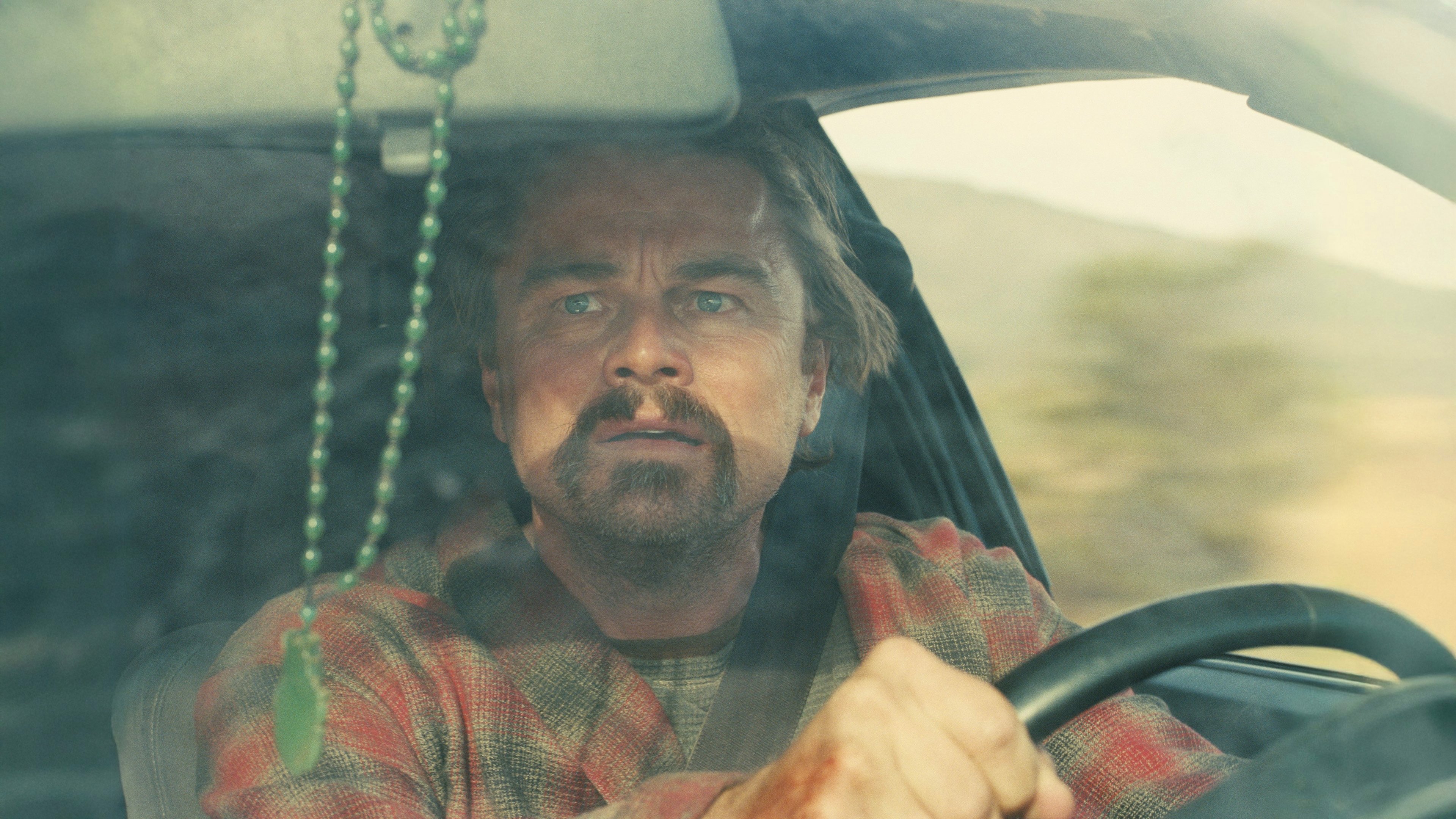
Direction and Mise-en-scène: The Art of the Unnecessarily Complicated
Paul Thomas Anderson is a director who has proven, time and again, that he knows how to construct a scene. From the opening tracking shot of Boogie Nights to the claustrophobic tension of Phantom Thread, his cinema has been synonymous with technical mastery. But in Battle After Battle, that mastery becomes his worst enemy. Every decision seems made not to serve the story, but to prove Anderson can do it. The tracking shots, for example, are technically flawless but narratively hollow. In a key scene, the camera follows DiCaprio for nearly five minutes as he wanders through an abandoned warehouse, talking to secondary characters who contribute nothing to the plot. It’s a display of coordination, sure, but also a reminder that cinema isn’t an Olympic sport.
Michael Bauman’s cinematography, on the other hand, is visually striking but emotionally cold. The muted tones and dim lighting attempt to create an atmosphere of tension, but end up giving the film the vibe of a pretentious music video. There’s a moment where the camera lingers on a close-up of DiCaprio, bathed in a bluish light meant to convey melancholy, but all it conveys is boredom. Jonny Greenwood’s score, as mentioned earlier, is another issue. Instead of complementing the scenes, it smothers them. There’s a recurring theme, a sort of leitmotif with dissonant strings, that appears every time the film tries to be profound. The effect is the opposite: instead of moving the audience, it sounds like a parody of itself.

Performances: Two Titans and a Script That Betrays Them
Leonardo DiCaprio and Sean Penn are two of the best actors of their generation, and in Battle After Battle, they prove why. DiCaprio, in particular, manages to convey Bob’s vulnerability—a man trapped between his revolutionary past and his resigned present. There’s a scene where Bob confronts a group of soldiers, and DiCaprio conveys his character’s fear and determination with just a gesture. It’s a restrained but powerful performance. Penn, meanwhile, steals every scene he’s in. His Colonel Lockjaw is a complex character, full of contradictions, and Penn plays him with an intensity that makes the rest of the cast seem like they’re acting in a different movie. It’s a shame the script doesn’t give him more room to shine.
The rest of the cast, however, isn’t as lucky. Chase Infiniti is the exception: her Willa is fresh, natural, and full of life, and you can’t help but wonder what would’ve happened if Anderson had given her more weight in the story. Benicio del Toro, as Sensei Sergio St. Carlos, seems lost in a sea of pseudo-philosophical dialogue. Regina Hall and Teyana Taylor do their jobs, but their characters are so flat you have to wonder why they bothered accepting the roles. Wood Harris and Tony Goldwyn, meanwhile, seem like they’re in the wrong movie, as if someone handed them the wrong script.
The best
- Sean Penn: His portrayal of Colonel Lockjaw is the only thing saving this film from being a complete disaster. Penn manages to give his character a humanity and complexity the script doesn’t deserve.
- Chase Infiniti: The cast’s revelation. Infiniti steals every scene she’s in, and you can’t help but wonder what would’ve happened if her character had more weight in the story.
- Some visual moments: Though the cinematography is generally cold and pretentious, there are a couple of shots—like the first encounter between Bob and Lockjaw—that prove Bauman knows what he’s doing.
- Jonny Greenwood’s score: While it sometimes smothers more than it accompanies, there are moments where Greenwood’s music elevates the scenes, especially in the tensest moments.
The worst
- The script: Pretentious, scattered, and full of dialogue that aspires to profundity but achieves pedantry. Anderson seems to have forgotten that cinema isn’t an academic essay.
- The unnecessary tracking shots: Technique for technique’s sake. Anderson abuses long tracking shots, but most of them add nothing to the story.
- The runtime: 162 minutes that feel like twice that. The film has no rhythm, and every scene drags on into infinity.
- The secondary characters: Benicio del Toro, Regina Hall, and Teyana Taylor are completely wasted. Their characters are underdeveloped archetypes, and you have to wonder why they bothered accepting the roles.
- The pretension: The film tries to be profound but ends up being a self-indulgent exercise. Anderson seems more interested in proving how smart he is than in telling a good story.
The Verdict of Claqueta Ácida
Battle After Battle is a reminder that even geniuses have off days. Paul Thomas Anderson has crafted a film that’s technically flawless but narratively hollow—a stylistic exercise that’s forgotten the moment you leave the theater. DiCaprio and Penn do what they can, but the script drowns them in a sea of pretension. The film aspires to profundity but ends up being a boring academic essay disguised as cinema. If this is the best Hollywood can offer in 2025, God help us all. 💀
🎬 Tráiler Oficial
Abrir en YouTube
Battle After Battle: frequently asked questions
- What is the rating of "Battle After Battle" on Claqueta Ácida?
- "Battle After Battle" scored 5.8/10 on Claqueta Ácida in the review by Valeria Von Doom.
- Is "Battle After Battle" worth watching?
- With reservations. We gave it 5.8/10 (Citric Acid), our rating for uneven films with something worth saving.
- Who directed "Battle After Battle"?
- "Battle After Battle" was directed by Paul Thomas Anderson.
Theater Collateral Damage Report
Psychophysical impact certificate issued by Valeria Von Doom
1 amago en el tramo intermedio; pestañeo pesado en las transiciones más innecesarias.
Un par de miradas al reloj en el tramo intermedio, comprobando cuánto quedaba de suplicio.
1 espresso para no dejarse vencer por la mediocridad cómoda.
"A mitad del segundo acto cuando la subtrama secundaria empezó a pesar más de lo que aportaba."
💬 Community Verdict
What did you think of the film? Rate it from 0 to 10 to compare it with the editorial review.
You haven't voted yet
📢 ¿Te ha gustado el ácido?
Comparte esta crítica con tus amigos cinéfilos o desata la polémica en redes.
⚡ THE CINEMATIC VENOM YOUR INBOX CRAVES
No sugarcoated ratings, no corporate fluff. Subscribe for our uncensored weekly analysis or join the private Telegram for press previews, poll clashes, and instant alerts.
Alertas de estrenos en 1 segundo, encuestas en caliente y audios al salir de pases de prensa.
Recibe la dosis semanal en tu mail + regalo inmediato del PDF con 50 joyas ocultas de culto.
Related Reviews
Recommended autopsies for demanding film buffs.
 🔥 Fusión Nuclear 8.0
 Licorice Pizza: The Valley of Shattered Dreams (and Unmade Beds)
⚡ Del mismo director (Paul Thomas Anderson): analiza la evolución o degradación de su estilo.
Paul Thomas Anderson gifts us a nostalgic trip to '73 that reeks of gasoline, teenage sweat, and missed opportunities. A masterpiece or just a self-indulgent wank?
 🔥 Fusión Nuclear 8.5
 "One Battle After Another: Paul Thomas Anderson Gets Lost—And Loves Every Minute of It—in Pynchon’s Maze"
⚡ Del mismo director (Paul Thomas Anderson): analiza la evolución o degradación de su estilo.
We dissect the big winner of the 2026 Oscars. A '70s conspiracy odyssey shot on 35mm that dazzles aesthetes and exhausts mere mortals.
 ⚡ Ácido Cítrico 7.1
 28 Years Later: The Bone Temple: when cult cinema trips over its own shadow
⚡ Afinidad temática directa en atmósfera, estilo y fijaciones visuales.
A sequel that smells rotten from the very first frame. Garland and DaCosta try to revive the genre, but the result is a technical knockout dressed up as a masterpiece.
Editorial Ecosystem
Cinephile connections, archive interviews and related analyses.
🎞️ In Claqueta Cinematheque 2

💬 Debate Cinéfilo & Autopsia de Lectores
0 veredictos¿Discrepas con nuestra nota? ¿Es una obra maestra o veneno puro? Deja tu veredicto abajo sin necesidad de registro.


Aún nadie ha dejado su veredicto para esta película.
Sé el primero en clavarle el colmillo rellenando el formulario de arriba.