Old Hag — A Technical Knockout
A devastating takedown of the film Old Hag—a cinematic exorcism that leaves you gasping for air and questioning your life choices.


Old Hag: full review
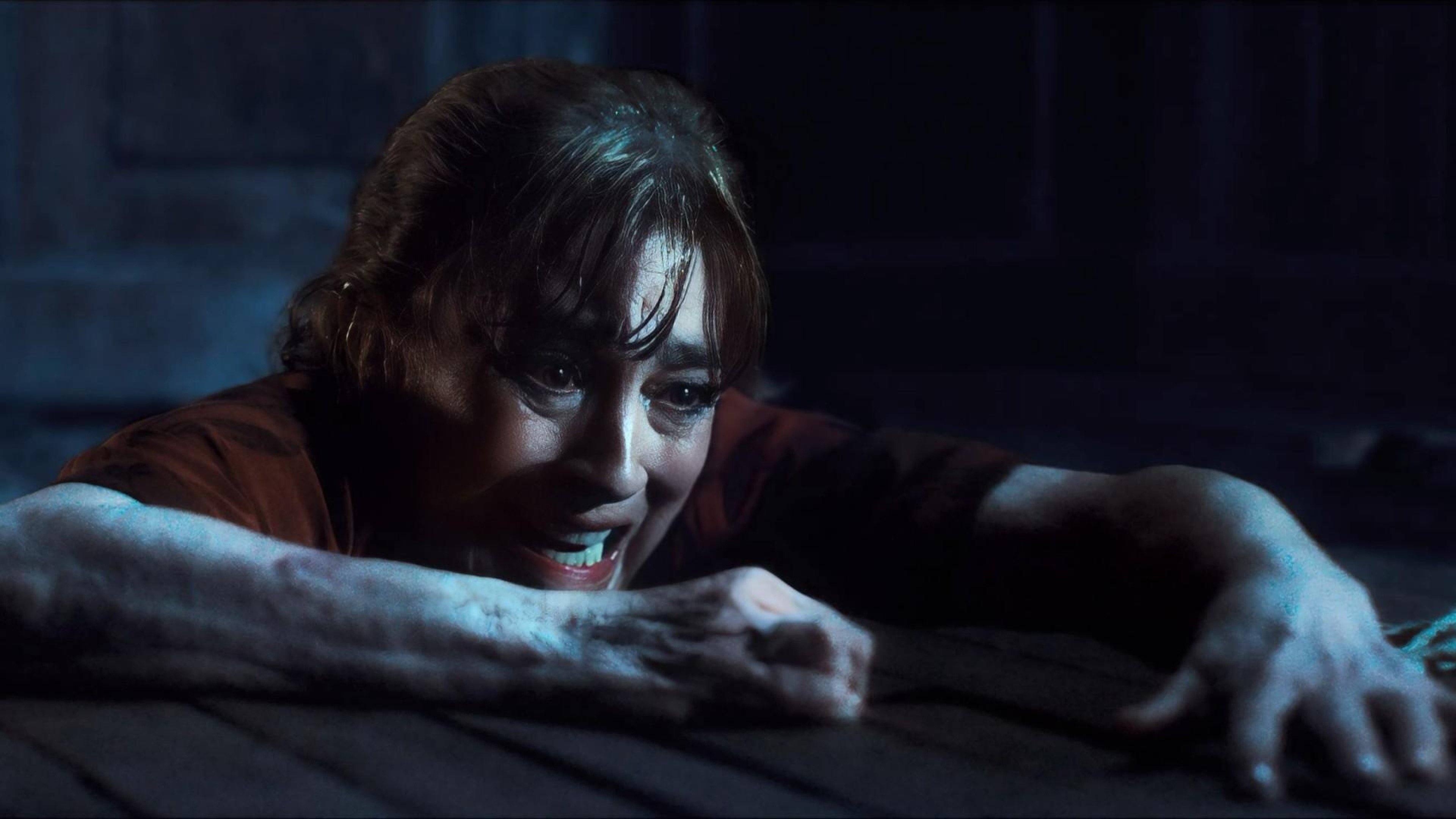
Old Hag isn’t a film—it’s an exorcism. One of those brutal, throat-ripping, egg-frying-your-eyeballs kind of exorcisms. Martín Mauregui, a guy who until now had only proven he could shoot a single take without making it look like a film-school exercise, has decided it’s time to unleash every ounce of bile he’s been storing up while watching Argentine cinema drown in its own self-congratulatory navel-gazing. And my God, has he succeeded. This isn’t a critique of old age, nor is it some black comedy about loneliness. It’s a sucker punch to the solar plexus with a boxing glove stitched together from rotten memories and laughter that tastes like vinegar. From the very first shot—when the camera creeps toward Carmen Maura’s face like a predator sniffing blood—you know you’re not walking out of this unscathed. This hurts. And it hurts good.
The timing couldn’t be more ironic. Released at a moment when Argentine cinema seems obsessed with either its own grim realism or saccharine slice-of-life bullshit, Old Hag arrives like a bull in a china shop. Mauregui, fresh off a string of shorts and indie features that barely made a ripple, has decided his third film would be his declaration of war. And not some metaphorical war, either—this is the real deal, the kind that leaves scars. The budget, according to production sources, didn’t even crack $800,000, a pittance even by Argentine standards. But Mauregui and his team have turned that limitation into a virtue, shooting in real locations with actors who look ready to immolate themselves on screen and a cinematography that doesn’t need digital effects to feel dangerous. The result is a film that reeks of sweat, of cigarettes stubbed out in tin ashtrays, and that particular brand of desperation you only feel when you realize time has slipped through your fingers like sand.
The story is insultingly simple: an older woman, played by Carmen Maura, decides she’s had enough of being invisible. So, in a fit of deranged clarity, she kidnaps a young man (Daniel Hendler) and forces him to be her accomplice in a series of petty crimes that escalate into something far darker. What starts as a macabre game—robbing a supermarket, humiliating an ex-boyfriend—morphs into something much uglier. And this is where Mauregui proves he’s not just some shock-jock provocateur: he knows exactly when to pull the trigger and when to let silence do the dirty work. There’s a scene, late in the first act, where Maura and Hendler argue in a parked car. The camera lingers outside, filming through the fogged-up windshield, and all you hear is the sound of their ragged breathing. No music, no unnecessary dialogue. Just two people teetering on the edge of the abyss, wondering how the hell they got there. It’s the kind of moment that leaves you breathless—not because of what happens, but because of what doesn’t.
Direction and Mise-en-scène: The Art of Not Blinking
Martín Mauregui doesn’t direct—he flays. Every frame of Old Hag seems designed to unsettle, to remind you that you’re watching something you probably shouldn’t be. It’s not just that the film has an unrelenting pace—though it does—but that every shot, every camera movement, every cut is calculated to make you feel like you’re trespassing. Mauregui uses medium and close-up shots like knives: not to slash, but to dig into the wound. There’s a particular sequence, shot in a single take, where Maura and Hendler enter a dive bar. The camera follows them as they weave between drunken patrons, dodging elbows and spilled beer, until they slump into a corner booth. No cuts, no editing tricks. Just two actors and a camera that refuses to blink. It’s uncomfortable. It’s brilliant. And it’s exactly what cinema should be: consensual voyeurism at its most visceral.
But the most impressive thing about Mauregui’s direction is how he handles tone. Old Hag could’ve been a run-of-the-mill dark comedy, one of those films that winks at the audience while laughing at old age and loneliness. But Mauregui doesn’t have time for winks. Here, the humor is caustic, corrosive, always one step away from curdling into something far darker. There’s a scene where Maura forces Hendler to dress in drag to distract a security guard. What starts as a ridiculous situation—Hendler in a wig and dress, stammering like a teenager—twists into something almost sinister when Maura looks at him with a smile that never reaches her eyes. It’s not funny. It’s terrifying. And it’s exactly why the film works. Mauregui doesn’t give you a break, doesn’t let you laugh without feeling guilty. It’s like staring directly into the sun: you know it’s going to burn, but you can’t look away.
The editing, handled by Alberto Ponc, is another of the film’s strengths. There isn’t a single superfluous shot or unjustified cut. Ponc works with a rhythm that recalls ‘70s thrillers, but with a modern, almost punk edge. The cuts are sharp, abrupt, and often land when you least expect them. There’s a scene where Maura and Hendler argue in an empty apartment. The camera frames them in a medium shot, but suddenly, without warning, the edit jumps to a close-up of Maura’s trembling hands. No music, no dialogue. Just the sound of her breathing and the shake of her fingers. It’s a small moment, almost insignificant, but it’s exactly the kind of detail that makes Old Hag unforgettable.

Performances: Hell Has a Name and a Surname
Carmen Maura doesn’t act in Old Hag. She bleeds. It’s one of those performances that leaves you exhausted—not because it’s histrionic or over-the-top, but because it’s so real it hurts. Maura plays a woman who’s gone from being the center of attention to being invisible, and she does it with a cocktail of rage, sorrow, and pitch-black humor that’s hard to describe. There’s a scene where her character, after kidnapping Hendler, sits in front of a mirror and applies makeup as if she’s getting ready to go out. She doesn’t say anything, doesn’t do anything dramatic. She just puts on her face, slowly, almost ritualistically. But the way Maura looks at her own reflection—a mix of contempt and nostalgia—is enough to break your heart. This isn’t acting. It’s a document.
Daniel Hendler, for his part, rises to the occasion. His character is the perfect foil to Maura’s: young, insecure, but with a simmering rage that erupts when you least expect it. Hendler has a scene where, after being humiliated by Maura, he breaks down crying in a public restroom. It’s not some dramatic, soap-opera sobfest. It’s an ugly cry, the kind that leaves your face puffy and your eyes red. It’s uncomfortable to watch, and that’s exactly what the film needs. Hendler isn’t afraid to look vulnerable, and that’s what makes his performance work.
But if there’s anyone who steals every scene they’re in, it’s Agustina Liendo. Her character, a nosy neighbor dragged into Maura and Hendler’s madness, is one of the film’s surprises. Liendo has a commanding physical presence, and Mauregui knows it. He films her like a ticking time bomb: you never know when she’s going to explode, but you know she will. There’s a scene where Liendo and Maura argue in a narrow hallway. The camera frames them in a medium shot, but Liendo steps so close to Maura she’s almost touching her. She doesn’t say anything, just stares at her with a smile that’s half threat, half complicity. It’s a small moment, but it’s one of those details that makes Old Hag stick with you.
Technical Breakdown: When Craft Becomes Art
Julián Apezteguia’s cinematography is, quite simply, a masterpiece. It’s not pretty, nor is it the kind of photography that draws attention to itself. It’s photography that serves the story, and it does so with surgical precision. Apezteguia uses a cold, almost metallic color palette that mirrors the emotional frigidity of the characters. Blues and grays dominate the film, but there are flashes of red—a dress, a door, a sign—that act as warnings. It’s as if the film is telling you, “This is going to hurt, and there’s nothing you can do to stop it.”
The production design, handled by María Eugenia Sueiro, is another of the film’s strengths. Sueiro has created a world that’s both realistic and dreamlike, a place where grime and decay coexist with unexpected flashes of beauty. The settings—a rundown apartment, a dive bar, an empty supermarket—are packed with details that reinforce the feeling that you’re watching something real. There’s a scene where Maura and Hendler are in an abandoned warehouse. The walls are covered in graffiti, the floor is littered with trash, and a dim light filters through a broken window. It’s not a pretty set, but it’s exactly the kind of place where this story could happen.
The score, composed by Diego Vainer, is minimalist but effective. There are no grand orchestral themes or catchy melodies. Just a series of ambient sounds—the hum of a fluorescent light, the growl of an engine starting, the echo of footsteps in an empty hallway—that heighten the constant sense of tension. There’s a scene where Maura and Hendler are driving at night. The music is almost imperceptible, just a low hum that grows in intensity until it cuts out abruptly. It’s a small moment, but it’s exactly the kind of detail that makes the film work.
The best
Carmen Maura’s performance: This isn’t acting—it’s an exorcism. Maura doesn’t play her character; she inhabits* her. Every glance, every gesture, every silence is loaded with a truth that stings. It’s one of those performances that leaves you exhausted, not because it’s over-the-top, but because it’s so real it feels like you’re invading someone’s privacy.- Martín Mauregui’s direction: Mauregui isn’t afraid to make you uncomfortable. Every shot, every cut, every camera movement is designed to make you feel like an intruder. This isn’t a film that invites you in—it drags you in kicking and screaming. And in an era where cinema increasingly resembles a theme park, that’s a breath of fresh air.
- Julián Apezteguia’s cinematography: It’s not pretty, but it’s honest. Apezteguia uses a cold, metallic color palette that reflects the emotional frigidity of the characters. Every frame seems designed to remind you that you’re watching something you shouldn’t be.
- Alberto Ponc’s editing: Ponc works with a rhythm that recalls ‘70s thrillers, but with a modern edge. The cuts are sharp, abrupt, and often land when you least expect them. There isn’t a single superfluous shot or unjustified cut.
- The chemistry between Carmen Maura and Daniel Hendler: It’s not romantic, nor is it even pleasant. It’s toxic, dangerous, the kind of chemistry that leaves you with the feeling that something bad is about to happen. And that’s exactly why it works.
The worst
The ending: It’s not bad, but it’s a bit abrupt. After ninety minutes of unrelenting tension, the finale hits like a bucket of ice water. It’s not a bad* ending, but it leaves you with the sense that something more could’ve been there.- Some of the dialogue: There are moments where the lines sound a bit forced, as if the characters are saying things just to move the plot along. It’s not enough to ruin the film, but it’s noticeable.
The Verdict of Claqueta Ácida
Old Hag is one of those films that leaves you breathless—not because it’s perfect, but because it’s honest. Brutally, unflinchingly honest. Martín Mauregui has crafted a work that doesn’t resemble anything being made today, a film that isn’t afraid to unsettle, to hurt, to leave you with the feeling that you’ve seen something you shouldn’t have. Carmen Maura is sublime, the cinematography is a work of art, and the editing is relentless. It’s not a film for everyone, nor is it one you’ll necessarily want to watch twice. But it’s a film that, once you’ve seen it, you won’t be able to forget. And in the end, that’s all that matters. 💀🎬 Tráiler Oficial
Abrir en YouTube
Old Hag: frequently asked questions
- What is the rating of "Old Hag" on Claqueta Ácida?
- "Old Hag" scored 7.5/10 on Claqueta Ácida in the review by Camilo K.O..
- Is "Old Hag" worth watching?
- With reservations. We gave it 7.5/10 (Citric Acid), our rating for uneven films with something worth saving.
- Who directed "Old Hag"?
- "Old Hag" was directed by Martín Mauregui.
Theater Collateral Damage Report
Psychophysical impact certificate issued by Camilo K.O.
1 amago en el tramo intermedio; pestañeo pesado en las transiciones más innecesarias.
Alguna consulta furtiva al móvil en el segundo acto. Nada que no se perdone.
2 espressos para no dejarse vencer por la mediocridad cómoda.
"A mitad del segundo acto cuando la subtrama secundaria empezó a pesar más de lo que aportaba."
💬 Community Verdict
What did you think of the film? Rate it from 0 to 10 to compare it with the editorial review.
You haven't voted yet
📢 ¿Te ha gustado el ácido?
Comparte esta crítica con tus amigos cinéfilos o desata la polémica en redes.
⚡ THE CINEMATIC VENOM YOUR INBOX CRAVES
No sugarcoated ratings, no corporate fluff. Subscribe for our uncensored weekly analysis or join the private Telegram for press previews, poll clashes, and instant alerts.
Alertas de estrenos en 1 segundo, encuestas en caliente y audios al salir de pases de prensa.
Recibe la dosis semanal en tu mail + regalo inmediato del PDF con 50 joyas ocultas de culto.
Related Reviews
Recommended autopsies for demanding film buffs.
 🔥 Fusión Nuclear 8.0
 Bitter Christmas: Almodóvar Comes Home (And Saves Us from Corporate Holiday Hell)
⚡ Consagradas en el olimpo transgresor con 🔥 Fusión Nuclear.
Almodóvar turns holiday grief into an intimate, visually stunning, and emotionally raw drama. Bárbara Lennie shines, but the script stumbles in the third act. 8/10.
 🔥 Fusión Nuclear 8.0
 The End of Oak Street: David Robert Mitchell Reinvents Cosmic Horror Without Losing Its Human Core
⚡ Consagradas en el olimpo transgresor con 🔥 Fusión Nuclear.
Anne Hathaway and Ewan McGregor lead this claustrophobic descent where the unknown isn’t a monster—it’s reality itself unraveling at the seams. Mitchell proves once again that the most terrifying horror is the kind that festers in the intimate.
 🔥 Fusión Nuclear 9.0
 The Odyssey: Nolan’s Epic Ego Trip
⚡ Consagradas en el olimpo transgresor con 🔥 Fusión Nuclear.
Christopher Nolan’s *The Odyssey*: A cinematic masterpiece—or a bloated vanity project drowning in its own pretensions?
Editorial Ecosystem
Cinephile connections, archive interviews and related analyses.
💬 Debate Cinéfilo & Autopsia de Lectores
0 veredictos¿Discrepas con nuestra nota? ¿Es una obra maestra o veneno puro? Deja tu veredicto abajo sin necesidad de registro.


Aún nadie ha dejado su veredicto para esta película.
Sé el primero en clavarle el colmillo rellenando el formulario de arriba.