Chained — The Hitchcock Network
Acidic review of 'Chained', the Hitchcock film that will trap you


Chained: full review
I left the cinema with the feeling that someone had put me in a cocktail shaker full of ice, cheap whiskey, and a pair of rattlesnakes. Chained is not a film, it's a physical experience. Alfred Hitchcock, that brilliant fat man with a bulldog face and surgeon's hands, once again demonstrated in 1946 that suspense is not a genre, but a state of mind. And boy, does it leave you in that state: sweating, with your heart racing, and wondering if the guy sitting next to you in the seat is a Nazi spy or just a spectator who smells like stale popcorn. RKO and Vanguard Films risked their necks with this project in the post-war period, when the world still smelled of gunpowder and betrayal. And Hitchcock, like a good sadist, decided that the best setting for a toxic romance was not Paris, but Rio de Janeiro, with second-rate Nazis, poisoned champagne, and a Cary Grant who looks like he just stepped out of an expensive suit ad but with the gaze of someone about to strangle you with a silk tie.
The context is not a minor detail. Chained premiered when Europe still had its wounds open and the United States was beginning to realize that the world was not a safe place. Hitchcock, who had already played with fear in Rebecca and The Shadow of a Doubt, decided it was the perfect time to mix espionage, romance, and a generous dose of paranoia. And he did it with his elegance, as British as a five o'clock tea, but with a touch of perversion that only a guy who collected mannequins could have. The film not only reflects the climate of the time but amplifies it to the point of making it almost tangible. When Ingrid Bergman looks at Cary Grant with those deer-in-headlights eyes, you're not seeing a love scene, you're seeing a contract signed in blood. And when Claude Rains smiles as if he's just won the war, you know you're facing a villain who doesn't need monsters or special effects to give you goosebumps.
Hitchcock was not a director, he was a magician with a budget and a script. And in Chained, his favorite illusion trick was the subjective shot. That moment when the camera becomes the eyes of Alicia Huberman (Bergman) while she drinks poisoned champagne, with the room spinning as if the whole world is drunk, is pure cinematic alchemy. It's not just that you get into the character's skin, you're forced to do so. And when the camera stops on Bergman's close-up, with her sweaty face and trembling lips, you understand why the close-up is the most powerful weapon in cinema. Hitchcock doesn't show you fear, he injects it into your veins.
But it's not all technique. Chained is also a film about betrayal, and not just the Nazis'. The relationship between Alicia and Devlin (Grant) is a macabre dance where love and hate are confused to the point of becoming indistinguishable. Grant, with that air of a leading man that hides a knife in his smile, and Bergman, with that fragility that's pure dynamite, create a chemistry that burns the screen. There's a scene in particular, in a Rio apartment, where Devlin tells Alicia that 'love is a word that's used too much'. It's not a dialogue, it's a stab. And Hitchcock knows it, because he films it with the coldness of a scientist observing an experiment. There's no music, just silence and the sound of two people destroying each other with words. It's brutal, it's beautiful, and it's cinema in its purest form.

Analytical Development

#### Direction: Hitchcock and his obsession with control
Hitchcock didn't direct actors, he dissected them. In Chained, every movement, every glance, every gesture is calculated to the millimeter. It's no coincidence that the film starts with a close-up of a champagne glass. It's not just an object, it's a metaphor: something shiny, dangerous, and about to break. The director uses framing like a surgeon uses a scalpel, cutting where it hurts to reveal what's underneath. And what's underneath, in this case, is a story of love that's also a story of espionage, where kisses taste like poison and smiles hide daggers.
One of the most brilliant moments in the film is the casino concert sequence. Hitchcock films Bergman and Grant dancing while the camera spins around them, creating a sense of vertigo that perfectly reflects the characters' emotional state. It's not just a long take, it's a statement of intent: the world is upside down, and you, the viewer, are in the eye of the hurricane. The director also plays with what's off-screen, like when Alicia discovers the champagne is poisoned. We don't see the poison, we don't see Devlin's reaction, but the silence and Bergman's expression say it all. Hitchcock understood that what's not shown is just as important as what is shown.
But not everything is perfect. There's a moment when the film trips over its own cleverness: the airport scene, where Devlin and Alicia reunite after a forced separation. The dialogue is too explanatory, almost as if Hitchcock had lost confidence in his ability to tell the story with just images. It's a rare mistake for a director who usually trusted in the power of the visual, and it hurts because it breaks the spell he had woven up to that point.
#### Performances: Bergman, Grant, and Rains, or how to steal the show without seeming to
Ingrid Bergman doesn't act in Chained, she suffers. And she does it with an elegance that makes every tear, every stifled cry, every desperate glance seem real. She's not an actress playing a spy, she's a woman trapped in a nightmare she can't wake up from. Her chemistry with Cary Grant is electric, but not in the traditional romantic sense. It's a chemistry of distrust, of attraction and repulsion at the same time. Grant, for his part, is in his element: cold, calculating, but with a glimmer of humanity that makes you wonder if he's really the hero or just another villain in a better suit.
But if there's someone who steals the show, it's Claude Rains. His portrayal of Alexander Sebastian, the second-rate Nazi with an inferiority complex, is a masterpiece of subtlety. Rains doesn't need to shout or make a fuss to be scary. A smile, a gesture, a sideways glance is enough. He's the kind of villain that makes you hate him and pity him at the same time, because you know he's just a poor devil who's gotten in over his head in a game he can't win. There's a scene in particular, when Sebastian discovers Alicia has betrayed him, where Rains conveys more with silence than many actors do with a ten-page monologue. It's pure terror, but without monsters or special effects. Just a broken man in front of a mirror.
#### Technical Aspect: When cinema was art and not just spectacle
Ted Tetzlaff's photography is another of the film's strong points. Tetzlaff, who had already worked with Hitchcock on Notorious (yes, this film was called that in some countries, and no, it's not a coincidence that the original title is almost the same), understands that film noir is not just a genre, but a palette of colors. The chiaroscuro, the long shadows, the faces half-illuminated by a lamp... Everything is designed to create an atmosphere of claustrophobia and paranoia. There's a shot in particular, when Alicia and Devlin kiss in the Rio apartment, where the light filters through a blind, creating a pattern of stripes on their faces. It's not just a visual effect, it's a metaphor: they're trapped, chained, and there's no escape.
Roy Webb's music also deserves mention. It's not an invasive soundtrack, but more of a whisper that accompanies the characters in their darkest moments. Webb uses the main theme, a romantic melody with a hint of sadness, to underscore the irony of the story: this is not a romance, it's a trap. And when the music disappears, like in the poisoning scene, the silence becomes deafening.
The production design, handled by Albert S. D'Agostino and Jack Okey, is another success. The sets, from the luxurious Rio apartment to Sebastian's mansion, are designed to reflect the characters' emotional state. Alicia and Devlin's apartment is cold, almost clinical, like their relationship. Sebastian's mansion, on the other hand, is dark and labyrinthine, like his mind. Even the smallest detail, like the paintings on the walls or the furniture, is thought out to immerse you in the film's world.
Theron Warth's editing is another key element. Hitchcock was a master of rhythm, and in Chained, he proves it with sequences that seem choreographed. The casino concert scene, for example, is a ballet of shots and counter-shots that keeps you on edge. Warth understands that editing is not just cutting and pasting, but creating tension, and he does it with surgical precision.
The best
- Hitchcock's direction: Every shot is a lesson in cinema. Hitchcock doesn't just tell a story, he forces you to feel it in your skin. His use of off-screen space, subjective shots, and silence as a narrative tool are masterful.
- Ingrid Bergman's performance: It's not an interpretation, it's an immersion. Bergman doesn't act out fear, she lives it. And she transmits it with a naturalness that makes every scene believable.
- Ted Tetzlaff's photography: A play of light and shadow that turns every shot into a painting. Tetzlaff understands that film noir is not just a genre, but a state of mind.
- Claude Rains' interpretation: A villain who doesn't need to shout to be scary. Rains turns Alexander Sebastian into an unforgettable character, with a mix of pathos and cruelty that makes him unique.
- Ben Hecht's script: Dialogues as sharp as knives and a narrative structure that keeps you hooked from the first minute. Hecht knows that suspense is not just what happens, but what's not said.
The worst
- Some flat secondary characters: There are characters, like Sebastian's mother, who seem to have been taken from a manual of second-rate villains. They add nothing and their development is almost non-existent.
- A somewhat rushed third act: The plot resolution, especially the final escape, seems too quick compared to the rest of the film's slow pace. Hitchcock gets carried away by urgency and loses some of his usual elegance.
- Some explanatory dialogues: There are moments, like the airport scene, where the characters talk too much. Hitchcock usually trusted in the visual, but here he seems to doubt his ability to tell the story without words.
- The romance between Alicia and Devlin: Although the chemistry between Bergman and Grant is undeniable, there are moments when their relationship seems forced. It's not the actors' fault, but the script's, which sometimes prioritizes suspense over emotional coherence.
The Verdict of Claqueta Ácida
Chained is not just a film, it's a manual on how to make cinema. Hitchcock once again demonstrates that suspense is not a genre, but an art, and he does it with an elegance that few directors have matched. Bergman and Grant are superb, Rains is a villain for the ages, and Tetzlaff's photography is a masterpiece. But it's not perfect: some secondary characters are expendable, the third act feels rushed, and there are moments when the script trips over its own cleverness.That said, Chained remains a film that hurts, that leaves you marked. It's not just a classic, it's an experience that forces you to look inside yourself and wonder how far you'd be willing to go for love, loyalty, or survival. And that, dear readers, is what makes cinema great. 9.2/10. But be careful: if you watch it, don't trust anyone. Not even the guy passing you the popcorn. 💀
🎬 Tráiler Oficial
Abrir en YouTube
Chained: frequently asked questions
- What is the rating of "Chained" on Claqueta Ácida?
- "Chained" scored 8.5/10 on Claqueta Ácida in the review by Bastian Noir.
- Is "Chained" worth watching?
- Yes. We gave it 8.5/10 (Nuclear Fusion), our rating for must-see films.
- Who directed "Chained"?
- "Chained" was directed by Alfred Hitchcock.
Theater Collateral Damage Report
Psychophysical impact certificate issued by Bastian Noir
Cero bostezos. Pupilas dilatadas y tensión mandibular constante.
Ninguna comprobación del tiempo. Se agradece la rareza.
Ninguna. Guarda el café para la sesión siguiente.
"No aplica. La obra se sostiene sola."
💬 Community Verdict
What did you think of the film? Rate it from 0 to 10 to compare it with the editorial review.
You haven't voted yet
📢 ¿Te ha gustado el ácido?
Comparte esta crítica con tus amigos cinéfilos o desata la polémica en redes.
⚡ THE CINEMATIC VENOM YOUR INBOX CRAVES
No sugarcoated ratings, no corporate fluff. Subscribe for our uncensored weekly analysis or join the private Telegram for press previews, poll clashes, and instant alerts.
Alertas de estrenos en 1 segundo, encuestas en caliente y audios al salir de pases de prensa.
Recibe la dosis semanal en tu mail + regalo inmediato del PDF con 50 joyas ocultas de culto.
Related Reviews
Recommended autopsies for demanding film buffs.
 🔥 Fusión Nuclear 8.5
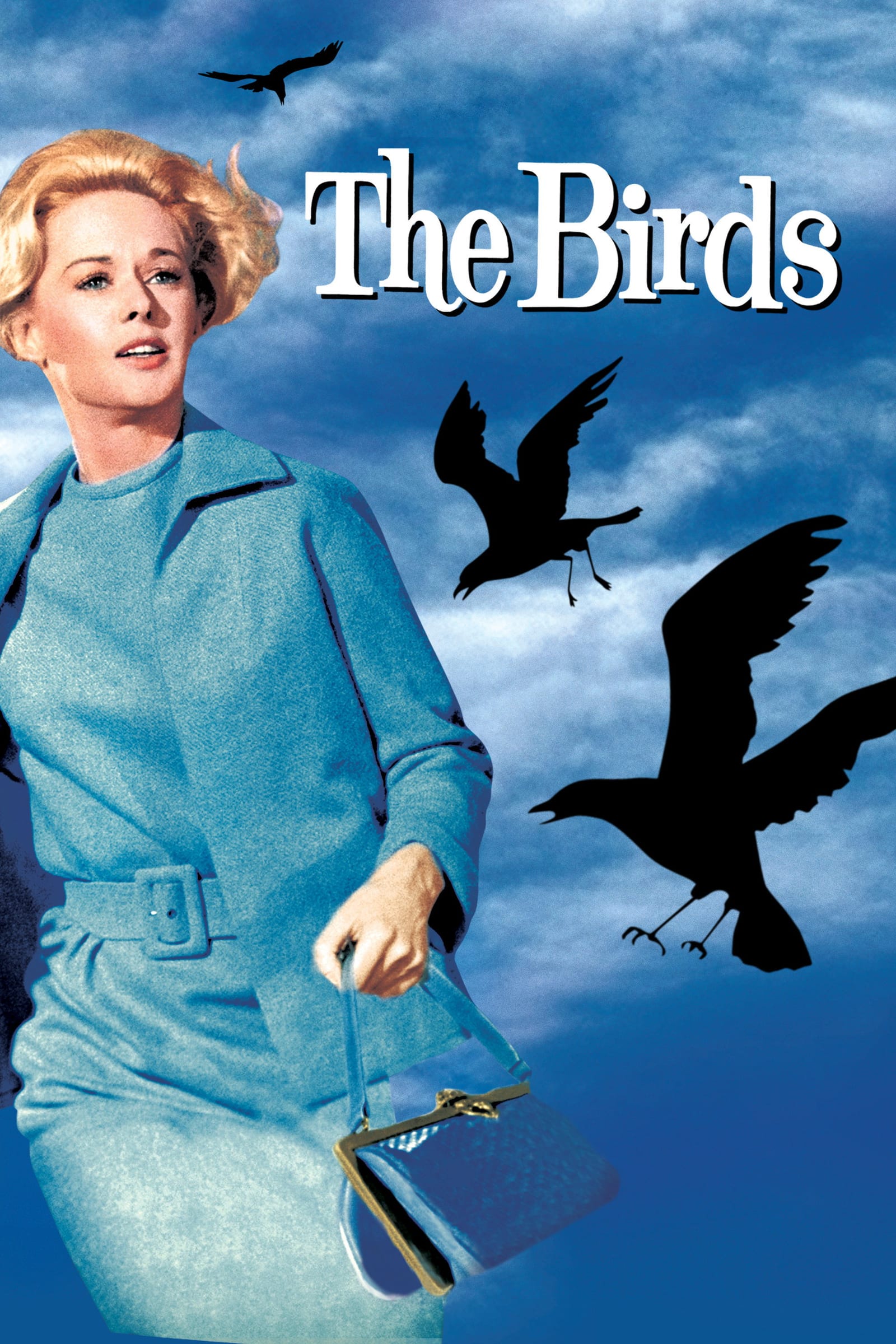
The Birds: When the Sky Became a Feathered Slaughterhouse of Psychosis
⚡ Del mismo director (Alfred Hitchcock): analiza la evolución o degradación de su estilo.
Hitchcock turns birds into winged assassins in this ornithological nightmare. Masterpiece or feathered panic? Claqueta Ácida dissects the chaos.
 🔥 Fusión Nuclear 9.5
*Vertigo: Hitchcock’s Broken Mirror or How to Turn Jimmy Stewart Into a Stylish Psychopath*
⚡ Del mismo director (Alfred Hitchcock): analiza la evolución o degradación de su estilo.
A scathing, analytical takedown of *Vertigo*, Alfred Hitchcock’s suspense masterpiece. A descent into psychological obsession and visual fetishism that exposes Hollywood’s necrophilic romance.
 🔥 Fusión Nuclear 9.3
2001: A Space Odyssey — The Day Kubrick Left Us Speechless (and Oxygenless)
⚡ Consagradas en el olimpo transgresor con 🔥 Fusión Nuclear.
Kubrick turned science fiction into pure art: 149 minutes of eloquent silence, bone-wielding apes, and a psychopathic computer. Masterpiece or pretentious fraud? Here’s the verdict.
Editorial Ecosystem
Cinephile connections, archive interviews and related analyses.
🎞️ In Claqueta Cinematheque 2
💬 Debate Cinéfilo & Autopsia de Lectores
0 veredictos¿Discrepas con nuestra nota? ¿Es una obra maestra o veneno puro? Deja tu veredicto abajo sin necesidad de registro.

Aún nadie ha dejado su veredicto para esta película.
Sé el primero en clavarle el colmillo rellenando el formulario de arriba.