28 Years Later — The Rage Virus Returns... Along with the Boredom
Danny Boyle and Alex Garland attempt to resurrect post-apocalyptic terror with an iPhone 15 Pro Max. Spoiler: it doesn’t work.


28 Years Later: full review

Post-apocalyptic horror cinema has been gnawing on its own entrails for decades, like a zombie chewing off its own arm. '28 Years Later' stumbles into 2025 with the promise of reviving the legacy of 28 Days Later and 28 Weeks Later, but armed with the technology of an iPhone 15 Pro Max and the soul of a script that feels like it was scribbled during a coffee break. Danny Boyle, the same man who gave us Trainspotting and Slumdog Millionaire, hops onto the apocalypse bandwagon with the same energy a child brings to a rollercoaster: enthusiastic, but utterly clueless.
The official synopsis mentions the rage virus has returned, but what’s truly back is exhaustion. Exhaustion at watching the same tired formula unfold again and again: survivors, hordes of infected, a charismatic leader, and an ending that always leaves the door ajar for a sequel. Spoiler: this one’s no exception. Shot across the UK and the US, the film might as well have been set anywhere—because the apocalypse here is so generic it could unfold in a shopping mall in any city. And no, it’s not a coincidence the budget is tight: when the rage virus strikes, the first thing to vanish is cash for decent special effects.
And in horror cinema, that’s a cardinal sin.
The rage virus isn’t new: in 2002, Boyle and Alex Garland gifted us 28 Days Later, a film that revolutionized the genre with its frenetic pace and grungy aesthetic. Now, 23 years later, they’re trying to revive the formula with a script that reeks of reheated leftovers. Garland, the same mind behind Ex Machina and Annihilation, should know sequels are rarely good—especially when they repeat the same mistakes. Yet here we are, watching a group of survivors attempt to eke out an existence in a world that’s already lost its soul. And the worst part? They don’t even try with conviction.
Released in 2025, the film could’ve been set in any other decade. The zeitgeist is one of cheap nostalgia, of trying to resurrect ghosts of the past without realizing those ghosts no longer scare anyone. And that, dear viewers, is the real infection: the infection of indifference. The infection of watching a film that doesn’t hurt, doesn’t move, doesn’t even annoy. It just exists, like another zombie in the horde ravaging the screen. And deep down, we all know this isn’t the end of the world. It’s just the end of patience for those who still believe horror cinema is art, not fast-consumption junk.
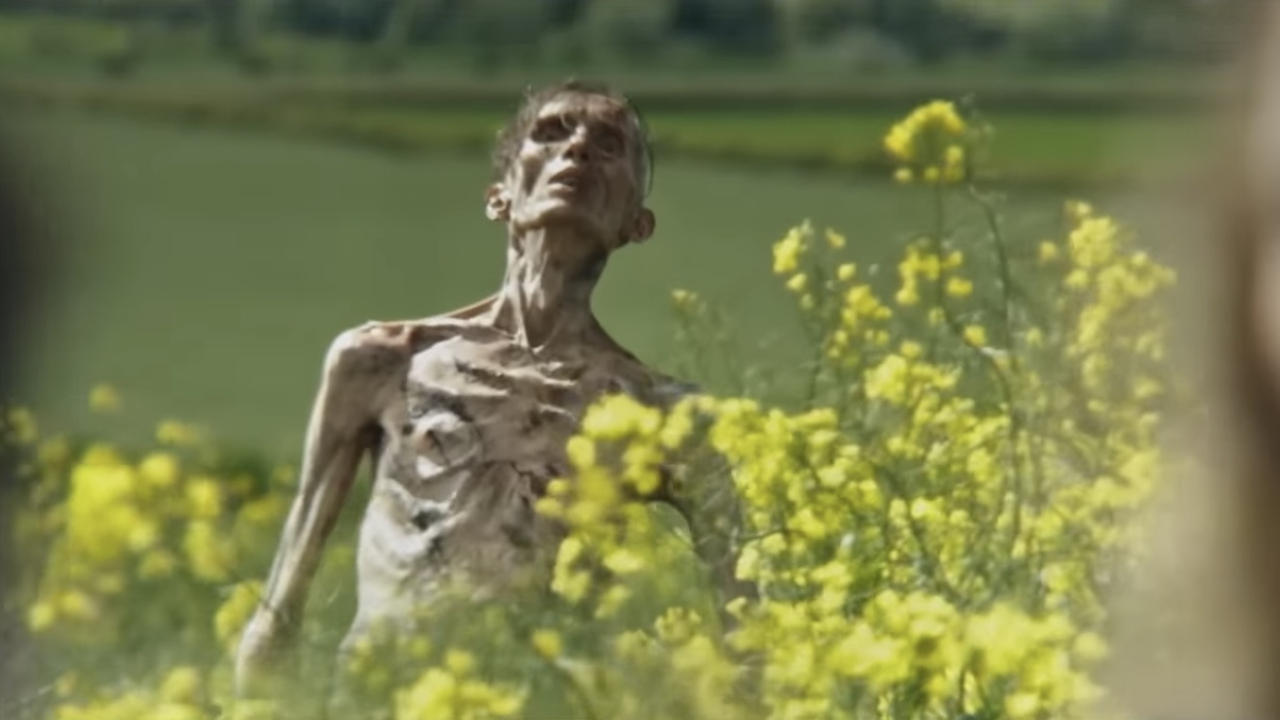
The film was shot on an iPhone 15 Pro Max, according to the official synopsis. No joke. No mistranslation. It’s real. Danny Boyle, the same director who delivered iconic images like infected sprinting through an empty London, now offers shots that look like they were lifted from a bored teenager’s TikTok. Anthony Dod Mantle’s cinematography, which won an Oscar for Slumdog Millionaire, here feels like it was handled by an amateur in a hurry. The colors are washed out, the framing is clumsy, and the lighting is so poor even the infected need sunglasses. Spoiler: they don’t wear them.
Alloysious Massaquoi’s score sounds like it was composed during a lunch break. There’s no tension, no rhythm, no justification for its existence. It’s as if the film were edited by a YouTube algorithm designed solely to maximize watch time. And it succeeds: you sit through to the end, not because of the content, but out of morbid curiosity to see just how far the disaster can go.
Boyle’s direction is erratic. Sometimes it tries to be poetic, other times violent, but it always ends up boring. The actors, for their part, do what they can with material that doesn’t deserve their talent. Aaron Taylor-Johnson, playing Jamie, is the only one who seems to grasp this is a horror film, not a documentary about rush-hour rage. Jodie Comer, as Isla, has moments where she nearly saves the situation, but the script drags her into the abyss of predictability. Ralph Fiennes, as Dr. Kelson, seems to be in another film—or perhaps another century. Jack O’Connell, as Sir Jimmy Crystal, has a character that could’ve been interesting, but ends up as another cliché in an endless list.
The editing is another disaster. Action scenes are confusing, time jumps make no sense, and the pacing is so uneven even the infected look exhausted. The film tries to be epic but ends up ridiculous.
Direction and Staging
Danny Boyle attempts to resurrect post-apocalyptic terror with the same energy a child brings to assembling Lego without instructions. The result is a film that lurches between pretentiousness and ridiculousness, never finding its footing. The wide shots of empty cities, iconic in 28 Days Later, here look like they were ripped from a bargain-bin video game. The camera shakes too much, the framing is clumsy, and the lighting is so poor even the infected need sunglasses. The direction of actors is another disaster. Taylor-Johnson does what he can with a character lacking depth, Comer tries to inject life into a strong woman but the script drags her into cliché, and Fiennes seems to be in another film—or another century. The staging is chaotic. Boyle tries to be poetic, violent, epic, but always ends up boring. Moments of tension dissolve into a sea of poorly framed shots and dialogue that sounds like filler. The film tries to be a meditation on humanity but ends up reflecting its own mediocrity.

Script and Pacing
Alex Garland, the same writer behind Ex Machina and Annihilation, should know sequels are rarely good—especially when they repeat the same mistakes. The script for 28 Years Later is a mess of inconsistencies, clunky dialogue, and situations that make no sense. The characters act like they’re in a high school play, not a post-apocalyptic wasteland. The time jumps are confusing, the pacing is erratic, and the tension dissipates like an infected in broad daylight. Spoiler: there is no tension. The dialogue sounds like filler, the characters are archetypes without depth, and the plot is so predictable even the infected could’ve guessed the ending. Garland should’ve known the rage virus stopped scaring after 28 Weeks Later. Now it just bores.
Technical Aspects
The production design is another disaster. The sets look like they were lifted from a high school drama club, not a post-apocalyptic wasteland. The costumes are anachronistic, the props look like they were bought secondhand, and the infected designs are so poor even a Resident Evil zombie would blush. Spoiler: they don’t scare, only evoke pity.
The best
- Anthony Dod Mantle’s cinematography: A shadow of what it once was.
- Aaron Taylor-Johnson: The only one who seems to grasp this is a horror film, not a documentary about rush-hour rage. He does what he can with material that doesn’t deserve his talent.
- Alloysious Massaquoi’s score: Sounds like it was composed during a lunch break.
- The production design: So poor even a Resident Evil zombie would blush.
The worst
- Alex Garland’s script: A mess of inconsistencies, clunky dialogue, and situations that make no sense.
- Danny Boyle’s direction: Lurches between pretentiousness and ridiculousness, never finding its footing.
- The editing: Action scenes are confusing, time jumps make no sense, and the pacing is so uneven even the infected look exhausted.
- The infected designs: So poor even a Resident Evil zombie would blush.
- The use of the iPhone 15 Pro Max: Not an ironic nod—it’s an excuse. The film was shot on a phone because the budget couldn’t stretch further, and it shows in every frame.
The Verdict of Claqueta Ácida
28 Years Later is definitive proof that post-apocalyptic cinema has nothing new to say. Danny Boyle and Alex Garland try to revive the legacy of their own films, but all they manage is a pale, soulless shadow of what they once were. The cinematography is a disaster, the script is chaos, and the pacing is so uneven even the infected look bored. Aaron Taylor-Johnson saves what little there is to save, but the rest is a waste of talent. The film was shot on an iPhone 15 Pro Max, and it shows in every frame. Spoiler: it’s not an ironic nod—it’s an excuse. The rage virus has returned, but what’s truly back is exhaustion. Exhaustion at watching the same tired formula, the same boredom, the same lack of originality unfold again and again. 28 Years Later isn’t the end of the world. It’s just the end of patience for those who still believe horror cinema is art. 💀
🎬 Tráiler Oficial
Abrir en YouTube
28 Years Later: frequently asked questions
- What is the rating of "28 Years Later" on Claqueta Ácida?
- "28 Years Later" scored 6.6/10 on Claqueta Ácida in the review by Dr. Cinismo.
- Is "28 Years Later" worth watching?
- With reservations. We gave it 6.6/10 (Citric Acid), our rating for uneven films with something worth saving.
- Who directed "28 Years Later"?
- "28 Years Later" was directed by Danny Boyle.
Theater Collateral Damage Report
Psychophysical impact certificate issued by Dr. Cinismo
1 amago en el tramo intermedio; pestañeo pesado en las transiciones más innecesarias.
Alguna consulta furtiva al móvil en el segundo acto. Nada que no se perdone.
1 espresso para no dejarse vencer por la mediocridad cómoda.
"A mitad del segundo acto cuando la subtrama secundaria empezó a pesar más de lo que aportaba."
💬 Community Verdict
What did you think of the film? Rate it from 0 to 10 to compare it with the editorial review.
You haven't voted yet
📢 ¿Te ha gustado el ácido?
Comparte esta crítica con tus amigos cinéfilos o desata la polémica en redes.
⚡ THE CINEMATIC VENOM YOUR INBOX CRAVES
No sugarcoated ratings, no corporate fluff. Subscribe for our uncensored weekly analysis or join the private Telegram for press previews, poll clashes, and instant alerts.
Alertas de estrenos en 1 segundo, encuestas en caliente y audios al salir de pases de prensa.
Recibe la dosis semanal en tu mail + regalo inmediato del PDF con 50 joyas ocultas de culto.
Related Reviews
Recommended autopsies for demanding film buffs.
 ⚡ Ácido Cítrico 7.1
28 Years Later: The Bone Temple: when cult cinema trips over its own shadow
⚡ Hermana de saga: otro capítulo diseccionado con rigor forense.
A sequel that smells rotten from the very first frame. Garland and DaCosta try to revive the genre, but the result is a technical knockout dressed up as a masterpiece.
 ⚡ Ácido Cítrico 5.8
A Serbian Film: The Snuff That Thought It Was Art (and Ended Up a High-School Nightmare)
⚡ Comparten trinchera editorial en la sección de Perros Verdes.
Srđan Spasojević serves up a depravity feast swinging between gratuitous shock and social commentary. Genius or pretentious trash? Claqueta Ácida dissects it with surgical precision.
 🔥 Fusión Nuclear 8.0
Abigail: Ballet, Rivers of Hemoglobin, and the Worst Nightmare of a Discount Kidnapping Gang
⚡ Comparten trinchera editorial en la sección de Perros Verdes.
Radio Silence signs a delightfully entertaining, bloody, and hyperbolic vampire slasher within a mansion where a twelve-year-old ballerina is the monster.
Editorial Ecosystem
Cinephile connections, archive interviews and related analyses.
💬 Debate Cinéfilo & Autopsia de Lectores
0 veredictos¿Discrepas con nuestra nota? ¿Es una obra maestra o veneno puro? Deja tu veredicto abajo sin necesidad de registro.

Aún nadie ha dejado su veredicto para esta película.
Sé el primero en clavarle el colmillo rellenando el formulario de arriba.