Calvaire — The Belgian Nightmare Hollywood Will Never Understand (And That’s Why It’s Perfect)
Fabrice Du Welz makes his debut with a masterpiece of European transgressive cinema—a fog-drenched, deeply unsettling ordeal that dissects loneliness and rural madness.

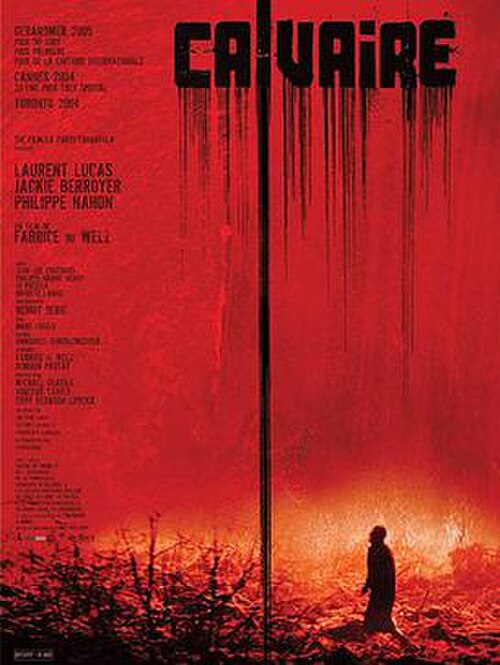
Calvaire: The Belgian Nightmare Hollywood Will Never Understand (And That’s Why It’s Perfect)
In the early 2000s, while Hollywood was drowning in a sea of lazy Ringu and Ju-on remakes—turning horror into a fast-food buffet of jump scares and ghosts with bad wigs—Europe was firing back with a wave of visceral, filthy, and deeply uncomfortable cinema. From that cauldron of transgression, Belgian director Fabrice Du Welz emerged like a surgeon of the human psyche, armed with a rusty scalpel and an obsession for society’s most rotten margins. His debut, Calvaire (2004), isn’t just a film: it’s an exorcism shot on Super 16mm, a 90-minute ordeal that leaves you with the taste of wet earth and bile in your mouth. And, against all odds, it’s the undisputed pinnacle of European rural horror, a subgenre that had until then been monopolized by Texas chainsaws and leather-masked hillbillies.
The Lodge of Madness: When Hell Speaks Walloon
The premise of Calvaire is deceptively simple: Marc Stevens (Laurent Lucas, in a performance that oscillates between stoicism and mute despair), a third-rate cabaret singer—one of those guys who performs in nursing homes and bingo halls with all the enthusiasm of a death row inmate facing his last meal—breaks down in the middle of the Belgian Ardennes. A closed, foggy, hostile forest, where the trees look like skeletal fingers pointing toward a fate worse than death. There, Marc finds refuge in the lodge run by Bartel (Jackie Berroyer), a small man with an unsettling smile and glassy eyes, obsessed with his missing wife, Gloria.
What begins as awkward rural hospitality—of the kind where the host offers you coffee with a smile that never reaches his eyes—quickly spirals into a biblical nightmare. Bartel doesn’t see Marc as a guest, but as a physical and spiritual reincarnation of Gloria, his runaway wife. And like any good psychopath with a Pygmalion complex, he decides to "re-educate" his guest to take his rightful place in his life. What follows is a descent into humiliation, psychological torture, and ritualized violence that makes The Texas Chain Saw Massacre look like an episode of Sesame Street.
But Calvaire isn’t your typical slasher. Du Welz isn’t interested in cheap gore or jump scares. His film is a pitch-black comedy about male loneliness, a clinical study of how geographical and emotional isolation corrupts the soul until it becomes something unrecognizable. The men in the village—because, spoiler alert: there are no women, except for a pig they treat with more affection than their own mothers—are a gallery of pathetic and dangerous freaks: a postman who collects human teeth, a bartender who plays the piano as if possessed by the spirit of Liberace in a Deliverance remake, and a group of locals who dance in a circle like they’re at a Black Mass… but with even worse rhythm.
The Cinematography: When Green Turns Cancerous
If there’s one element that elevates Calvaire to masterpiece status, it’s undoubtedly the cinematography by Benoît Debie (the same genius behind Irreversible and Climax). Shot on Super 16mm, the film is drenched in a palette of putrid greens, icy grays, and sickly yellows that don’t just convey the damp cold of the Ardennes but also the moral rot of its inhabitants. There’s no warm light in Calvaire. No golden sunsets or hopeful dawns. Only perpetual twilight, as if the entire film were submerged in a swamp with no way out.
Debie uses the format to create an oppressive, almost tactile atmosphere. The wide shots of the forest seem to breathe, the close-ups of the characters’ sweaty, gaunt faces convey a suffocating intimacy, and the interiors—those filthy lodges, those taverns with walls covered in yellowed photos—reek of mold and despair. It’s cinematography that you don’t just see, but feel on your skin, like the viewer is also trapped in that moral limbo where sanity is an unattainable luxury.
The Dance of the Damned: When Horror Becomes Abstract
One of Calvaire’s most memorable scenes—and, without a doubt, one of the most terrifying moments in contemporary genre cinema—is the tavern dance. Marc, already half-mad from Bartel’s treatment, is dragged into a local bar where the drunken, sweaty locals launch into a collective dance to the rhythm of a detuned piano. There’s no choreography, no harmony. Just a group of men moving like broken marionettes, their smiles looking more like masks of pain than joy.
The scene is pure surreal horror, an interlude that seems plucked from a fever dream by David Lynch or a nightmare by Alejandro Jodorowsky. The piano sounds as if it’s being played by fingers that don’t belong to this world, and the dancers’ movements have a hypnotic yet repulsive quality. It’s a sequence that doesn’t need blood or explicit violence to freeze your blood: the terror here is abstract, almost metaphysical. It’s the fear of losing control, of the dissolution of the self into a mass of collective madness.
Systematic Degradation: When Body and Mind Surrender
Du Welz shows no mercy to his protagonist. Marc Stevens is subjected to an escalating spiral of physical and psychological degradation that ranges from the grotesque to the existential. It’s not just that Bartel treats him like a woman (dressing him in feminine clothes, applying makeup like a broken doll), but that the entire community joins in the game, as if Marc were a scapegoat onto which they project their frustrations and repressed desires.
There’s one particularly brutal scene where Marc is forced to sing a love song in front of a hostile, drunken crowd of men. It’s not physical torture, but it’s one of the most devastating humiliations ever committed to horror cinema. Laurent Lucas conveys the weight of shame, helplessness, and despair with his gaze. It’s a restrained, almost minimalist performance, but it hurts more than any scream or sob.
And then there’s the climax. Oh, the climax. Without spoilers, suffice it to say that Calvaire ends in the mud, both literally and metaphorically. It’s an ending that freezes your blood with its unrelenting brutality, a gut-punch of reality that leaves you breathless. There’s no redemption, no hope. Just the mud, the cold, and the certainty that, in this world, madness always wins.
Odious (But Necessary) Comparisons
Calvaire has been compared to The Texas Chain Saw Massacre (1974), and not without reason: both are rural nightmares about isolated communities that have lost touch with humanity. But while Tobe Hooper wallows in gore and slasher iconography, Du Welz prefers psychological torture and oppressive atmosphere. His film is closer to the gothic horror of The Shining or The Toolbox Murders, but with a touch of European surrealism that makes it unique.
There are also echoes of Lars von Trier in the way Du Welz explores his protagonist’s degradation, though without the Dane’s melodramatic flair. And, of course, there’s the unmistakable whiff of 1970s European cult cinema, that mix of the grotesque and the poetic (think Salò, or the 120 Days of Sodom by Pasolini, but with less fascism and more fog).
Why Calvaire Is a Masterpiece (And Why You’ll Hate It If You’re Not Ready)
Calvaire isn’t a film for everyone. It’s not a jump-scare thriller or a fast-paced slasher. It’s an extreme sensory and emotional experience, an immersion into madness that demands patience, a strong stomach, and an open mind. Its pacing is slow, almost contemplative, and its violence—when it appears—is more psychological than physical.
But if you can tune into its frequency, Calvaire reveals itself as one of the most original, disturbing, and brilliant horror films of modern cinema. It’s a work that doesn’t just scare you, but eats away at you from the inside, leaving a lingering sense of unease that persists for days after viewing.
finalExplicado: "En el clímax de Calvaire, Marc, completamente quebrado y vestido de mujer, es obligado a participar en una macabra cena de Navidad con los aldeanos. Tras un violento estallido de celos y locura, los hombres violan en grupo a Barthélémy delante de él. Marc, ya convertido en el nuevo objeto de deseo colectivo, es arrastrado de vuelta al bosque mientras los lugareños lo persiguen cantando y bailando en una procesión demencial. Simbólicamente, el desenlace significa la aniquilación total de la identidad masculina: Marc no escapa, sino que ocupa el lugar de la “esposa” muerta, cerrando un ciclo eterno de humillación, aislamiento y degradación. El calvario no termina; simplemente cambia de víctima. La niebla y la canción final sellan la idea de que en esta Bélgica rural profunda, la locura es una tradición que se hereda."
The best
- Benoît Debie’s cinematography: A visual feast of gangrenous greens and terminal grays that drives the Ardennes’ chill into your bones.
- The acting duel between Laurent Lucas and Jackie Berroyer: Two actors at the top of their game, one as victim and the other as tormentor, in a battle of gazes that burn.
The worst
Its slow, oppressive pacing: If you’re looking for quick scares and action, Calvaire* will leave you colder than Bartel’s breath on a winter’s night.- The extreme psychological degradation: There are scenes that don’t just turn your stomach—they make you question human nature (and not in a good way).
The Verdict of Claqueta Ácida (9/10)
Calvaire is the rural nightmare Europe spat in the face of American commercial horror. Fabrice Du Welz delivers a masterpiece of discomfort, a journey into the hell of male isolation with more bile than blood and more poetry than jump scares. It’s a film that stains your guts with Belgian mud and leaves you with the certainty that, sometimes, the real horror isn’t in the monsters, but in the men who create them. If you dare to venture into its foggy forests, you won’t emerge unscathed. And that, dear readers, is exactly what makes cinema great. 💀🎹🇧🇪🎬 Tráiler Oficial
Abrir en YouTube
Ending Explained: Calvaire
Ficha de Daños Colaterales en Sala
Certificado de impacto psicofísico emitido por Héctor Veneno
Cero. La pantalla absorbió cada segundo de atención disponible.
El móvil permaneció en el bolsillo donde debía estar.
Ninguna: la adrenalina cinematográfica es suficiente.
"No hubo. La coherencia se mantuvo hasta el último fotograma."
💬 El Veredicto de la Comunidad
¿Qué te ha parecido la película? Deja tu nota de 0 a 10 para contrastarla con el análisis de la redacción.
Aún no has votado
📢 ¿Te ha gustado el ácido?
Comparte esta crítica con tus amigos cinéfilos o desata la polémica en redes.
⚡ THE CINEMATIC VENOM YOUR INBOX CRAVES
No sugarcoated ratings, no corporate fluff. Subscribe for our uncensored weekly analysis or join the private Telegram for press previews, poll clashes, and instant alerts.
Alertas de estrenos en 1 segundo, encuestas en caliente y audios al salir de pases de prensa.
Recibe la dosis semanal en tu mail + regalo inmediato del PDF con 50 joyas ocultas de culto.
Related Reviews
Recommended autopsies for demanding film buffs.
 🔥 Fusión Nuclear8.5
*Alleluia: Love as a Terminal Illness (or How to Turn Crimes of Passion into a Sweaty, Fleshy Spectacle)*
⚡Del mismo director (Fabrice Du Welz): analiza la evolución o degradación de su estilo.
Fabrice Du Welz reimagines the myth of the lonely hearts killers in a feverish whirlwind of jealousy, submission, and blood, led by Lola Dueñas in a performance that’s equal parts hypnotic and harrowing.
 ⚡ Ácido Cítrico7.5
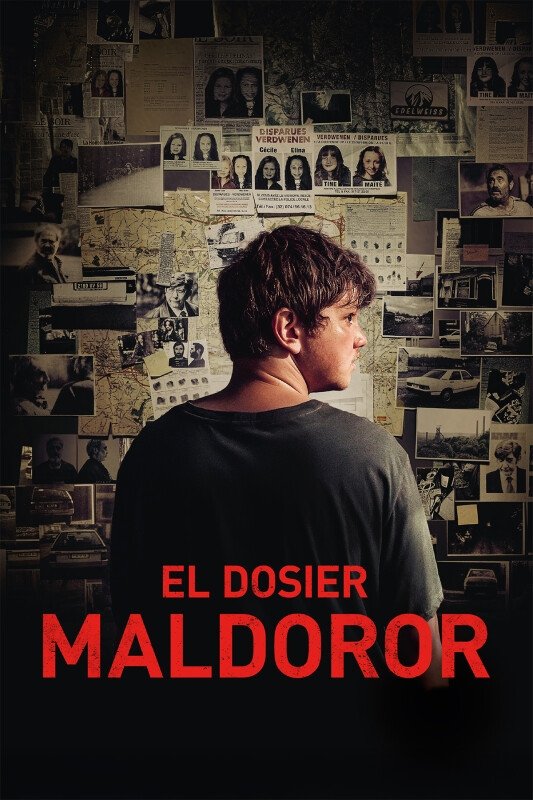
*The Maldoror Dossier: Claqueta Ácida’s Verdict*
⚡Del mismo director (Fabrice Du Welz): analiza la evolución o degradación de su estilo.
Fabrice Du Welz and his shadow ballet in the Belgian underworld. Du Welz delivers a gothic thriller teetering between visual virtuosity and baroque excess—155 minutes of nightmare and obsession.
 🔥 Fusión Nuclear8.0
*Inexorable* – The Literary Parasite and the Decaying Bourgeoisie’s Obsession
⚡Del mismo director (Fabrice Du Welz): analiza la evolución o degradación de su estilo.
Fabrice Du Welz crafts an obsessive, elegant, and relentless psychological thriller set in a mansion hiding unspeakable creative secrets.
Editorial Ecosystem
Cinephile connections, archive interviews and related analyses.
🎞️ In Claqueta Cinematheque3
💬 Debate Cinéfilo & Autopsia de Lectores
0 veredictos¿Discrepas con nuestra nota? ¿Es una obra maestra o veneno puro? Deja tu veredicto abajo sin necesidad de registro.


Aún nadie ha dejado su veredicto para esta película.
Sé el primero en clavarle el colmillo rellenando el formulario de arriba.