High Tension (Haute Tension) — The Brutal Birth of the New French Extremism – Or How to Turn Flesh into Poetry with a Machete
Alexandre Aja shocked global screens with a relentless rural bloodbath, redefined by breakneck pacing and a divisive twist that splits serious cinephiles right down the middle.

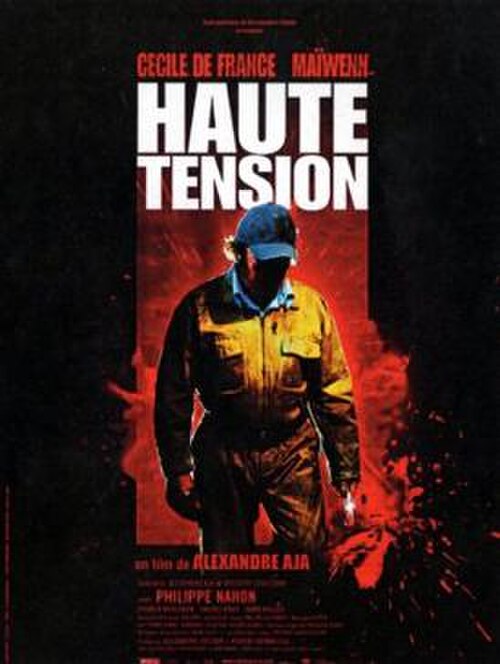

High Tension (2003): The New French Extremism – Or How to Turn Meat into Art with a Cleaver
In a world where contemporary horror drowns in sterile remakes, jump scares timed to the millisecond, and villains with psychological motivations as deep as a barroom puddle of piss, High Tension lands like a throat punch. This isn’t just a movie—it’s a manifesto. A war cry from a 24-year-old Alexandre Aja, armed with a laughable budget and an overflowing creative fury, who decided European slashers didn’t need apologies, moralizing, or even a shred of decency. They just needed blood, sweat, and a rusted-out van.
And boy, did he deliver. High Tension isn’t just one of the best horror films of the 2000s—it’s the official birth certificate of the New French Extremism, a movement that proved cinematic violence doesn’t have to be tidy, elegant, or even coherent. It can be filthy, brutal, uncomfortable, and, above all, real. So real it hurts. So real it leaves you with the metallic taste of blood in your mouth and the feeling you’ve just walked away from a car wreck.
finalExplicado: "Marie es el asesino. Tras una noche de masacre rural, se revela que la “persecución” era una elaborada fantasía disociativa: Marie, obsesionada sexualmente con Alexia, ha matado a toda la familia y torturado a su amiga para después “rescatarla” y consumar su deseo. El killer de aspecto sucio y olor a gasolina era solo su proyección masculina. El desenlace simboliza la explosión final del Nuevo Extremismo Francés: el horror no viene de fuera, sino del deseo reprimido y la identidad fragmentada. La liberación final de Marie es, en realidad, la victoria monstruosa de su locura, un brutal “coming out” sangriento que destruye todo lo que toca. El twist no es un truco; es una bofetada nihilista a la audiencia."
The Premise: Two Friends, a Farm, and a Killer Who Smells Like Gasoline and Desperation
The plot is so simple it borders on insulting: Marie (Cécile de France, oscillating between action heroine and traumatized victim) and Alexia (Maïwenn, whose performance is so intense it looks like she might shatter the screen at any moment) decide to escape the university grind for some quiet study time at Alexia’s isolated family farm. The plan is perfect: silence, books, and—presumably—some lesbian intimacy, which the film teases with all the subtlety of a sledgehammer to the skull.
But fate, that capricious screenwriter, has other plans. In the dead of night, a roadside killer (Philippe Nahon, in a performance that should’ve earned him a posthumous Oscar for Best Disgusting On-Screen Presence) bursts into the house like a bull in a china shop. What follows is a festival of graphic violence that makes The Texas Chain Saw Massacre look like an episode of Sesame Street. Alexia’s father is decapitated with a ladder (yes, you read that right), her mother gets a shotgun blast to the head, and her little brother is stabbed with a knife while trying to flee. All of it seasoned with a soundtrack that mixes oppressive silence with the victims’ gut-wrenching screams and the metallic clank of the killer’s tools.
Marie, an unwilling witness to the massacre, manages to hide and begins a desperate chase to save Alexia, who’s been kidnapped by the psychopath in his delivery van. What follows is one of the most intense, sweat-drenched chase sequences in modern horror, a game of cat and mouse that winds through backroads, abandoned gas stations, and dark forests, where every shadow could hide the killer and every breath might be your last.
Aja’s Direction: A Surgeon with a Hatchet
Alexandre Aja doesn’t direct this movie—he dissects it. With surgical precision that contrasts sharply with the carnage on screen, the French director makes it clear from the first frame that he has no patience for genre conventions. There’s no unnecessary build-up, no psychological explanations for the killer (who, by the way, has no name, because real monsters don’t need labels), and certainly no sugarcoated happy ending.
Aja drinks straight from the well of European rural horror classics—like The Texas Chain Saw Massacre (1974) or The Bag Man (1997)—but outdoes them in rawness and commitment to physical violence. Every blow, every wound, every spurt of blood is filmed with a clarity that borders on the pornographic. There are no quick cuts to soften the impact, no POV shots to let you look away. Here, the camera lingers on the suffering, as if Aja wants to make sure the viewer feels every stab in their own flesh.
And then there’s the sound. Oh, the sound. High Tension is one of those films that proves horror is built as much on what you hear as what you see. The sound design is a masterclass in tension: the creak of floorboards under the killer’s feet, Marie’s ragged breathing as she hides, the click of a switchblade opening, the van’s engine roaring to life... Everything is amplified to unbearable levels, creating an atmosphere of auditory claustrophobia that forces you to hold your breath.
The Gore: Giannetto De Rossi and the Art of Turning the Human Body into a Canvas
If there’s one name that deserves to be etched in gold in the pantheon of extreme horror, it’s Giannetto De Rossi, the master of practical effects who turned High Tension into a feast of analog gore. De Rossi, a frequent collaborator with Lucio Fulci (the godfather of Italian gore), proves here why digital effects will never match the texture, weight, and realism of well-crafted fake blood.
The violence in High Tension isn’t just a series of set pieces designed to shock—it’s macabre art. The ladder decapitation, for example, isn’t a clean cut: it’s a slow, agonizing process where you see the wood digging into flesh, blood gushing in spurts, the body convulsing in death throes. The same goes for the scene where the killer slits a victim’s throat with a knife: no quick cuts, no confusing angles. The camera stays put, showing the blade tearing skin, blood pouring out, life draining away in seconds.
And then there’s the chainsaw. Because what’s a slasher without a chainsaw? In High Tension, its use isn’t gratuitous or over-the-top—it’s an extension of the killer himself, a symbol of the industrial violence looming over his victims. The scene where the psychopath chases Marie with the chainsaw revving is one of the film’s tensest moments, not just because of the physical danger, but because of the hellish noise of the machine, drilling into the viewer’s brain like a power tool.
The Twist: When the Slasher Becomes a Psychological Thriller (or a Cosmic Joke)
This is where High Tension earns its place in the pantheon of controversial films. Because, about 20 minutes from the end, the movie pulls a narrative twist that redefines everything you’ve seen up to that point. A twist that, depending on your tolerance for narrative incoherence, will make you laugh, cry, curse, or applaud.
No spoilers (though, let’s be honest, if you’re reading this in 2024, you should already know what’s coming), but High Tension’s twist is as bold as it is problematic. On one hand, it’s a stroke of genius that elevates the film from a stylistic exercise to a meditation on trauma, identity, and the perception of reality. On the other, it’s such a brazen deus ex machina that it makes earlier scenes physically impossible, even for someone with the flexibility of a contortionist and the strength of an Olympic weightlifter.
Is the twist a script flaw? Absolutely. Does it detract from the film? Depends on who you ask. For horror purists, who demand every action have a logical explanation, High Tension is a betrayal of the genre’s rules. For fans of extreme cinema, who value atmosphere, style, and a film’s ability to provoke a visceral reaction, the twist is a minor detail—almost an inside joke between Aja and the audience.
The truth is, beyond its plausibility, the twist works on an emotional level. Because, at the end of the day, High Tension isn’t a movie about logic—it’s a movie about fear. And fear, as any nightmare survivor knows, doesn’t follow rules. Fear is irrational, illogical, absurd. And in that sense, High Tension’s twist is perfectly true to the nature of terror.
The Performances: Cécile de France and the Art of Running (and Suffering) with Grace
In a film where gore and violence are the undisputed stars, the acting could’ve easily taken a backseat. But it doesn’t. Cécile de France delivers a physical and emotional performance that’s the beating heart of High Tension. Marie isn’t the typical slasher “final girl”: she’s not a virginal innocent or an invincible heroine. She’s an ordinary woman, terrified, vulnerable, dragged into a nightmare she can’t wake up from. De France conveys that mix of fear, determination, and exhaustion with such naturalism that every scene she’s in feels real, even when the events around her border on the surreal.
Maïwenn, meanwhile, has a more limited but equally memorable role. Her Alexia is the perfect victim: fragile, desperate, but with a survival instinct that keeps her fighting to the bitter end. And then there’s Philippe Nahon, who crafts one of the most terrifying villains in modern horror. Nahon doesn’t need dialogue to convey menace; his mere presence—with that empty stare and hulking, gangly frame—is enough to freeze your blood. He’s the kind of killer who doesn’t need a mask or a costume: just being himself is enough.
The Influence: High Tension’s Legacy in Horror Cinema
High Tension wasn’t just a cult hit—it was the starting gun for a new wave of extreme horror. After its release, the New French Extremism solidified as a movement in its own right, with films like Martyrs (2008), Frontière(s) (2007), and Inside (2007) following in its footsteps. But none of them captured the visceral, uninhibited essence of High Tension.
Moreover, the film proved that horror doesn’t need million-dollar budgets or flashy CGI to be effective. With a handful of actors, an abandoned farm, and a killer with a van, Aja created one of the most intense and memorable experiences in the genre. And he did it without falling into self-indulgence. High Tension doesn’t glorify violence—it shows it in all its rawness, without filters, without sugarcoating. It’s a film that forces you to look, even when you don’t want to.
The Best
- The breakneck pacing: Ninety minutes of relentless physical pursuit that leaves you breathless, morally drained, and, above all, with no excuse to look away.
- Philippe Nahon: A villain so repulsive, so real, he’ll make you side-eye every delivery van driver you pass on the street.
The Worst
- The twist’s physical incoherence: There are moments when Marie seems to have ninja skills and superhuman strength, shattering immersion as brutally as a hatchet to the forehead.
- The mishandled lesbian subtext: The film teases a romantic relationship between Marie and Alexia but never develops it, leaving a lingering taste of missed opportunity.
The Verdict of Claqueta Ácida (8.5/10)
High Tension is the kind of movie that leaves you feeling like you’ve survived a car crash: shell-shocked, sweaty, and wondering how the hell you made it out alive. Alexandre Aja delivered his wildest work here—a European slasher that doesn’t apologize for its violence or its narrative audacity. It’s messy, incoherent, brutal, and, at times, absurd. But it’s also one of the most intense and honest cinematic experiences modern horror has given us. If you’ve got the stomach (and a dark sense of humor), don’t miss it. Just double-check your locks afterward. You know. Just in case. 🔪🎬 Tráiler Oficial
Abrir en YouTube
Ending Explained: High Tension (Haute Tension)
Ficha de Daños Colaterales en Sala
Certificado de impacto psicofísico emitido por Lúa Ácida
Cero bostezos. Pupilas dilatadas y tensión mandibular constante.
Ninguna comprobación del tiempo. Se agradece la rareza.
Ninguna: la adrenalina cinematográfica es suficiente.
"No aplica. La obra se sostiene sola."
💬 El Veredicto de la Comunidad
¿Qué te ha parecido la película? Deja tu nota de 0 a 10 para contrastarla con el análisis de la redacción.
Aún no has votado
📢 ¿Te ha gustado el ácido?
Comparte esta crítica con tus amigos cinéfilos o desata la polémica en redes.
⚡ THE CINEMATIC VENOM YOUR INBOX CRAVES
No sugarcoated ratings, no corporate fluff. Subscribe for our uncensored weekly analysis or join the private Telegram for press previews, poll clashes, and instant alerts.
Alertas de estrenos en 1 segundo, encuestas en caliente y audios al salir de pases de prensa.
Recibe la dosis semanal en tu mail + regalo inmediato del PDF con 50 joyas ocultas de culto.
Related Reviews
Recommended autopsies for demanding film buffs.
 🔥 Fusión Nuclear8.0
*Crawl (2019): Giant Gators, Claustrophobic Floods, and a Lean, Mean Survival Machine*
⚡Del mismo director (Alexandre Aja): analiza la evolución o degradación de su estilo.
Alexandre Aja delivers a flawless B-movie rollercoaster about a swimmer trapped in a flooded basement during a Category 5 hurricane—with Florida’s oversized gators as the cherry on top.
 🔥 Fusión Nuclear8.8
*The Hills Have Eyes: The Miracle of a Remake That Outshone the Classic with Radioactive Rage*
⚡Del mismo director (Alexandre Aja): analiza la evolución o degradación de su estilo.
Alexandre Aja takes Wes Craven’s classic and transforms it into a savage, blood-soaked, and unbearable nightmare of desert survival and mutant cannibalism.
 🔥 Fusión Nuclear8.5
*Alleluia: Love as a Terminal Illness (or How to Turn Crimes of Passion into a Sweaty, Fleshy Spectacle)*
⚡Afinidad temática directa en atmósfera, estilo y fijaciones visuales.
Fabrice Du Welz reimagines the myth of the lonely hearts killers in a feverish whirlwind of jealousy, submission, and blood, led by Lola Dueñas in a performance that’s equal parts hypnotic and harrowing.
Editorial Ecosystem
Cinephile connections, archive interviews and related analyses.
💬 Debate Cinéfilo & Autopsia de Lectores
0 veredictos¿Discrepas con nuestra nota? ¿Es una obra maestra o veneno puro? Deja tu veredicto abajo sin necesidad de registro.


Aún nadie ha dejado su veredicto para esta película.
Sé el primero en clavarle el colmillo rellenando el formulario de arriba.