Alpha — Julia Ducournau and the Tattoo That Saves Nothing
Julia Ducournau delivers a teen drama with body-and-soul pretensions, but all she manages is a poorly healed tattoo on the arm of French cinema.

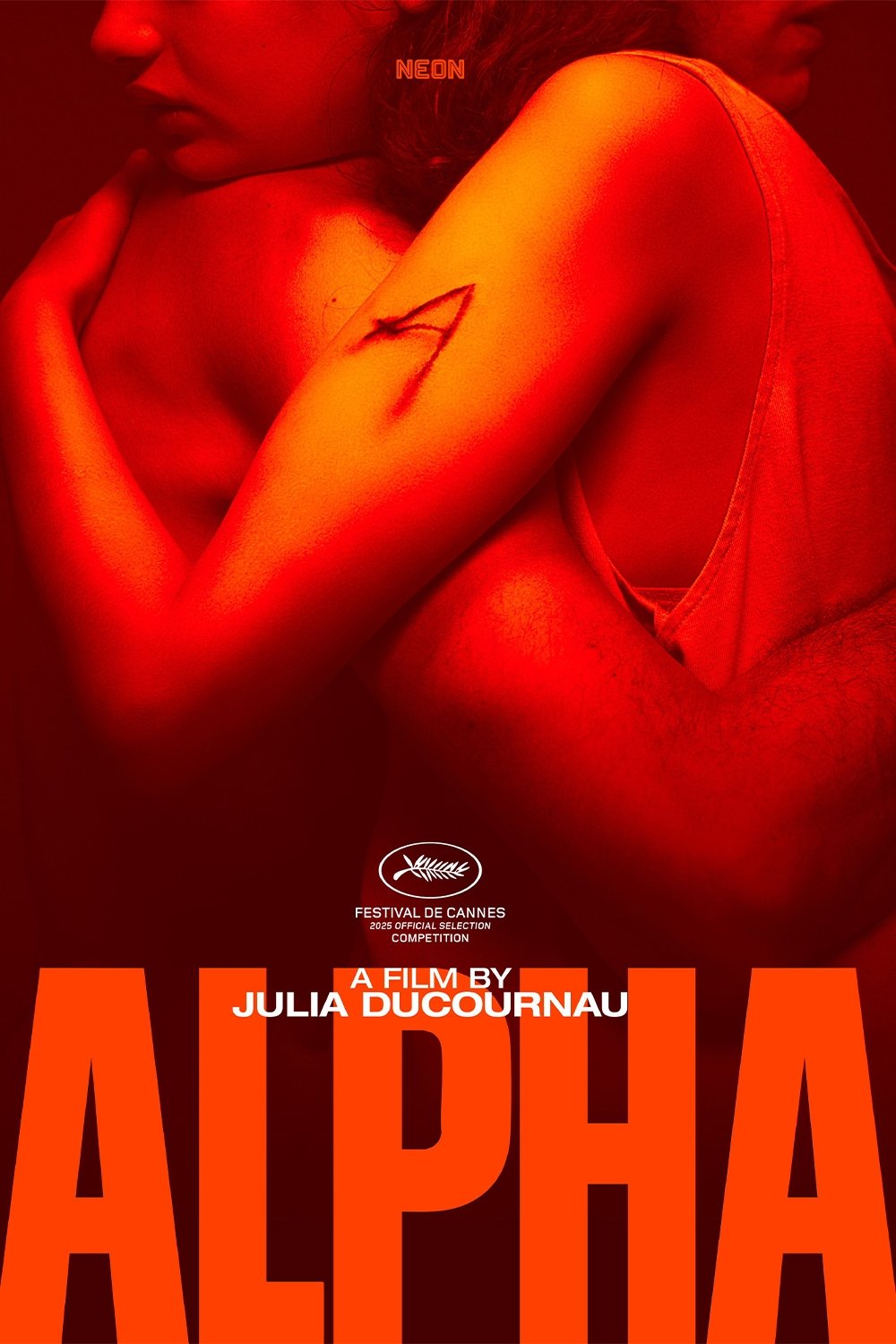
The cinema of Julia Ducournau has always been an act of faith. A gamble on the corporeal, the visceral, what pulses beneath the skin—and sometimes, what festers. After the triumph of Raw (2016), that cannibalistic debut that spat in the face of conventional horror, and the festival darling Titane (2021), which earned her the Palme d’Or and an army of fans mistaking excess for genius, the French director seemed destined to become the high priestess of a new cinematic cult. One where flesh is weak, but the frame is sacred. Yet Alpha, her latest creation, arrives as an uncomfortable reminder: not even the gods of auteur cinema are safe from tripping over their own fetishes. And what a stumble, folks. One of those that leaves bruises in the shape of half-digested pretension and a script that reeks of bargain-bin perfume.
The film presents itself as an intimate teen drama, that subgenre the French have elevated to an art form since the days of the Nouvelle Vague, when Truffaut and Godard turned bourgeois boredom into visual poetry. But here, in Ducournau’s hands, boredom isn’t poetic—it’s clinical, almost surgical. Alpha follows a 13-year-old girl, played by debutante Mélissa Boros, whose world crumbles when she comes home with a tattoo on her arm. A tattoo that, oh wow, isn’t just a drawing but the symbol of something bigger, darker, more significant. Or at least, that’s what they want us to believe. Because, like those dreams where you think you’re running but aren’t moving at all, Alpha trudges forward with the heaviness of a poorly executed long take, where every step feels like a Herculean effort to get… nowhere.
The problem isn’t the premise itself. A tattoo as a metaphor for teen rebellion, identity crises, generational conflict—it’s a trope as old as cinema itself. But Ducournau, who in Titane proved she could elevate the grotesque to sickly beauty, here seems to have confused ambition with simplicity. Or worse: with laziness. The film wavers between two extremes: on one hand, it wants to be a raw portrait of adolescence, with its awkward silences and contained outbursts of rage; on the other, it aspires to be a psychological thriller where the tattoo becomes a McGuffin of cosmic proportions. The result is a hybrid that neither moves nor unsettles, like airplane food: you know it’s supposed to nourish you, but in the end, it just leaves you hungry with a cardboard aftertaste.
Then there’s the cast. Tahar Rahim, that actor who went from being the face of French auteur cinema (A Prophet, The Mauritanian) to becoming the Ryan Gosling of dramas with exotic accents, plays Alpha’s father—a man whose on-screen presence is as necessary as a hole in the head. His performance is competent, sure, but risks being forgotten like a Black Mirror episode you watched on a transatlantic flight. Emma Mackey, the Brit we all remember from Sex Education and who now seems doomed to play French women with existential crises, does what she can with a character who’s little more than a wigged cliché. And Golshifteh Farahani, that Iranian actress with a piercing gaze and an international career, gets lost in a role as an absent mother straight out of a screenwriting 101 manual. But if anyone deserves applause, even if just for sheer endurance, it’s Mélissa Boros, the young lead. Boros carries the weight of a character swinging between tragic and unbearable, like a tightrope walker without a net in a suburban circus. Her Alpha is fragile but not weak; rebellious but not stupid. Too bad the script doesn’t give her half of what she gives the film.
Direction: The Frame That Doesn’t Save
Julia Ducournau is a director with a distinct voice—that much is undeniable. Her cinema is physical, tactile, almost rotten in its obsession with the corporeal. In Raw, that obsession worked because it served a powerful metaphor: sexual awakening as an act of literal and figurative cannibalism. In Titane, the grotesque became poetry thanks to editing that seemed plucked from a fever dream and a score that pulsed like a boiling heart. But in Alpha, that voice becomes monotonous, predictable, like a scratched record. The long takes, which in her previous films were exercises in narrative virtuosity, here feel more like crutches for a script that doesn’t know where it’s going. The camera moves with elegance, yes, but it’s an empty elegance, like a dancer executing steps perfectly but without soul.
There are moments when Ducournau seems to remember she knows how to make cinema. A close-up of Alpha’s tattoo, lit by a glow that seems to emanate from the earth’s bowels. A scene where the protagonist stares at her reflection while her mother screams, and the mirror image feels more real than the person casting it. But these are isolated flashes, like fireflies in a moonless night. The rest of the time, the film drags along with the sluggishness of a rehab patient, where every scene feels like physical therapy: painful, necessary, but boring as hell. And the worst part? Ducournau, who in Titane proved she could play with rhythm like a conductor, here seems to have forgotten that cinema is also time. Well-measured time, stolen time, time that hurts. In Alpha, time just stagnates, like water in a puddle.
Performances: The Cast That Deserved More
If anything saves Alpha from total shipwreck, it’s the performances. Not because they’re brilliant, but because at least they try to breathe life into a script written with the feet. Mélissa Boros is, without a doubt, the revelation. Her Alpha is a complex character, full of nuances, and the young actress conveys that mix of vulnerability and rebellion with a disarming naturalness. There’s one scene in particular—Alpha confronting her mother in the kitchen—where Boros proves she has the talent to carry a film. The problem is the script doesn’t give her many more opportunities like that. The rest of the time, her character is reduced to walking around the city with a scowl, like a supporting player in a Dardenne brothers film.
Tahar Rahim, for his part, does what he can with a character who’s little more than a bearded ghost. His father is a broken man, sure, but he’s also a walking cliché: the absent dad who suddenly wants to reconnect with his daughter, the guy who cries silently while looking at old photos, the type who delivers profound lines like he’s in a perfume commercial. Rahim, who’s shown in other films he can be an extraordinary actor, here seems to be in autopilot mode, as if he knows his character isn’t going anywhere and has decided to save energy for future projects.
And then there’s Golshifteh Farahani, whose on-screen presence is so magnetic it hurts to see her wasted in such a flat role. Her mother is a cold, distant, almost inhuman woman, but the script doesn’t bother exploring why. Is it trauma? Depression? Just plain indifference? We don’t know, and in the end, her character becomes little more than a narrative obstacle, an excuse for Alpha to rebel against. Mackey, meanwhile, has a role so secondary it almost feels like a cameo. Her character, some kind of spiritual mentor for Alpha, appears and disappears like a ghost with a hangover, leaving no trace on the plot or the viewer.
Technical Aspects: What Shines and What Stinks
If there’s one thing Alpha can’t be denied, it’s its technical craftsmanship. The cinematography by Ruben Impens, a frequent Ducournau collaborator, is flawless. The shots are meticulously composed, with a color palette oscillating between the cold blues of depression and the warm reds of rebellion. There’s a scene where Alpha walks through a neon-lit tunnel, and the effect is so hypnotic you almost forget the plot is going nowhere. Almost. The problem is, like a hyperrealist painting, technical beauty doesn’t always hide the lack of substance. It’s like admiring a Ferrari with a Seat Ibiza engine: stunning on the outside, but empty under the hood.
The production design, meanwhile, is functional but bland. The settings—from Alpha’s apartment to her school—look like they were plucked from an IKEA catalog: pretty but generic. There’s nothing in them that speaks to the characters, their inner worlds, or their conflicts. They’re empty spaces, like the script. And the costumes, while appropriate, don’t add anything beyond the obvious: Alpha dresses like a rebellious teen, her mother like a woman who’s given up on life, and her father like a man trying to recapture his lost youth. Nothing we haven’t seen a thousand times before.
The score, composed by Jim Williams, is another highlight. Williams, who also worked with Ducournau on Titane, crafts a soundtrack that oscillates between ethereal and oppressive, as if Björk and John Carpenter had an illegitimate child. There are moments where the music elevates scenes that would otherwise collapse into ridicule. But even here, the problem is the same: the score tries to save what the script can’t. It’s like putting a haute couture dress on a cardboard mannequin: for a moment, it seems real, but in the end, it’s just decoration.
The best
- Mélissa Boros’ performance: A revelation. The young actress brings a complex character to life with disarming naturalness.
- Ruben Impens’ cinematography: Impeccable, with a color palette shifting between cold and warm, creating hypnotic images.
- Jim Williams’ score: A soundtrack that oscillates between ethereal and oppressive, capable of elevating scenes that would otherwise flop.
- Some visual moments: Flashes of genius in Ducournau’s direction, like that close-up of Alpha’s tattoo lit by an almost supernatural glow.
The worst
- The script: A confusing hybrid that doesn’t know if it wants to be a teen drama, a psychological thriller, or a manifesto on youthful rebellion. In the end, it’s none of the above.
- The pacing: The film drags like a rehab patient, with scenes that feel like physical therapy: painful, necessary, but boring as hell.
- The supporting cast: Tahar Rahim, Golshifteh Farahani, and Emma Mackey deserved more. Their characters are walking clichés, ghosts without depth.
- The lack of coherence: The film swings between poetic and pedestrian without ever finding balance. It’s like airplane food: you know it’s supposed to nourish you, but it just leaves you hungry.
The Verdict of Claqueta Ácida
Alpha is the kind of film that leaves you with an uncomfortable feeling, like you’ve just walked out of a blind date with someone who seemed interesting on Instagram but has nothing to say in person. Julia Ducournau proves, once again, that she knows how to make cinema. The problem is, this time, she seems to have forgotten why. The film has flashes of genius—moments where the cinematography, music, and performances lift it above its mediocre script. But in the end, Alpha is like a botched tattoo: it hurts, it’s annoying, and you’ll never quite understand why you got it. A 6 out of 10 that leaves you wanting more, like an appetizer that promises a feast but just leaves you hungry. And wanting to erase it all. 💀
🎬 Tráiler Oficial
Abrir en YouTube
Ending Explained: Alpha
Ficha de Daños Colaterales en Sala
Certificado de impacto psicofísico emitido por Odin Lagbert
2 amagos en el tramo intermedio; pestañeo pesado en las transiciones más innecesarias.
Minuto 40 y minuto 86 (comprobando cuánto quedaba de suplicio).
1 espressos para no dejarse vencer por la mediocridad cómoda.
"A mitad del segundo acto cuando la subtrama secundaria empezó a pesar más de lo que aportaba."
💬 El Veredicto de la Comunidad
¿Qué te ha parecido la película? Deja tu nota de 0 a 10 para contrastarla con el análisis de la redacción.
Aún no has votado
📢 ¿Te ha gustado el ácido?
Comparte esta crítica con tus amigos cinéfilos o desata la polémica en redes.
⚡ THE CINEMATIC VENOM YOUR INBOX CRAVES
No sugarcoated ratings, no corporate fluff. Subscribe for our uncensored weekly analysis or join the private Telegram for press previews, poll clashes, and instant alerts.
Alertas de estrenos en 1 segundo, encuestas en caliente y audios al salir de pases de prensa.
Recibe la dosis semanal en tu mail + regalo inmediato del PDF con 50 joyas ocultas de culto.
Related Reviews
Recommended autopsies for demanding film buffs.
 🔥 Fusión Nuclear8.8
*Raw*: A Vegetarian Awakening with a Side of Human Flesh
⚡Del mismo director (Julia Ducournau): analiza la evolución o degradación de su estilo.
Julia Ducournau made her feature debut with this wild, exquisite cannibal fable about coming of age, college hazing, and forbidden appetites.
 🔥 Fusión Nuclear9.0
*Titane: The Palme d’Or That Spit in the Face of Conventional Cinema (And We Loved It)*
⚡Del mismo director (Julia Ducournau): analiza la evolución o degradación de su estilo.
Julia Ducournau shocked and captivated the Cannes Film Festival with a hypnotic, violent, and tender odyssey about human hybrids, cars, and familial redemption.
 ⚡ Ácido Cítrico7.1
28 años después
⚡Afinidad temática directa en atmósfera, estilo y fijaciones visuales.
Una secuela que huele a podrido desde el primer fotograma. Garland y DaCosta intentan revivir el género, pero el resultado es un KO técnico disfrazado de obra maestra.
Editorial Ecosystem
Cinephile connections, archive interviews and related analyses.
🎞️ In Claqueta Cinematheque2
💬 Debate Cinéfilo & Autopsia de Lectores
0 veredictos¿Discrepas con nuestra nota? ¿Es una obra maestra o veneno puro? Deja tu veredicto abajo sin necesidad de registro.

Aún nadie ha dejado su veredicto para esta película.
Sé el primero en clavarle el colmillo rellenando el formulario de arriba.