Titane — The Palme d’Or That Spit in the Face of Conventional Cinema (And We Loved It)
Julia Ducournau shocked and captivated the Cannes Film Festival with a hypnotic, violent, and tender odyssey about human hybrids, cars, and familial redemption.

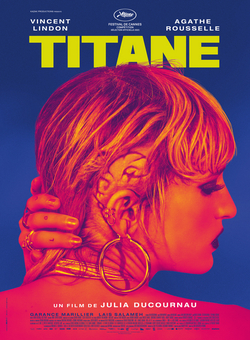


Titane: The Palme d’Or That Spit in the Face of Conventional Cinema (And We Loved It)
In a world where the Cannes Film Festival usually awards films as predictable as an episode of Hell’s Kitchen—with its just-right dose of social drama, boring long takes, and speeches about the human condition that nobody asked for—the jury chaired by Spike Lee decided in 2021 to drop a stinking bomb on the red carpet: Titane, by Julia Ducournau. Not content with crowning the second woman to win the Palme d’Or solo (what progress, guys—only 74 years after the first!), they handed the prize to a film that looks like the result of a failed body-horror lab experiment: one part Crash by Cronenberg, two parts Raw (Ducournau’s own debut), a splash of Mad Max: Fury Road, and a dash of Family Guy at its most grotesque. The result is a work that doesn’t just blow up notions of gender, biology, and family—it stomps on them with steel-toed boots, douses them in gasoline, and sets them ablaze while dancing on their ashes.
finalExplicado_en: "In the climax, Alexia, now fully transformed into a man named Adrien after a series of body-modifying surgeries and murders, gives birth to a grotesque, metallic hybrid baby during a frenzied dance ritual at the car show. Her adoptive father, Vincent, accepts the monstrous offspring as his own, cradling it tenderly. The ending spits in the face of biological essentialism and gender norms, symbolizing radical rebirth through metal, violence, and chosen family. What emerges is not human but a new, post-human possibility: identity as fluid performance, love as unconditional engineering, and the body as a vehicle for something savage, artificial, and strangely redemptive."
Alexia: The Psychopath Who Loved Cars (And Bobby Pins) Too Much
The premise of Titane is so absurd it feels like it was written by an algorithm trained on Sharknado scripts and Chuck Palahniuk novels. Alexia (Agathe Rousselle, in a debut that oscillates between fascinating and terrifying) is a car-show dancer who, after a childhood accident, has a titanium plate in her skull. So far, so Drive—but with less Ryan Gosling and more questionable bodily fluids. Yet Ducournau isn’t satisfied with that: Alexia is a serial killer who dispatches her victims with a bobby pin—yes, that innocent hair accessory your grandma used to secure her bun—and, to top it off, she’s so sexually attracted to cars that she ends up pregnant by a sports car. No, it’s not a metaphor. No, there’s no room for poetic interpretation. Alexia literally sleeps with a Cadillac, and nine months later, her abdomen looks like the hood of a rusted-out car.
But the most disturbing part isn’t the mechanical pregnancy (though, let’s be honest, that’s already plenty disturbing)—it’s how Ducournau turns this premise into a meditation on identity, motherhood, and family. Cornered by the police after a massacre worthy of American Psycho on a budget, Alexia decides to break her own nose in front of a mirror to impersonate Adrien, the missing son of Vincent (Vincent Lindon, in a role seemingly written for a bodybuilder with an existential crisis). What follows is one of the most twisted, tender, and nauseating father-son love stories in recent cinema.
Cronenberg on Wheels: When Body-Horror Embraces Melodrama
Ducournau didn’t reinvent the wheel—irony intended—but she did stud it with spikes and roll it over broken glass. Titane drinks straight from the body-horror well of David Cronenberg, that master of elegant disgust who taught us the human body is a flawed, filthy, and fascinating machine. But where Cronenberg maintains a clinical, almost cold distance, Ducournau injects a lethal dose of emotion. The first act of Titane is an industrial music video bathed in pink and blue neon, with Alexia moving like a broken doll among gleaming cars and thick blood. It’s Drive if the protagonist were a serial killer with a motor-oil fetish.
Yet when Alexia infiltrates Vincent’s life as the fake Adrien, the film takes an unexpected turn: suddenly, we’re in a family drama as heartwarming as it is grotesque. Vincent, a veteran firefighter who injects steroids like they’re vitamins, accepts Alexia/Adrien without too many questions, as if his paternal instinct had been replaced by a desperate need to fill the void left by his missing son. Their relationship is an explosive cocktail of tenderness and revulsion: Vincent, with his steroid-swollen body and fragile masculinity, and Alexia, with her mutant flesh and fractured identity, are two monsters who recognize and need each other.
The visual design of Titane is a masterclass in excess. Cinematographer Ruben Impens saturates the screen with primary colors plucked from a neon dream. The close-ups of Alexia’s skin splitting open to reveal rust and silver oil are so detailed you can almost smell the oxidized metal. The film isn’t afraid to show the grotesque—deformed bodies, bodily fluids, oozing wounds—but unlike other body-horror films, Titane doesn’t do it for shock value. It does it to underscore its message: flesh is imperfect, ever-changing, and sometimes literally metallic.
Crisis of Masculinity and Family as Performance
Vincent Lindon is a force of nature in Titane. His character, a firefighter obsessed with reclaiming lost youth via syringes, is a ferocious critique of toxic masculinity and the social pressure to maintain an illusion of strength. Vincent isn’t a hero; he’s a broken man clinging to the idea of his lost son like a drowning man to a life preserver. His relationship with Alexia/Adrien is as uncomfortable as it is moving: he accepts her not despite her deformities, but because, deep down, they’re both monsters who’ve learned to survive in a world that rejects them.
And this is where Titane becomes truly transgressive. Ducournau doesn’t just question notions of gender and biology—she dismantles the idea of family as something sacred and immutable. Alexia isn’t the ideal mother, nor is Vincent the perfect father, but together they form a dysfunctional unit that, against all odds, works. The film suggests family isn’t something you inherit but something you choose—even if that choice involves murdering a few people and getting knocked up by a car.
The Pacing: From Full Throttle to a Screeching Halt (And Back Again)
One of Titane’s few weaknesses is its pacing. The first act is a rollercoaster of violence and mechanical sex, with a breakneck rhythm that gives the audience no respite. But when the film transitions to the firefighter drama, the tempo noticeably slows. It’s not that the second act is boring—far from it—but there are moments when the film seems to lose itself in its own ambition. Ducournau wants to tackle too many themes at once: gender identity, motherhood, fatherhood, loneliness, redemption… and sometimes the result feels a bit scattered.
Yet even in its slower moments, Titane never stops being fascinating. The director maintains absolute control over the film’s tone, balancing body horror with moments of unexpected tenderness. There’s a scene where Vincent, drunk and emotional, dances with his fellow firefighters in a bar, and it’s as ridiculous as it is moving. Ducournau isn’t afraid to mix the grotesque with the human, and that’s what makes Titane such a unique experience.
Cinematic Comparisons: Where Does This Madness Fit?
Titane isn’t an easy film to classify. It has the body-horror of Cronenberg, but with a heart that beats louder. It has the stylized violence of Drive, but with an emotional depth Nicolas Winding Refn never dared explore. It has the surrealism of Holy Motors, but with a grounding in reality that makes it even more disturbing. And, of course, it has that quintessential French flair for intellectual provocation, making you wonder whether Ducournau is joking or if she truly believes in what she’s saying.
But in the end, Titane transcends comparisons. It’s a film that exists in its own universe—a place where cars can impregnate people, firefighters dance like there’s no tomorrow, and family is built on lies, blood, and motor oil.
The best
- Ducournau’s audacity: Making a film about a serial killer pregnant by a car not only work but also move you is like getting a pig to fly. Without CGI.
- Vincent Lindon: An actor who proves toxic masculinity can be as fragile as a Fabergé egg in the hands of a bull.
The worst
Instant rejection: If you think cinema should be "pleasant," Titane* will spit in your face, kick you in the gut, and then ask for a thank-you.- The second-act slowdown: The film goes from industrial slasher to firefighter drama with the subtlety of an elephant in a china shop.
The Verdict of Claqueta Ácida (9/10)
Titane is the kind of film your racist, homophobic uncle would cite as proof that "cinema isn’t what it used to be," while you, in silence, bask in its brilliance. Julia Ducournau has created a mutant, uncomfortable, and brilliant work that confirms French auteur cinema is still the only kind capable of spitting in the audience’s face without losing its elegance. It’s grotesque, tender, violent, and moving—all at once. And above all, it’s necessary: in a world where cinema has become increasingly sanitized, Titane is a reminder that art should hurt, should unsettle, and sometimes should make you want to puke. 9/10, and may God have mercy on our souls.🎬 Tráiler Oficial
Abrir en YouTube
Ending Explained: Titane
Ficha de Daños Colaterales en Sala
Certificado de impacto psicofísico emitido por Héctor Veneno
Cero. La pantalla absorbió cada segundo de atención disponible.
Ni una sola mirada al móvil.
Ninguna: la adrenalina cinematográfica es suficiente.
"No hubo. La coherencia se mantuvo hasta el último fotograma."
💬 El Veredicto de la Comunidad
¿Qué te ha parecido la película? Deja tu nota de 0 a 10 para contrastarla con el análisis de la redacción.
Aún no has votado
📢 ¿Te ha gustado el ácido?
Comparte esta crítica con tus amigos cinéfilos o desata la polémica en redes.
⚡ THE CINEMATIC VENOM YOUR INBOX CRAVES
No sugarcoated ratings, no corporate fluff. Subscribe for our uncensored weekly analysis or join the private Telegram for press previews, poll clashes, and instant alerts.
Alertas de estrenos en 1 segundo, encuestas en caliente y audios al salir de pases de prensa.
Recibe la dosis semanal en tu mail + regalo inmediato del PDF con 50 joyas ocultas de culto.
Related Reviews
Recommended autopsies for demanding film buffs.
 🔥 Fusión Nuclear8.8
*Raw*: A Vegetarian Awakening with a Side of Human Flesh
⚡Del mismo director (Julia Ducournau): analiza la evolución o degradación de su estilo.
Julia Ducournau made her feature debut with this wild, exquisite cannibal fable about coming of age, college hazing, and forbidden appetites.
 🔥 Fusión Nuclear8.5
*Alleluia: Love as a Terminal Illness (or How to Turn Crimes of Passion into a Sweaty, Fleshy Spectacle)*
⚡Afinidad temática directa en atmósfera, estilo y fijaciones visuales.
Fabrice Du Welz reimagines the myth of the lonely hearts killers in a feverish whirlwind of jealousy, submission, and blood, led by Lola Dueñas in a performance that’s equal parts hypnotic and harrowing.
 🔥 Fusión Nuclear8.5
*High Tension (Haute Tension): The Brutal Birth of the New French Extremism – Or How to Turn Flesh into Poetry with a Machete*
⚡Afinidad temática directa en atmósfera, estilo y fijaciones visuales.
Alexandre Aja shocked global screens with a relentless rural bloodbath, redefined by breakneck pacing and a divisive twist that splits serious cinephiles right down the middle.
Editorial Ecosystem
Cinephile connections, archive interviews and related analyses.
🎞️ In Claqueta Cinematheque2

💬 Debate Cinéfilo & Autopsia de Lectores
0 veredictos¿Discrepas con nuestra nota? ¿Es una obra maestra o veneno puro? Deja tu veredicto abajo sin necesidad de registro.


Aún nadie ha dejado su veredicto para esta película.
Sé el primero en clavarle el colmillo rellenando el formulario de arriba.