An Andalusian Dog — The Slice That Lobotomized Cinema (And Left Us Blind with Genius)
Buñuel and Dalí eviscerate surrealism in 16 minutes of blood-soaked celluloid. Masterpiece or Freudian nightmare with a razor? Here’s the acidic verdict.

'''''''''''''''tweets_alternativos:'''''''''''''''
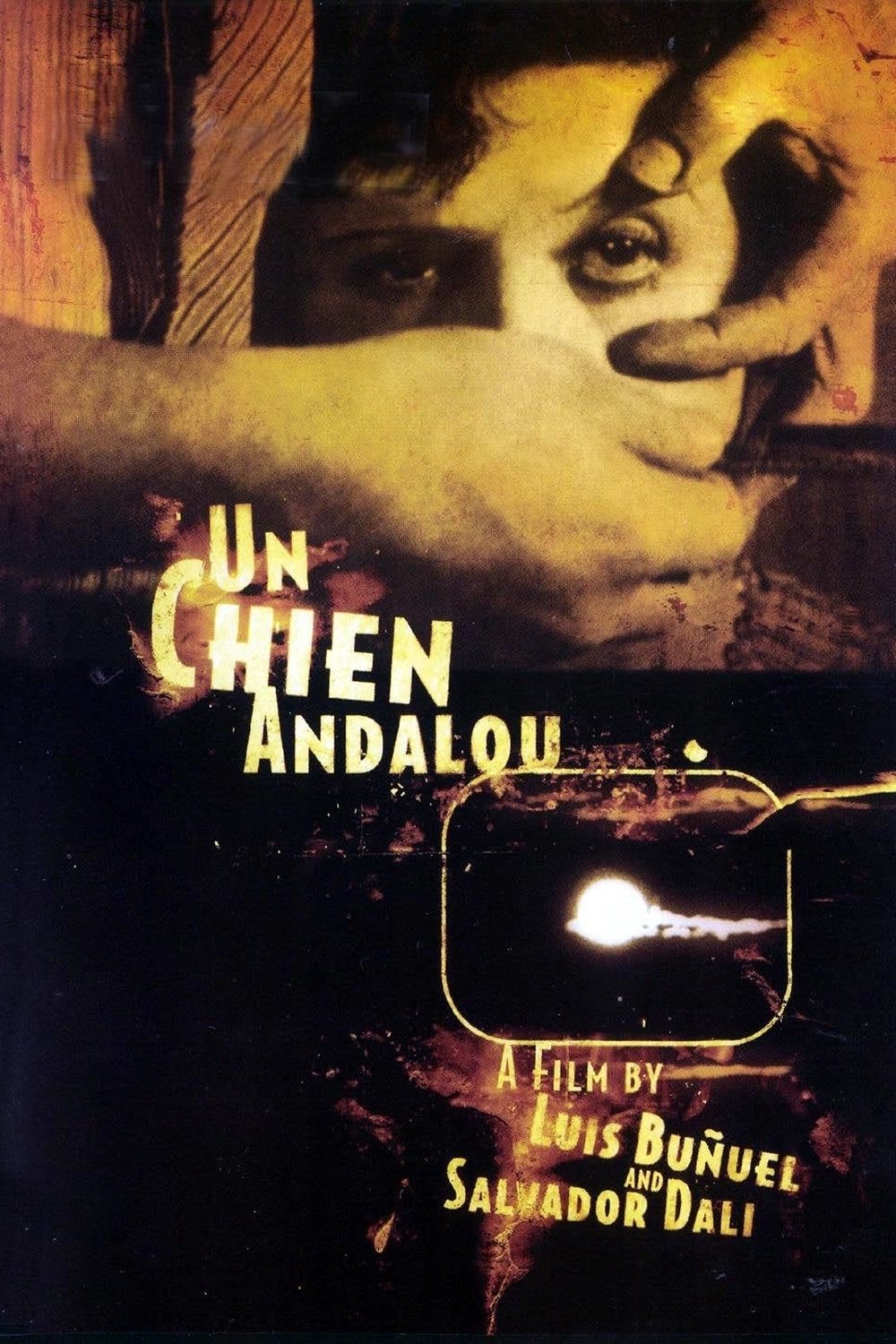
The celluloid crackles like a bone under an executioner’s boot while the screen bleeds a darkness denser than the collective unconscious. Un Chien Andalou isn’t a film—it’s a cinematic initiation ritual, the exact moment when cinema stopped being a carnival sideshow and became a scalpel digging into the darkest folds of the human psyche. The year was 1929, the financial crash had shattered bourgeois dreams, and in that precise moment of economic and existential chaos, two Spaniards in Paris—a man from Aragon with the gaze of a poetic assassin and a Catalan with the mustache of a comic-book villain—decided the seventh art needed an emergency lobotomy. Luis Buñuel and Salvador Dalí, kindred spirits in their hatred of logic and love of the oneiric, locked themselves in a room with one sacred rule: «No ideas or images that could lead to a rational explanation.» The result was this cursed short film, financed with Buñuel’s mother’s money (because, of course, no sane producer would bet a franc on such madness), which premiered at the Studio des Ursulines before an audience of Parisian intellectual elite... and provoked fainting spells, vomiting, and—according to the chronicles—the frantic flight of more than one spectator toward the emergency exit. Cinema was never innocent again after that.
But let’s cut to the chase: Un Chien Andalou isn’t just a film—it’s a visual manifesto against conventional narrative, a gob of spit in the face of Griffith and his classical editing. Buñuel, who had absorbed surrealism in the Café Cyrano gatherings with Breton and Éluard, understood that cinema could be more than stories with a beginning, middle, and end: it could be a fever dream, a succession of images so jarring that the viewer’s brain had no choice but to surrender to its absurd logic. The script’s genesis is legendary: Buñuel dreamed of a thin cloud slicing the moon like a razor; Dalí, of ants devouring a hand. «What if we combine both images?» they must have thought. And thus was born the first shot in cinema history to make an entire theater scream: a human eye—actually, that of a dead calf, because the budget didn’t stretch further—being sliced with a razor blade. The metaphor is so painfully obvious it hurts: cinema, until then a complacent entertainment, had just lost its innocence. Or rather, it had forced the viewer to lose theirs.
The industrial context of the era adds a delicious layer of irony to this work. While Hollywood was churning out Technicolor musicals and romantic comedies with happy endings, in Europe the avant-garde were playing at dynamiting conventions. Un Chien Andalou cost a measly 25,000 francs (the equivalent of what a YouTuber might spend on a «react» video today), but its influence was so disproportionate that nearly a century later, any self-respecting film student has tried to emulate its style—usually with results as pathetic as a Shrek joke at a funeral. What’s fascinating is that, despite its brevity, the film contains more visual ideas than the entire filmography of contemporary directors who believe themselves «transgressive» for including a single-take Steadicam shot. Here, there’s no Steadicam, no CGI, no superfluous dialogue: just pure, brutal images that lodge in the retina like needles in an eyeball. Buñuel, who had worked as Jean Epstein’s assistant, knew cinema was, above all, an art of the gaze. And what better way to prove it than by forcing the viewer to look at what no one wants to see.
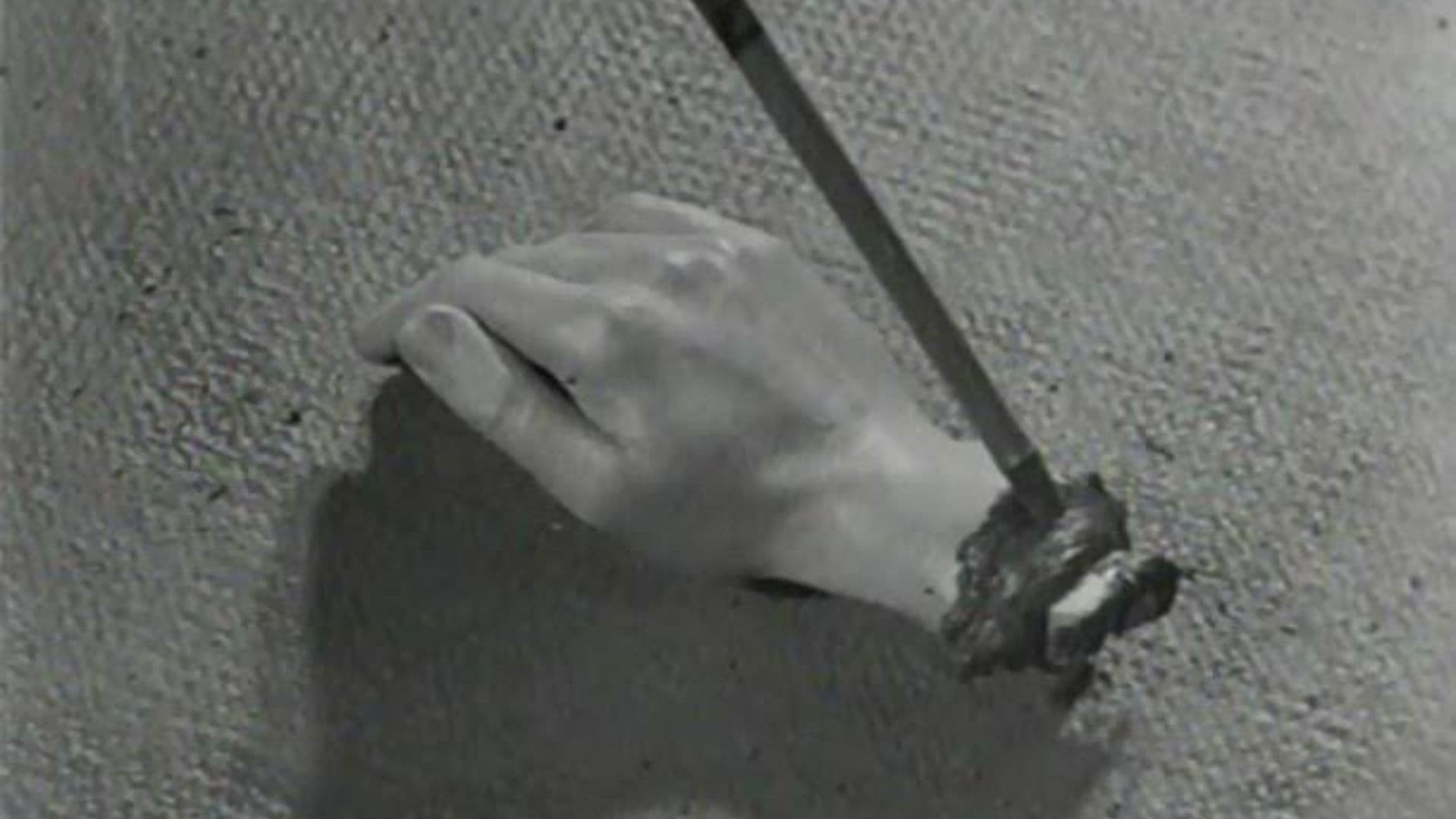
The cultural climate of the time was the perfect breeding ground for a work like this. Paris in the 1920s was a party, yes, but also an open-air asylum where artists, poets, and madmen mixed in an explosive cocktail of absinthe, opium, and psychoanalytic theories. Freud had just published Civilization and Its Discontents, and surrealism, with its obsession with the unconscious and the irrational, was at its peak. Un Chien Andalou is, in essence, a filmed Freudian dream: hands crawling with ants (symbol of libido?), pianos dragged by dead donkeys (the death of high culture?), a man caressing a woman’s breasts as she turns into a skeleton (desire and death as two sides of the same coin?). The film explains nothing because it doesn’t need to. As Buñuel said years later: «If someone understands it, I haven’t done it right.» And damn if he didn’t do it right: 16 minutes that weigh more than the entire filmography of directors who spend two hours masturbating over their own «depth.»
The direction: Buñuel as the surgeon of the oneiric
If cinema is, as Hitchcock said, «life with the boring parts cut out,» Un Chien Andalou is the result of applying that maxim with an axe. Buñuel doesn’t direct: he dissects. Every shot is a visual stab, every cut an open wound oozing meaning (or the absence of it). The editing, far from following the rules of classical continuity, functions like a series of low blows: a man drags pianos with dead donkeys, a woman plays with a severed hand in the middle of the street, and a character—played by Buñuel himself—sticks out his tongue like a horny lizard. There’s no smooth transition, no logical explanation: just the organized chaos of dreams, where time and space fold like a drunken accordion.
The most brilliant aspect of Buñuel’s direction is his ability to turn the everyday into the uncanny with a simple shift in context. A close-up of a hand crawling with ants could be a National Geographic documentary... if it weren’t for the fact that the hand belongs to a man who’s just been run over by a car. The scene where Pierre Batcheff looks in the mirror and sees himself dead is pure cinematic alchemy: in less than 10 seconds, Buñuel condenses existential angst, the Freudian double, and the obsession with mortality. All without a single line of dialogue. Why talk when you can show an eye being sliced? The silence in Un Chien Andalou isn’t the absence of sound: it’s another character, a void the viewer fills with their own fears.
Buñuel’s use of off-screen space is another triumph. When the woman (Simone Mareuil) is dragged across the floor while a man (Batcheff) watches impassively, we don’t see what’s pulling her. We don’t need to. The viewer’s brain fills in the gaps with their worst nightmares. It’s the same trick he’d use years later in The Exterminating Angel, but here, in its purest and most primitive form. Buñuel doesn’t show: he suggests. And what he suggests is so disturbing that the film still works like a sinister clockwork mechanism nearly a century later.
The performances: Faces as masks of the unconscious
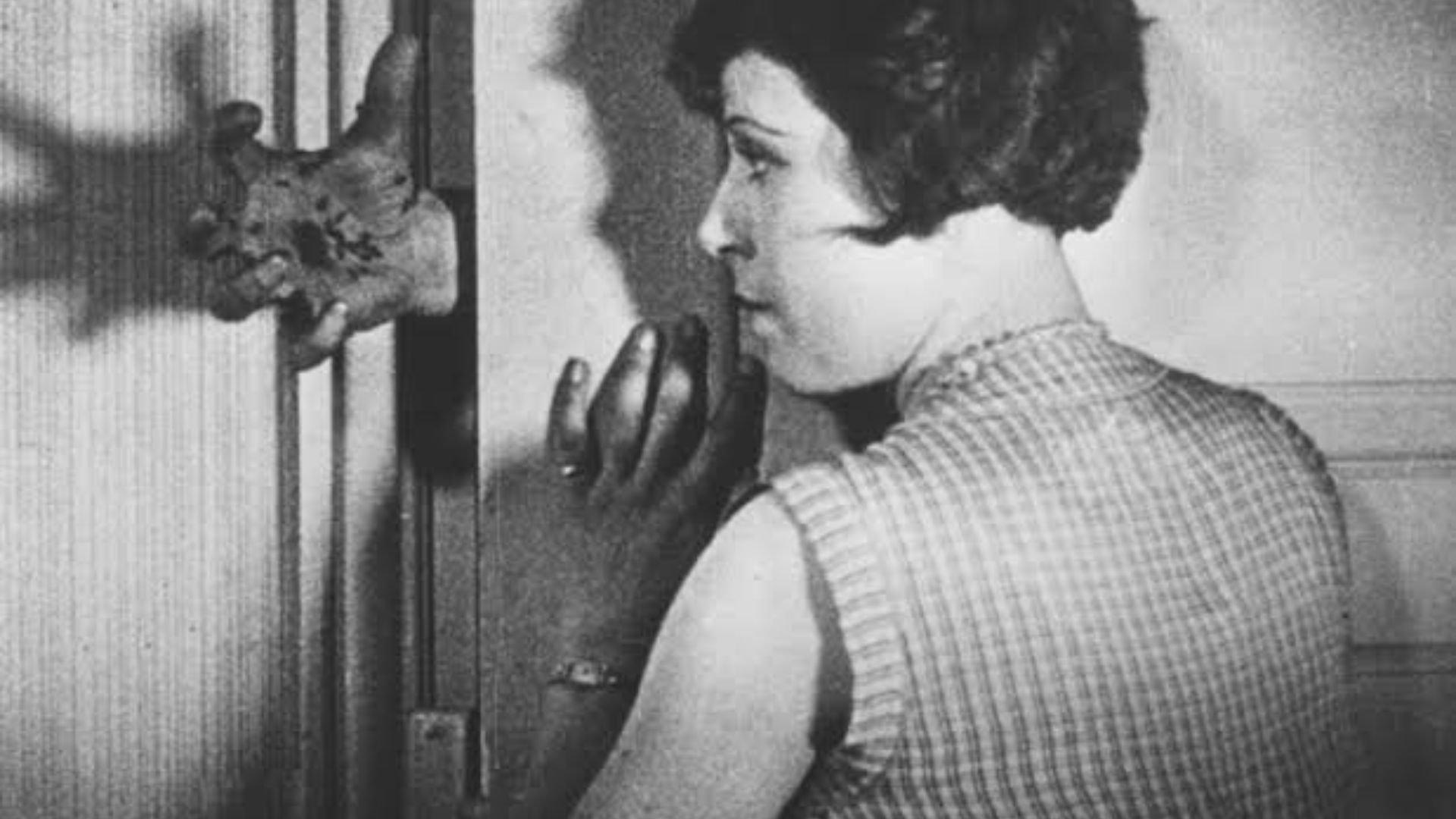
The cast of Un Chien Andalou doesn’t act: they exist. There’s no performance in the traditional sense because there’s no script to cling to, no characters to develop. Simone Mareuil, Pierre Batcheff, and the rest of the ensemble are, above all, bodies that Buñuel manipulates like a puppeteer with an axe. Mareuil, with her face of a broken doll, is the perfect embodiment of the surrealist femme fatale: an object of desire and repulsion in equal measure. Her scene with the man caressing her breasts as she turns into a skeleton is pure theater of the absurd, a metaphor so obvious about the fleeting nature of beauty that it hurts for its rawness. Batcheff, meanwhile, plays a character who is and isn’t himself: a man torn between desire and impotence, a Buñuel alter ego who stares at the camera as if he knows the viewer is complicit in his madness.
What’s fascinating about the performances in this film is that there’s no acting. The actors don’t «portray» emotions: they live them (or at least fake them with a conviction bordering on the pathological). When Batcheff crawls across the floor with his hands crawling with ants, he’s not «acting» repulsed: he’s being repulsive. And when Mareuil stares directly at the camera while a man slices her eye (or seems to), her expression isn’t one of pain but of complicity. As if she knows the real cut isn’t on the celluloid but the one happening in the viewer’s mind. Buñuel wasn’t looking for actors: he was looking for bodies that could bear the weight of his obsessions. And damn if he didn’t find them.
Dalí’s cameo, where he briefly appears as a seminarian dragged by a piano, is pure surrealism in its purest form: a nod to his own obsession with the religious and the erotic, two forces that in his work (and Buñuel’s) always go hand in hand. That the most famous artist of the 20th century appears in the film as a mere pawn in Buñuel’s game is a perfect metaphor for their relationship: Dalí was the genius, but Buñuel was the auteur. And in cinema, as the man from Aragon well knew, the auteur always has the last word.
The technical department: When the budget is zero but the ambition is infinite
Un Chien Andalou is the definitive proof that cinema doesn’t need money: it needs ideas. With a budget that today wouldn’t even cover a YouTuber’s craft services, Buñuel and his team created a work that remains more impactful than 99% of modern films with nine-figure budgets. Albert Duverger’s cinematography is functional, almost documentary-like, but that’s precisely what makes it brilliant: no filters, no contrived lighting effects, no modern obsession with color grading that turns many films into Pantone catalogs. Here, the light is raw, direct, like a spotlight in an interrogation room. And that, in a film that plays with dreams, is pure irony: the oneiric filmed with the rawness of a newsreel.
The editing is, without a doubt, the film’s most revolutionary technical aspect. Buñuel, who had learned the craft as Epstein’s assistant, understood that editing wasn’t just a narrative tool but a weapon. The abrupt cuts, impossible ellipses, lack of temporal continuity... everything is designed to disorient the viewer, to force them to question what they’re seeing. When the film jumps from a man shaving to a shot of a cloud slicing the moon, there’s no logical explanation: just emotion. And that emotion is fear, confusion, fascination. Buñuel doesn’t want you to understand the film: he wants you to feel it like a punch to the gut.
The sound, added in a later version (because the original was silent), is another masterstroke. Wagner’s music, with its operatic grandiosity, contrasts deliriously with the surrealist imagery. It’s like scoring 2001-una-odisea-del-espacio-kubrick-y-el-monolito-que-nos-dejo-mudos" class="text-amber-400 font-black hover:text-amber-300 transition underline decoration-amber-500/40 hover:decoration-amber-300" title="[9.3/10 🔥 Fusión Nuclear] Lee nuestra autopsia de «2001»" data-acid-interlink="2001-una-odisea-del-espacio-kubrick-y-el-monolito-que-nos-dejo-mudos">2001: A Space Odyssey to a video of cats playing the piano: the result is so absurd it hurts. But it works. Because Un Chien Andalou isn’t a film: it’s a sensory experience, a hallucinogenic trip without the need for drugs. And in that trip, every technical element—from the cinematography to the editing—serves a single idea: cinema as a shared nightmare.
The best
- The eye shot: The scene that changed everything. A dead calf, a razor blade, and 10 seconds of celluloid that redefined cinema forever. If this doesn’t make your hair stand on end, you’re soulless.
- The editing: Buñuel cuts like a drunk butcher, and the result is pure visual poetry. Every narrative jump is a punch in the viewer’s face.
- Limitless ambition: 16 minutes that weigh more than the entire filmography of directors who think they’re transgressive for including a Steadicam single take. Here, there’s no Steadicam: just pure, unfiltered genius.
- Duverger’s cinematography: Raw, direct, uncompromising. As if Freud’s most disturbing dream had been filmed by a BBC documentarian.
- The soundtrack: Wagner in a surrealist film is like scoring an opera to an ASMR video of ants eating an eyeball. And it works.
The worst
- The runtime: 16 minutes are enough to change cinema, but not enough to sate the nightmare hunger it leaves behind. We want more, even if it’s just to suffer.
- The lack of explanations: Not a flaw, but it can frustrate viewers looking for conventional narrative. Spoiler: you won’t find it here.
- Dalí’s cameo: Brief, almost irrelevant. You’d expect the most eccentric artist of the 20th century to have more weight in the film, but Buñuel relegates him to an extra.
- The added sound: The original was silent, and while Wagner’s music works, there’s something perversely wrong about adding sound to a work born to be silent.
- The poetic misogyny: The women in the film are objects of desire or victims of violence. It’s a reflection of the era (and Buñuel), but it stings to see it on screen.
The Verdict of Claqueta Ácida
Un Chien Andalou isn’t a film: it’s a filmed exorcism, a primal scream in celluloid form that still echoes nearly a century later. Luis Buñuel and Salvador Dalí didn’t create a work of art; they created a virus that infected cinema forever, a reminder that the seventh art can be more than entertainment: it can be a shattered mirror where the viewer sees their deepest fears reflected. Sixteen minutes are enough to prove that cinema, in the right hands, is the most dangerous art form in the world. And Buñuel, with his razor and his poetic assassin’s gaze, was the perfect surgeon for the visual lobotomy cinema needed. If you don’t feel something break inside you after watching it, you were already dead before the screening began. 💀
🎬 Tráiler Oficial
Abrir en YouTube
Ending Explained: An Andalusian Dog
Ficha de Daños Colaterales en Sala
Certificado de impacto psicofísico emitido por Maximiliano Z.
Ni un solo parpadeo voluntario. El asiento, inusualmente cómodo.
El móvil permaneció en el bolsillo donde debía estar.
Ninguna. Esta obra no necesita muletas estimulantes.
"No aplica. La obra se sostiene sola."
💬 El Veredicto de la Comunidad
¿Qué te ha parecido la película? Deja tu nota de 0 a 10 para contrastarla con el análisis de la redacción.
Aún no has votado
📢 ¿Te ha gustado el ácido?
Comparte esta crítica con tus amigos cinéfilos o desata la polémica en redes.
⚡ THE CINEMATIC VENOM YOUR INBOX CRAVES
No sugarcoated ratings, no corporate fluff. Subscribe for our uncensored weekly analysis or join the private Telegram for press previews, poll clashes, and instant alerts.
Alertas de estrenos en 1 segundo, encuestas en caliente y audios al salir de pases de prensa.
Recibe la dosis semanal en tu mail + regalo inmediato del PDF con 50 joyas ocultas de culto.
Related Reviews
Recommended autopsies for demanding film buffs.
 🔥 Fusión Nuclear9.5
*2001: A Space Odyssey – A Monkey, a Monolith, and Two Hours of Cosmic Pretentiousness*
⚡Afinidad temática directa en atmósfera, estilo y fijaciones visuales.
We dissect Stanley Kubrick’s magnum opus. A visual feast of minimalism and space hypnosis that cemented "serious" sci-fi—and bored half of humanity to tears.
 🔥 Fusión Nuclear9.3
2001: A Space Odyssey — The Day Kubrick Left Us Speechless (and Oxygenless)
⚡Afinidad temática directa en atmósfera, estilo y fijaciones visuales.
Kubrick turned science fiction into pure art: 149 minutes of eloquent silence, bone-wielding apes, and a psychopathic computer. Masterpiece or pretentious fraud? Here’s the verdict.
 🔥 Fusión Nuclear8.5
*A Clockwork Orange: The Sweet, Rusty Aftertaste of Violent Haute Couture*
⚡Afinidad temática directa en atmósfera, estilo y fijaciones visuales.
A scathing review of Kubrick’s masterpiece, where ultraviolence meets 60s fashion in a twisted pas de deux.
Editorial Ecosystem
Cinephile connections, archive interviews and related analyses.
💬 Debate Cinéfilo & Autopsia de Lectores
0 veredictos¿Discrepas con nuestra nota? ¿Es una obra maestra o veneno puro? Deja tu veredicto abajo sin necesidad de registro.

Aún nadie ha dejado su veredicto para esta película.
Sé el primero en clavarle el colmillo rellenando el formulario de arriba.