Wild Heart — The Soap Opera That Proved Melodrama Is the Only Genre That Could Survive a Nuclear Apocalypse
Angélica María and Fernando Allende in a 1977 Mexican telenovela that turned excess into art. A kitsch masterpiece or just another Televisa product? Claqueta Ácida dissects it with a scalpel and a smirk.

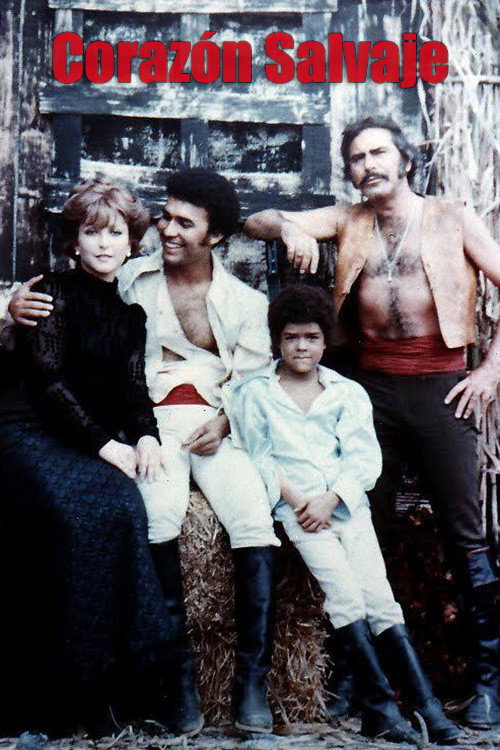
The year 1977 wasn’t just about Star Wars and Saturday Night Fever. While George Lucas was inventing the modern blockbuster and John Travolta was turning disco into a religion, in Mexico, Televisa was carving its own path to glory through sheer excess with Wild Heart (Corazón salvaje), a telenovela that proved melodrama doesn’t need special effects to be epic. Directed by the legendary Caridad Bravo Adams—a woman who understood better than anyone that lovesick suffering sells more than bread—this production became a cultural phenomenon that transcended generations. It wasn’t cinema, it wasn’t high art, but, good God, it was as addictive as sweet poison. In 1970s Mexican television, drama wasn’t acted: it was lived, sweated, screamed between velvet drapes and gazes sharp enough to cut glass. Wild Heart didn’t invent the telenovela, but it did elevate it to a level of controlled hysteria that, in today’s era of minimalist series and ambiguous endings, feels like an act of artistic rebellion. Or is there anything more subversive than embracing excess in a world obsessed with emotional restraint?
The story of this telenovela is the story of a country that loved drama as much as pan de muerto. Mexico in the 1970s was a nation of contrasts: between incipient modernity and deep-rooted folklore, between progressive rock and Agustín Lara’s boleros, between political repression and sexual liberation. Amidst this chaos, Televisa—the empire of Emilio Azcárraga Milmo—understood that people didn’t want realism; they wanted escapism in capital letters. And boy, did Wild Heart deliver. There was no room for nuance here: characters were walking archetypes, dialogues sounded like biblical edicts, and romantic conflicts had the subtlety of a sledgehammer to the skull. But—oh, surprise!—it worked. Because, let’s be honest, who needs deep psychology when you can have Fernando Allende staring into the camera as if he’s about to challenge fate to a duel? The telenovela wasn’t a reflection of reality but a funhouse mirror that exaggerated everything until it became something bigger, more intense, more alive. And in that, dear cinephiles, lies its genius: its ability to be both an industrial product and an unintentional work of art.
But let’s talk about Caridad Bravo Adams, the woman behind this sacred monster of melodrama. If Mexican cinema had a patron saint of soap operas, it would be her. With a career spanning decades and dozens of tear-jerking stories, Bravo Adams didn’t just write telenovelas: she lived them. Her pen knew no moderation, and her characters were so extreme they’d be ripe for parody on Saturday Night Live today. But in the 1970s, in a Mexico where television was the opium of the people, her stories were sacred. Wild Heart wasn’t her first masterpiece, but it was one of the most remembered, partly thanks to a cast that understood the operatic tone of the material perfectly. There was no room for shy actors here: what was needed was people willing to cry, scream, and suffer as if the world were ending with every commercial break. And boy, did they deliver. Angélica María, America’s sweetheart, and Fernando Allende, the leading man with a killer gaze, became the perfect duo in a love so toxic it would be canceled on Twitter within hours today. But in 1977, audiences didn’t want healthy relationships: they wanted passion, betrayal, and suffering so exaggerated it bordered on the comical. And Wild Heart gave them exactly that, with the generosity of a chef serving a banquet of poisoned emotions.
The industrial context of this telenovela is as fascinating as its content. Televisa in the 1970s was a well-oiled machine for producing cheap, addictive, and mass-market content. There was no room for experimentation or risks: what worked was repeated ad nauseam, and Wild Heart was the result of that tried-and-true formula. But—and here’s the interesting part—amidst this assembly-line production, something magical happened. The telenovela transcended its status as a product to become a cultural phenomenon, a reference point for entire generations. It wasn’t The Godfather or 2001-una-odisea-del-espacio-kubrick-y-el-monolito-que-nos-dejo-mudos" class="text-amber-400 font-black hover:text-amber-300 transition underline decoration-amber-500/40 hover:decoration-amber-300" title="[9.3/10 🔥 Fusión Nuclear] Lee nuestra autopsia de «2001»" data-acid-interlink="2001-una-odisea-del-espacio-kubrick-y-el-monolito-que-nos-dejo-mudos">2001: A Space Odyssey, but within its niche, it was just as important as those films. Because, in the end, art isn’t always measured by its ambition but by its ability to connect with the audience. And Wild Heart connected like few television products have. Not with the mind, but with the gut, the viscera, that dark place where we keep our cheesiest fantasies and deepest fears. In that sense, this telenovela was a perfect mirror of its time: exaggerated, melodramatic, sometimes ridiculous, but always, always, unforgettable.
Direction: The Art of Turning Excess into Visual Poetry
If there’s one thing Caridad Bravo Adams understood better than anyone, it’s that melodrama isn’t directed: it’s choreographed. Every scene in Wild Heart seems designed to be a living tableau, where actors don’t just deliver their lines but embody them with an intensity that borders on the religious. It’s no coincidence that close-ups in this telenovela are as frequent as commercial breaks: Bravo Adams knew that the human face, when well-lit and overacted with conviction, can be more expressive than any dialogue. There’s no room for subtlety here because subtlety doesn’t sell soap or soda. What there is, is a mise-en-scène that embraces excess as if it were its religion, with actors staring into the void as if they’re seeing the future of humanity, and dialogues that sound like self-fulfilling prophecies. Is it ridiculous? Of course. Is it effective? More than a beer commercial during the Super Bowl.
The pacing of Wild Heart is another of its great achievements. In an era when telenovelas could drag on into infinity (and beyond), Bravo Adams managed to maintain a narrative tension that, while predictable, never became boring. Every episode ended with a cliffhanger so exaggerated it seemed lifted from a 1930s serial, but instead of feeling like a cheap trick, audiences devoured it as if it were the ending of Inception. And let’s be honest, in melodrama, it doesn’t matter if the plot is original or not: what matters is how it’s told. And here, every plot twist, every betrayal, every desperate declaration of love was calculated to generate the maximum amount of tears and sighs. It wasn’t auteur cinema, nor did it pretend to be. It was television in its purest form: a product designed to entertain, move, and, above all, sell.
But where Wild Heart truly shines is in its ability to turn the mundane into the epic. A scene of two lovers arguing in a garden isn’t just that: it’s a duel of gazes, a dance of emotions where every word weighs like a tombstone. The sets, though clearly made of cardboard, are designed to frame the characters as if they were mythological figures, and the lighting—though rudimentary—manages to create an atmosphere that oscillates between the gothic and the romantic. There are no special effects, no CGI, nothing to distract from the essential: raw emotions, served without filters. And in that, dear readers, lies the true genius of this telenovela. Because, in the end, melodrama doesn’t need million-dollar budgets or complex scripts: it just needs actors willing to give it their all, and an audience willing to believe that love, betrayal, and suffering are the only things that matter in this world.
Actors: A Cast That Turned Suffering into an Olympic Sport
If there’s one thing that defines Wild Heart, it’s its cast, an ensemble of actors who understood perfectly that melodrama isn’t a genre for the faint of heart. There’s no room for half-measures here: either you commit to the role with the intensity of an evangelical preacher, or you become the laughingstock of the audience. And, luckily for us, this group of performers didn’t just commit—they immolated themselves on the altar of excess. Angélica María, America’s sweetheart, plays Mónica, a character who seems plucked from a Greek tragedy but with more tears and less common sense. Her performance is a masterclass in how to turn suffering into art, with a crying capacity that would make Meryl Streep pale in comparison. But it’s not just her weeping that impresses: it’s her ability to convey a vulnerability that, though exaggerated, is strangely moving. Mónica isn’t a complex character, but Angélica María infuses her with a humanity that transcends the script, making her the emotional heart of the telenovela.
But if Angélica María is the heart, Fernando Allende is the muscle. His portrayal of Juan del Diablo—a name that’s already a manifesto in itself—is one of those performances that can only be described as physical. Allende doesn’t just act: he inhabits the character with a presence that fills the screen every time he appears. His Juan del Diablo is a tormented, violent, passionate, and, above all, magnetic man. It doesn’t matter if he’s shouting, crying, or simply staring into the camera with an intensity that seems capable of melting celluloid: Allende makes every scene he’s in unforgettable. And the most impressive thing is that he does it without slipping into caricature. Yes, the character is exaggerated, but Allende plays him with a conviction that makes him believable, as if he truly believes the world is ending every time his beloved rejects him. In an era when telenovela leading men were usually as interesting as a brick, Allende proved you could be attractive, dangerous, and deeply human all at once.
The rest of the cast doesn’t lag behind. Susana Dosamantes, as Aimée, is the perfect villain: beautiful, cruel, and so self-assured it’s impossible not to hate her (and, at the same time, admire her a little). Her chemistry with Allende is electric, and their scenes together-la-cueva-de-los-espejos-rotos" class="text-amber-400 font-black hover:text-amber-300 transition underline decoration-amber-500/40 hover:decoration-amber-300" title="[6.5/10 ⚡ Ácido Cítrico] Lee nuestra autopsia de «Together»" data-acid-interlink="together-la-cueva-de-los-espejos-rotos">together are a reminder that when done right, melodrama can be as addictive as hard drugs. Bertha Moss, meanwhile, plays Juan del Diablo’s suffering mother with a dignity that contrasts with the rest of the cast’s histrionics, and Miguel Manzano provides a touch of unintentional comedy with his portrayal of a character so ridiculous it borders on the surreal. But, in the end, what makes this cast great is their ability to believe in what they’re doing. There’s no irony in their performances, not a hint of distance: they commit to the material with a passion that, though it may seem naive today, is impossible not to admire. Because, let’s be honest, how many actors today would be willing to cry, scream, and suffer with the conviction of these performers?
Technical Aspects: When Kitsch Becomes Art
The technical side of Wild Heart is a reminder that sometimes limitations can be creativity’s best ally. We’re not talking about a production with a million-dollar budget or a technical team with access to the latest technology. What we have here is a telenovela made with the resources of its time but with a visual ambition that elevates it above most of its contemporaries. The sets, though clearly made of cardboard, are designed to create an atmosphere that oscillates between the gothic and the romantic, with a color palette that seems plucked from a fever dream. There’s no realism in these settings, nor do they need it: what matters is the emotion they convey, and in that sense, they fulfill their purpose perfectly. Every room, every garden, every landscape seems designed to frame the characters as if they were figures in a painting, creating an aesthetic that, though it may seem dated today, has an undeniable charm.
The cinematography of Wild Heart is another of its strong points. Though we don’t have the name of the director of photography (a detail that speaks to the era in which this production was made), the work with light and framing is impeccable. Close-ups are frequent and calculated to maximize the emotional impact of each scene, with lighting that highlights the actors’ expressions and creates an intimate, almost claustrophobic atmosphere. There’s no room for subtlety in this telenovela, and the cinematography reflects that perfectly: every scene is designed to be as dramatic as possible, with contrasts of light and shadow that recall film noir but with a warmer, more saturated color palette. And though it may seem exaggerated today, it works. Because, in the end, melodrama isn’t a genre for realists: it’s a genre for dreamers, for people who want to feel that love and suffering can change the world. And in that sense, the cinematography of Wild Heart is perfect.
Costumes and makeup are two other aspects worth mentioning. In an era when telenovelas often dressed their characters in clothes that seemed plucked from a 1950s catalog, Wild Heart opted for a bolder style, with dresses that hugged the actresses’ curves and suits that accentuated the leading men’s masculinity. It’s not high fashion, nor does it pretend to be: it’s a wardrobe designed to enhance the actors’ beauty and, at the same time, reflect their personalities. Villains wear black, heroes wear white, and tormented characters (which are most of them) oscillate between grays and blues, as if their clothes reflected their emotional state. The makeup, meanwhile, is just as exaggerated: the actresses look like they’ve just stepped out of a 1970s beauty salon, with false eyelashes sharp enough to cut the air and lips painted a red so intense it looks like blood. But, again, it works. Because in melodrama, exaggeration isn’t a flaw: it’s a virtue.
The best
- Fernando Allende: His portrayal of Juan del Diablo is a lesson in how to turn an archetypal character into something memorable, with a physical presence and intensity that steal every scene he’s in.
- The chemistry between Angélica María and Fernando Allende: When these two are on screen, the telenovela reaches its peak, with a sexual and emotional tension that makes every scene addictive.
- Costumes and cinematography: Though they may seem dated today, these elements are designed to enhance the drama and emotion of each scene, creating an aesthetic that’s as exaggerated as it is effective.
- The ability to turn the mundane into the epic: Every argument, every declaration of love, every betrayal is choreographed like an opera scene, with an intensity that makes the ordinary feel transcendent.
The worst
The predictable script: If you’ve seen one telenovela in your life, you know exactly how Wild Heart* will end. There are no surprises, no unexpected plot twists: it follows the formula to the letter.
- Flat characters: With the exception of Juan del Diablo and Mónica, most of the characters are archetypes without depth, designed to serve a function in the plot and little else.
- Excessive melodrama: Sometimes, the telenovela veers into unintentional self-parody, with scenes so exaggerated they’re hard to take seriously.
- Cardboard sets: Though they serve their purpose, there are moments when the lack of budget is painfully obvious, especially in outdoor scenes.
Lack of nuance: In Wild Heart*, everything is black or white: there are no grays, no ambiguities. Heroes are flawless, villains are irredeemably evil, and love always triumphs (even if it costs everyone’s sanity).
The Verdict of Claqueta Ácida
Wild Heart isn’t a cinematic masterpiece, nor does it pretend to be. It’s a product of its time, a Mexican soap opera that embraced excess as if it were its religion and turned melodrama into a high-performance sport. There’s no psychological depth, no revolutionary scripts, no performances destined for the history books. But—and this is the important part—it doesn’t need them. Because what makes this telenovela great is its ability to be both an industrial product and an unintentional work of art. It’s kitsch, it’s exaggerated, it’s sometimes ridiculous, but it’s also addictive, exciting, and, above all, authentic. In a world where series and films often hide behind irony and cynicism, Wild Heart commits to drama with a passion that’s refreshing. It’s not for everyone, of course, but for those who appreciate the art of excess, this telenovela is a feast. A masterpiece? No. A cult classic? Without a doubt. And at Claqueta Ácida, that’s enough to earn our respect… and a couple of knowing laughs. 💀
Ending Explained: Wild Heart
Ficha de Daños Colaterales en Sala
Certificado de impacto psicofísico emitido por Héctor Veneno
1 amago en el tramo intermedio; pestañeo pesado en las transiciones más innecesarias.
Minuto 55 y minuto 81 (comprobando cuánto quedaba de suplicio).
2 espressos para no dejarse vencer por la mediocridad cómoda.
"A mitad del segundo acto cuando la subtrama secundaria empezó a pesar más de lo que aportaba."
💬 El Veredicto de la Comunidad
¿Qué te ha parecido la película? Deja tu nota de 0 a 10 para contrastarla con el análisis de la redacción.
Aún no has votado
📢 ¿Te ha gustado el ácido?
Comparte esta crítica con tus amigos cinéfilos o desata la polémica en redes.
⚡ THE CINEMATIC VENOM YOUR INBOX CRAVES
No sugarcoated ratings, no corporate fluff. Subscribe for our uncensored weekly analysis or join the private Telegram for press previews, poll clashes, and instant alerts.
Alertas de estrenos en 1 segundo, encuestas en caliente y audios al salir de pases de prensa.
Recibe la dosis semanal en tu mail + regalo inmediato del PDF con 50 joyas ocultas de culto.
Related Reviews
Recommended autopsies for demanding film buffs.
 🔥 Fusión Nuclear9.5
*2001: A Space Odyssey – A Monkey, a Monolith, and Two Hours of Cosmic Pretentiousness*
⚡Afinidad temática directa en atmósfera, estilo y fijaciones visuales.
We dissect Stanley Kubrick’s magnum opus. A visual feast of minimalism and space hypnosis that cemented "serious" sci-fi—and bored half of humanity to tears.
 🔥 Fusión Nuclear9.3
2001: A Space Odyssey — The Day Kubrick Left Us Speechless (and Oxygenless)
⚡Afinidad temática directa en atmósfera, estilo y fijaciones visuales.
Kubrick turned science fiction into pure art: 149 minutes of eloquent silence, bone-wielding apes, and a psychopathic computer. Masterpiece or pretentious fraud? Here’s the verdict.
 🔥 Fusión Nuclear8.5
*A Clockwork Orange: The Sweet, Rusty Aftertaste of Violent Haute Couture*
⚡Afinidad temática directa en atmósfera, estilo y fijaciones visuales.
A scathing review of Kubrick’s masterpiece, where ultraviolence meets 60s fashion in a twisted pas de deux.
Editorial Ecosystem
Cinephile connections, archive interviews and related analyses.
💬 Debate Cinéfilo & Autopsia de Lectores
0 veredictos¿Discrepas con nuestra nota? ¿Es una obra maestra o veneno puro? Deja tu veredicto abajo sin necesidad de registro.

Aún nadie ha dejado su veredicto para esta película.
Sé el primero en clavarle el colmillo rellenando el formulario de arriba.