Donnie Darko — The Movie Nobody Understood (Not Even Herself)
Richard Kelly sold us a $4 million puzzle that he himself didn't know how to solve. Jake Gyllenhaal shines, but the script drowns in its own ambition. Cult classic by accident.


Donnie Darko: full review


On October 2, 1988, Donnie Darko woke up in the middle of a highway with the feeling that something was off. I woke up the day I saw Donnie Darko with the same feeling. Richard Kelly, a 25-year-old director with a $4.5 million budget and a script that seemed written under the influence of bad LSD, released this movie in 2001 like a message in a bottle into the ocean. And boy, did the bottle arrive somewhere, although nobody's sure where the heck that somewhere is. Donnie Darko isn't a movie; it's a cultural phenomenon, a walking meme, a magnet for conspiracy theories, and the cinematic equivalent of that friend who always has a convoluted explanation for everything, even if they have no idea what they're talking about. And the worst part is that, despite all this, it works. Or at least, part of it does.
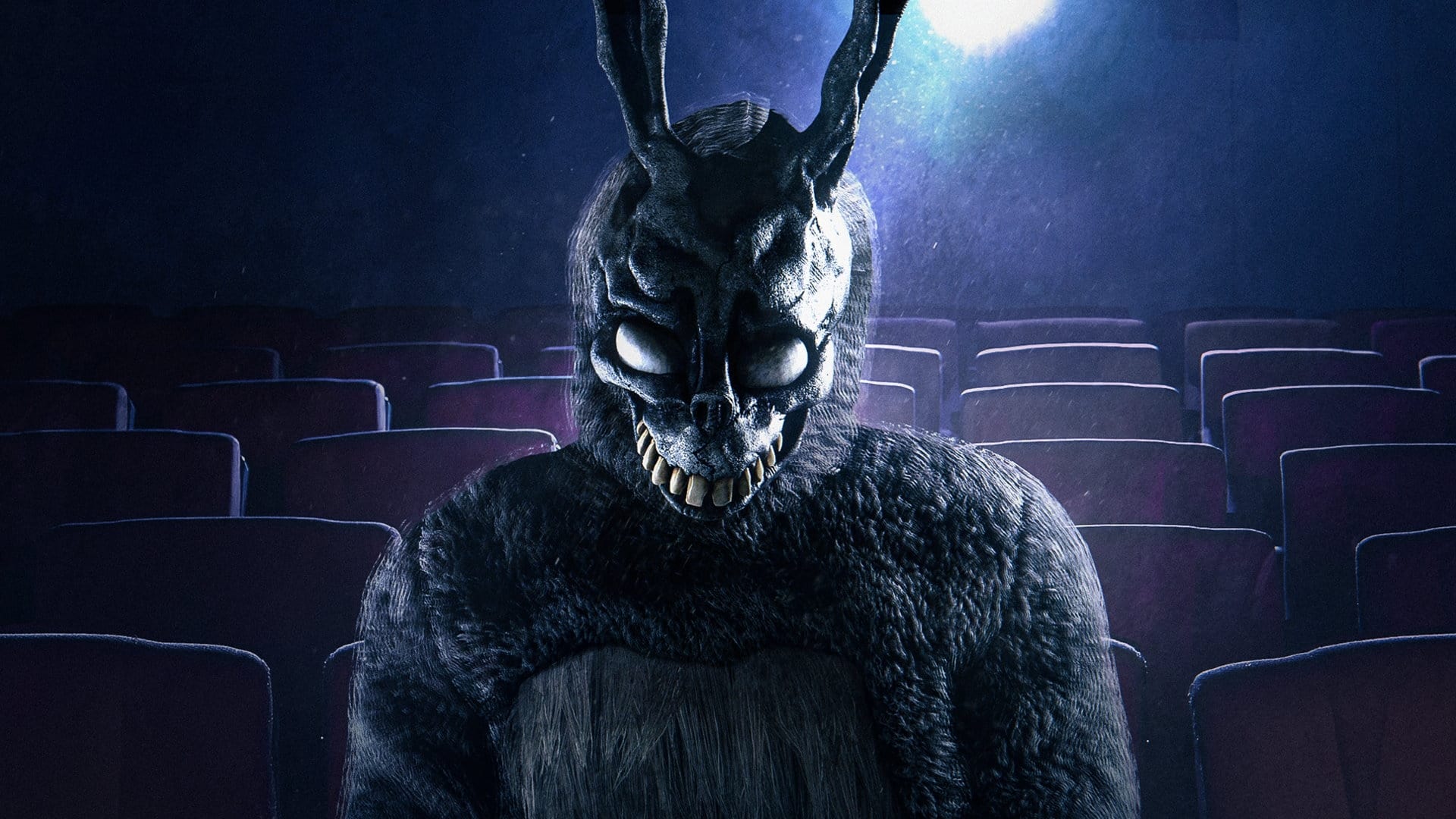
The shoot was a controlled chaos, as if Kelly had decided that the best way to capture Donnie's existential confusion was to replicate it behind the camera. Shot in 28 days with a crew that, according to rumors, didn't always know what they were filming, Donnie Darko was born in an atmosphere of improvisation and creative desperation. Jake Gyllenhaal, at 20, already had that look of someone who's seen the end of the world and come back to tell the tale (or not tell it, which is what Donnie does). But the real mystery isn't Donnie; it's Frank, the giant rabbit that seems plucked from a David Lynch nightmare after eating too much cheese. James Duval, the actor behind the mask, confessed years later that he didn't fully understand the character himself. And yet, there's Frank, with his ear-to-ear smile and robotic voice, becoming one of the most iconic (and incomprehensible) villains in modern cinema. Is he a demon? A time traveler? A hallucination? The movie refuses to answer, and that's both its genius and its biggest frustration.
The premiere was a disaster. Released at Sundance in 2001, Donnie Darko passed without fanfare, grossing only $500,000 at the box office. But then something curious happened: people started talking. Not about the movie itself, but about what Donnie Darko might mean. Entire forums filled with theories about tangent universes, wormholes, and the hidden meaning behind every frame. The DVD became a cult object, and suddenly, Donnie Darko went from being a commercial failure to one of those movies everyone's seen but nobody understands. Even Kelly himself admitted in interviews that he didn't have all the answers, which only fueled the fans' enthusiasm. How not to love a movie that its own creator can't explain? It's as if Donnie Darko was born with the mission of being the puzzle that nobody can solve, and in that sense, it's a resounding success.
But let's get to the point: is Donnie Darko a good movie or just a bunch of pretentious ideas wrapped in an 80s aesthetic and a soundtrack that sounds like cheap nostalgia? The answer, like almost everything in this movie, is complicated. On the one hand, there are moments of pure genius: the scene where Donnie and Gretchen (Jena Malone, in an acting performance that steals every frame she's in) kiss while 'Mad World' by Gary Jules plays in the background is so perfect it hurts. It's one of those moments where cinema transcends its own mediocrity and becomes almost sacred. But then there's the rest of the movie, a mishmash of subplots that go nowhere, secondary characters that seem plucked from an adolescent cliché manual (the psycho teacher, the absent father, the rebellious sister), and an ending that, no matter how hard you try, never quite fits with the rest. Kelly wanted to make a reflection on destiny, free will, and the nature of the universe, but what he ended up doing was making a movie that drowns in its own ambition.
Direction and Cinematography: Chaos as Style
Richard Kelly directs Donnie Darko as if he's competing in a contest to see who can cram the most crazy ideas into 113 minutes. Every frame seems designed to confuse: impossible angles, camera movements that can't decide if they want to be elegant or clumsy, and a color palette that oscillates between the sickly blue of American suburbs and the red blood of nightmares. There's something fascinating in the way Kelly mixes the gritty realism of the 80s with cheap sci-fi touches, as if E.T. and Eraserhead had a bastard child. But there's also something deeply irritating in his lack of coherence. The movie jumps from the poetic to the ridiculous without warning, like when Donnie destroys a teacher's house with an axe while 'The Killing Moon' by Echo & the Bunnymen plays in the background. Is it a moment of emotional liberation or just a desperate attempt to keep the viewer awake?
Kelly's greatest achievement is creating an oppressive atmosphere, that feeling that something terrible is about to happen but you never know exactly what. The suburbs of Donnie Darko aren't those of Back to the Future, but a place where normalcy is just a facade hiding something much darker. The problem is that Kelly doesn't always know what to do with that atmosphere. There are entire scenes that feel like filler, like the subplot of the gym teacher (Beth Grant, in a role that seems written for a soap opera villain) and her obsession with the 'self-esteem program'. It's as if Kelly had so many ideas that he couldn't decide which ones to discard, so he put them all in and hoped some would work. Spoiler: not all of them do.
Acting: Gyllenhaal Saves the Day (But Can't Save Everything)
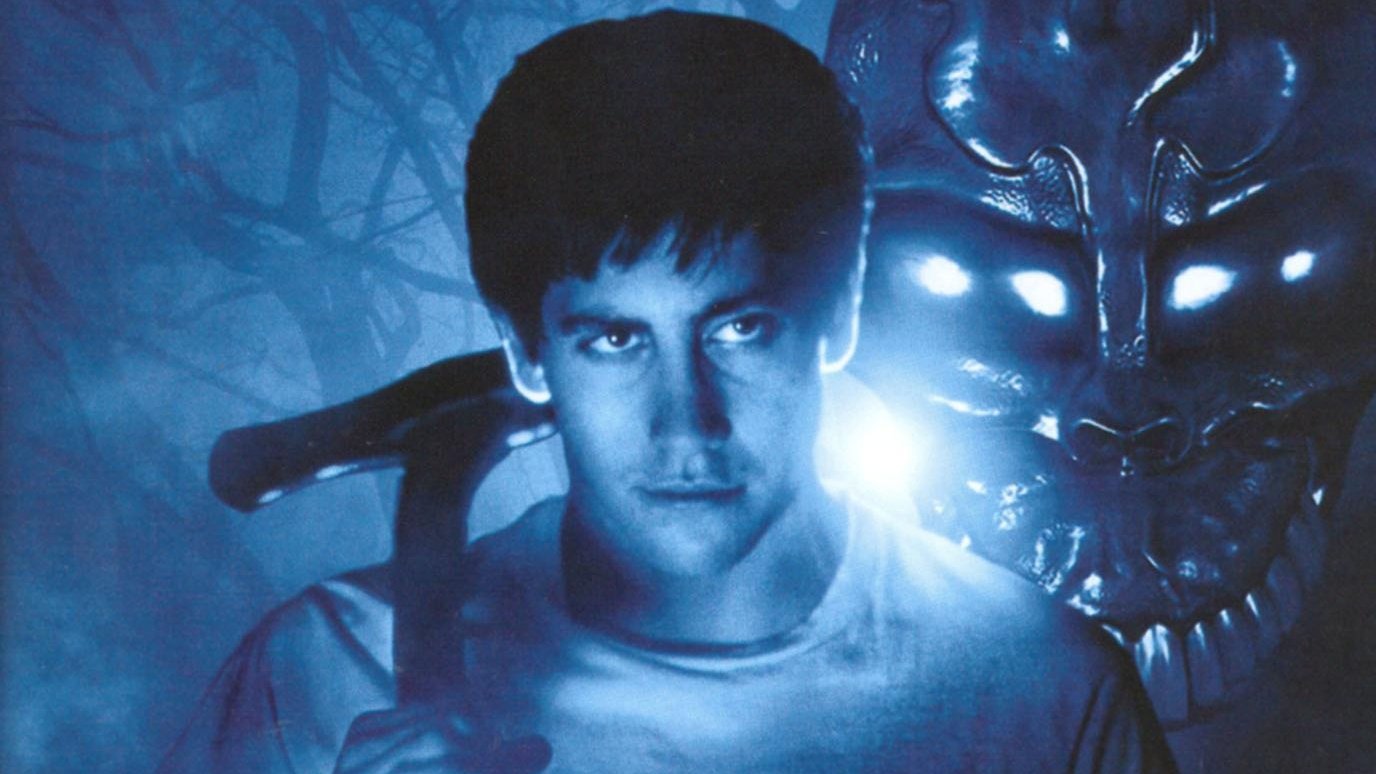
Jake Gyllenhaal is the heart of Donnie Darko, and without him, the movie would have sunk like the Titanic. At 20, Gyllenhaal already had that unique ability to convey a mix of vulnerability and danger, as if Donnie were a live wire that could electrocute you at any moment. His performance is what keeps afloat a movie that, otherwise, would have drowned in its own symbolism. Jena Malone, as Gretchen, is another strong point: her chemistry with Gyllenhaal is palpable, and there's a scene where they simply walk down the street talking about death that's more moving than the rest of the movie combined. But then there are the others, and that's where Donnie Darko stumbles.
Drew Barrymore, in a role that seems written for her (the progressive teacher who smokes in class and reads Graham Greene), is okay, but her character is so predictable it hurts. Mary McDonnell and Holmes Osborne, as Donnie's parents, are little more than decoration, and Patrick Swayze, as the motivational guru Jim Cunningham, is so over-the-top he seems plucked from a Saturday Night Live sketch. But the real crime is Maggie Gyllenhaal, Jake's sister, who plays Elizabeth Darko with an indifference that borders on insulting. It's as if she knew her character didn't matter and decided not to bother. And maybe she's right: in Donnie Darko, secondary characters are little more than chess pieces in Kelly's game, and some of them aren't even worth playing.
Script: A Puzzle Without a Solution (and Without All the Pieces)
The script of Donnie Darko is like a manual of instructions translated from Chinese to Spanish by someone who doesn't speak either language. Kelly tries to cover too much ground: time travel, parallel universes, theories on destiny, critiques of the American education system, reflections on adolescent love and death. It's as if he wanted to write The Catcher in the Rye but with wormholes and giant rabbits. And the worst part is that, at some point, he almost succeeds. There are brilliant dialogue moments ('Why do you like sad books?', Gretchen asks Donnie. 'Because they make me feel less alone', he responds), and moments where the movie seems about to take off towards something big. But then Kelly remembers Frank, the rabbit, and it all goes to hell.
The biggest problem with the script is that Kelly seems more interested in confusing the viewer than in telling a coherent story. There are entire scenes that don't make sense until you see them for the second (or third) time, and others that never make sense, no matter how hard you try. The ending, where Donnie decides to sacrifice himself to 'correct' the universe, is so abrupt and poorly explained it seems like a joke. Why does Donnie have to die? What happens to Gretchen? And what about Frank? Kelly doesn't bother to answer, and that's the most frustrating thing of all. Donnie Darko isn't a movie that invites reflection; it's a movie that leaves you with the feeling that you've been ripped off. Like you paid for a plane ticket and were left in the middle of a desert with a map drawn on a napkin.
The Best
- Jake Gyllenhaal's Performance: Donnie Darko is an impossible character to play: a teenager with schizophrenia, apocalyptic visions, and an intelligence superior to everyone around him. Gyllenhaal makes him believable, even when the movie becomes ridiculous. His look says it all.
- The Chemistry Between Donnie and Gretchen: Jena Malone and Gyllenhaal have a connection on screen that makes every scene between them worth watching. The kiss scene with 'Mad World' playing in the background is one of those magical moments that only cinema can offer.
- The Oppressive Atmosphere: Kelly manages to create a sense of constant unease, like the world of Donnie is about to collapse at any moment. The suburbs have never seemed so sinister.
- The Soundtrack: Michael Andrews and Gary Jules turn 'Mad World' into a generational anthem, and the rest of the soundtrack, with its 80s synthesizers, reinforces that sense of nostalgia and desperation.
The Worst
- The Incoherent Script: Kelly puts too many ideas into 113 minutes, and none of them quite gel. It's like a buffet where everything tastes the same: confusion.
- The Secondary Characters: From the gym teacher to the motivational guru, secondary characters are clichés on legs that add nothing to the story. Maggie Gyllenhaal deserved better.
- The Ending: After two hours of theories on tangent universes and time travel, the ending is so abrupt and poorly explained it seems like a joke. Kelly washes his hands and leaves the viewer with more questions than answers.
- The Uneven Pace: There are scenes that move at a snail's pace and others that fly by so fast you don't even notice. Kelly doesn't seem to know if he wants to make an art film or a teenage thriller.
The Verdict of Claqueta Ácida
Donnie Darko is like that friend you meet at a party, tells you a fascinating story, and then leaves without giving you their phone number. You're left with the feeling that something big happened, but you're not sure what. Richard Kelly sold us a movie that promised to be the Citizen Kane of time travel and ended up being a puzzle with missing pieces. Jake Gyllenhaal saves the day with a memorable performance, and there are moments of pure genius, but the script is a pretentious disaster that drowns in its own ambition. Donnie Darko isn't a masterpiece, but it's not a failure either. It's a movie that, despite everything, remains impossible to forget. And maybe that's enough. 💀
🎬 Tráiler Oficial
Abrir en YouTube
Donnie Darko: frequently asked questions
- What is the rating of "Donnie Darko" on Claqueta Ácida?
- "Donnie Darko" scored 7.8/10 on Claqueta Ácida in the review by Maximiliano Z..
- Is "Donnie Darko" worth watching?
- Yes. We gave it 7.8/10 (Nuclear Fusion), our rating for must-see films.
- Who directed "Donnie Darko"?
- "Donnie Darko" was directed by Richard Kelly.
Theater Collateral Damage Report
Psychophysical impact certificate issued by Maximiliano Z.
3 amagos en el tramo intermedio; pestañeo pesado en las transiciones más innecesarias.
Alguna consulta furtiva al móvil en el segundo acto. Nada que no se perdone.
2 espressos para no dejarse vencer por la mediocridad cómoda.
"A mitad del segundo acto cuando la subtrama secundaria empezó a pesar más de lo que aportaba."
💬 Community Verdict
What did you think of the film? Rate it from 0 to 10 to compare it with the editorial review.
You haven't voted yet
📢 ¿Te ha gustado el ácido?
Comparte esta crítica con tus amigos cinéfilos o desata la polémica en redes.
⚡ THE CINEMATIC VENOM YOUR INBOX CRAVES
No sugarcoated ratings, no corporate fluff. Subscribe for our uncensored weekly analysis or join the private Telegram for press previews, poll clashes, and instant alerts.
Alertas de estrenos en 1 segundo, encuestas en caliente y audios al salir de pases de prensa.
Recibe la dosis semanal en tu mail + regalo inmediato del PDF con 50 joyas ocultas de culto.
Related Reviews
Recommended autopsies for demanding film buffs.
 🔥 Fusión Nuclear 8.5
 *Alleluia: Love as a Terminal Illness (or How to Turn Crimes of Passion into a Sweaty, Fleshy Spectacle)*
⚡ Afinidad temática directa en atmósfera, estilo y fijaciones visuales.
Fabrice Du Welz reimagines the myth of the lonely hearts killers in a feverish whirlwind of jealousy, submission, and blood, led by Lola Dueñas in a performance that’s equal parts hypnotic and harrowing.
 🔥 Fusión Nuclear 8.5
 *High Tension (Haute Tension): The Brutal Birth of the New French Extremism – Or How to Turn Flesh into Poetry with a Machete*
⚡ Afinidad temática directa en atmósfera, estilo y fijaciones visuales.
Alexandre Aja shocked global screens with a relentless rural bloodbath, redefined by breakneck pacing and a divisive twist that splits serious cinephiles right down the middle.
 🔥 Fusión Nuclear 8.5
 *Aterrados: The Rebirth of Ghost Stories in the Raw Grit of Buenos Aires*
⚡ Afinidad temática directa en atmósfera, estilo y fijaciones visuales.
Demian Rugna revolutionizes paranormal horror—possessions, poltergeists, and all—by transplanting it to a residential neighborhood in Buenos Aires, armed with a devastating sound design that rattles your bones.
Editorial Ecosystem
Cinephile connections, archive interviews and related analyses.
💬 Debate Cinéfilo & Autopsia de Lectores
0 veredictos¿Discrepas con nuestra nota? ¿Es una obra maestra o veneno puro? Deja tu veredicto abajo sin necesidad de registro.


Aún nadie ha dejado su veredicto para esta película.
Sé el primero en clavarle el colmillo rellenando el formulario de arriba.